Organize Laundry Supplies in a Small Home: 15 Systems That Fit
Quick answer: To organize laundry supplies in a small home, sort everything into four groups (wash, treat, dry, fold), give each group one labelled container, and store them where you use them, with chemicals up high or locked away from children and pets. Keep only what you use each month, decant carefully into original-labelled containers, never mix cleaners, and check the lease and appliance manuals before mounting anything.
If you want to organize laundry supplies small home style, the problem is rarely the laundry itself. It is the supplies. Detergent, stain remover, dryer sheets, a lint brush, spare hangers, a mesh bag, a sewing kit and a drying rack all fight for the same shelf, and in a small home that shelf might be a hallway closet, a kitchen cabinet or the top of the machine. This guide is about the stuff, not the room. It shows how to audit what you own, sort it into zones, choose containers that suit tight spaces, store chemicals safely, and keep the system going with a weekly routine. It includes 15 systems, a zone table, three example homes, a checklist and an FAQ. For the room itself, see our guide to small laundry room ideas for narrow spaces, the main small laundry room ideas pillar and the existing post on small laundry room organization.
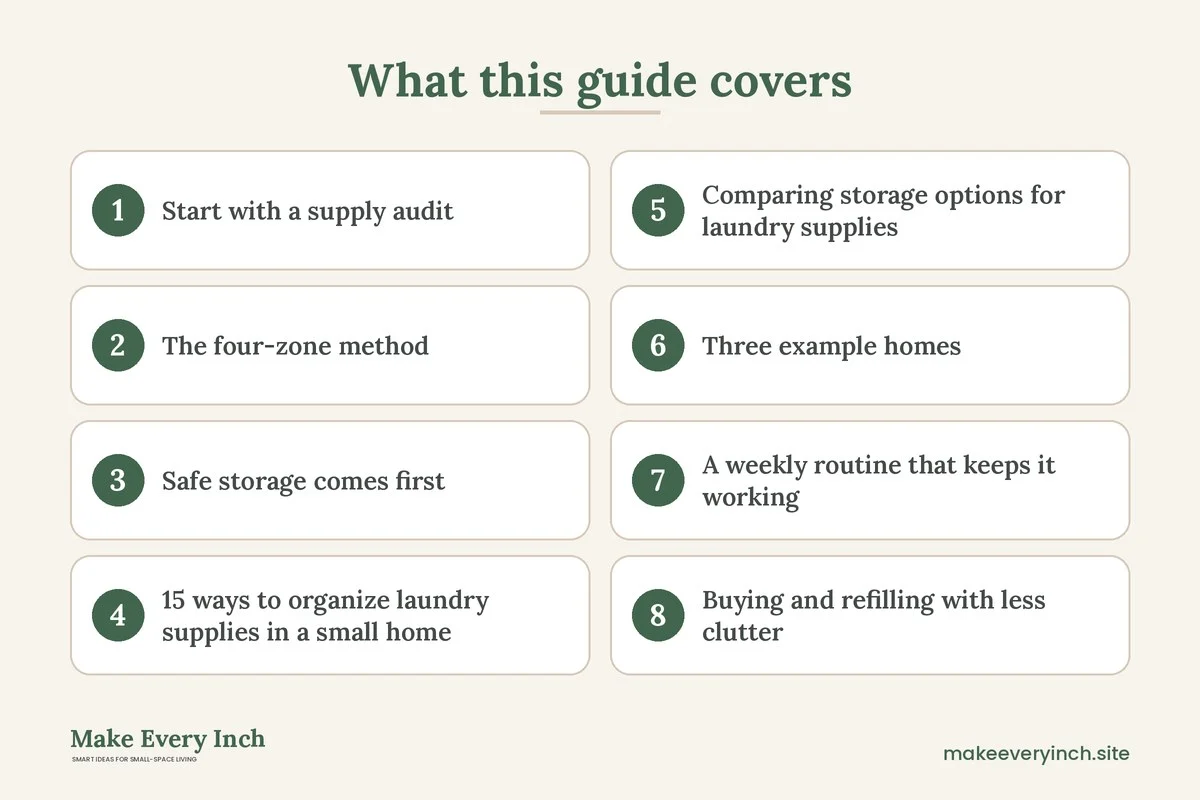
Start with a supply audit
Most small homes hold more laundry supplies than the household needs. Before buying a single bin, empty every place where laundry products live and put them on a table. Group them by purpose and ask four questions about each item.
- Do I use it? If you have not touched it in a few months, it is a candidate to give away or use up.
- Is it safe? Check for leaking caps, damaged labels and products that are very old. Follow the label for disposal, and do not pour unknown chemicals down a drain. Check local guidance for hazardous waste if you are unsure.
- Is it duplicated? Three half-used bottles of the same product can be combined only if the label says they are identical and compatible. Otherwise, use them one at a time.
- Where does it belong? Some items belong at the machine, some in the bedroom and some in the kitchen.
After the audit, you will usually find that the real daily list is short: detergent, a stain treatment, a softener or a substitute, a lint brush, a mesh bag or two, a bag of clothes pegs or a rack and a place for the lone sock. The rest can live in a deeper, less convenient place.
The four-zone method
Laundry has four stages, and supplies should live with the stage they serve. This is a different organizing principle than sorting by product type, and it is the reason the system sticks.
- Wash zone: detergent, softener, booster and anything poured into the machine. Place these within arm’s reach of the drum or drawer.
- Treat zone: stain remover, a small brush, a sponge and gloves. These are used before the wash, so they should be near the hamper or sorting spot.
- Dry zone: a drying rack, pegs, hangers, dryer balls and a lint brush. Keep these near where clothes come out.
- Fold and put away zone: a flat surface, a basket for each person, a sewing kit and a bag for donations.
In a small home, these four zones may share one wall or even one shelf, but they should be visibly separate. A simple tray or basket for each zone is enough.
Safe storage comes first
Laundry products are chemicals, and a small home puts them close to everything. Treat safety as part of the system, not an afterthought.
- Keep chemicals out of reach. Store detergent, bleach, stain remover and pods on a high shelf or in a locked or latched cabinet where children and pets cannot get them. A baby gate on a shelf does not count.
- Keep products in original containers. The label holds the ingredients, directions and emergency information. If you decant, use a clearly labelled container and keep the original label or a photo of it.
- Never mix cleaners. Do not combine bleach with ammonia or acidic products such as some toilet cleaners or vinegar. The fumes can be dangerous. Use one product at a time and rinse between uses.
- Ventilate. Open a window or use a fan when working with strong products, and close lids tightly.
- Separate from heat. Keep aerosols, flammable products and oily rags away from the dryer and any heat source. Lint buildup is a known fire risk, so clean the lint screen after every load.
- Keep pods in a closed container. Their bright colors attract children, so store them out of sight.
- Check the manuals. Appliance manuals tell you which products suit your machine and what to avoid.
- Mind the water. Do not store liquids where a leak from a hose could soak them. Know where the water shutoff valves are and keep that route clear.
15 ways to organize laundry supplies in a small home
Shelf and cabinet systems
1. A single zone shelf
One shelf, divided into four labelled baskets, replaces a cluttered cabinet. Place heavy bottles low on the shelf and keep the shelf within comfortable reach. If it is wall-mounted, anchor into studs and do not drill without permission.
2. A bottle caddy with a handle
A caddy holds detergent, stain remover and a brush, and moves from the machine to the sink. It also lets you carry everything away when a guest is over. Choose a design that keeps bottles upright.
3. Lazy susan in a corner cabinet
A turntable in a deep corner makes the back accessible. Use one tier for the wash zone and another for treatments, and make sure the rim keeps bottles from sliding off.
4. Pull-out drawers in a base cabinet
If you own the home, a pull-out lets you see everything. In a rental, a freestanding drawer unit on wheels gives a similar effect without changes to the cabinet.
Wall and door systems
5. Over-the-door organizer
Pockets hold lint rollers, a mesh bag, stain sticks and small sachets. Keep the load light and do not store liquids that could leak onto the door.
6. A rail with hooks
A short rail holds a brush, a mesh bag and a pair of gloves. A rail on a wall needs permission, while an adhesive version should be rated for the weight and used on surfaces that suit it.
7. A tension rod in a cupboard
A rod across the inside of a cupboard door or between two walls lets you hang spray bottles by their triggers and keeps the floor free. Make sure bottles are secure so they cannot drip.
8. A pegboard panel
A panel on a wall holds the drying rack, pegs and a small broom. It is useful where floor space is zero. Anchor it properly and do not overload.
Container and decanting systems
9. Airtight bins for dry products
Powders and boosters stay dry and tidy in a sealed bin. Keep the original box or label inside, and mark the bin clearly. Follow the label’s directions for scoop size, and keep the bin shut.
10. A labelled basket per person
Each family member gets a basket for folded clothes. It stops the sorting at the end of a load and removes the pile from the bed.
11. A sock holder
A small mesh bag or a bin for single socks keeps strays from piling up. Check it weekly and match or retire.
12. A small sewing and repair kit
Buttons, a few needles, a thread and safety pins in a tin save a trip to the shops. Keep needles secured from children.
Space-saving and rental systems
13. A rolling cart
A narrow cart holds the zones and moves to the machine on laundry day, then into a closet. Lock the wheels when in use and keep it clear of vents and valves.
14. A fold-flat drying rack
A rack that folds flat to a few inches lives behind a door or between the machine and a wall. Place it away from the dryer vent and heat.
15. A hamper that doubles as storage
A lidded hamper holds clean items waiting to be folded or a stack of towels. Choose breathable material to avoid trapped damp.
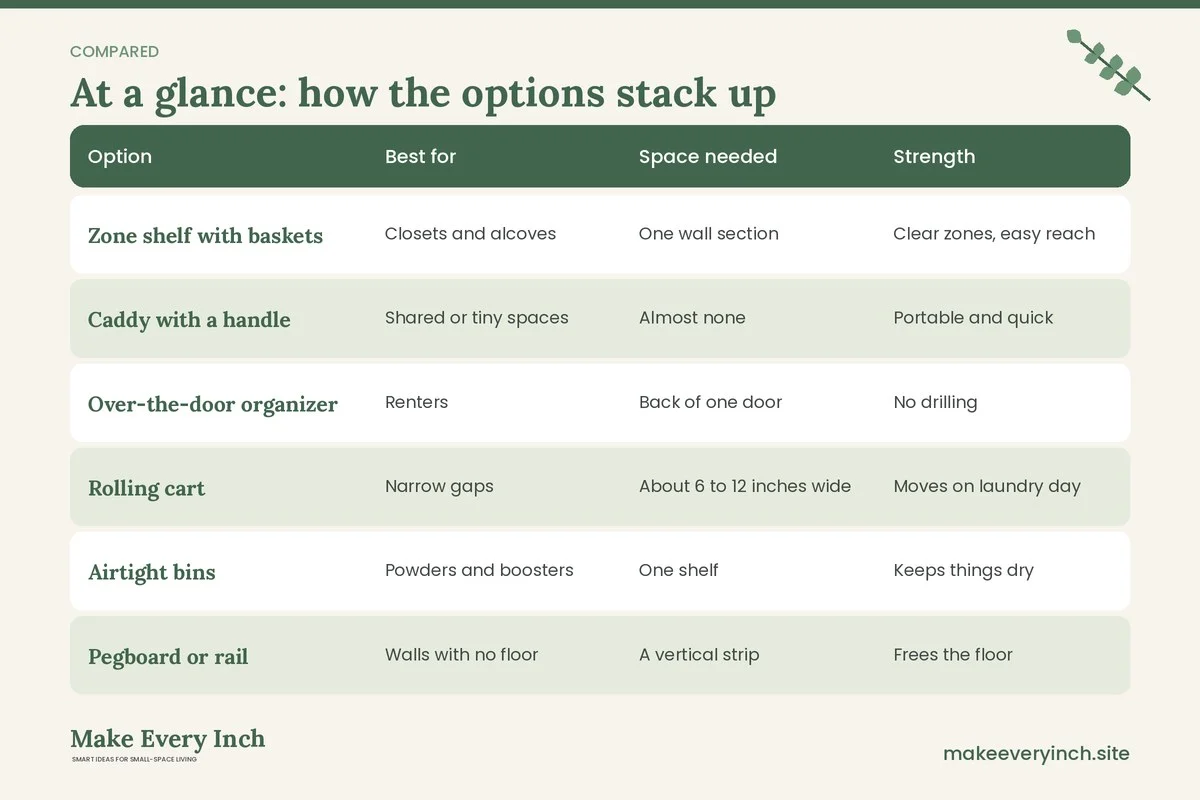
Comparing storage options for laundry supplies
| Option | Best for | Space needed | Strength | Watch out for |
|---|---|---|---|---|
| Zone shelf with baskets | Closets and alcoves | One wall section | Clear zones, easy reach | Anchoring and weight |
| Caddy with a handle | Shared or tiny spaces | Almost none | Portable and quick | Tipping and leaks |
| Over-the-door organizer | Renters | Back of one door | No drilling | Door weight and spills |
| Rolling cart | Narrow gaps | About 6 to 12 inches wide | Moves on laundry day | Blocking vents or valves |
| Airtight bins | Powders and boosters | One shelf | Keeps things dry | Mislabelling |
| Pegboard or rail | Walls with no floor | A vertical strip | Frees the floor | Permission and anchoring |
| Locked or latched cabinet | Homes with children and pets | One cabinet | Best for safety | Needs fitting |
Treat the table as a starting point. Your wall type, lease and appliance manuals decide what is allowed and safe.
Three example homes
A 450 square foot studio
A studio has one machine in a kitchen alcove. The household uses a rolling cart with four baskets, one per zone, parked between the machine and the wall. Detergent and stain remover sit in the top basket of a latched cabinet above, out of reach of a toddler visitor. A foldable rack hangs behind the bathroom door. The renter checked the lease before using any adhesive hooks and keeps all hooks within the weight limit.
A two-bedroom apartment with a hallway closet
A hallway closet holds a stacked washer and dryer. A single shelf above holds four labelled baskets. A slim over-the-door organizer holds lint rollers, mesh bags and a sewing kit. Cleaners are stored on the top shelf in a closed bin, and the household never combines products. The dryer vent is checked, the lint screen is cleaned after each load and the closet door stays open during use for airflow.
A family home with pets
A family with two children and a dog keeps the laundry area in a basement corner. All chemicals live in a latched cabinet at adult height, and pods go in a closed container inside it. The drying rack, brushes and baskets are on open shelves low down, where the children can help to fold and put away. Outlets near the sink are protected, and the shutoff valves are marked with a tag and kept clear.
A weekly routine that keeps it working
A system only works if it is easy to maintain. A short routine keeps supplies tidy without becoming a chore.
- Daily: empty the lint screen after each load and return the bottle caddy to its spot.
- Weekly: check the sock bin, wipe the top of the machine and the shelf, and remove empty bottles.
- Monthly: look at what you used, restock the small items and check hoses and connections for drips.
- Twice a year: clear everything off the shelf, wipe it, and review the audit questions. This is also a good moment to check the dryer vent and to have it cleaned if the manual suggests.
Buying and refilling with less clutter
You can lower waste and clutter by buying only what you will use before it expires. Concentrates take less space, though you should follow the label for dosing. Refill small containers only if the manufacturer allows it and label them clearly. Avoid decanting into drink bottles or food containers, which can be mistaken for something safe to drink. If you buy in bulk, store the extra in a closed container in a cool, dry spot, away from heat and out of reach of children and pets.
Renter-friendly rules
If you rent, treat the lease as your first checklist. Ask before drilling, hanging a shelf or changing a door. Use freestanding and removable options such as carts, over-the-door organizers, tension rods and baskets. Photograph the space before you start. For more ideas, see no-drill storage ideas for renters and renter friendly apartment decorating ideas.
Mistakes to avoid
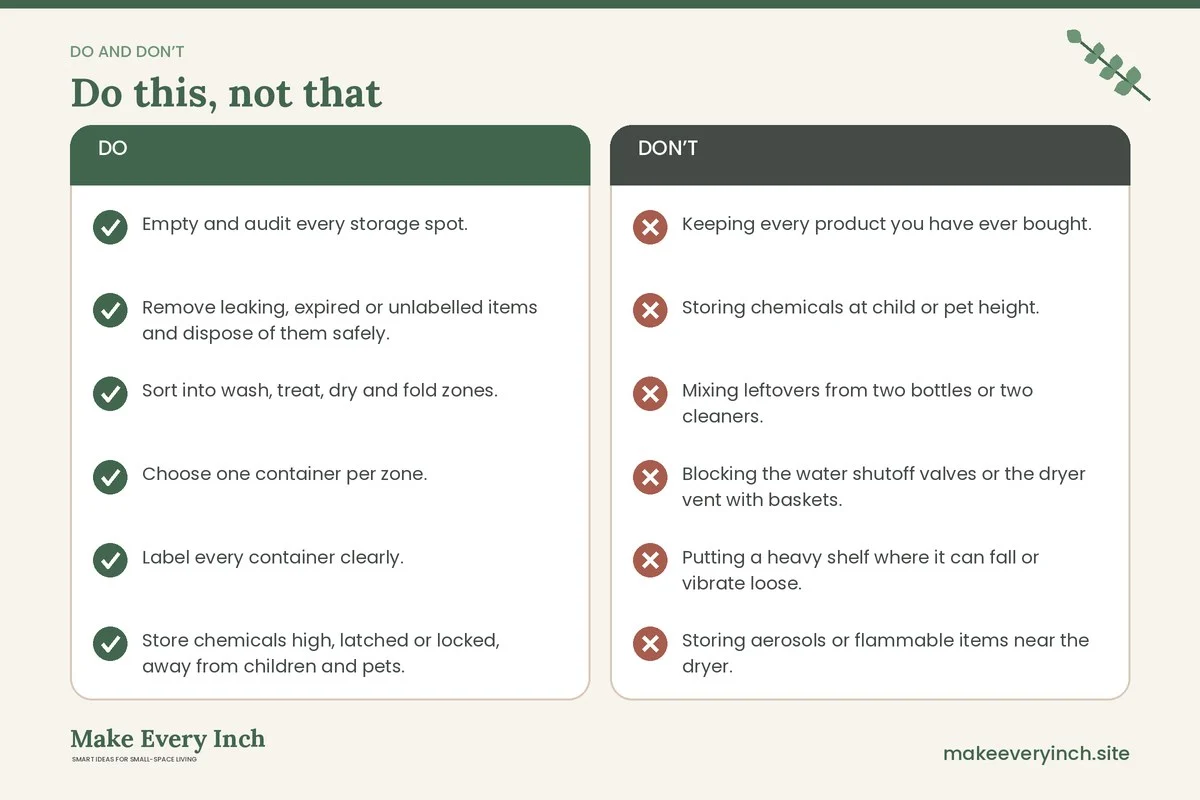
- Keeping every product you have ever bought.
- Storing chemicals at child or pet height.
- Mixing leftovers from two bottles or two cleaners.
- Blocking the water shutoff valves or the dryer vent with baskets.
- Putting a heavy shelf where it can fall or vibrate loose.
- Storing aerosols or flammable items near the dryer.
- Decanting into unlabelled bottles.
- Ignoring the appliance manual about which products to use.
- Letting lint build up in the screen and the vent.
Laundry supplies checklist
- Empty and audit every storage spot.
- Remove leaking, expired or unlabelled items and dispose of them safely.
- Sort into wash, treat, dry and fold zones.
- Choose one container per zone.
- Label every container clearly.
- Store chemicals high, latched or locked, away from children and pets.
- Never mix cleaners.
- Check the manuals for products, clearances and venting.
- Anchor shelves into studs, with permission.
- Keep valves, outlets and vents clear.
- Check that outlets near water have ground-fault protection.
- Clean the lint screen after every load.
- Set a weekly reset.
FAQ
How do I organize laundry supplies in a very small space?
Sort into four zones, use one container for each and store them where you use them. A rolling cart, an over-the-door organizer and a single shelf can cover most homes.
Where should I store laundry detergent?
Store it in its original container, upright, in a cool, dry place out of reach of children and pets. Follow the label for details.
Is it safe to put supplies above the dryer?
Be cautious. Heat and vibration can affect some products. Check the dryer manual and the product labels, and keep flammable items well away from the heat source.
Can I decant detergent into a nicer container?
Only if the container is clearly labelled, closed tightly and not mistaken for food or drink. Keep the original label or a photo of it.
How do I stop the sock pile?
Use a small bin for single socks, check it weekly and match or retire the strays.
What if I have no laundry room at all?
Use a closet, a hallway shelf or a kitchen cabinet with a caddy and a few baskets. For layouts and clearance ideas, see our guide to small laundry room ideas for narrow spaces.
Related ideas for a calmer small home
Good laundry storage links to the rest of the home. See small space organization ideas for wider systems, small closet ideas for hanging and folding storage, small bathroom ideas where towels and cleaners share space, small kitchen ideas when the machine lives near the sink, small entryway ideas for the hallway and budget small space ideas for a low-cost approach.
Keep going: Keep going with our small laundry room ideas, the layout guide for small laundry room narrow spaces and our tips for no-drill storage ideas for renters.
Save this guide for later
Pin the ideas you like to Pinterest so you can come back to them when you plan your space.