15 Small Bedroom Lighting Ideas for a Calm, Bright Room
Quick answer: The best small bedroom lighting ideas use three layers: a soft ceiling or wall light, bedside reading lights and a gentle accent such as a lamp or LED strip. Use warm 2700K bulbs, add a dimmer and use wall-mounted or plug-in lights to keep surfaces clear.
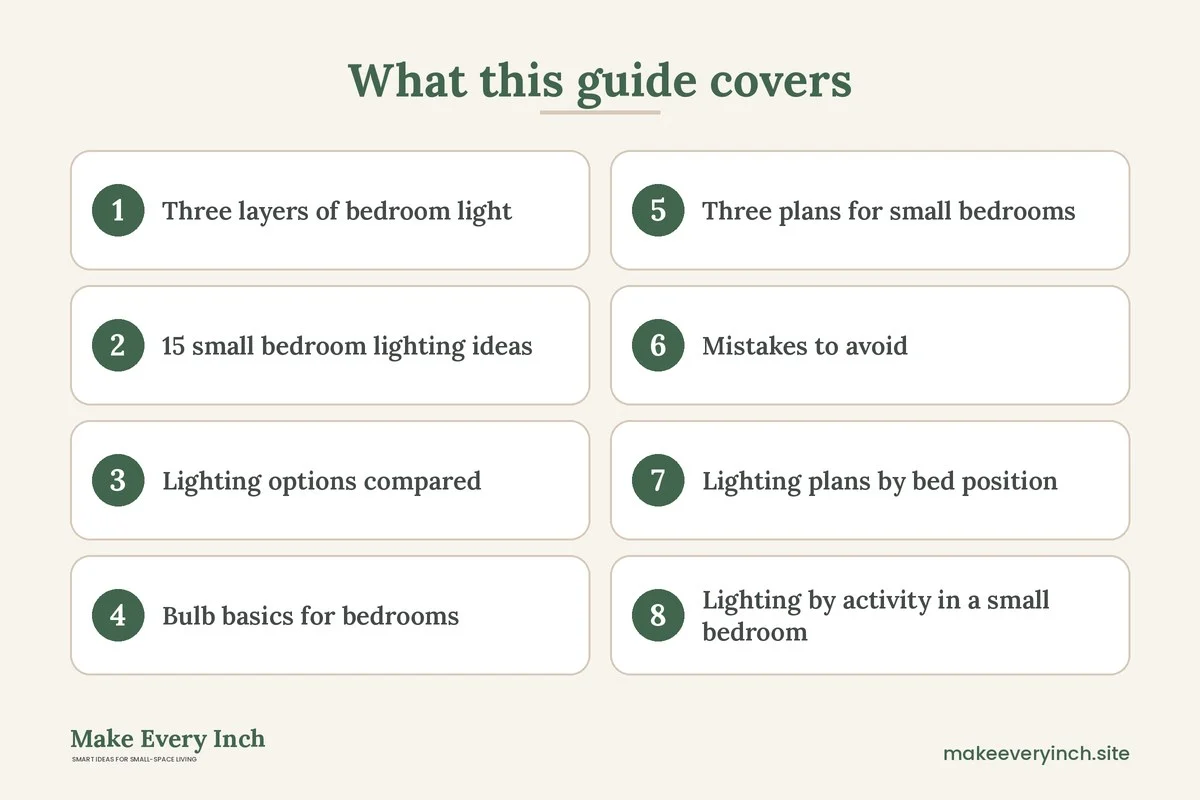
Small bedroom lighting ideas should help you wake up, read and wind down without cluttering the room. A single overhead light can feel harsh and flat. This guide shares 15 ideas, a comparison table, bulb basics, three plans and a checklist so the bedroom feels bigger and calmer.
Three layers of bedroom light
Ambient light fills the room, usually from the ceiling or a wall fixture. Task light helps with reading and dressing, from bedside lamps or sconces. Accent light adds a glow, such as a lamp on a dresser or a strip behind the headboard. Use warm bulbs, around 2700K, and put at least two layers on a dimmer.
15 small bedroom lighting ideas
1. Swap the ceiling light for a flush mount
A flush or semi-flush fixture saves headroom and spreads light evenly.
2. Add wall-mounted reading lamps
Swing-arm lamps free the nightstand and aim light where you need it.
3. Use plug-in sconces
No wiring needed. Hide the cord with a cord cover or run it behind the headboard.
4. Use small table lamps
A 12 to 16 inch lamp suits a narrow nightstand.
5. Add a dimmer
A dimmer switch or smart bulbs lets you change brightness for the time of day.
6. Add LED strip lights
Place a strip behind the headboard or under a shelf for a soft glow.
7. Use warm bulbs
Choose 2700K for the bedroom. Cool bulbs feel harsh and disturb sleep.
8. Add a mirror opposite the window
Daylight bounces around the room and makes it look bigger.
9. Use sheer curtains
Sheer panels let daylight in and add privacy. Add blackout liners for sleeping.
10. Use a floor lamp in a corner
An arc or slim floor lamp lights a dark corner and saves surface space.
11. Use a lamp in the closet or wardrobe
A battery LED puck helps you see clothes without lighting the room.
12. Add a night light
A low, warm night light in the hall or by the bed avoids switching on the main light.
13. Light the desk separately
A clip-on or slim desk lamp keeps work light off the bed. See bedroom desk ideas.
14. Pick matching bulb colors
Mixed bulbs look uneven. Stay consistent across the room.
15. Keep cords tidy
Use clips and covers so cords do not tangle on the nightstand.
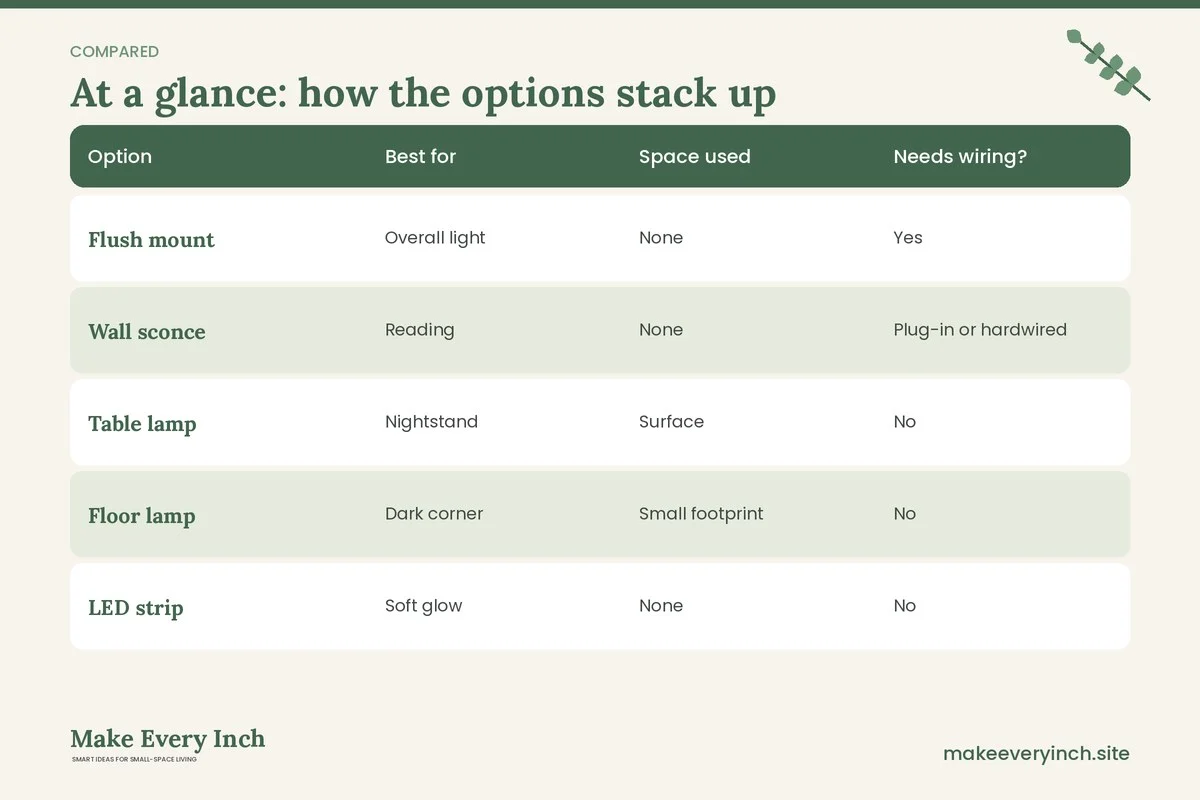
Lighting options compared
| Option | Best for | Space used | Needs wiring? |
|---|---|---|---|
| Flush mount | Overall light | None | Yes |
| Wall sconce | Reading | None | Plug-in or hardwired |
| Table lamp | Nightstand | Surface | No |
| Floor lamp | Dark corner | Small footprint | No |
| LED strip | Soft glow | None | No |
Bulb basics for bedrooms
Choose LED bulbs rated 2700K, with a CRI of 90 if you can, so colors look natural. A small bedroom needs about 1,500 to 2,000 lumens in total, split across the layers. Use lower lumens near the bed and higher ones in the dressing area.
Three plans for small bedrooms
Plan A: a bedroom with one ceiling light
Add two plug-in sconces over the bed and a small lamp on the dresser.
Plan B: a dark north-facing room
Use pale walls, a large mirror opposite the window and warm lamps at two heights. Our small bedroom ideas give color choices.
Plan C: a rental with no switch
Use smart plugs on two lamps so one tap controls the room. See renter tips.
Mistakes to avoid
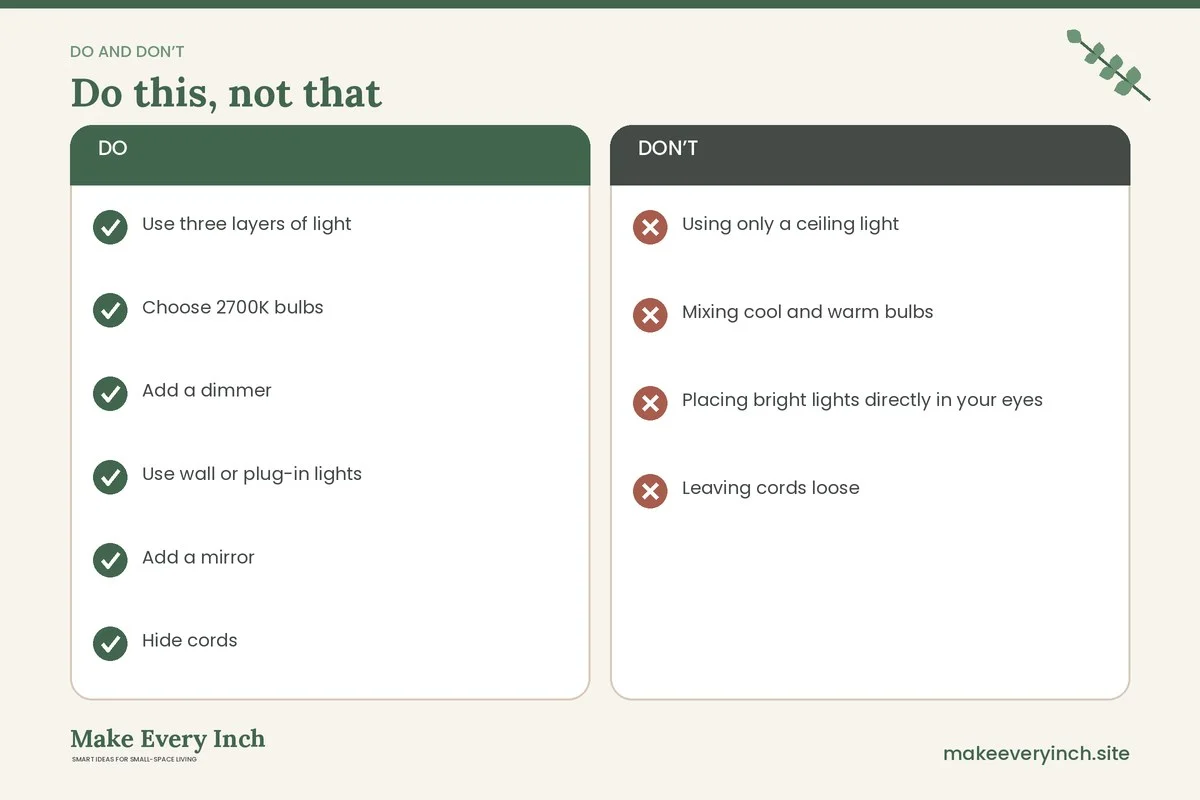
- Using only a ceiling light
- Mixing cool and warm bulbs
- Placing bright lights directly in your eyes
- Leaving cords loose
Lighting plans by bed position
Bed centered on the wall
Mount a swing-arm lamp or a plug-in sconce on each side of the headboard, about 24 to 30 inches above the mattress and 6 to 8 inches out from the bed edge. Aim each light at the page rather than at the other sleeper. Add a ceiling fixture on a dimmer for general light. Both lamps should use the same bulb color so the wall looks even.
Bed in a corner
Use one wall lamp on the open side and a small clip-on lamp on the wall side. Add a floor lamp in the opposite corner to balance the light. A strip of LED light under a shelf near the bed gives a soft glow for late-night trips.
Bed under a window
Use a lamp on each side of the window, on the nightstands or on the wall, and keep curtains light so daylight reaches the room. Place a dimmable lamp on a dresser to bring light to the far side. A small light on a shelf above the window adds depth after dark.
Bed with a tall headboard
Choose lamps that clip to the headboard or sit on a shelf attached to it. Make sure the shade does not touch the fabric. A slim light bar over the headboard provides soft indirect light and avoids glare on screens.
Lighting by activity in a small bedroom
| Activity | Light needed | Best fixture | Bulb color |
|---|---|---|---|
| Reading in bed | Focused, 400 to 600 lumens | Swing-arm lamp | 2700K |
| Getting dressed | Bright and even | Ceiling light or mirror light | 3000K |
| Applying makeup | Even, on the face | Vanity lights | 3000K to 3500K |
| Working at a desk | Bright, no glare | Desk lamp | 3500K to 4000K |
| Winding down | Low and warm | Lamp on a dimmer | 2200K to 2700K |
| Night walk | Very dim | Night light | 2000K to 2200K |
Think about each activity and make sure there is a light for it. Many small bedrooms need only three or four light sources if each is placed well. Avoid adding more than you need, since each cord and bulb adds clutter.
Lighting for sleep
Bright, cool light in the evening can delay sleep, so use warm, dim bulbs after sunset. Choose lamps with a dimming range from 10 to 100 percent and a bulb that can go as low as 2200K. Avoid blue-heavy screens an hour before bed, or use a night mode. A red or amber night light is better for night trips than a white one. Use blackout curtains if streetlights shine into the room, and cover small LED lights from electronics with tape. Wake up with daylight when you can, and open the curtains as soon as you rise. See cozy bedroom ideas for more calming touches.
Lighting a small bedroom with a low ceiling
Choose flush mounts rather than pendants and avoid fixtures that hang below eye level. Use wall lights to direct light upward and wash the ceiling, which makes it seem higher. A white or light ceiling reflects the most light. Use uplights in the corners and keep tall lamps away from the walkway. Avoid dark lamp shades that absorb light, and use white or cream shades instead.
Smart lighting ideas for small bedrooms
A smart bulb can change color and brightness from a phone or voice, which means you can dim it from bed. Use a smart plug to turn a lamp on a schedule, such as a gentle morning light. A motion-activated strip under the bed lights the floor at night. A smart switch can replace the wall switch in a rental if allowed. Use scenes for waking, working and sleeping, and keep the settings simple so everyone in the household can use them. If you are on a budget, a basic timer plug does much of the same job.
Budget lighting makeover for a small bedroom
- Under 20 dollars: warm LED bulbs for every fixture and a clip-on lamp
- Under 60 dollars: a pair of plug-in sconces, a small table lamp and a dimmer plug
- Under 150 dollars: two swing-arm lamps, a floor lamp and a smart bulb
- Over 150 dollars: a new flush fixture, a mirror with a light and a hardwired dimmer
Begin with the bulbs, since they cost little and change the room the most. Then add task lights at the bed and the desk. Save decorative lighting for last. If you rent, keep the original bulbs and shades in a box.
Mistakes with bedroom lighting
The most common mistake is relying on a single ceiling light, which makes the room look flat and harsh. The second is using bulbs of mixed colors, which looks uneven. The third is putting a lamp too far from the bed, so reading is uncomfortable. The fourth is leaving cords across the floor, which can be a trip hazard. The fifth is leaving a bright light directly facing the bed. Fixing these costs very little and makes the bedroom more restful. See small bedroom ideas for the full room plan and storage ideas for hiding cables and chargers.
Room-by-room lighting recipes for small bedrooms
The calm bedroom
Use two table lamps with linen shades, a dimmable ceiling light and a small night light. Keep every bulb at 2700K or lower. Choose lamps with simple bases in ceramic or wood, and keep cords hidden behind the nightstands. The result is soft, even light that supports sleep.
The bright bedroom
Use a bright flush fixture, a wall light on each side of the bed and a mirror opposite the window. Add a clip-on reading light and a desk lamp. Choose white shades and light walls to bounce light. Use a dimmer to lower the level in the evening.
The moody bedroom
Paint one wall a deep color and use warm spotlights to highlight art. Add two small lamps with dark shades and a string of soft lights behind a sheer curtain. Keep a brighter task light for reading and dressing. The room feels cocooning at night and still works in the morning.
The shared bedroom
Give each person an individual light with a separate switch. Use a dimmable ceiling light and add a shared night light. Choose lights that do not shine on the other person’s side, and use a small book light for reading while the other sleeps.
The work-and-sleep bedroom
Use a dedicated desk lamp, a bright ceiling light for work and a warm lamp for sleep, each on its own switch or plug. Move the desk lamp out of sight at night. Use a cover or a screen over the desk at the end of the day. See desk ideas for ways to separate work from rest.
How to measure light in your bedroom
You can use a free light meter app to check the level of light at the bed, the desk and the dresser. A good level for reading is 300 to 500 lux, general light is 100 to 200 lux and a calm evening level is 30 to 50 lux. Measure at different times of day and adjust the bulbs, the shades or the dimmer until the readings suit the activity. This simple check helps you avoid guesswork and makes lighting decisions easier.
Troubleshooting bedroom lighting
The room feels too bright at night. Use a dimmer, switch to a lower-wattage bulb or add a shade. Use a lamp instead of the ceiling light after dark.
The lamp light is too yellow. Choose bulbs rated 2700K instead of 2200K, or look for a bulb with a better color rendering index. Warm light feels cozy, but too yellow can distort colors.
The bed is lit unevenly. Place lights at the same height on each side, and make sure the shades are the same. Use one bulb type in the whole room.
Light leaks around the curtains. Use a rod that extends past the window, add a blackout liner or install side channels. Use a tape of blackout fabric along the edges if needed.
The ceiling light buzzes. The dimmer may not suit the bulb. Replace the dimmer with an LED-rated one or choose a bulb marked for dimming.
The cord does not reach. Use a slim extension cord and run it along the baseboard with clips. Move the lamp or choose a wall lamp with a longer cord.
The room looks flat in photos. Add a lamp at a different height and a pool of light on the wall. Layer your lights to add depth. See cozy bedroom ideas for more atmosphere.
How to choose bedroom shades and fixtures
Fabric shades diffuse light and look softer than metal or glass shades. A drum shade spreads light evenly, while an empire shade directs light up and down. Choose a shade slightly wider than the base so the lamp looks balanced. For wall lamps, choose arms that swing so you can aim the light at a book. For ceiling fixtures, a frosted glass or fabric shade avoids glare. Match finishes, such as brass or black, across the room, but mix shapes for interest. In a small room, choose a few well-made lights rather than many cheap ones, and pick a style that fits your bedding and curtains.
Light and color together
The color of your walls changes how light looks. Warm white walls reflect warm bulbs and glow. Dark walls absorb light, so you need more lamps. Glossy paint adds sparkle but shows flaws, while matte paint hides flaws and looks softer. Test your bulbs against the paint and bedding before you commit. If the colors look dull, increase the brightness or add a lamp near the wall. If they look too bright, add a shade. A few tests make the room look better in the evening, when the bedroom is used most.
Do a quick lighting audit this week. Count the bulbs, note the color temperature on each box and check that every light has a purpose. Replace any mismatched bulb, move one lamp closer to where you read and add a dimmer plug if the room has no dimmer. These three small changes cost little and give the bedroom a calmer, more even glow that you will notice the first night.
One last idea: photograph your bedroom at night with only the lamps on, then again with only the ceiling light. Compare the two pictures. The one with lamps will almost always look softer and larger, and it tells you which layer to keep as your main light after dark.
Lighting checklist
- Use three layers of light
- Choose 2700K bulbs
- Add a dimmer
- Use wall or plug-in lights
- Add a mirror
- Hide cords
FAQ
What is the best light for a small bedroom?
A soft ceiling or wall light with bedside lamps and a dimmer.
What color temperature is best for a bedroom?
Warm white, about 2700K.
How do I light a bedroom without overhead lighting?
Use floor lamps, plug-in sconces and table lamps.
Are wall lights better than table lamps?
They save space, but lamps need no wiring. Choose based on room and lease.
How bright should a bedroom be?
About 1,500 to 2,000 lumens in total, with the ability to dim.
Can lighting make a bedroom look bigger?
Yes. Layer light, use a mirror and wash a wall with light.
Keep going: Explore our small bedroom ideas, layout ideas and small living room lighting ideas.
Save this guide for later
Pin the ideas you like to Pinterest so you can come back to them when you plan your space.