23 Small Closet Organization Ideas for a Clutter-Free Wardrobe
Quick answer: The best small closet organization ideas start by editing your clothes, then double the hanging space with a second rod, use slim hangers, add shelf dividers and hanging organizers, and store shoes and accessories on doors and walls. Group clothes by type and color, and keep off-season items in under-bed bins.
Small closet organization ideas can turn a 24-inch reach-in closet into a wardrobe that works. Most closets fail for the same reasons: too many clothes, hangers that waste space, shelves that are too high and a floor full of shoes. The solution is not a bigger closet but a smarter system. This guide covers how to edit, how to measure, 23 ideas, a table of closet tools, plans for three kinds of closets, folding and hanging methods, shoes and accessories, and a seasonal routine. For the broader system, see our guide to small space organization ideas, and for off-season storage, read under bed storage ideas.
Step 1: edit before you organize
Take everything out of the closet and put it on the bed. Sort into keep, donate, repair, store and throw away. Try on items you are unsure about, and ask whether you wore them in the last year. Be honest about clothes that no longer fit, clothes you keep for an imaginary future and clothes you never liked. Aim to keep only what fits your current life, and what you can see and reach.
A small closet works best when it is about 80 percent full. A packed closet wrinkles clothes and makes dressing slow. Leaving space lets you see what you own, and it gives you room to bring in a new item without a struggle.
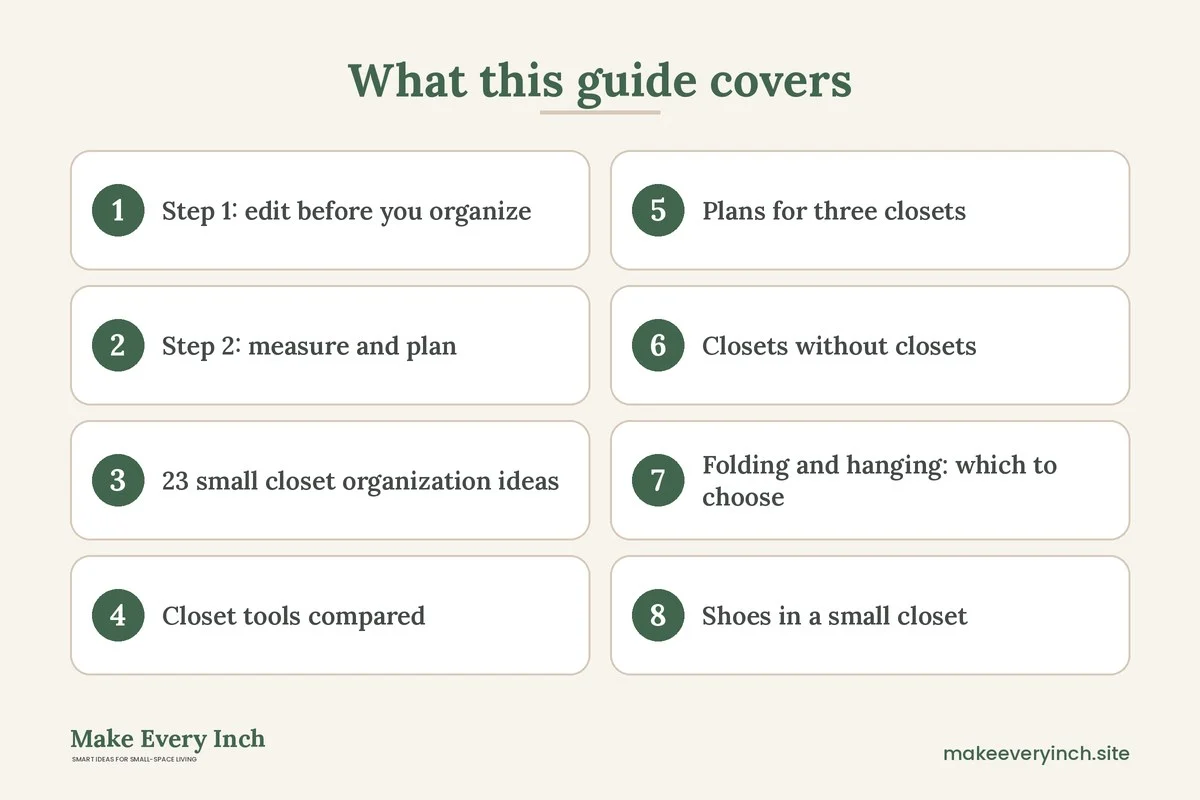
Step 2: measure and plan
Measure the width, depth and height of the closet. Note the height of the rod and the shelf, and the width of the door opening. In a reach-in closet, the standard rod is 66 inches high with a shelf above it, which wastes the space below the clothes. Most people hang shirts, jackets and short dresses that are under 42 inches long, so the bottom half is empty. This is the space a second rod will use. Draw a simple plan, and decide what must hang, what can be folded and what can go elsewhere.
23 small closet organization ideas
Hanging ideas
1. Add a second rod
A double hang system with one rod at 40 inches and one at 80 inches doubles the hanging space for shirts, skirts and folded trousers.
2. Use slim velvet hangers
Slim hangers save about a third of the space and keep clothes from slipping.
3. Use cascading hangers
Cascade hooks let you hang several items vertically from one hanger. They work well for tops.
4. Use a hanging rod extender
An extender adds a lower rod below the main one without tools.
5. Hang by category and color
Group shirts, pants, dresses and jackets, then arrange by color. This helps you see what you own.
6. Use pants hangers with clips
A multi-tier pants hanger holds four to six pairs in the space of one.
Shelf ideas
7. Use shelf dividers
Dividers keep stacks of sweaters and jeans from tipping over.
8. Use bins on the shelf
Bins hold socks, scarves and gloves. Label them.
9. Lower the shelf
If the top shelf is too high, add a second shelf or a hanging shelf below the rod.
10. Use a hanging shelf organizer
Fabric shelves hang from the rod and hold sweaters and bags.
11. Fold clothes like files
Fold shirts into small rectangles and stand them upright in a drawer or bin. You can see every item without digging.
12. Use a tension-rod shelf
A tension rod across the closet can hold folded items or a small shelf.
Door and wall ideas
13. Use an over-door hook rack
Hooks hold bags, belts and scarves.
14. Use an over-door shoe organizer
Clear pockets hold shoes, accessories and small items.
15. Use a wall hook strip
A strip of hooks inside the closet holds hats, bags and tomorrow’s outfit.
16. Add a mirror
A mirror on the inside of the door saves wall space in the bedroom.
Floor and under-closet ideas
17. Use a shoe rack
A tiered rack holds twice as many pairs as a flat floor. Pick a narrow one.
18. Use stackable bins
Bins on the floor hold gym gear, bags or shoes. Choose clear bins.
19. Use a laundry bag
A slim hanging hamper keeps dirty clothes from piling up.
Accessories and systems
20. Use a belt and tie rack
A small rack on the wall keeps belts and ties visible.
21. Use jewelry storage
A hanging jewelry organizer or a small tray keeps pieces tidy and untangled.
22. Use a seasonal swap
Store off-season clothes under the bed or on a high shelf, and swap twice a year.
23. Use a closet system
A modular system lets you design the closet around your wardrobe. It costs more, but it is the most efficient.
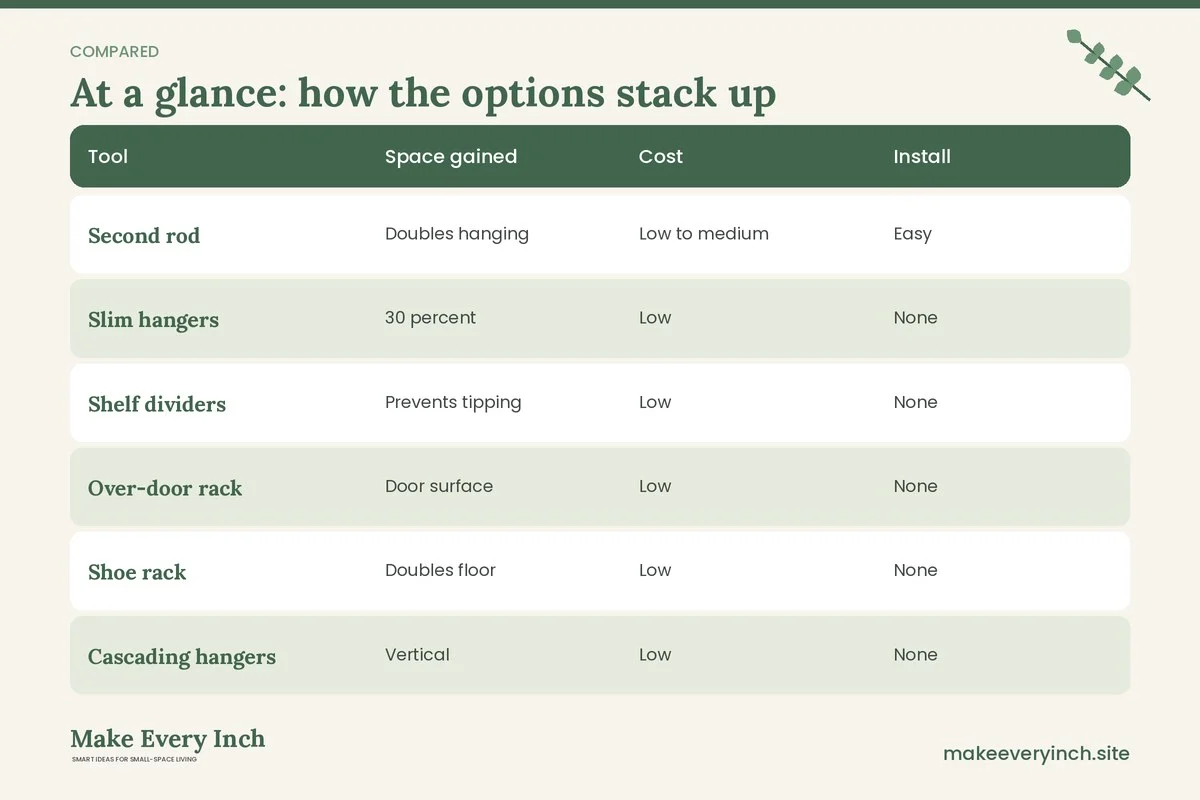
Closet tools compared
| Tool | Space gained | Cost | Install | Best for |
|---|---|---|---|---|
| Second rod | Doubles hanging | Low to medium | Easy | Shirts, skirts |
| Slim hangers | 30 percent | Low | None | All hanging clothes |
| Shelf dividers | Prevents tipping | Low | None | Sweaters, jeans |
| Over-door rack | Door surface | Low | None | Bags, belts |
| Shoe rack | Doubles floor | Low | None | Shoes |
| Cascading hangers | Vertical | Low | None | Tops |
| Closet system | Full redesign | High | Moderate | Long-term homes |
Plans for three closets
A 24-inch reach-in closet
Hang the long items on one side and double hang the shorter ones on the other. Add shelf dividers, a shoe rack and bins on the shelf. Use the door for hooks and a mirror.
A narrow 18-inch closet
Hang clothes sideways if the rod allows it, or use a wall-mounted rod. Use slim hangers and a few bins. Add a freestanding rack in the bedroom for extra hanging space.
A walk-in closet of 4 x 6 feet
Use both sides for double hang, with a shelf above and a shoe rack at the back. Add a central drawer unit or a bench with bins. A mirror and good lighting help.
Closets without closets
Many rentals have tiny closets or none. Use a freestanding garment rack, a wardrobe or a wall-mounted rail in the bedroom. Add a tall dresser, under-bed bins and hooks. See small bedroom ideas without a closet for layouts that work.
Folding and hanging: which to choose
Hang clothes that wrinkle or lose their shape: blazers, dresses, button shirts and trousers. Fold knits, T-shirts and jeans, because hangers stretch them. Roll socks, underwear and gym clothes. A mix of hanging and folding saves the most space. Use the file method to store folded items upright in bins or drawers, so you can see each piece without disturbing the stack.
Shoes in a small closet
Shoes take more space than people expect. Keep only the pairs you wear, and store the rest elsewhere. Use a rack that holds shoes at an angle, a shelf with a lip or an over-door organizer. Stack boots in a basket or hang them by a clip. Keep shoes clean and dry so they do not smell. Use shoe trees for leather shoes and clear boxes for rarely worn pairs.
Accessories, bags and belts
Bags crowd closets quickly. Hang them on hooks or on a rod with shower curtain rings, and stuff them with tissue to keep their shape. Belts can hang on a slim rack, and scarves can hang on a loop hanger. Use small bins for gloves and hats. Display only the pieces you use, and store the rest in an upper shelf or a bin.
A seasonal routine
Twice a year, move off-season clothes into bins and bring the current season forward. Wash everything before storing, check for damage and donate what you did not wear. This keeps the closet light and prevents the build-up of unused clothes. It also gives you a chance to see what you really wear and what you miss.
Building a capsule wardrobe to fit a small closet
A capsule wardrobe is a small set of clothes that mix and match. Choose a base of neutral colors, such as black, navy, gray, cream and denim, and add two or three accent colors. Aim for about 10 tops, 5 bottoms, 3 layers, 2 dresses or suits and a few pairs of shoes per season, and adjust the numbers to your life. Buy the best quality you can afford in pieces you wear weekly. When a new item arrives, it should work with at least three things you own. This approach cuts decision fatigue in the morning and keeps the closet from overflowing.
How to keep clothes in good shape in a tight closet
Crowded closets wrinkle clothes and cause odors. Leave a finger of space between hangers. Hang heavy knits folded over the rod, or fold them on a shelf. Use breathable garment bags for suits and dresses, and avoid plastic dry-cleaning bags for long-term storage. Air out worn clothes before putting them back. Add a cedar block, a lavender sachet or a dehumidifier bag. Check the closet for moisture, especially against an outside wall. Clean the floor and shelves each season.
Small closet lighting and visibility
A dark closet makes clothes hard to find and encourages clutter. Add a battery LED strip or a motion-sensor puck light, and paint or line the inside in a light color. Use clear bins and labels so you can see contents at a glance. Hang a mirror on the door for outfit checks. If you can, put the items you wear most at eye level and the less-used ones above and below. A bright, visible closet makes it easy to choose and easy to put back.
Organizing children’s closets
A child’s closet should change as they grow. Hang a low rod, add a second rod when they are taller and use bins for toys and shoes. Put everyday clothes on the lower rod and special items higher. Label bins with pictures so young children can help. Do a seasonal check to remove clothes that no longer fit and pass them on. Keep a bin for hand-me-downs so you can save the clothes for the next child.
Closet makeovers for renters
If you rent, avoid drilling into the closet walls and use tension rods, hanging shelves, over-door hooks and freestanding racks. Use removable adhesive hooks within weight limits. If you want a full closet system, choose one that sits on the floor or attaches to the existing rod and shelf. Keep the original parts and photograph the closet before you start. At move-out, put everything back and patch any marks. Thoughtful choices let you enjoy an organized closet and keep your deposit.
A one-day closet reset
Morning: empty and edit
Pull everything out and sort it onto the bed. Try on the items you are unsure about and make fast decisions. Bag the donations and remove them from the house the same day.
Midday: clean and measure
Wipe the shelves, the rod and the floor, and vacuum the corners. Measure the closet and the door, note the height of the rod and the shelf and sketch a simple plan.
Afternoon: install and sort
Add the second rod, the dividers and the door organizer. Hang the clothes by category, from short to long, and then by color. Fold knits into bins and place the shoes on the rack.
Evening: label and review
Label the bins, hang the accessories on hooks and take a photo. Stand back and note what feels awkward, such as the frequency of reaching for a high shelf. Adjust one thing the next day so the system matches how you live.
Everyday outfit planning in a small closet
A small closet works best with a quick routine. At night, pick tomorrow’s outfit and hang it on a hook on the door. Keep a basket for items to be re-worn once, such as jeans and light tops, so they do not clutter the floor or crowd the clean clothes. Keep a hamper outside the closet, so dirty clothes do not mix with clean ones. Once a month, check the rod for items you have not worn since last month, and decide whether to keep or donate them. Small habits like these protect your edit and keep the closet useful with little effort.
Buying less, wearing more
The best closet organization is a smaller closet. Before you buy something new, ask whether it fits your style, matches several pieces and fits the space. Wait 48 hours before an impulse purchase. Choose quality fabrics that last and can be repaired. Track what you wear for a month using a note on your phone, and you will see which pieces earn their place. Over a year, this habit saves money, space and time, and leaves you with a wardrobe you enjoy wearing.
Troubleshooting a small closet
“Clothes keep falling off the hangers”
Switch to velvet or flocked hangers, and use clip hangers for slippery fabrics. Do not overload one hanger.
“I cannot reach the top shelf”
Keep only light, seldom-used items up there, and use a small step stool stored nearby. Lower the shelf if you can.
“Everything smells musty”
Check for moisture, air the closet, remove damp items and add a moisture absorber. Wash clothes before storing them.
“The door will not close”
You have too much for the space. Edit again, remove bulky items and use the under-bed space for off-season clothes.
Budget guide
Under $30
A set of slim hangers, shelf dividers and an over-door hook.
About $100
Add a second rod, a shoe rack, bins and an over-door organizer.
$300 and up
Install a modular closet system with adjustable shelves and rods, or add a freestanding wardrobe.
Mistakes to avoid
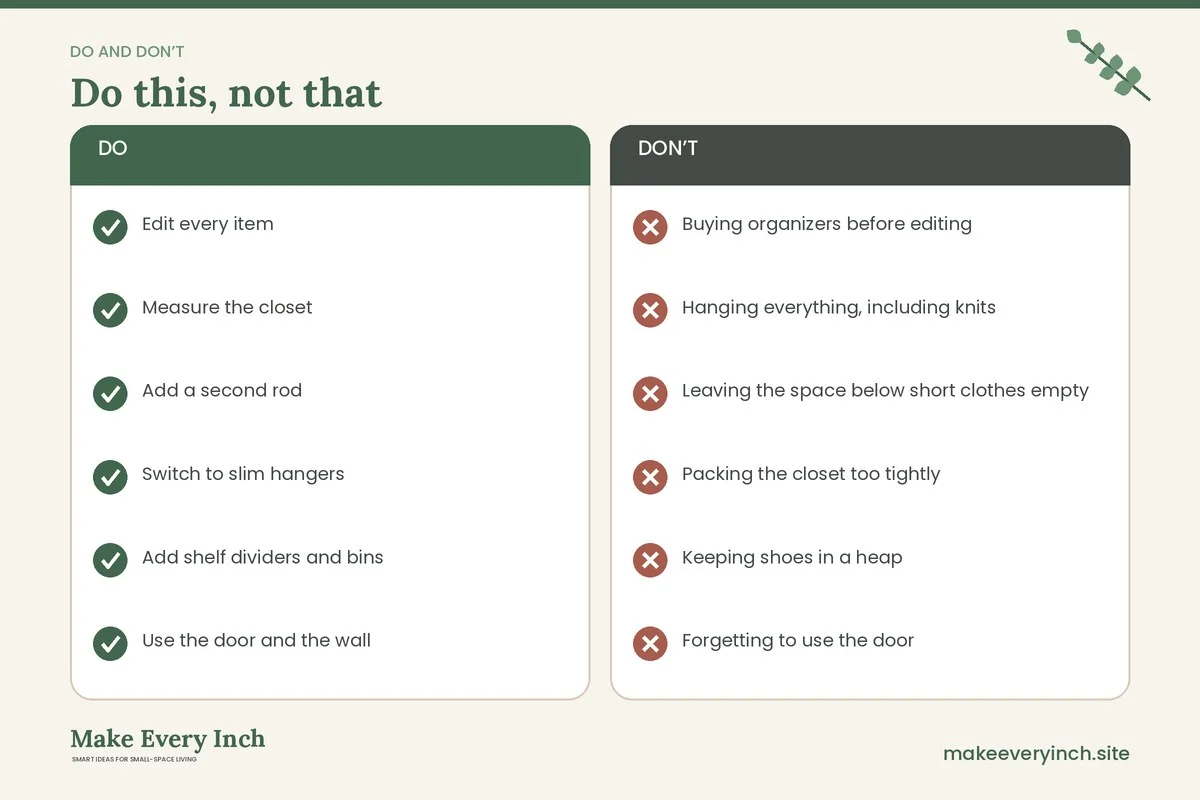
- Buying organizers before editing
- Hanging everything, including knits
- Leaving the space below short clothes empty
- Packing the closet too tightly
- Keeping shoes in a heap
- Forgetting to use the door
- Skipping a seasonal swap
Checklist
- Edit every item
- Measure the closet
- Add a second rod
- Switch to slim hangers
- Add shelf dividers and bins
- Use the door and the wall
- Store shoes on a rack
- Group by category and color
- Store off-season items elsewhere
- Review twice a year
FAQ
How do I organize a small closet?
Edit, add a second rod, use slim hangers, add dividers and bins and use the door.
How can I double closet space?
A double rod, slim hangers and shelf dividers can double the usable space.
Should I hang or fold clothes?
Hang items that wrinkle, fold knits and jeans and roll small items.
How do I organize a closet with no shelves?
Add a hanging shelf organizer, a tension-rod shelf or stackable bins on the floor.
How do I store shoes in a small closet?
Use a narrow rack, an over-door organizer or clear boxes.
How do I organize a closet by color?
Group by category first, then arrange from light to dark.
What do I do with off-season clothes?
Store them in bins under the bed or on a high shelf.
How do I stop clutter from returning?
Use one-in, one-out, and do a seasonal edit.
Keep going: Explore our small space organization ideas, under bed storage ideas and small bedroom storage ideas.
Save this guide for later
Pin the ideas you like to Pinterest so you can come back to them when you plan your space.