19 Small Entryway Storage Ideas for Shoes, Coats and Keys
Quick answer: Good small entryway storage matches products to what each person actually carries: one pair of daily shoes and one coat per person at the door, plus a key spot and a bag spot. Use wall hooks, a shallow shoe cabinet 7 to 12 inches deep, a narrow bench or shelf, baskets and over-door racks, check weight ratings, and rotate off-season items out of the entry.
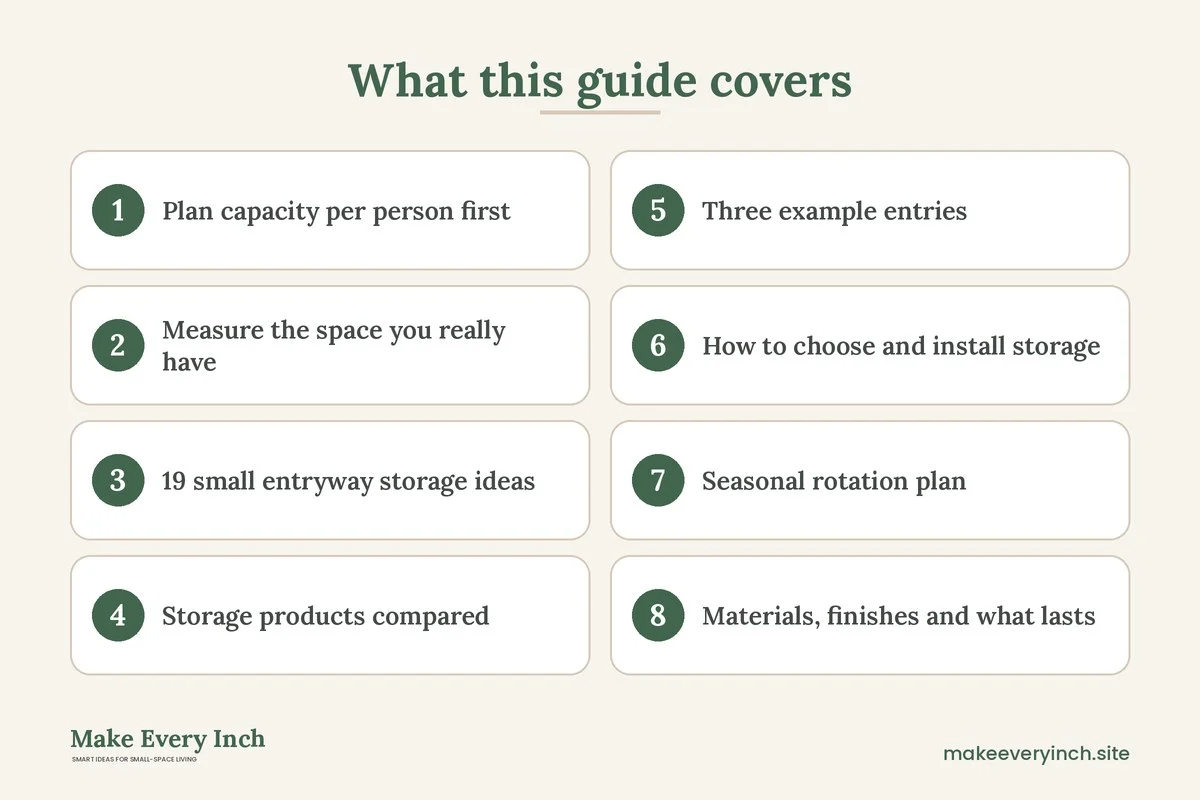
Small entryway storage fails when it is bought by looks and not by numbers. A bench that is 18 inches deep can swallow a narrow entry, a hook rail that is rated for 5 pounds will sag under a wet winter coat, and a shoe cabinet that holds 12 pairs is useless if four people each own 10. This guide is product focused. It covers measuring, capacity planning per person, 19 storage ideas with typical sizes and load ratings, a comparison table, three example entries, a method for choosing, a seasonal rotation plan, budget tiers, mistakes, a checklist and an FAQ. For layout and drop zone habits, see our guide to small entryway organization, and for the wider look of the space, see small entryway ideas.
Plan capacity per person first
Count before you shop. A useful starting rule is to keep at the door only what is used in the current week, and store the rest elsewhere. For each person, plan for one coat or jacket, one bag, one or two pairs of shoes, one hat or scarf set and one key spot. That is two to four hooks per adult, one or two hooks for each child, and two to three pairs of shoes in the cabinet or on a rack. Guests need two hooks and a spot for two pairs of shoes. A household of three adults therefore needs about 8 to 10 hooks, 6 to 9 pairs of shoe space and a small tray for keys, which fits in a surprisingly small footprint.
Convert counts into inches. A coat on a hook takes about 4 to 6 inches of wall width, so six hooks on a rail need 24 to 36 inches. One pair of adult shoes on a rack takes about 4 to 5 inches of width, and a tilt-out cabinet 24 inches wide holds roughly 6 to 8 pairs of daily shoes. A basket for hats and gloves is typically 12 to 14 inches wide.
Measure the space you really have
Measure the wall width, the height to the ceiling, the swing of the door and the depth available before the path is blocked. Keep a clear walking path of at least 30 to 36 inches. Check the baseboard thickness, since a unit that sits flat on the floor may need a notch. Find studs with a stud finder, and mark outlets, thermostats and light switches. Photograph the wall for your lease record. If the entry is a hallway rather than a room, see our guide to narrow hallway ideas for clearance rules.
19 small entryway storage ideas
Wall storage
1. A hook rail with 4 to 6 hooks
A rail 24 to 36 inches long is the most efficient coat storage, and it can sit in under 4 inches of depth. Choose double hooks if you want a bag below a coat. Screw the rail into studs for loads of 20 pounds or more, since wet wool, backpacks and umbrellas add up quickly.
2. Adhesive hooks for light items
Adhesive hooks suit keys, scarves, masks and a dog leash. Check the weight rating on the pack, which is commonly between 1 and 7.5 pounds for standard sizes, and use the rated number as a hard limit, not a guide. Clean the wall with rubbing alcohol, press for the time listed and wait an hour before loading.
3. A narrow wall shelf with hooks
A shelf 6 to 8 inches deep with hooks below holds a tray for keys, a small basket for mail and coats underneath. Look for solid wood or sturdy plywood, with a shelf load rating of at least 15 to 25 pounds. Mount the shelf at about 60 inches, so it clears heads and still reaches.
4. A key and mail wall organizer
An organizer with a small shelf, key hooks and a slot for letters takes 4 to 6 inches of depth and sits at eye level. It stops keys from living in coat pockets. Choose a version with a closed back if the wall is textured.
5. A magnetic key rack
A magnetic strip holds keys, bottle openers and small metal items with no hooks needed. Keep the magnet away from cards with magnetic strips and from any pacemaker or medical device guidance you were given. A 12 inch strip holds about 6 keys.
6. A floating ledge for shoes and baskets
A ledge 8 to 10 inches deep, about 30 inches long, holds shoe pairs side by side, but heavy boots need a rated bracket. Mount it 6 inches off the floor, with a gap below for a boot tray. A lipped ledge keeps shoes from sliding.
Shoe storage
7. A tilt-out shoe cabinet
Tilt-out cabinets are commonly 7 to 12 inches deep, 24 to 40 inches wide and 40 to 50 inches tall. Each flap holds two pairs, so a unit with three flaps holds six pairs, and a unit with four holds eight. Check the weight per flap, often 15 to 25 pounds, and anchor tall units to the wall.
8. A two-tier shoe rack
A rack 10 to 12 inches deep and 24 to 32 inches wide holds 4 to 8 pairs, and fits under a bench or by the door. Choose metal or bamboo with slotted shelves, so wet shoes can drain. Check that the rack does not stick out past the door swing.
9. A shoe bench with cubbies
A bench 14 to 16 inches deep and 36 to 48 inches wide combines seating and 4 to 8 pairs of shoes. Seat height should be about 17 to 19 inches, and the load rating is typically 250 to 400 pounds, so check it if two adults will sit at once. Use a bench only if it leaves a path of 30 inches or more.
10. Stackable shoe shelves or risers
A stackable shelf, 3 to 5 inches high, doubles the number of pairs on a floor strip by lifting one pair over another. Choose ones that interlock and cost under $20 for a pack. Keep them in a cabinet or a closet if the entry is small.
11. An over-door shoe rack
An over-door rack with 12 to 24 pockets or shelves uses the back of a door and no floor. Check the door clearance, since many racks need a gap of about a quarter to half inch. Use it for flat shoes and sandals, and not for heavy boots, which can pull the door out of alignment. For more shoe ideas, see our guide to small shoe storage ideas.
Coat, bag and hat storage
12. An over-door hook rack
An over-door rack of 6 to 8 hooks fits most hollow-core and solid doors, and needs no tools. Keep the total load under the rating, often 10 to 20 pounds, and avoid doors with a tight frame. It is an excellent choice for a rental. See our guide to small coat storage ideas for more.
13. A freestanding coat rack
A rack with a 14 to 18 inch footprint can hold 6 to 10 items, though heavy loads can tip it. Choose a weighted base and hang heavy items low. Place it in a corner where the arms will not catch passing elbows.
14. A wall-mounted coat rail with a shelf
A rail with a top shelf holds hats, gloves and a basket at the same time. Typical depth is 8 to 10 inches, and the shelf should carry at least 20 pounds. Put the highest hook at about 66 inches for adults and the lowest at about 42 inches for children.
15. A fold-down or slim bench
A fold-down seat projects only a couple of inches when closed and gives a place to put on shoes. Check the rated load, usually 150 to 250 pounds, and mount into studs. It suits a hall or a tight entry that cannot take a full bench.
Baskets, bins and hidden storage
16. Baskets for seasonal accessories
A basket 12 by 12 inches holds hats, gloves and scarves for a household of three. Label baskets by person or by item, and choose a basket with a lid or a liner if dust is a problem. Open baskets on a shelf make it easy for children to put things away.
17. A slim console with drawers
A console 8 to 12 inches deep and 30 to 40 inches wide can hold keys, masks, mail and chargers in drawers, and baskets underneath. Look for a height of 30 to 34 inches and check that it clears the door swing. See our guide to hidden storage ideas for more disguised options.
18. A storage ottoman or box
A lidded ottoman, about 15 by 15 inches, stores umbrellas, sports gear or spare shoes and serves as a seat. Check the lid load rating and a slow-close hinge for fingers. Choose a wipeable fabric or faux leather if the entry sees mud.
19. A tray and a bowl for daily items
A small tray, about 8 by 12 inches, and a bowl keep keys, wallet and sunglasses in one place. It is the least expensive item on the list and the most effective for preventing lost keys. Place it where you naturally drop things, at hand height.
Storage products compared
| Product | Typical size | Holds | Load or weight limit | Best for |
|---|---|---|---|---|
| Hook rail | 24 to 36 in long, 3 to 4 in deep | 4 to 6 coats | 20 to 50 lb into studs | Coats and bags |
| Adhesive hook | 1 to 3 in | 1 light item | 1 to 7.5 lb | Keys and scarves |
| Tilt shoe cabinet | 7 to 12 in deep | 6 to 8 pairs | 15 to 25 lb per flap | Shoes |
| Shoe rack | 10 to 12 in deep | 4 to 8 pairs | Varies | Damp shoes |
| Shoe bench | 14 to 16 in deep | 4 to 8 pairs | 250 to 400 lb seat | Wider entries |
| Over-door hooks | Fits 1.75 in doors | 6 to 8 items | 10 to 20 lb | Rentals |
| Over-door shoe rack | 12 to 24 pockets | Flat shoes | Light | Sandals and flats |
| Wall shelf | 6 to 10 in deep | Trays, baskets | 15 to 25 lb | Small items |
| Storage ottoman | About 15 in square | Spare items | 200 to 300 lb seat | Extra seating |

Three example entries
A studio entry with one wall, 30 inches wide
Mount a hook rail at 66 inches with four double hooks, add a 7 inch deep tilt cabinet below if the wall is 30 inches wide, and hang a magnetic key strip beside it. Two adults each get two hooks and three pairs of shoes in the cabinet. Use an over-door rack for the guest coats. The total depth is under 8 inches.
A one bedroom with a 40 inch foyer
Place a 36 inch bench, 14 inches deep, with a basket underneath, and put a 24 inch rail with five hooks above. Add a 6 inch wall shelf with a tray for keys. Each of two adults owns three pairs of shoes at the door, and the rest go to the closet. The path stays at 26 inches only if you skip a coat on the floor, so use a bench with a 12 inch depth if the door swings inward.
A family of four in a two bedroom rental
Use a 48 inch hook rail at two heights, 66 inches for adults and 44 inches for children, with eight hooks. Add a 32 inch wide tilt cabinet for eight pairs, a basket for each child at floor level and an over-door rack for bags. Shoe storage covers daily shoes only, and boots live in a tray. Keep a labeled bin for each season.
How to choose and install storage
Step 1. Count what you use weekly
Write down each person’s daily coat, bag and shoes. Add guests. This number sets the size of everything else.
Step 2. Set a depth limit
Subtract the path width from the entry width. For example, a 44 inch entry minus a 32 inch path leaves 12 inches for storage. Choose items at or under that depth.
Step 3. Check weights
Add the weight of what you will store, and divide by the number of hooks or shelves. A wet coat can weigh 3 to 5 pounds, and a loaded backpack can reach 15 pounds. Keep the total under 75 percent of the rated limit as a margin.
Step 4. Find studs or use the right anchor
Find studs for hook rails and shelves. If there is no stud, choose a toggle or a drywall anchor rated above the load. Do not load a plastic anchor beyond its rating. In a rental, check the lease and use adhesive or over-door options where holes are banned.
Step 5. Install, level and test
Mark with a pencil and a level, drill pilot holes, mount, and hang a loaded bag for a few minutes to test. Anchor any unit taller than 30 inches to a stud with a safety strap, especially with children in the home.
Step 6. Label and review
Label baskets and review the setup after a month. If something is always on the floor, add storage for it or remove it.
Seasonal rotation plan
A small entry cannot hold every season, so rotate. In autumn, move sandals and sun hats to a labeled box under a bed, and bring out boots, gloves and scarves. In spring, reverse the process. Each swap takes about 20 minutes. Keep only the current season at the door, and one spare layer per person. Launder or wipe items before storing them, and tuck cedar blocks or silica packets in boxes. Check hooks and shelves after each swap to see if loads have crept up. If you live in a place with four seasons and rainy periods, keep an umbrella and a boot tray out all year. A calendar reminder on the first day of each season keeps the habit going.
Materials, finishes and what lasts
Solid wood and plywood hold screws and weight better than thin particleboard, which can swell when wet. Powder-coated metal handles damp boots and wipes clean, while untreated steel can rust under wet gear. Bamboo drains well but may split if overloaded. Plastic is light and cheap, and it handles water, though thin plastic can crack in cold. Choose finishes that wipe clean, such as satin paint or sealed wood, and avoid fabrics near the floor unless they are washable. Check for formaldehyde-free or low-emission labels if the entry is small and poorly ventilated.
Storage for renters
Start with the lease and photograph the wall. Over-door racks, freestanding cabinets, adhesive hooks, benches and tension poles leave no marks. If screws are allowed, use a stud, keep to a single row of holes and save the old hardware. Fill holes with spackle at move-out, when the lease allows. For more options, see our guide to no drill storage ideas for renters. If your apartment has no real entry, see no entryway apartment ideas.
Budget guide
Under $50
Adhesive hooks, a tray, a basket and an over-door hook rack.
About $150
A hook rail, a two-tier shoe rack and a wall shelf with hooks.
$400 and up
A tilt-out shoe cabinet, a storage bench, a console with drawers and a custom rail with a shelf.
Mistakes to avoid
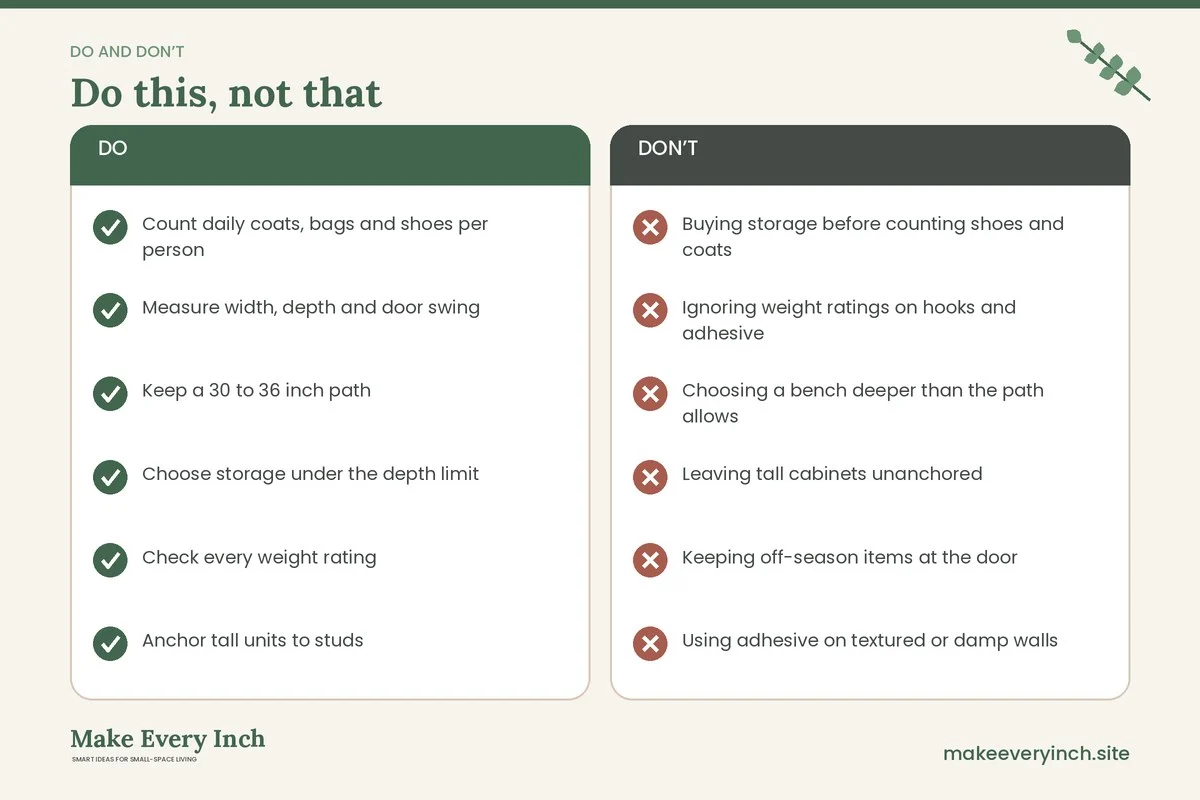
- Buying storage before counting shoes and coats
- Ignoring weight ratings on hooks and adhesive
- Choosing a bench deeper than the path allows
- Leaving tall cabinets unanchored
- Keeping off-season items at the door
- Using adhesive on textured or damp walls
- Mounting hooks too high for children
- Putting leather or fabric next to a wet boot tray
- Forgetting a place for keys
Small entryway storage checklist
- Count daily coats, bags and shoes per person
- Measure width, depth and door swing
- Keep a 30 to 36 inch path
- Choose storage under the depth limit
- Check every weight rating
- Anchor tall units to studs
- Add a tray for keys
- Add a basket for hats and gloves
- Plan a seasonal swap
- Photograph the entry before and after
FAQ
How much shoe storage do I need in a small entry?
Plan for two to three pairs per person at the door, and store the rest in a closet or under a bed. A cabinet with six to eight pairs of space suits two adults.
How deep should an entryway shoe cabinet be?
A cabinet 7 to 12 inches deep fits most adult shoes when they are tilted or angled. Check the size of your largest pair, and add an inch for boots.
How many hooks do I need?
Plan on two to four hooks per adult and one or two per child, with two for guests. A rail of six hooks suits two adults and a child.
How much weight can an adhesive hook hold?
It depends on the product, and many standard hooks are rated from about 1 to 7.5 pounds. Read the pack and stay below the limit, particularly with wet coats.
Do I need a bench in a small entryway?
No. A bench helps when the entry is at least 44 to 48 inches wide, but a shelf, a fold-down seat or a stool can serve the same purpose in less space.
What is the best storage for a rental entryway?
Over-door hooks, a freestanding shoe cabinet, adhesive hooks and a tray are the least risky. Check the lease before drilling.
How do I keep boots from making a mess?
Use a boot tray with a raised edge, about 1 inch high, and a rubber mat. Keep a rag nearby, and let boots dry before they go into a cabinet.
How often should I rotate entryway items?
Rotate at the change of each season, or four times a year. Keep only the current season’s coats, shoes and accessories at the door.
Keep going: Keep going with our small entryway ideas, apartment entryway decorating ideas and small shoe storage ideas.
Save this guide for later
Pin the ideas you like to Pinterest so you can come back to them when you plan your space.