19 Small Entryway Organization Ideas for a Clutter-Free Welcome
Quick answer: Small entryway organization works best with a drop zone: wall hooks for coats and bags, a narrow shelf or bench for shoes, a tray for keys and a basket for mail and outgoing items. Use vertical space, keep only current-season items, and add a mirror and a light so the entry feels welcoming.
Small entryway organization matters because the entry is where the day starts and ends. A cluttered entry means lost keys, a pile of shoes and a feeling of stress the moment you walk in. In many apartments the entry is just a few feet of hall, with no closet and no room for furniture. This guide shows how to plan a drop zone, shares 19 ideas for tiny entries, compares options in a table, covers renters, families and pets, and gives a weekly routine and a checklist. For storage ideas for the rest of the home, see small space organization ideas.
Plan your drop zone
A drop zone is a place where things land on arrival and are picked up on the way out. It has four parts: a place to hang coats and bags, a place for shoes, a surface for keys and wallet and a place for mail. If you have all four within arm’s reach of the door, your entry will work.
Measure the wall by the door, the floor space and the height of the ceiling. Note how the door opens and whether it blocks the wall. Count how many people use the entry and how many coats, bags and shoes each one needs daily. Then choose a system sized for the daily items and store the rest elsewhere.
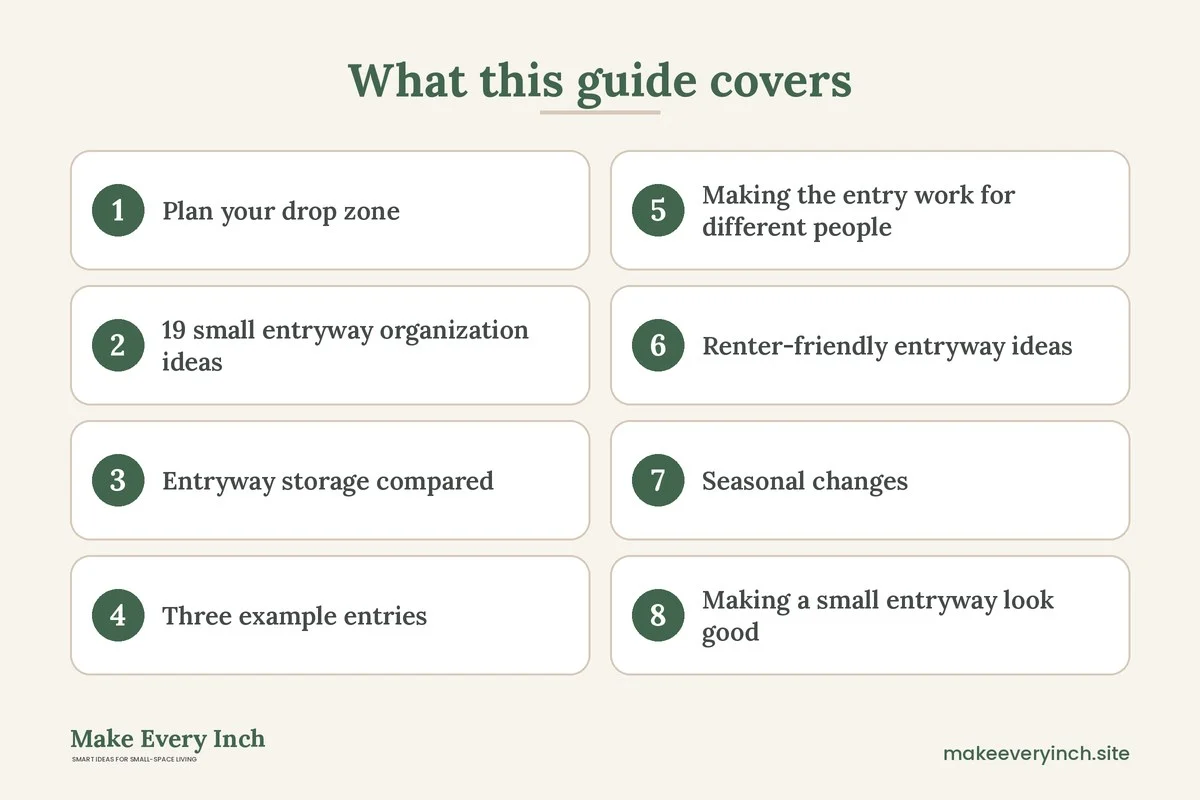
19 small entryway organization ideas
Hanging and wall storage
1. Use a row of hooks
A row of hooks at 60 inches, with a second row at 40 inches for children, holds coats and bags. Choose sturdy hooks anchored into studs.
2. Use a wall-mounted rack with a shelf
A rack with a shelf above holds hats, baskets and keys. It takes no floor space.
3. Hang a narrow shelf for keys and mail
A shelf 4 to 6 inches deep fits above the hooks or beside the door. Add a lip so items do not slide.
4. Use a wall-mounted key holder
A small hook strip near the door keeps keys visible and off the counter.
5. Use a wall pocket for mail
A wall pocket holds the day’s mail, so it does not spread over the table.
6. Hang a mirror
A mirror lets you check your look and makes the entry feel larger. Choose one that you can mount with adhesive strips if you rent.
Shoe storage
7. Use a narrow shoe rack
A rack of 8 to 10 inches deep holds four to six pairs. Place a boot tray beside it.
8. Use a bench with shoe storage
A bench provides a seat and holds shoes in cubbies or baskets. Choose one that is 12 inches deep or less.
9. Use a wall-mounted shoe shelf
Angled shoe shelves hold shoes on the wall, and free the floor.
10. Use an over-the-door shoe organizer
Clear pockets hold shoes, scarves and umbrellas inside a closet or on a door.
11. Keep only the current pairs near the door
Store off-season shoes in bins under the bed or in a closet.
Surfaces and containers
12. Use a narrow console
A console 8 to 10 inches deep holds a tray, a lamp and baskets. Choose one with a shelf below.
13. Use a tray for keys and wallet
A small tray keeps essentials together, and you can lift it to wipe the surface.
14. Use baskets for hats, gloves and scarves
Baskets on a shelf or under a bench keep small items together.
15. Use a basket for outgoing items
Put returns, library books and parcels in a basket so you do not forget them.
16. Use a charging station
A small tray with a charging cable by the door ensures your phone is charged and in one place.
Habits and finishing touches
17. Add a calendar or a whiteboard
A small board keeps the family on schedule and shows what to bring.
18. Add a light
A lamp, a plug-in sconce or a motion light makes the entry welcoming and helps you find things.
19. Add a doormat and a small plant
A mat catches dirt, and a plant adds life.
Entryway storage compared
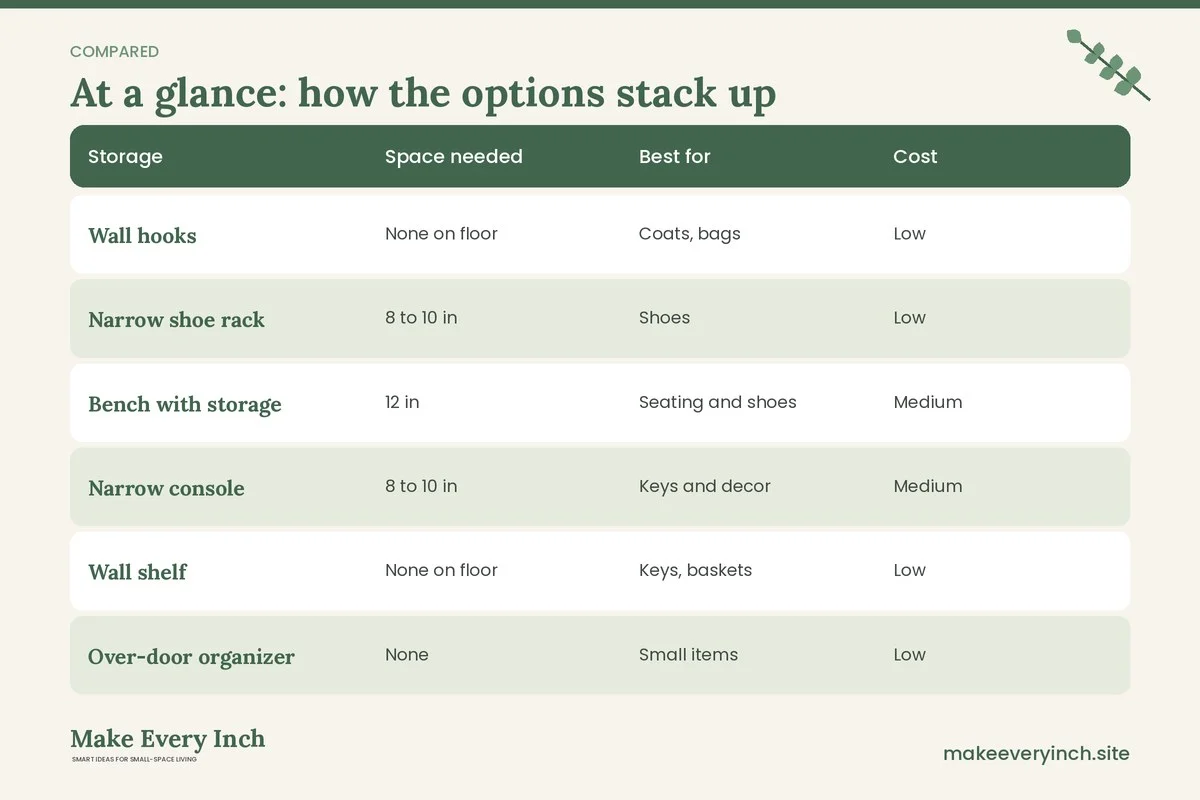
| Storage | Space needed | Best for | Cost | Drilling |
|---|---|---|---|---|
| Wall hooks | None on floor | Coats, bags | Low | Yes or adhesive |
| Narrow shoe rack | 8 to 10 in | Shoes | Low | No |
| Bench with storage | 12 in | Seating and shoes | Medium | No |
| Narrow console | 8 to 10 in | Keys and decor | Medium | No |
| Wall shelf | None on floor | Keys, baskets | Low | Yes or adhesive |
| Over-door organizer | None | Small items | Low | No |
| Mirror | None | Looks, space | Low to medium | Strips |
Three example entries
An apartment entry with no closet
Add a wall-mounted rack with hooks, a narrow shoe rack and a small tray on a shelf. Hang a mirror, and use a basket for mail. Keep the floor clear except for the shoes and a mat.
A narrow hall entry
Use a thin console on one wall with a mirror above, hooks on the opposite wall at a high level and a slim shoe cabinet. Keep a runner on the floor.
A family entry with children
Use a low row of hooks at kid height, a bench with a basket for each child, a wall calendar and a bin for sports gear. Put a shelf above for keys and sunglasses, and a rotating basket for the season.
Making the entry work for different people
Singles and couples
A minimalist system works: hooks for coats and bags, a tray for keys and a small shoe rack. A mirror and a plant make it feel welcoming.
Families
Give each person a hook, a basket and a cubby. Teach the routine of hanging up the bag, putting shoes on the rack and putting papers in a basket. Use labels with pictures for young children.
Pet owners
Add a small basket for leashes and waste bags, a towel hook for muddy paws and a washable mat. Keep a wipe station with a few cloths, and store pet items out of reach if needed.
Roommates
Give each person a hook and a shelf, labelled with names. Agree on a small shared space for keys, mail and delivery packages. Check the basket weekly for lost items.
Renter-friendly entryway ideas
If you rent, use freestanding racks, tension rods, over-door hooks and adhesive hooks within weight limits. Use a bench or a console that stands on the floor, and lean a mirror against the wall. Avoid drilling unless the lease allows it, and keep the original hardware if you replace anything. Photograph the entry at move-in and move-out. See organization ideas for renters for more ideas, and no-drill storage ideas for renters for a deeper guide.
Seasonal changes
In winter, add a boot tray, a basket for gloves and hats and a hook for scarves. In spring and fall, add an umbrella stand and a rack for light jackets. In summer, swap the boot tray for sandals, and add a basket for sunscreen and sunglasses. Store off-season items in bins elsewhere, so the entry holds only what you need now. A short seasonal swap takes ten minutes and keeps the space calm.
Making a small entryway look good
A small entry makes the first impression of your home, so a few details matter. Choose one color family for the baskets, hooks and mat. Hang a mirror and a piece of art at eye level. Use a lamp or a wall light to create a warm glow. Add a small plant or a bowl for decor, and keep surfaces nearly bare. Choose a doormat that matches the style of the home, and shake it out weekly. When the entry looks good, you are more likely to keep it tidy.
Common entryway problems and fixes
“Shoes pile up”
Limit the number of pairs near the door, add a rack or a bench and set a rule for who puts them where.
“Coats pile on a chair”
Add more hooks, or replace a bulky coat rack with a wall rack that holds more in less space.
“Mail piles up”
Use a wall pocket or a basket, sort mail daily over a bin and recycle junk at once.
“I keep losing keys”
Use a hook or a tray right by the door and make it a habit to drop them there every time.
“The entry feels dark”
Add a plug-in light, a mirror and light colors on the wall or the mat.
A five-minute weekly reset
Once a week, clear the shoe rack and put away off-season pairs, empty the mail basket, wipe the surfaces, shake out the mat and check the hooks. Return stray items to their rooms and make a note of anything to buy or repair. A quick weekly reset keeps the entry from filling up, and it takes less time than a big clean-up.
Entry layouts by floor plan
The door opens straight into the living room
There is no entry, so create one with furniture. Place a narrow console or a bench perpendicular to the wall beside the door, and hang hooks on the wall. A tall bookcase or a folding screen can mark the zone without blocking light. Use a rug to define the space, and keep the items nearest the door limited to daily use.
The entry is a hallway
A hallway entry is long and narrow, so keep one side clear. Put hooks and a shelf on one wall, and a slim shoe cabinet on the other if the width allows 36 inches of walkway. Use a runner, and a mirror to bounce light down the hall. Use wall lights instead of a table lamp.
The entry has a small closet
Make the closet work harder with a double rod, a shelf and an over-door organizer. Use baskets for hats and gloves, a bin for shoes and a hook for the day’s bag. Keep guest coats on the rod, and move seldom-used items to a bedroom closet.
The entry is a corner by the kitchen
Use the wall above a counter or a cabinet for hooks and a shelf. A narrow cart can hold shoes and bags, and rolls away when needed. Keep food and keys separate to avoid clutter on the counter.
Smart extras for a small entry
A wall-mounted fold-down bench
A bench that folds flat against the wall gives you a place to sit while you put on shoes, then disappears. It suits tiny entries with no space for furniture.
A hidden shoe cabinet
A tipping shoe cabinet looks like a thin dresser and holds up to 15 pairs in a depth of 6 to 8 inches. It is a good choice for hallway entries.
A mirror with hooks
A mirror with a row of hooks and a shelf combines three functions in one footprint.
A ceiling-mounted rack
In a high-ceilinged entry, a rack hung from the ceiling can hold bikes, helmets and bags. Check the lease before drilling.
An entry rug with a boot tray
A rug that catches dirt and a tray for wet boots protect the floor and make cleaning easy.
Keeping the entry clean
Dirt, water and salt enter through the door. Use a doormat outside and a rug inside, and wipe shoes before coming in. Keep a small brush or a hand vacuum nearby, and wipe the floor with a damp mop twice a week. A boot tray catches wet shoes and can be washed in the tub. Clean the mirror monthly. If you use fabric baskets, wash or vacuum them each season. Clean entries invite everyone to keep them that way.
Security and safety in the entry
Keep a spare key somewhere secure, not under the mat. Use a hook inside the door for keys at night, so everyone can find them in an emergency. Make sure nothing blocks the path to the door, and keep a small flashlight in a drawer or on a shelf. If you receive packages, ask neighbors or a locker to hold them, or place a small bin for deliveries just inside the door. In an apartment building, avoid leaving personal items in the corridor, since fire codes often ban them.
Entryway storage for sports and hobbies
Active households need space for bikes, scooters, yoga mats and gym bags. Use wall hooks for helmets and bags, a vertical rack for a bike and a basket for balls and gloves. Keep a bin for muddy gear and a towel for wet items. Rotate gear by season, and store the rest in a closet or the garage. A system that makes it easy to grab and return gear helps you use it more.
One more tip: review your system with fresh eyes
After a month, look at the system as a guest would. Notice what is hard to find, what is hard to put back and what has crept onto a surface. Ask the people who share the space what slows them down. Change one thing at a time, such as a label, a bin size or a hook height, and give it a week before changing another. Small adjustments based on real use make a system last far longer than a perfect plan made on paper.
Budget guide
Under $30
A row of hooks, a tray, a basket and a mat. Use what you have and edit the rest.
About $100
Add a narrow shoe rack, a wall shelf, a mirror and a plug-in light.
$300 and up
Add a bench with storage, a console and a wall-mounted cabinet.
Mistakes to avoid
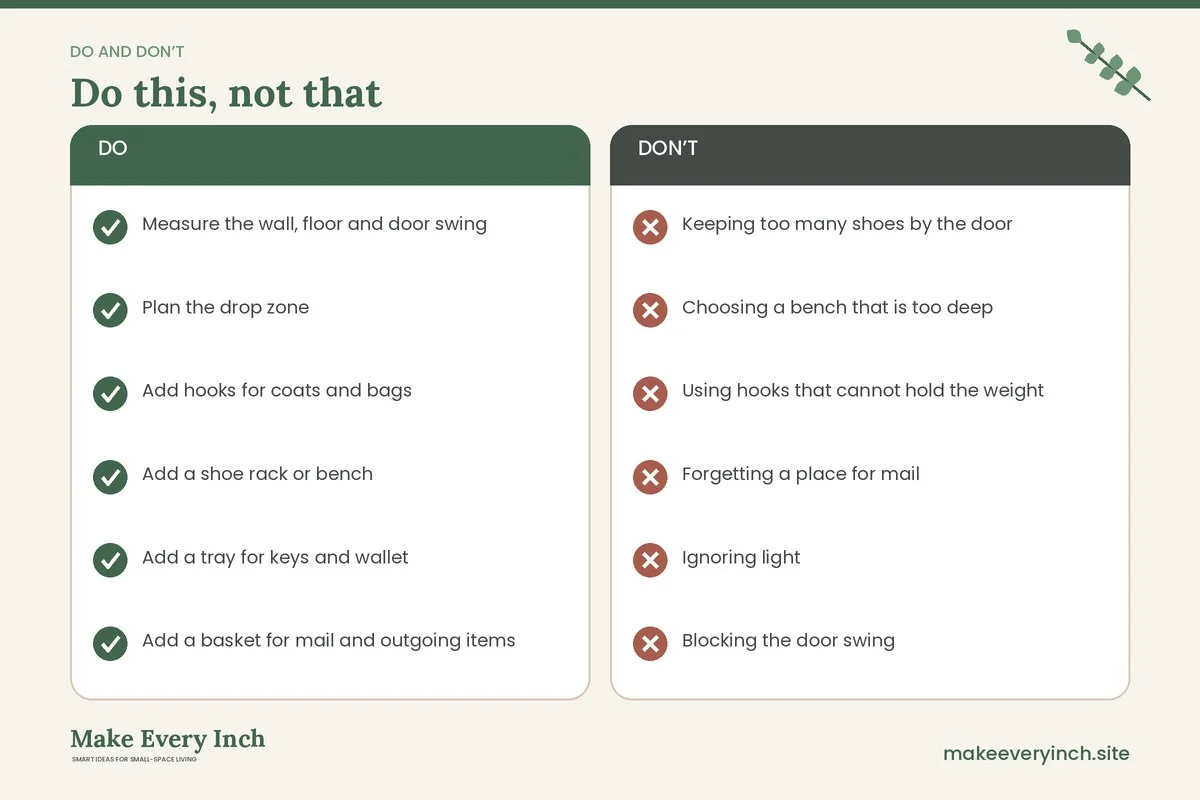
- Keeping too many shoes by the door
- Choosing a bench that is too deep
- Using hooks that cannot hold the weight
- Forgetting a place for mail
- Ignoring light
- Blocking the door swing
- Leaving seasonal items out all year
Small entryway organization checklist
- Measure the wall, floor and door swing
- Plan the drop zone
- Add hooks for coats and bags
- Add a shoe rack or bench
- Add a tray for keys and wallet
- Add a basket for mail and outgoing items
- Hang a mirror and add light
- Keep only current-season items
- Label for each person
- Reset weekly
FAQ
How do I organize a small entryway?
Make a drop zone with hooks, a shoe rack, a tray for keys and a basket for mail.
What do I do with no entry closet?
Use a wall rack, an over-door hook and a narrow shoe rack, and store off-season items elsewhere.
How do I organize shoes in a small entry?
Use a narrow rack, a bench or a wall shelf, and limit pairs to those in use.
How can I make a small entry feel bigger?
Use a mirror, light colors, good lighting and a clear floor.
Can renters organize an entry without drilling?
Yes, with freestanding racks, over-door hooks and adhesive hooks.
How deep should an entry console be?
Eight to ten inches for a small space.
How do I keep the entry tidy with kids?
Use low hooks, labelled baskets and a simple routine.
What should I keep near the door?
Keys, a wallet tray, current-season coats and shoes and a basket for outgoing items.
Keep going: Explore our small space organization ideas, small closet organization ideas and organization ideas for renters.
Save this guide for later
Pin the ideas you like to Pinterest so you can come back to them when you plan your space.