21 Thrifted Apartment Decor Ideas for Small Spaces
Quick answer: The best thrifted apartment decor ideas are lamps, frames, small wood furniture, baskets, ceramics and mirrors, because they are cheap, durable and easy to clean. Shop with a measured list, inspect every piece for damage and odors, skip anything with safety risks such as cribs, old helmets and frayed cords, and edit your finds down to a few repeated colors and materials.
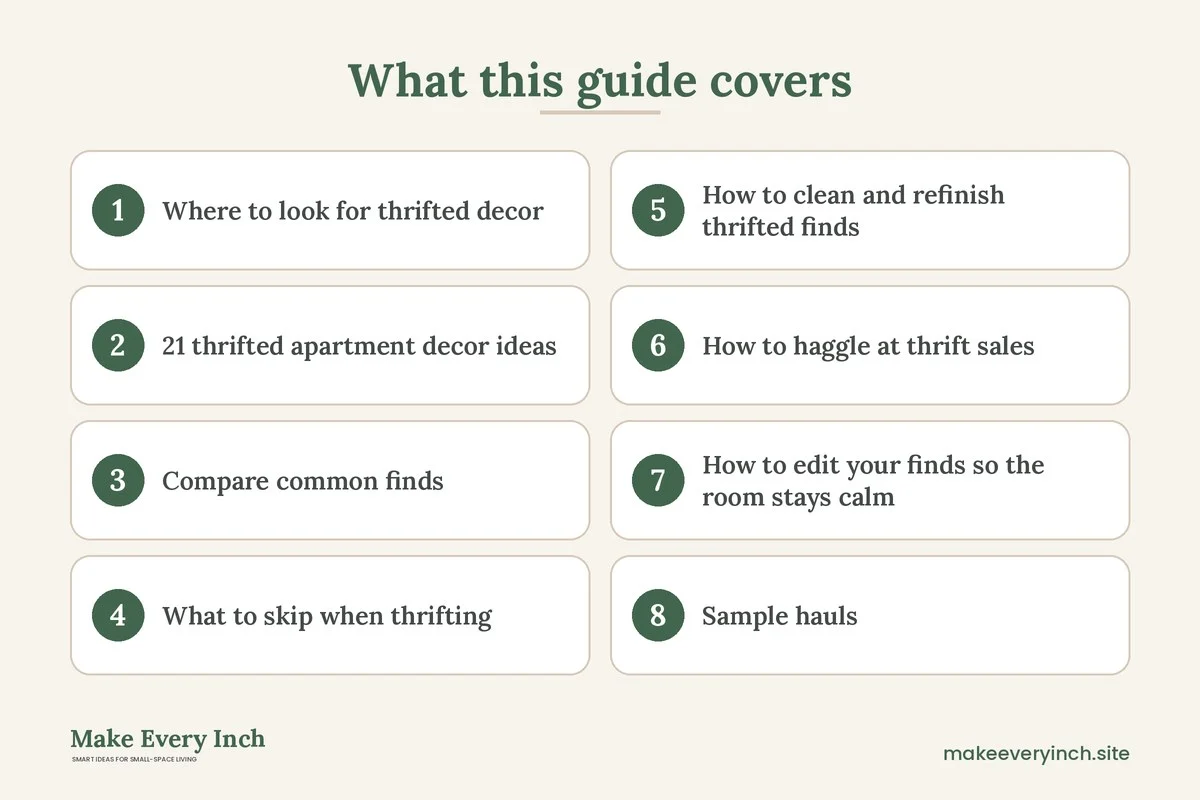
Thrifted apartment decor ideas work especially well in small homes, because a small room needs only a handful of good pieces, not a houseful of new ones. A single solid wood side table or a pair of mismatched lamps costs a fraction of retail and often outlasts it. The catch is that thrifting rewards a plan. Without one, a small apartment fills with bargains that do not fit. This guide covers where to look, 21 things to buy, what to leave on the shelf for safety reasons, how to clean and refinish finds, how to haggle, how to edit a haul so the room stays calm, and three sample hauls with hedged price ranges. If you are working with a tight total, our guide to a small apartment makeover on a budget pairs well with this one.
Where to look for thrifted decor
Each source has a different strength, so it helps to know what to expect before you go.
Thrift shops and charity stores
Big donation shops have constant turnover, so a weekly visit beats a single long trip. Check the housewares aisle for lamps, ceramics and baskets, then the furniture floor for small tables and chairs. Many stores run a color-tag sale each week, which can lower the price of one tag color by a meaningful amount, so ask which color is on sale.
Estate sales
Estate sales are where solid wood furniture, framed art and good glassware show up. Prices on the first day are usually firmer, and the second or final day often brings markdowns. Look at the online listings the night before, because photos let you plan a route and measure your space first.
Online marketplaces
Local resale apps and classified sites let you search for exact measurements, such as a narrow console or a 24 inch wide dresser. Search for common misspellings and plain descriptions like “wood table” to find listings others miss. Meet in a public place for small items, and bring a helper for anything large.
Curb alerts and free groups
Neighborhood free groups and curb alerts surface free furniture, especially around move-out dates at the end of the month and the end of the academic year. Move quickly, since good pieces vanish within hours. Be more cautious with anything soft or upholstered, as explained in the skip list below.
Yard sales and flea markets
Early arrival gets you the best selection, and late arrival gets you the best deals. Bring cash in small bills, a tape measure and a flashlight, since dim tables hide cracks and stains.
21 thrifted apartment decor ideas
Lighting
1. A mismatched lamp pair
Two lamps with different bases but similar shade tones feel collected, not matched. Put one on a side table and one on a dresser or shelf to spread light at eye level. Check the cord and socket before buying.
2. A ceramic lamp with a new shade
Thrift stores often sell good bases with dated shades. A new linen or white drum shade, often in the $10 to $25 range, changes the look entirely. Measure the base so the shade is about two thirds its height.
3. A brass or wood floor lamp
A slim floor lamp takes up almost no floor space and adds height in a corner. Wipe the metal with a mild cleaner, and test it with the bulb you plan to use. A warm bulb makes older finishes look richer.
Walls and mirrors
4. Frames in one finish
Buy several mismatched frames and paint or spray them all black, brass or white. The shared finish makes odd sizes look planned. Replace the art with your own prints, postcards or pages from an old calendar.
5. A big thrifted mirror
A large mirror across from a window doubles the light and makes a small room feel wider. Look for solid frames, and check that the backing is intact and the glass is not peeling at the edges. Lean it on the floor if the lease forbids nails.
6. A gallery of small art
Thrift stores sell small oil paintings, prints and botanical plates for a few dollars each. Group three to five in a tight cluster, since many small pieces spread across a wall look messy. Keep the colors in the same family.
7. Woven wall pieces
Baskets, trays and plates hung together add texture. Use adhesive hooks rated for the weight if you rent, and test a hidden spot first. See our renter friendly wall decor ideas for more no-nail methods.
Furniture
8. A solid wood side table
Small solid wood tables are a thrift staple. Wobble it, check each leg joint and look underneath for cracks. A table with a drawer gives you hidden storage for remotes and chargers.
9. A narrow console or dresser
A slim piece behind a sofa or in an entry holds keys, lamps and a tray. Pull out every drawer, check the slides and make sure it opens fully without sticking or tilting. Pieces with broken or missing slides can be hard to fix cheaply.
10. A bench or stool
A small bench works as an entry seat, a bedside perch or extra seating. Test it by sitting on it, and look for loose joints. A wooden stool can also serve as a plant stand or a nightstand.
11. A caned or wooden chair
A single accent chair gives a corner a purpose. Check cane for sagging or breaks, and check wood chairs for wobbles. Skip upholstered chairs unless you can inspect the seams closely.
12. A bookshelf or open shelf
A narrow open shelf stores books and shows off ceramics. Check that the shelves are level and not bowed under the weight of old books. Anchor tall units to the wall if the lease allows it, or use furniture straps.
Baskets, ceramics and objects
13. Baskets for hidden storage
Woven baskets hold blankets, toys, shoes and cables. Smell them first, since mildew is hard to remove, and check that the weave is intact. Line a basket with fabric if it snags knits.
14. Ceramic vases and bowls
A few vases in matching tones make a shelf look styled. Check for hairline cracks by tapping gently, and for chips on the rim. Use a vase for dried stems, or a bowl for keys and fruit.
15. Planters and pots
Thrifted pots cost far less than new ones. Add a saucer if the pot has a drainage hole, or use it as a cachepot with a plastic nursery pot inside.
16. Trays and cutting boards
Wooden trays corral objects on a coffee table or a dresser. Cutting boards lean against a kitchen backsplash as art, and double as serving boards. Sand and oil old wood to refresh it.
17. Glass jars and canisters
Clear jars store pantry goods and bathroom supplies, and make a tidy counter. Run them through a hot wash and let them dry fully.
Textiles and finishing touches
18. Linen and cotton throws
Natural fiber blankets and tablecloths are often well made and washable. Wash on a hot cycle when the label allows, and skip anything with a strong smell that does not go away.
19. Curtain panels and tablecloths as fabric
A large vintage tablecloth or a pair of long panels can cover a window or a blank wall. Hem them with fabric tape, and iron on low heat.
20. A rug runner
A runner under a console or in a hallway adds pattern. Roll it up and sniff it, and shake out dust outside. Skip any rug with a musty smell or dark stains.
21. A thrifted artwork as the anchor
Choose one larger piece that sets the palette for the room. Build everything else around it, and keep the rest of your finds quiet. This is the single best way to make a thrifted room look planned.
Compare common finds
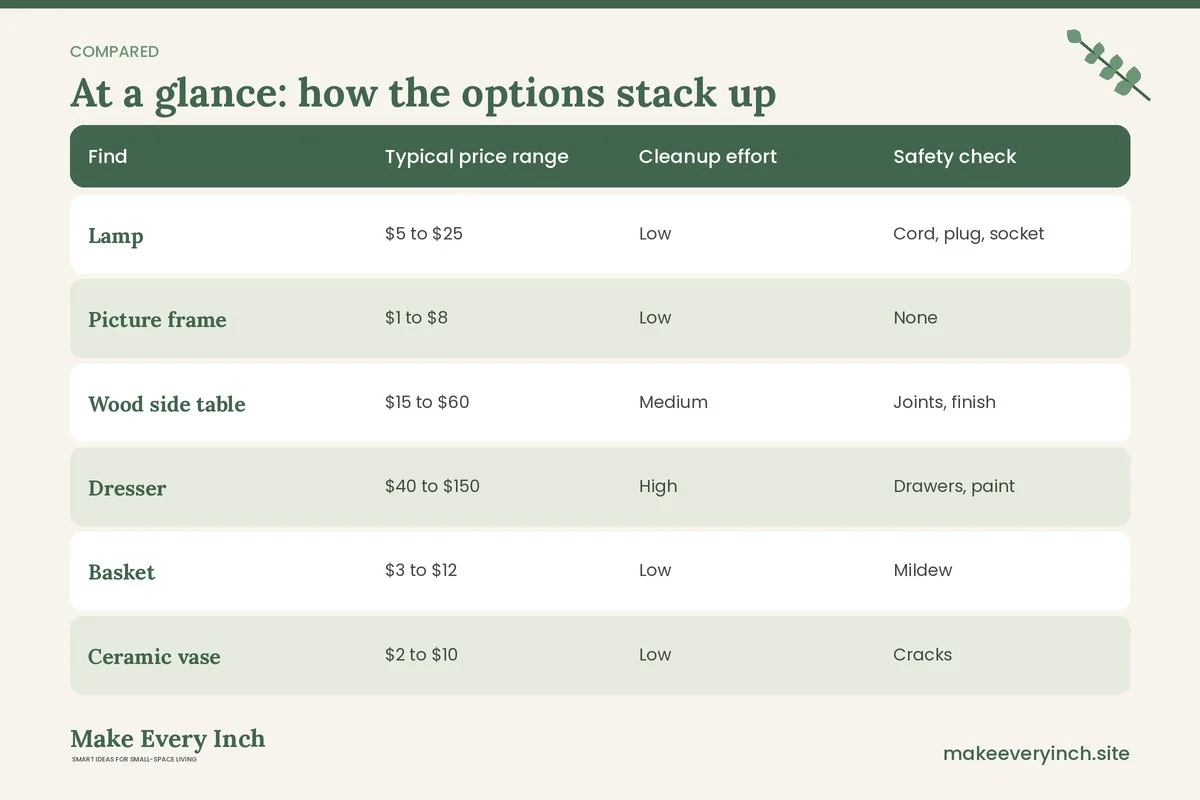
| Find | Typical price range | Cleanup effort | Safety check | Best use |
|---|---|---|---|---|
| Lamp | $5 to $25 | Low | Cord, plug, socket | Any room |
| Picture frame | $1 to $8 | Low | None | Gallery wall |
| Wood side table | $15 to $60 | Medium | Joints, finish | Living room |
| Dresser | $40 to $150 | High | Drawers, paint | Bedroom, entry |
| Basket | $3 to $12 | Low | Mildew | Storage |
| Ceramic vase | $2 to $10 | Low | Cracks | Shelf |
| Mirror | $10 to $50 | Medium | Backing, glass | Any room |
| Upholstered chair | $20 to $100 | High | Pests, odor | Only if inspected |
What to skip when thrifting
Some things are cheap for a reason. A small apartment has little room for a mistake, since you cannot easily isolate a problem piece. Walk away from these.
Upholstered items you cannot inspect
Sofas, mattresses and chairs from the curb can carry bed bugs or other pests, and the cost of removing an infestation far exceeds any savings. If you buy an upholstered piece from a shop, flip it over, check the seams and the underside with a flashlight and look for dark spots or shed skins. Skip anything that has been outside, and anything with a strong smell.
Cribs and baby gear
Safety rules for cribs and other baby products have changed over the years, and older secondhand versions may not meet current standards, or may have been recalled. Check recalls through the Consumer Product Safety Commission, and do not buy secondhand cribs for sleeping use.
Old helmets
A helmet that has taken an impact may have damage you cannot see, and the foam breaks down with age. Buy helmets new.
Furniture with failing drawer slides
A drawer that sticks, drops or tilts is annoying at best and dangerous in a tall chest at worst. Test each drawer fully, and walk away if the slides are bent, broken or missing parts.
Painted furniture that may contain lead
Paint made before 1978 in the US may contain lead. Do not sand or strip an old painted piece without testing it first, and use a lead test kit if you plan to refinish it. A sealed, intact finish is safer than dust from sanding.
Lamps and appliances with electrical problems
Never buy anything with a frayed cord, a cracked plug, a loose socket or a missing safety listing. A replacement cord and plug kit is cheap, and you can rewire a basic lamp yourself, but an unfamiliar appliance is not worth the risk. If you are not comfortable, leave it.
Pressure cookers and cooking gear with worn seals
Pressure cookers depend on a sound gasket and a working lid lock. Rubber gaskets age, and a used unit may have a missing part or a bad seal. Skip them secondhand, along with any appliance without a manual or a clear safety record.
How to clean and refinish thrifted finds
Wash anything washable the day you bring it home. Wipe wood with a mild dish soap solution on a damp cloth, then dry it right away. Use baking soda in a bowl or on a cloth to lift odor from baskets and drawers, and let pieces air out for a day or two in a ventilated area.
For small refinishing jobs, start with the least work. Rub a worn wood top with a wax or oil made for furniture, which brings back color without stripping. Fix light scratches with a matching marker or a walnut. To paint, clean thoroughly, scuff lightly with fine sandpaper, apply a primer made for the surface and finish with two thin coats. Swap dated hardware for new knobs, which often changes a piece more than paint does. Always do chemical work near an open window, wear gloves and follow the product label.
How to haggle at thrift sales
Thrift shops with fixed prices rarely negotiate, but estate sales, yard sales and marketplaces often do. Be polite and specific. Point out a real flaw, such as a scratch, and offer a clear lower number instead of asking for a discount. Bundle several items and ask for one price. Show up late in the day or on the last day for markdowns. Keep cash on hand, and accept a fair counteroffer. If the seller refuses, leave your number and walk away, since they may call back.
How to edit your finds so the room stays calm
A haul can turn a calm room into a cluttered one. Use a few rules to keep control.
- Choose two or three main colors and one or two materials, such as wood and brass, and reject anything outside them.
- Repeat shapes. If you buy round mirrors, favor round trays and round vases.
- Limit surfaces. Leave about a third of each shelf and tabletop empty.
- Buy one large piece for each room, and keep the smaller items quiet.
- Set a one in, one out rule, so a new find replaces an old one.
- Photograph the room before you shop, and use the picture as a guide.
For a deeper approach to keeping small rooms calm, see our guide to small apartment decluttering ideas.
Sample hauls
Prices below are hedged ranges that vary by city and store.
A living room haul, about $90 to $160
A pair of mismatched lamps, new shades, a solid wood side table, a large mirror, a basket for blankets and three small framed prints. Paint the frames the same color. Total in a typical thrift market might land in the range above, though estate sales can cost more for good wood.
A bedroom haul, about $60 to $120
A small dresser used as a nightstand, a table lamp, a linen throw, two frames and a woven basket for the closet shelf. Wash the textiles and check the drawer slides before you buy. Add a plant in a thrifted pot.
An entry haul, about $40 to $90
A narrow bench, a tray for keys, a wall mirror and a set of baskets for shoes. Use a rug runner if the floor allows. This is a high-impact corner, so spend your time editing.
A shopping day plan
Before you go
Measure the spaces you want to fill, and write the measurements in your phone. Take a photo of the room, a tape measure, a flashlight, a small bag of cleaning wipes and a few blankets for the car.
At the store
Walk the whole store once before buying. Check each piece for damage and smell. Look under tables, inside drawers and at the back of mirrors. Put things back if they do not fit your list.
At home
Clean, test and place each piece before you decide to keep it. Return or resell anything that does not work, and give the room a few days before adding more.
Budget guide
Under $50
A lamp or two, a set of frames and a basket. Spend the rest on a new lamp shade or paint.
About $150
A side table, a mirror, a lamp pair and a few ceramics and textiles.
$300 and up
A dresser or a bookshelf, a larger rug and one statement art piece. At this level, compare thrifting with new items, as in our IKEA small space ideas, and use both.
Mistakes to avoid
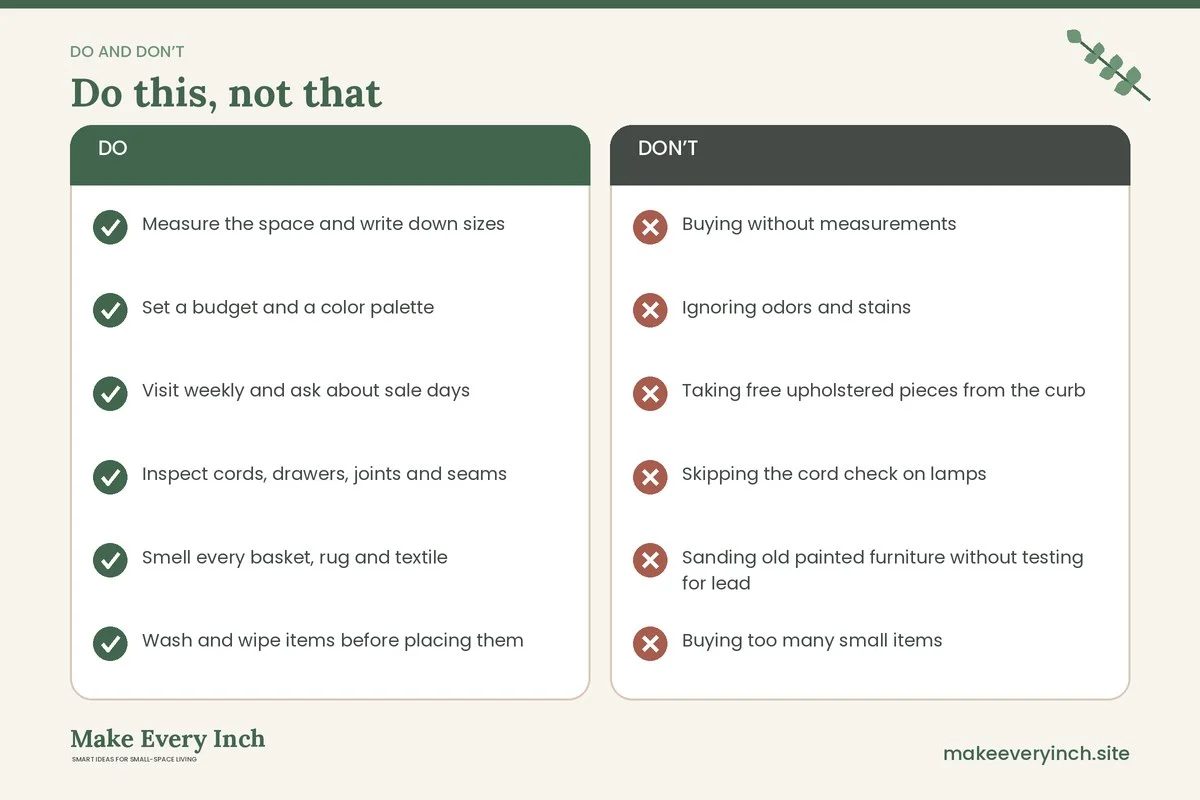
- Buying without measurements
- Ignoring odors and stains
- Taking free upholstered pieces from the curb
- Skipping the cord check on lamps
- Sanding old painted furniture without testing for lead
- Buying too many small items
- Forgetting the cost of paint, shades and hardware
- Overpaying for items that new stores sell for less
Thrifted decor checklist
- Measure the space and write down sizes
- Set a budget and a color palette
- Visit weekly and ask about sale days
- Inspect cords, drawers, joints and seams
- Smell every basket, rug and textile
- Wash and wipe items before placing them
- Skip cribs, helmets and worn gaskets
- Test old paint for lead before refinishing
- Edit the haul and return extras
- Photograph the finished room
FAQ
What are the best things to thrift for an apartment?
Lamps, frames, small wood tables, baskets, ceramics and mirrors give the most value for the money.
What should I never buy secondhand?
Avoid cribs, helmets, mattresses, items with frayed cords and pressure cookers with worn gaskets.
How do I know if thrifted furniture has bed bugs?
Check seams, folds and undersides with a flashlight for dark spots or live insects, and skip anything with signs of them.
Is it safe to refinish old furniture?
It can be if the paint is lead free. Test pre-1978 painted pieces first, and avoid sanding when the test is positive.
How can I check a thrifted lamp is safe?
Look for a frayed cord, a cracked plug or a loose socket. Replacing a cord is simple and cheap, and a rewire kit is available at hardware stores.
How do I make thrifted pieces look cohesive?
Repeat a small palette of colors and materials, and give frames and hardware the same finish.
How much should I pay at a thrift store?
Prices vary by city, so use the ranges in this guide as a rough guide, and compare against new prices before you buy.
Can renters use thrifted decor?
Yes. Freestanding pieces, leaning mirrors and lamps need no installation. Check the lease, and photograph the room before you add furniture. See our budget renter upgrades for more.
Keep going: Explore our cheap storage ideas for apartments, small apartment decor under $100 and small living room makeover under $500.
Save this guide for later
Pin the ideas you like to Pinterest so you can come back to them when you plan your space.