21 Budget Renter Upgrades That Cost Under $50 and Leave No Trace
Quick answer: The best budget renter upgrades under $50 are LED bulbs, a plug-in sconce, a shower head swap you can reverse, peel-and-stick hooks, drawer liners, a tension rod, a bath mat and rug combo, cabinet organizers, a cord cover and a good curtain. Keep every original part, photograph before you start and choose the lowest-risk option first.
Budget renter upgrades work best when you start with the price tag instead of the style board. Most rental frustrations, such as dim light, bare walls, a cramped kitchen and a sad bathroom, can be improved for less than a restaurant dinner if you pick the right fix. This guide lists 21 upgrades by room, each with a hedged price range in US dollars, an honest time estimate and a risk rating for your deposit. You will also find a comparison table, three example scenarios, a method for ordering your purchases, a budget guide, common mistakes and a checklist. For the wider approach to making a rental feel like yours, see our hub guide on renter-friendly apartment decorating ideas, and for a deeper look at the lease side, read security deposit safe apartment upgrades.
How to read the costs, times and risk ratings
Prices below are rough US ranges for budget retailers and can shift with sales, brand, region and size. Treat them as a planning guide, and check the current price before you buy. Time means hands-on time for a first-timer, not shopping or shipping.
Risk describes what could happen to the rental, not to you. Low means nothing touches the walls, floor or fixtures permanently. Medium means adhesive or a swapped part that you must remove carefully. High means anything that could mark paint, flooring or plumbing if it goes wrong. Every idea here is low or medium, and none involves drilling, painting or hardwiring.

Before you spend anything
Read the lease for rules on adhesives, wall changes, fixtures and appliances. Ask for permission in writing if a clause is unclear, and keep the reply. Photograph every room with the date visible, paying attention to walls, floors, cabinet interiors, the shower area and light fixtures. Make a box for original parts, such as old shower heads, cabinet knobs and bulbs, so you can reinstall them at move-out.
Then walk through each room with a notepad and list the three things that bother you most. Dim light, no storage and bare walls usually top the list. Spend on those first, because a few well-chosen fixes beat many small decorations.
21 budget renter upgrades under $50
Living room and bedroom
1. Swap in warm LED bulbs
Replace harsh or mismatched bulbs with 2700K to 3000K LEDs, which usually cost about $2 to $6 each. It takes five minutes per fixture, and risk is none. This is the cheapest way to change how a room feels, and you can keep the old bulbs in a bag.
2. Add a plug-in wall sconce
A sconce with a cord and a plug gives you wall-level light without wiring. Expect about $20 to $50, and 15 minutes to mount with adhesive strips or to set on a shelf. Risk is low to medium, since the cord should be tucked in a paintable cord cover and the fixture must stay within the strip’s weight rating.
3. Hang a curtain on a tension rod
A tension rod inside a window frame or alcove costs about $10 to $25 and goes up in minutes. Add inexpensive panels for $15 to $30, and the room looks finished. Risk is low, though thin rods sag under heavy fabric, so choose lightweight panels.
4. Lean a large mirror
A full-length leaning mirror runs about $30 to $50 at many budget stores, and sometimes less secondhand. It takes no installation, only a spot where it cannot slide, and risk is none. It bounces light and makes a small room feel wider.
5. Use adhesive strips for light frames
Strips rated for the frame’s weight cost about $5 to $10 per pack and take 10 minutes to place. Risk is medium, since fresh or flaky paint can lift. Test a hidden spot first and see our renter friendly wall decor ideas for layouts.
6. Cover the bed with one good throw and pillow set
A throw and two pillow covers can cost about $20 to $45 total and take two minutes. Risk is none. Matching the colors to one accent in the room often does more than buying new furniture.
Kitchen
7. Line shelves and drawers
Non-adhesive liner costs about $8 to $20 per roll and takes 20 minutes. Risk is none, as it lifts out at move-out, and it hides old stains inside cabinets. Choose a plain pattern and cut it with scissors.
8. Add a shelf riser or a cabinet organizer
A stackable riser costs about $10 to $25 and doubles usable height inside a cabinet. It takes a minute and carries no risk. Measure the shelf depth first so doors still close.
9. Put a tension rod under the sink
A rod under the sink holds spray bottles by their necks for about $8 to $15. Setup takes five minutes, and risk is none. It frees the cabinet floor for a bin.
10. Try a peel-and-stick backsplash strip
Small peel-and-stick tile sections behind a stove or sink can cost about $15 to $45, depending on tile size and quantity. Allow an hour, and know that risk is medium, because sticky backing can pull paint or laminate when removed. See temporary backsplash ideas for tested approaches and removal advice.
11. Add under-cabinet stick-on lights
Battery or USB-powered LED strips cost about $12 to $30 and take 15 minutes. Risk is low to medium, as the adhesive backing can mark finishes. Hide a small power bank or plug so no cords hang loose.
Bathroom
12. Replace the shower curtain and liner
A fabric curtain and clean liner cost about $15 to $35 and take 10 minutes. Risk is none, and it changes the look of the whole bathroom. Wash it every few weeks to prevent mildew.
13. Swap the shower head, and keep the original
A new shower head runs about $15 to $40 and takes about 10 minutes with a wrench and plumber’s tape. Risk is medium if you overtighten, so stop at hand tight plus a quarter turn. Keep the old one and put it back when you move out. See renter friendly bathroom upgrades for more.
14. Use a bath mat and towel set in one color
A cohesive mat and towels cost about $25 to $50 and take no time. Risk is none. Repeating one color instantly calms a bathroom.
15. Add over-the-door hooks and a caddy
Over-the-door hooks cost about $8 to $15, and a hanging caddy about $12 to $25. Setup is a minute, and risk is none if the door still closes. This gives storage without adhesive on tile.
Entry, hallway and everywhere
16. Use removable hooks for keys and bags
Hooks with adhesive strips cost about $6 to $12 and take five minutes. Risk is medium because of the adhesive, so match the rating to the load. Pair with a small tray from small entryway ideas.
17. Put down an affordable rug
A rug of about 4 by 6 feet can cost around $30 to $50 at discount sellers, and it takes two minutes. Add a non-slip pad if the floor is smooth. Risk is low, though some rubber backs can stain vinyl, so choose a felt or natural-fiber pad.
18. Hide cords with a cord cover
A paintable cord cover costs about $8 to $15 and takes 15 minutes. Risk is medium, since adhesive can pull paint. It makes TV and lamp cords nearly disappear.
19. Swap switch plates, with permission
A decorative switch plate cover costs about $3 to $10 and takes five minutes with a screwdriver. Risk is medium, as you must turn the power off at the breaker and ask permission first. Keep the original plate in your box.
20. Add a plant or two
A small pothos or snake plant costs about $8 to $25, and a plain pot about $5 to $12. It takes a few minutes. Risk is none, though a saucer is a must to protect floors from drips.
21. Use furniture risers or felt pads
Felt pads cost about $3 to $8 a pack and protect floors from scratches. Risers cost about $10 to $25 and lift furniture for storage. Risk is none, and they prevent the most common floor complaints.
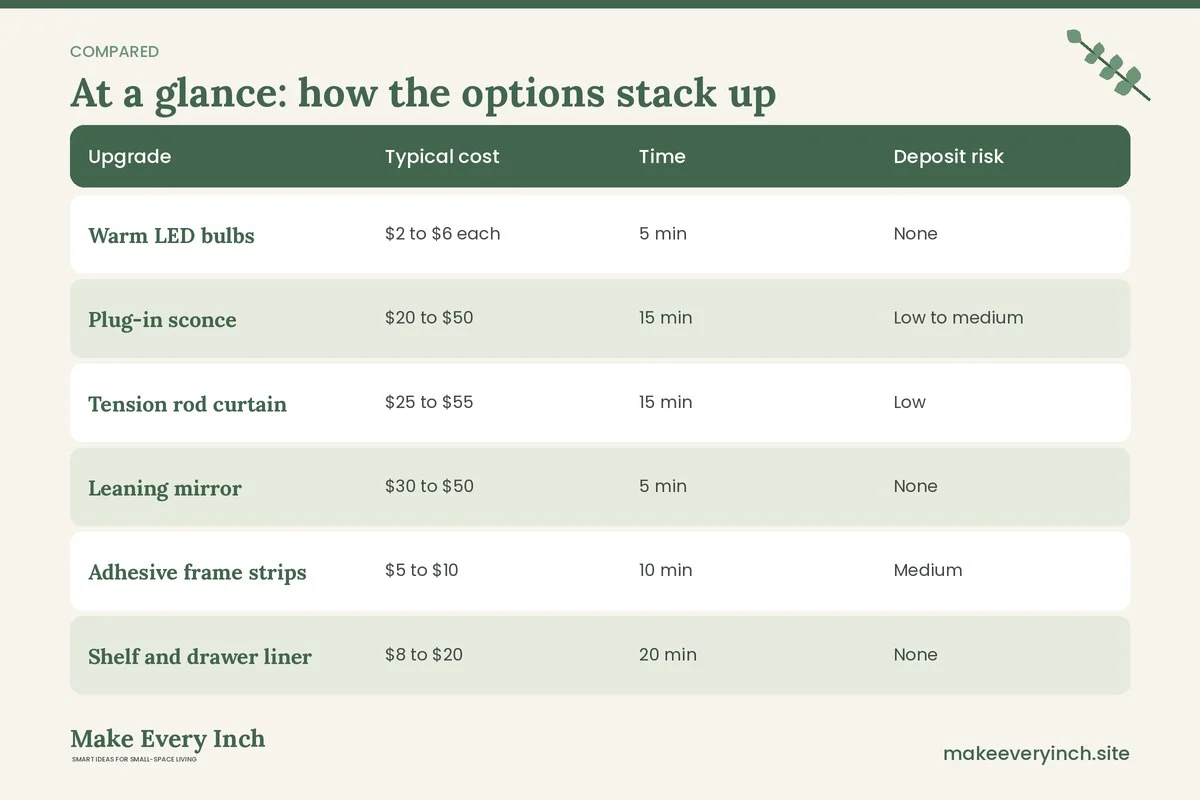
Upgrades compared at a glance
| Upgrade | Typical cost | Time | Deposit risk | Best for |
|---|---|---|---|---|
| Warm LED bulbs | $2 to $6 each | 5 min | None | Any room |
| Plug-in sconce | $20 to $50 | 15 min | Low to medium | Bedroom, living room |
| Tension rod curtain | $25 to $55 | 15 min | Low | Windows, alcoves |
| Leaning mirror | $30 to $50 | 5 min | None | Light and space |
| Adhesive frame strips | $5 to $10 | 10 min | Medium | Light art |
| Shelf and drawer liner | $8 to $20 | 20 min | None | Kitchen, closets |
| Peel-and-stick backsplash | $15 to $45 | 1 hr | Medium | Small kitchen areas |
| Shower head swap | $15 to $40 | 10 min | Medium | Bathrooms |
| Cord covers | $8 to $15 | 15 min | Medium | TV walls |
| Rug and pad | $30 to $50 | 2 min | Low | Living areas |
Three example scenarios
The dim studio for about $90
A studio has one ceiling fixture and no lamps. Swap in warm bulbs, add a plug-in sconce beside the bed and a leaning mirror opposite the window. The room gets layered light and looks wider, and nothing touches the walls permanently. For furniture ideas to match, see small apartment decor under $100.
The bare one-bedroom for about $120
Hang a lightweight curtain on a tension rod, add a rug, place a throw and pillow covers on the sofa and use strips for three frames. Add two plants. The result is a softer room, and every item travels with you.
The cramped rental kitchen for about $75
Line the cabinets, add two shelf risers and an under-sink tension rod, then put stick-on lights under the wall cabinets. You gain usable storage and better task light without a single screw. For a bigger plan, see budget small kitchen makeover.
The method: spend in the right order
Step 1: Fix light first
Bulbs and one lamp or sconce often change a room more than paint. Do this before buying decor, since good light makes everything else look better.
Step 2: Add storage you can take along
Risers, bins, hooks and rods are reusable and solve daily annoyances. They also keep the bigger purchases visible, which helps you avoid clutter. See cheap storage ideas for apartments for more.
Step 3: Add softness
Rugs, curtains, throws and plants change how a room feels. Buy neutral basics first, and add color through cheap, swappable pieces.
Step 4: Finish with art
Art comes last because its cost and scale depend on what the room needs. Frames secondhand and prints you print yourself keep this step cheap.
Where to shop cheaply
Check thrift stores and online marketplaces for mirrors, lamps and rugs, where condition matters more than brand. Discount home stores sell bulbs, hooks and liners at good prices. Dollar stores carry baskets and bins that work for under-sink storage. Wait for seasonal sales on bedding and curtains. For more ideas, read thrifted apartment decor ideas.
Moving out: undoing every upgrade
Plan the exit while you buy. A week before your move-out inspection, work through the apartment room by room with your photos open. Reinstall the original shower head, switch plates and any bulbs you replaced if the lease asks for it. Peel adhesive strips slowly, with the tab pulled down and parallel to the wall, and warm stubborn adhesive with a hair dryer on low heat.
Clean residue with a damp cloth and a little rubbing alcohol, testing a hidden spot first. Lift shelf liner, wipe the surface and let it dry. Take cord covers off slowly, since they carry the most paint risk. Finally, photograph each room again from the same angles as your first set, and send the pictures to the landlord if the lease allows. If paint lifts anywhere, mention it honestly and offer a touch-up, which usually costs less than a deduction.
Upgrades that look like savings but are not
Some cheap purchases cost more in the long run. Very thin curtain rods sag and get replaced. Bargain adhesive hooks that fail can drop a frame and damage a floor. Peel-and-stick tile in a high-heat spot behind a stove may curl and leave residue. Very cheap rugs without a pad can slide and wear faster. When a product holds weight, touches heat or sits near water, spend a little more on a reputable rating and read the load and temperature limits. A $12 hook that works beats two $5 hooks that fail.
Which upgrade to choose when you can only buy one
If the room feels dark, buy a lamp or a sconce and warm bulbs. If it feels messy, buy bins or risers and fix the biggest mess first. If it feels cold, buy a rug. If it feels bare, buy a large leaning mirror or one big piece of art, rather than many small ones. If the kitchen annoys you daily, buy liners and an organizer. Picking one fix and finishing it beats starting five and finishing none, and it gives you a clear before and after.
Budget guide
Under $25
LED bulbs, shelf and drawer liner, a shower curtain, hooks and a plant. These give the biggest change per dollar.
About $50 to $100
Add a sconce, a leaning mirror, a tension rod curtain and cord covers. This covers light, privacy and tidiness.
About $100 to $150
Add a rug, a peel-and-stick backsplash section, a cohesive bath set and a few cabinet organizers. At this point a room looks planned.
Mistakes to avoid
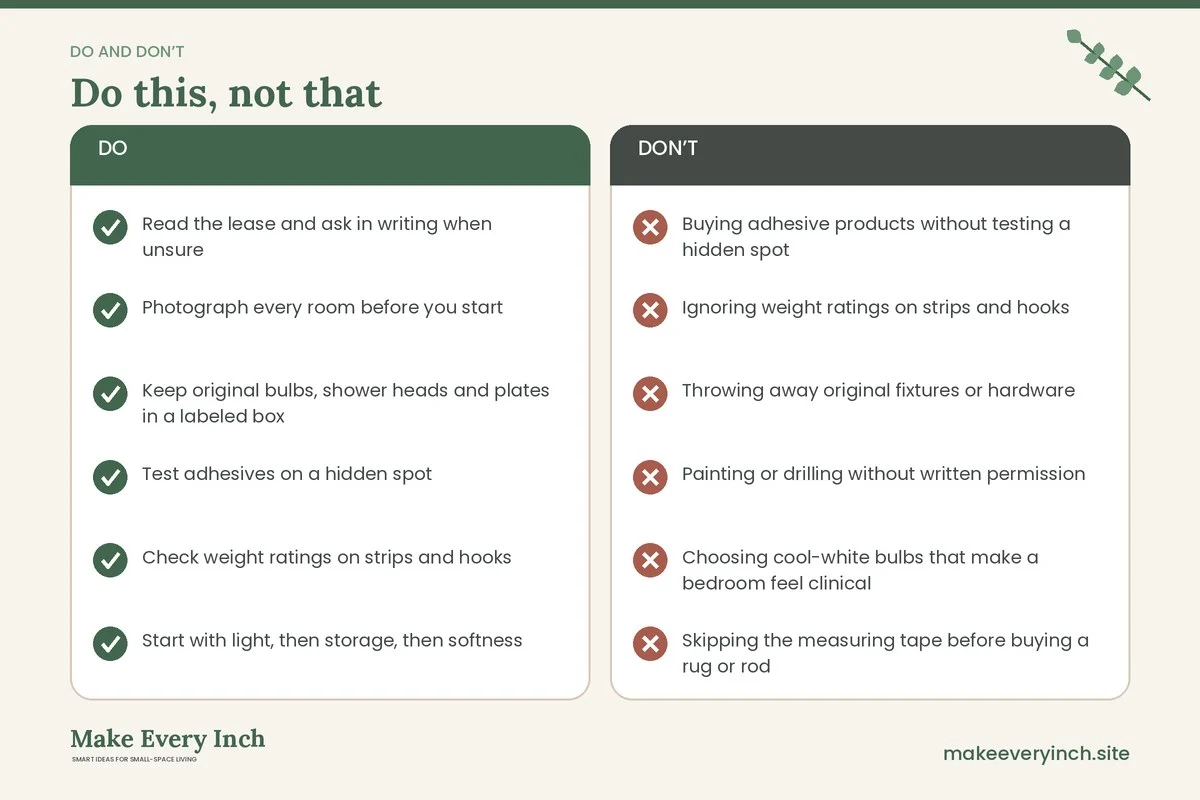
- Buying adhesive products without testing a hidden spot
- Ignoring weight ratings on strips and hooks
- Throwing away original fixtures or hardware
- Painting or drilling without written permission
- Choosing cool-white bulbs that make a bedroom feel clinical
- Skipping the measuring tape before buying a rug or rod
- Buying many small items instead of one useful one
Renter upgrade checklist
- Read the lease and ask in writing when unsure
- Photograph every room before you start
- Keep original bulbs, shower heads and plates in a labeled box
- Test adhesives on a hidden spot
- Check weight ratings on strips and hooks
- Start with light, then storage, then softness
- Measure windows, shelves and floors before buying
- Remove adhesives slowly with a hair dryer
- Photograph at move-out
FAQ
What are the best budget renter upgrades?
Warm LED bulbs, a plug-in sconce, a curtain on a tension rod, shelf liners, a leaning mirror and a rug give the most change for the least money.
Can I really upgrade an apartment for under $50?
Yes, if you choose one problem, such as light or storage, and fix it with two or three items. Prices vary, so check current costs before you shop.
Which upgrades are safest for my security deposit?
Anything that does not touch walls, floors or fixtures, such as bulbs, liners, mirrors, rugs with pads and tension rods. Adhesive items carry more risk.
Do adhesive strips damage paint?
They can on fresh, flaking or matte paint, and when removed too fast. Test first, and pull the tab slowly, parallel to the wall.
Can I change a shower head in a rental?
Often yes, if you keep the original and reinstall it at move-out. Check the lease, use plumber’s tape and do not overtighten.
Should I tell my landlord about small upgrades?
For anything adhesive, electrical or plumbing related, yes, and get the reply in writing. For bulbs, rugs and liners, it is usually unnecessary.
What should I buy first?
Buy light first, then storage, then soft furnishings, and art last.
How do I remove adhesive upgrades safely?
Warm the adhesive with a hair dryer, peel slowly at a low angle and clean residue with a damp cloth. Photograph the wall afterward.
Keep going: Keep going with our renter-friendly apartment decorating ideas, security deposit safe apartment upgrades and cheap storage ideas for apartments.
Save this guide for later
Pin the ideas you like to Pinterest so you can come back to them when you plan your space.