23 No Drill Storage Ideas for Renters Who Cannot Make Holes
Quick answer: The best no drill storage ideas for renters are tension rods and poles, over-the-door racks, freestanding shelves, rolling carts, adhesive hooks within weight limits, under-bed bins and furniture with built-in storage. Clean the surface, check weight ratings and test adhesives in a hidden spot first.
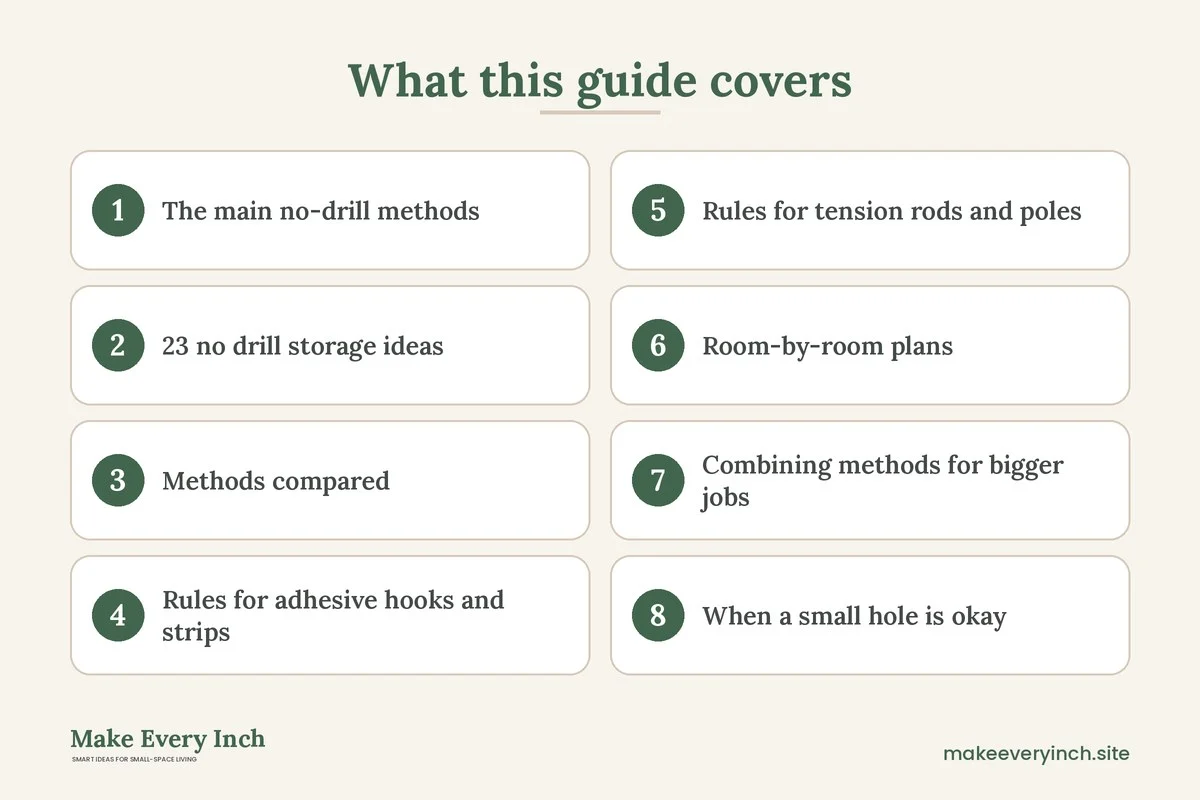
No drill storage ideas for renters solve the most common rental problem: you need places to put things, but the lease says no holes. Fortunately, there are many ways to add storage without a drill, from tension poles that wedge between the floor and the ceiling to adhesive hooks and furniture that stands on its own. This guide explains how each method works, shares 23 ideas, compares them by weight and cost, gives rules for adhesives and tension rods, and covers room-by-room plans, move-out steps and a checklist. For broader renter advice, read organization ideas for renters and renter-friendly apartment decorating ideas.
The main no-drill methods
Tension
Tension rods and poles press against two opposite surfaces. They hold curtains, shelves and light loads inside windows, closets and cabinets.
Hanging over an edge
Over-the-door hooks, racks and organizers hang from the top of a door, a cabinet or a shower rod. They add storage without touching the wall.
Adhesive
Strips, hooks and tape stick to clean, smooth walls. They suit light items and need correct installation and removal.
Freestanding
Furniture and racks that stand on the floor need no fixing at all. Choose stable, tall, narrow pieces and anchor them if the lease allows.
Magnetic
Magnets hold items on a metal surface such as a fridge, a range hood or a metal cabinet.
Hidden storage furniture
Ottomans, beds with drawers and benches add capacity with no wall contact.
23 no drill storage ideas
Tension-based ideas
1. A tension rod in the closet
A second rod doubles the hanging space for shirts or holds hanging bags.
2. A tension rod under the sink
A rod holds spray bottles by their necks and frees the shelf.
3. A tension pole shelf
A pole with shelves wedges between floor and ceiling and holds toiletries, plants or books.
4. A tension rod in a window
A rod holds curtains, plants or a hanging basket in a window.
5. A tension rod in a shower
A rod holds a caddy and towels with no tile damage.
Over-the-door and over-the-edge ideas
6. An over-door hook rack
Hooks hold robes, bags and towels.
7. An over-door shoe organizer
Pockets hold shoes, accessories, cleaning supplies and toiletries.
8. An over-cabinet basket
A basket that hooks over the cabinet door holds wraps, lids and cleaning cloths.
9. An over-the-sink rack
A rack that spans the sink holds a dish rack and a cutting board.
10. A hanging shower caddy
A caddy hung from the shower rod or head holds all bottles.
Adhesive ideas
11. Adhesive hooks
Strong hooks hold keys, robes and light bags.
12. Adhesive shelves
Light shelves hold small items on tile or paint, with the weight within the limit.
13. Adhesive cable clips
Clips keep cords tidy along a wall or a desk.
14. Adhesive towel bar
A bar holds a towel on a bathroom wall or a kitchen cabinet.
15. Adhesive wall pocket
A fabric pocket holds mail, remotes or magazines near the door.
Freestanding ideas
16. A tall, narrow bookcase
A bookcase 10 to 12 inches deep holds a lot with a small footprint.
17. A ladder shelf
A leaning shelf adds many levels, and no wall fixings.
18. A rolling cart
A cart holds kitchen, bath or craft items and rolls to where needed.
19. A freestanding coat rack
A rack holds coats and bags in an entry with no hooks.
20. A garment rack
A rolling rack adds hanging space for a small closet.
Furniture ideas
21. A storage ottoman or a bench
Lids lift to reveal blankets, shoes or toys.
22. A bed with drawers or under-bed bins
They hold clothes and linens without wall contact. See under bed storage ideas.
23. A magnetic strip for metal items
A strip on a metal range hood or a fridge side holds utensils or spice tins with no fixings.
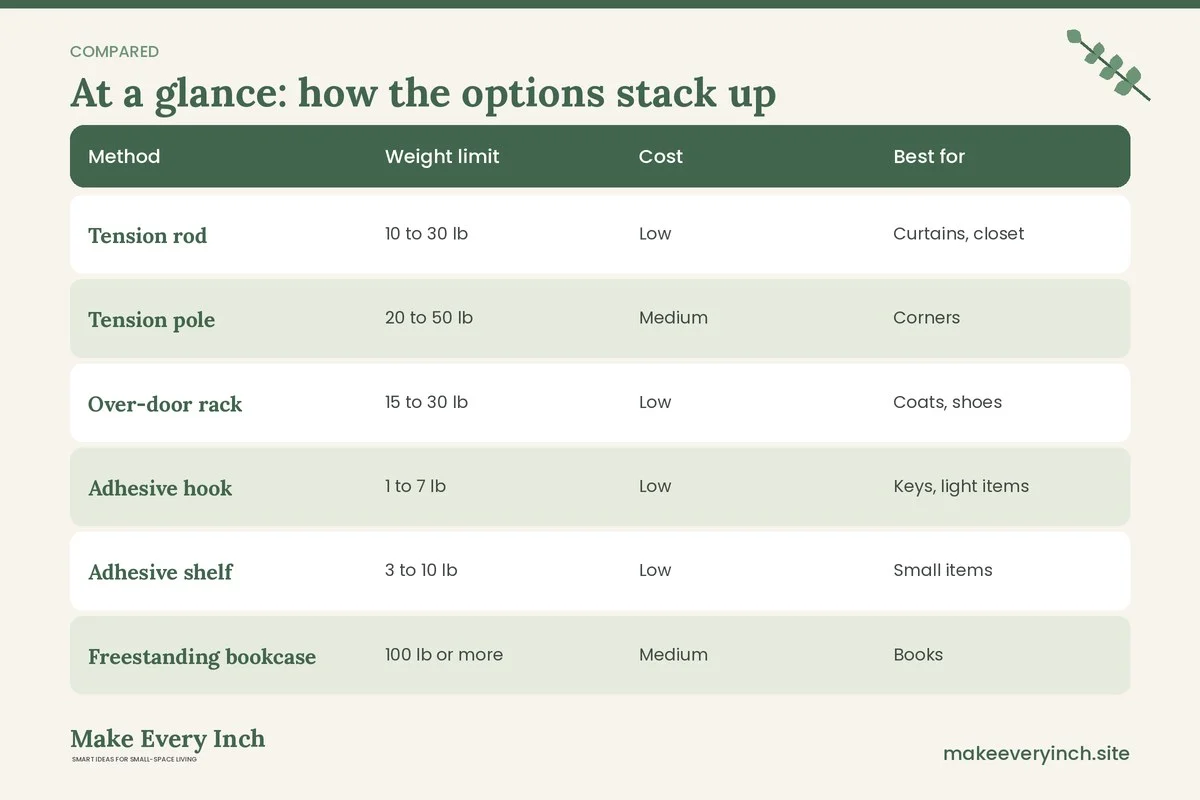
Methods compared
| Method | Weight limit | Cost | Best for | Risk |
|---|---|---|---|---|
| Tension rod | 10 to 30 lb | Low | Curtains, closet | Slips if overloaded |
| Tension pole | 20 to 50 lb | Medium | Corners | Needs ceiling |
| Over-door rack | 15 to 30 lb | Low | Coats, shoes | Door must close |
| Adhesive hook | 1 to 7 lb | Low | Keys, light items | Paint damage |
| Adhesive shelf | 3 to 10 lb | Low | Small items | Falls if wet |
| Freestanding bookcase | 100 lb or more | Medium | Books | Tips if not anchored |
| Rolling cart | 30 to 60 lb | Medium | Mixed | Needs floor |
| Storage ottoman | 250 lb | Medium | Seating | Size |
Rules for adhesive hooks and strips
1. Check the weight limit on the package, and use half of it.
2. Clean the wall with rubbing alcohol, and let it dry.
3. Avoid textured, dusty or freshly painted walls, which need up to four weeks to cure.
4. Press the hook firmly for the time stated, then wait an hour before loading it.
5. Do not use adhesive on wallpaper, damp walls, brick or flaking paint.
6. Use multiple hooks for heavier or wider items.
7. To remove, pull the tab slowly down and parallel to the wall, and warm stubborn strips with a hair dryer.
Rules for tension rods and poles
Tension rods work by friction, so the surfaces they press on must be solid and clean. Choose a rod rated for the load, twist it until snug and do not overtighten, which can dent a frame. Poles for floor and ceiling need a solid ceiling, not a drop ceiling or a thin tile. Place the pole on a flat floor, and use the rubber caps. Check them every few months, and re-tighten. If a rod slips, wipe both ends and the surface with alcohol, or use a rubber pad.
Room-by-room plans
Entry
Use an over-door hook rack, a freestanding coat rack, a shoe rack and a basket for mail. A mirror leaning against the wall adds light.
Kitchen
Use a rolling cart, shelf risers, an over-cabinet basket and tension rods under the sink. See small kitchen cart ideas.
Bathroom
Use an over-door organizer, a ladder shelf and a hanging caddy. See renter friendly bathroom ideas.
Bedroom
Use under-bed bins, a bed with drawers and a closet rod extender. See small bedroom ideas for renters.
Living room
Use a bookcase, a storage ottoman and a console with baskets. See small living room ideas for renters.
Combining methods for bigger jobs
For a large load, use two methods together. Place a freestanding bookcase against the wall and add a strap to the stud if allowed. Use a tension pole in a corner, and hang baskets on it with hooks. Add a rolling cart under a window and a rod above it for a plant. Use a bench under a row of adhesive hooks so you can sit and store shoes. Combine the strength of freestanding pieces with the flexibility of hooks, and a rental can hold as much as an owner’s home.
When a small hole is okay
Some leases allow small nail holes, which can be filled with spackle. Others allow picture hooks but not anchors. If you want a stronger hold, ask your landlord, and offer to patch the holes at move-out. For tall furniture such as a bookcase or a wardrobe, a small anchor screw into a stud is safer than none, especially around children. Get approval in writing. If you cannot get a yes, use heavier, lower furniture that is stable without anchors.
No-drill storage for specific problems
“I have no closet”
Use a freestanding wardrobe or a garment rack, a tall dresser and under-bed bins. Add an over-door hook rack inside the bedroom door and a tension rod across an alcove for hanging clothes. See small bedroom ideas without a closet.
“I have no pantry”
Use a tall freestanding shelf, a rolling cart and clear containers. Add over-door pantry racks, and use shelf risers inside cabinets. Keep a small basket for snacks, and store bulk items under the bed or in a closet.
“I have no bathroom storage”
Hang a shower caddy from the rod, add a ladder shelf and an over-door organizer. Use a tray on the sink and a basket for towels. See tiny bathroom storage ideas.
“I have no entry”
Place a coat rack, a narrow shoe rack and a tray near the door. Use a mirror and a basket. See small entryway organization.
“I have no desk”
Use a folding desk that stands on its own, a rolling cart as a desk, or a drop-leaf table. Store supplies in a basket and a tall shelf.
No-drill ways to hang art
You can hang art without nails. Use adhesive strips rated for the weight of the frame, and press them for 30 seconds. For heavier pieces, lean them on a dresser, a shelf or the floor with a small stand. Hang lighter pieces from a tension rod on a window, or from a curtain rail clipped to a door frame. Use a freestanding easel for one large piece. Create a gallery on a ladder shelf or a picture ledge that stands on a cabinet. Use washi tape and clips on a wire stretched across a closet door for photos and postcards.
No-drill storage for kids’ rooms
Children’s rooms need storage at kid height and that is safe. Use low freestanding shelves with bins, a toy chest with a safe lid and an over-door organizer for shoes and clothes. Add a tension rod for hanging costumes and a tent for a reading nook. Use hooks at a low height with adhesive strips, rated for the weight of a backpack. Anchor tall furniture to the wall if the lease allows, and choose rounded edges. Label bins with pictures, so children can help tidy up.
No-drill storage outdoors
A balcony or a patio can use storage too. Use a tall plant stand, a bench with storage, a hanging basket from a hook on the railing and a weatherproof cabinet. Avoid anything that could fall and hurt someone, and check your lease for rules about balconies. Use railing planters that clamp on, and keep walkways clear. Store cushions and tools in a waterproof box, and bring light items inside for the winter.
Care and maintenance of no-drill storage
Check the strength of your storage every few months. Press on adhesive hooks and see if they have loosened, re-tighten tension rods, and look at over-door racks for scuffs on the door. Wipe racks and shelves so they do not collect dust. Replace adhesive strips when they lose grip, and never reuse them. Keep an eye on bookcases and shelves for sagging, and take weight off if needed. A short check keeps your system safe and your deposit secure.
Choosing the right method: a quick guide
Ask three questions about each thing you want to store. How heavy is it? A few ounces suit an adhesive hook, a few pounds suit a tension rod or an over-door rack, and anything heavier needs furniture that stands on the floor. How often do you use it? Daily items belong at hand height on a hook or a shelf, and rare items belong in a bin up high or under the bed. What is the surface? Smooth, clean paint takes adhesive, while textured walls, wallpaper and brick call for tension or freestanding options. Matching the method to the load, the use and the surface prevents falls and damage.
Safety notes
Never hang heavy mirrors, televisions or shelves on adhesive. Do not stack heavy items on a tension shelf or an over-door rack. Keep paths clear of rolling carts, and lock the wheels. Do not store items above a bed or a crib that could fall. Keep cords from adhesive clips away from heaters. If an item holds anything valuable or breakable, use a sturdier method. A little caution makes no-drill storage as safe as drilled storage.
A weekend plan to add no-drill storage
Saturday morning
Measure the problem spots, and list what you need to store. Check the lease, and photograph the walls.
Saturday afternoon
Buy only what you need, such as a tension rod, hooks, an over-door organizer and bins. Clean the walls where you will place adhesive.
Sunday
Install the pieces, label bins, test each hook with its load and adjust. Take photos of the finished home, and write a short note of where each item lives.
What to do at move-out
Remove everything you added, starting with adhesive items. Pull each strip slowly, and clean any residue with a cloth and rubbing alcohol. Take down tension rods and poles, and check that the frames and floors are clean. Put original hardware back, and clean the unit. Compare the walls with your move-in photos, and patch any small marks only if the lease allows. Photograph each room, and return keys with a receipt. Because you chose no-drill storage, there is little to repair, and your deposit is safe.
Reusing no-drill storage in your next home
The beauty of no-drill storage is that it goes with you. Before you pack, note the weight and size of each piece, and check the new home’s measurements. Tension poles need a ceiling of the right height, and over-door racks need a door of the right thickness. Keep the instructions and spare parts. Buy adhesive hooks fresh for each home, since used strips lose their grip. With a little planning, your storage system can follow you through many moves.
Budget guide
Under $30
Adhesive hooks, a tension rod and an over-door hook rack.
About $100
An over-door organizer, a ladder shelf and under-bed bins.
$300 and up
A bookcase, a rolling cart, a storage ottoman and a coat rack.
Mistakes to avoid
- Ignoring weight limits
- Using adhesive on dusty or textured walls
- Overloading tension rods
- Putting tall furniture where it can tip
- Forgetting to test
- Pulling adhesive strips straight off the wall
- Skipping move-in photos
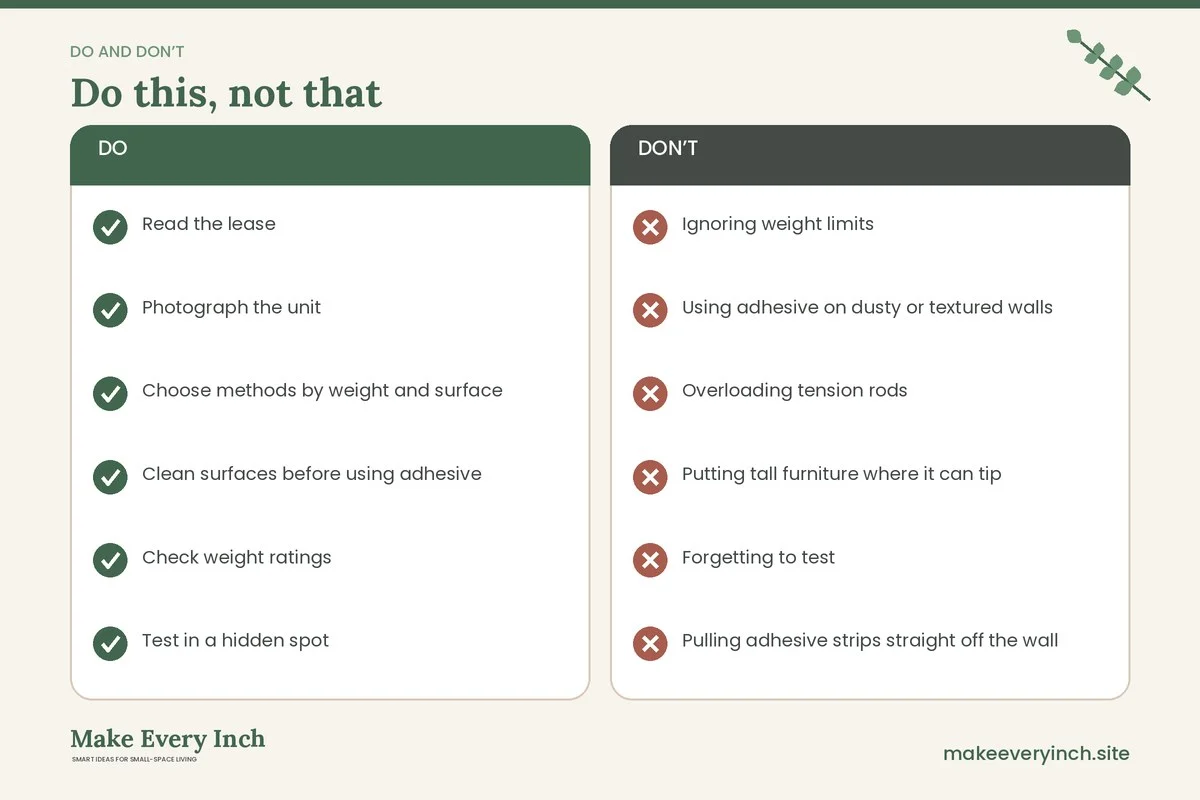
Checklist
- Read the lease
- Photograph the unit
- Choose methods by weight and surface
- Clean surfaces before using adhesive
- Check weight ratings
- Test in a hidden spot
- Use two or more hooks for large items
- Check tension rods every few months
- Keep packaging and instructions
- Remove adhesive slowly at move-out
FAQ
What are the best no drill storage ideas?
Tension rods, over-door racks, freestanding bookcases, rolling carts and adhesive hooks within the weight limit.
Do adhesive hooks damage walls?
They can, if used on bad surfaces or removed wrongly. Clean, test and remove them slowly.
How much weight can a tension rod hold?
Often 10 to 30 pounds, depending on the rod. Check the rating.
Can I use a tension pole in a rental?
Yes, if your ceiling is solid. It leaves no holes.
How do I stop a bookcase tipping without drilling?
Choose a heavy base, put heavier items low and place it against the wall. Ask your landlord about a small anchor.
What if my adhesive hook falls?
Clean the wall again, check the weight and wait longer before loading.
How do I remove adhesive strips?
Pull the tab slowly and parallel to the wall, warming with a hair dryer if needed.
Can I hang a TV without drilling?
Not safely. Use a stand or a console instead.
Keep going: Explore our organization ideas for renters, renter-friendly apartment decorating ideas and vertical storage ideas.
Save this guide for later
Pin the ideas you like to Pinterest so you can come back to them when you plan your space.