19 Small Kitchen Cart Ideas for Extra Counter and Storage
Quick answer: A small kitchen cart adds counter space and storage without a remodel. Choose one 12 to 20 inches deep and 30 to 36 inches high with locking wheels, a sturdy top and two or three shelves. Use it as a prep island, a pantry, a coffee bar or a serving trolley, and roll it away when not needed.
Small kitchen cart ideas give a tiny kitchen the one thing it lacks most: flexible surface. A rolling cart can be a prep island while you cook, a bar when you host, a pantry in a gap and a desk in a pinch. This guide shares 19 ideas, a sizing guide, a comparison of cart types, a buying checklist, three example kitchens and care tips so you choose and use a cart well.
Measure first
Measure the space where the cart will live and the path it will travel. A cart 12 to 16 inches wide fits many gaps beside a refrigerator, and a cart 18 to 24 inches wide suits a wall or a corner. Keep at least 36 inches of walkway beside it when it is in use, and 42 inches if two people cook. Check the height: the top should match your counter, usually 34 to 36 inches, so it works as an extension. Check the doors: the cart should clear the oven, the dishwasher and the cabinet doors when it is parked. Measure the doorways if the cart will move between rooms.
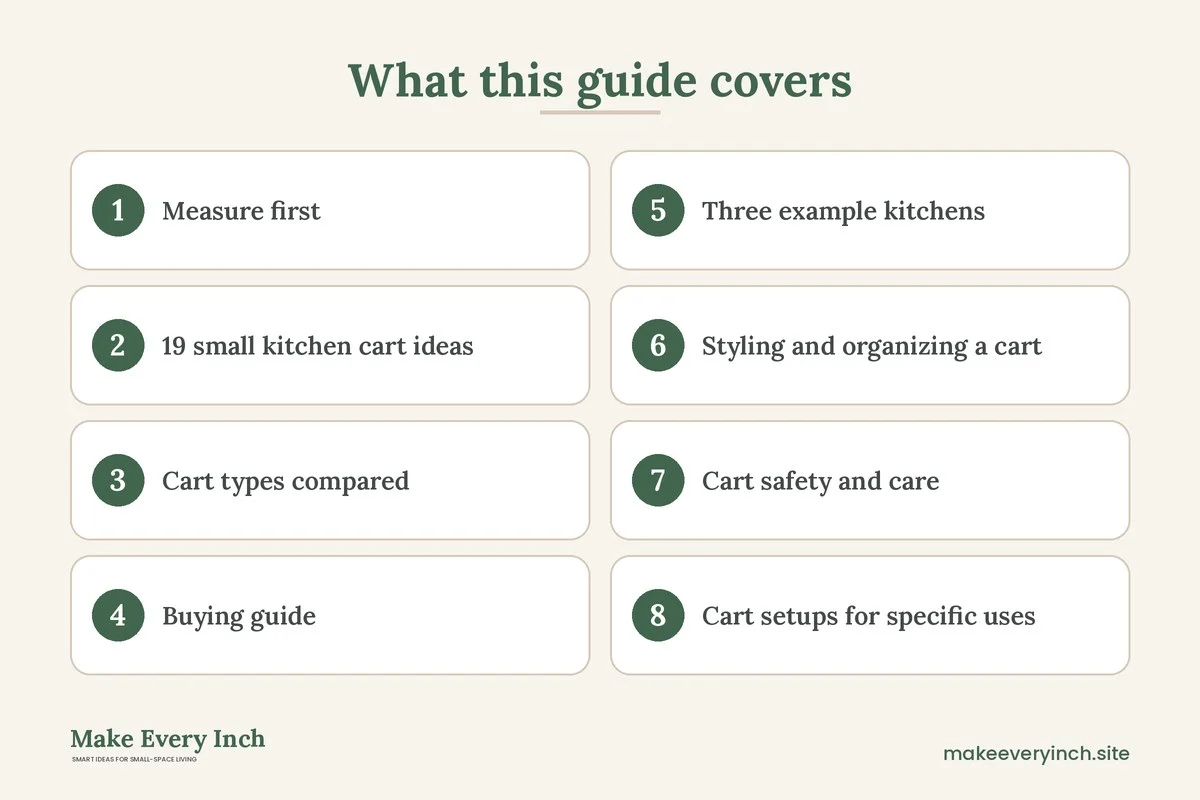
19 small kitchen cart ideas
1. Use it as a prep island
Roll the cart beside the stove or the sink and use the top as extra counter. A butcher block top is good for chopping, and a stainless steel top is easy to clean.
2. Make a coffee or tea bar
Put the kettle, a coffee maker, mugs and a jar of beans or tea on the cart. A hook on the side holds a towel, and a shelf below holds filters and sugar.
3. Turn it into a pantry
A three-tier cart with baskets holds cans, jars, snacks and bulk goods. Choose a narrow one that fits beside the refrigerator.
4. Serve drinks and appetizers
Use the cart as a bar trolley when guests come. A tray on top holds glasses, and the shelves hold bottles, ice and napkins.
5. Make a baking station
Set the mixer, the flour and the bowls on the cart and roll it to the table. A cart with a marble or smooth top is great for dough.
6. Hold small appliances
A cart with a sturdy top and a plug nearby can hold a toaster oven, an air fryer or a blender, freeing the counter. Keep the cord safe and the area ventilated.
7. Create a spice and oil station
A narrow cart with a lazy Susan, small baskets and hooks keeps spices and oils close to the stove.
8. Use it as a mobile dining table
A cart with a drop leaf becomes a table for two. Add two stools that tuck beneath.
9. Store cookbooks and a tablet
A shelf for cookbooks and a stand for the tablet turns a cart into a recipe center.
10. Add hooks for towels and tools
S-hooks and a rail on the side hold towels, utensils and bags. Keep heavy items low to keep the cart stable.
11. Use a cart with a trash and recycling bin
Some carts hide a bin in a cabinet. This is helpful in a kitchen with no space for a bin.
12. Use a cart as a plant stand
A cart near the window can hold herbs and plants. Add a tray to protect the shelf and the floor.
13. Store pet food and bowls
A cart with a shelf holds bowls and a bin of food in one spot, and rolls out of the walkway.
14. Make a cleaning cart
A cart with a basket holds sponges, sprays and towels and can move from the kitchen to the bathroom.
15. Use it as a bedside or sofa table in a studio
A cart can serve as a nightstand, a side table or a sofa table when it is not in the kitchen. Choose a design that fits the rest of the room.
16. Use it for meal prep containers
A cart in the fridge-side gap holds stackable containers and bags, so meal prep is faster.
17. Add a cutting board and tray for hot items
Keep a trivet or a tray on top so you can place hot pots without damaging the cart.
18. Choose a foldable or nesting cart
A foldable cart stores flat, and a nesting set tucks together when not in use.
19. Pair it with a rug or a runner
A rug under the parked cart protects the floor and defines the zone. Use a non-slip pad.
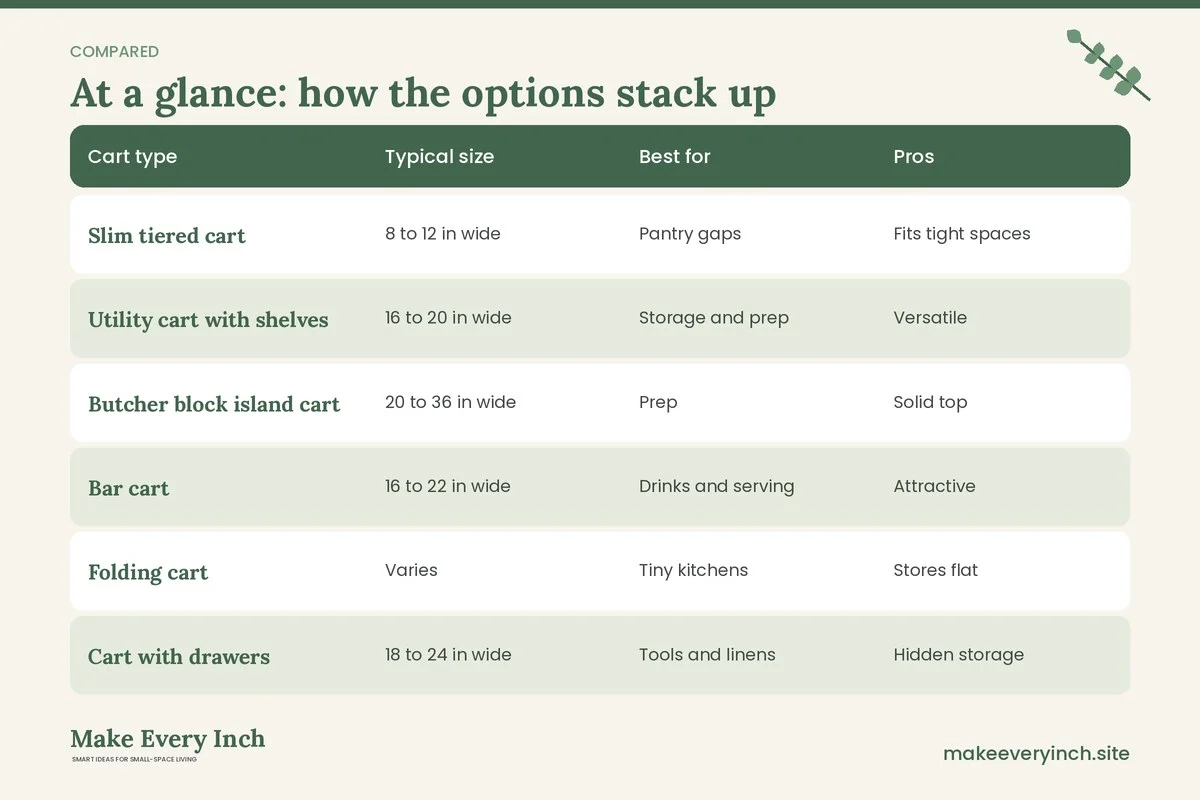
Cart types compared
| Cart type | Typical size | Best for | Pros | Cons |
|---|---|---|---|---|
| Slim tiered cart | 8 to 12 in wide | Pantry gaps | Fits tight spaces | Low capacity |
| Utility cart with shelves | 16 to 20 in wide | Storage and prep | Versatile | Open shelves show clutter |
| Butcher block island cart | 20 to 36 in wide | Prep | Solid top | Takes more space |
| Bar cart | 16 to 22 in wide | Drinks and serving | Attractive | Small top |
| Folding cart | Varies | Tiny kitchens | Stores flat | Less sturdy |
| Cart with drawers | 18 to 24 in wide | Tools and linens | Hidden storage | Heavier |
Buying guide
Look at the top material. Butcher block is good for chopping but needs oiling. Stainless steel is easy to clean and heat resistant. Wood and laminate are less expensive but can scratch. Check the weight rating, which should be at least 50 to 100 pounds for a prep cart. Choose wheels that lock and are large enough to roll over thresholds, and check that all four wheels swivel or at least two do. Look at the shelves: adjustable shelves are best, and a lip keeps items from sliding. Check the assembly: sturdy bolts and braces stop wobbling. Read reviews from people with small kitchens, and measure twice.
Three example kitchens
A 6 x 8 foot galley
Use a 12 inch slim cart at the end of the aisle as a pantry and a spare counter. Park it beside the fridge, and roll it to the center when you cook. Keep the aisle clear at all other times. See galley kitchen ideas.
A studio kitchenette
Use an 18 inch butcher block cart as a prep surface and a bar. Add two stools that tuck under, a tray for the kettle and a basket for snacks. Roll it to the wall when you have guests. See tiny kitchen ideas.
An L-shaped rental kitchen
Use a utility cart in the corner for small appliances and a coffee station. Hang a rail on its side for towels. Keep the original counters free for chopping. See renter kitchen upgrades.
Styling and organizing a cart
Treat the cart like a mini room. Put the heaviest items on the bottom shelf and the lightest on the top. Use baskets and trays to group items and keep the cart tidy. Choose a few pieces of decor, such as a plant or a small lamp, and keep the rest functional. Match the finish to the cabinet hardware and the kitchen colors. Label baskets if several people use the cart. Keep the top mostly clear so it stays useful as a work surface.
Cart safety and care
Lock the wheels when you chop or lean on the cart, and unlock them before you roll it. Do not overload the shelves, and keep heavy items low. Keep hot pans on a trivet, and avoid placing the cart near the stove where splatter and heat can reach it. Wipe the top after each use, and oil a wooden top every few months. Tighten the bolts every season, and check the wheels for debris. If the cart wobbles, add a small shim or tighten the braces. Teach children not to climb on it.
Cart setups for specific uses
A cart for a coffee lover
Place the machine on the top shelf near an outlet, with a tray for the grinder and the mugs. Hang a small towel on a hook and keep a bin below for filters, pods and beans. Add a jar of sugar and a small plant. Use a mat to catch drips and wipe it daily. Keep the cord tidy with a clip and avoid placing it near water.
A cart for a home baker
Use a cart with a smooth top for rolling dough, a lower shelf for the mixer and a basket for tins and cutters. Keep flour in a sealed container and label the shelves. Put a marble slab or a large board on top for cooling. Roll the cart to the stove while you bake and back to its place afterward.
A cart for a person who entertains
Dress the top with a tray, ice bucket and a few glasses, and keep bottles on the shelf below. Add a lower shelf for napkins and plates. A cart with a drop leaf can serve as a buffet. After the party, wipe it and roll it back to its parking spot.
A cart for a plant lover
Choose a cart with slatted shelves for drainage, and use trays under the pots. Put herbs and small plants on the top near the window, and trailing plants on the lower shelf. Keep it away from the stove to protect the plants from heat.
A cart for a family
Use a sturdy cart with a lower shelf for snacks, lunch boxes and water bottles, and a hook for bags. Keep sharp or hot items on the top shelf. Teach children to put their items back at the end of the day. Choose a cart with rounded corners and good locking wheels.
Making a cart look good
A cart is visible, so choose one that suits the room. Black metal looks modern, white metal looks light, wood looks warm and brass looks classic. Match the finish to the lights and the hardware. Add a runner or a tray in a color from the kitchen palette. Use three or four items on the top, grouped by height. Repeat a color or a material from the room. A well-styled cart feels like furniture and not like a temporary solution.
Using a cart beyond the kitchen
When you move to a new place, a cart can change roles. In a living room, it serves as a bar or a side table. In a bedroom, it becomes a nightstand or a closet organizer. In a bathroom, it holds towels and toiletries. In a home office, it holds printers and supplies. In a hallway, it gives a drop spot for keys, mail and shoes. Because carts are portable, they offer flexible storage that you can adapt to whatever space you have, which is a real advantage for renters and anyone who moves.
How to assemble and stabilize a cart
Lay out all the parts and check them against the manual. Use a soft cloth on the floor to prevent scratches. Attach the shelves to the frame with all of the supplied screws, and tighten them a little at a time so the frame stays square. Attach the wheels last and lock them. Test the cart by pushing on each corner. If it wobbles, tighten the bolts or add a corner brace. Put a small level on the top to check it. Load the heavy items low, and reconfirm the stability after a week of use.
Cart costs and where to save
Carts range from about 40 dollars for a basic metal utility cart to several hundred for a solid wood island on wheels. Spend more on the top and the frame if you will chop on it or load it with heavy appliances, and spend less if it is mainly a pantry. Look at secondhand shops, community marketplaces and clearance sections, where carts are often sold in good condition. Consider a bar cart or a rolling plant stand in a different category, which can cost less. Check the wheels and the screws before you buy, since those are the parts that wear. A mid-priced cart in good condition will last many years and move with you from home to home.
A quick test before you commit
Place a laundry basket or a cardboard box at the size of the cart in the spot where it will live for three days. Cook a few meals, open the doors and walk around it. Check whether it blocks the oven door, the dishwasher or the path to the trash. Try it in the second spot where you might park it. If it feels crowded, choose a narrower cart or a foldable one. The test costs nothing and keeps you from buying the wrong size. Take a photo of the setup and use it when you compare carts online.
Cart mistakes to avoid
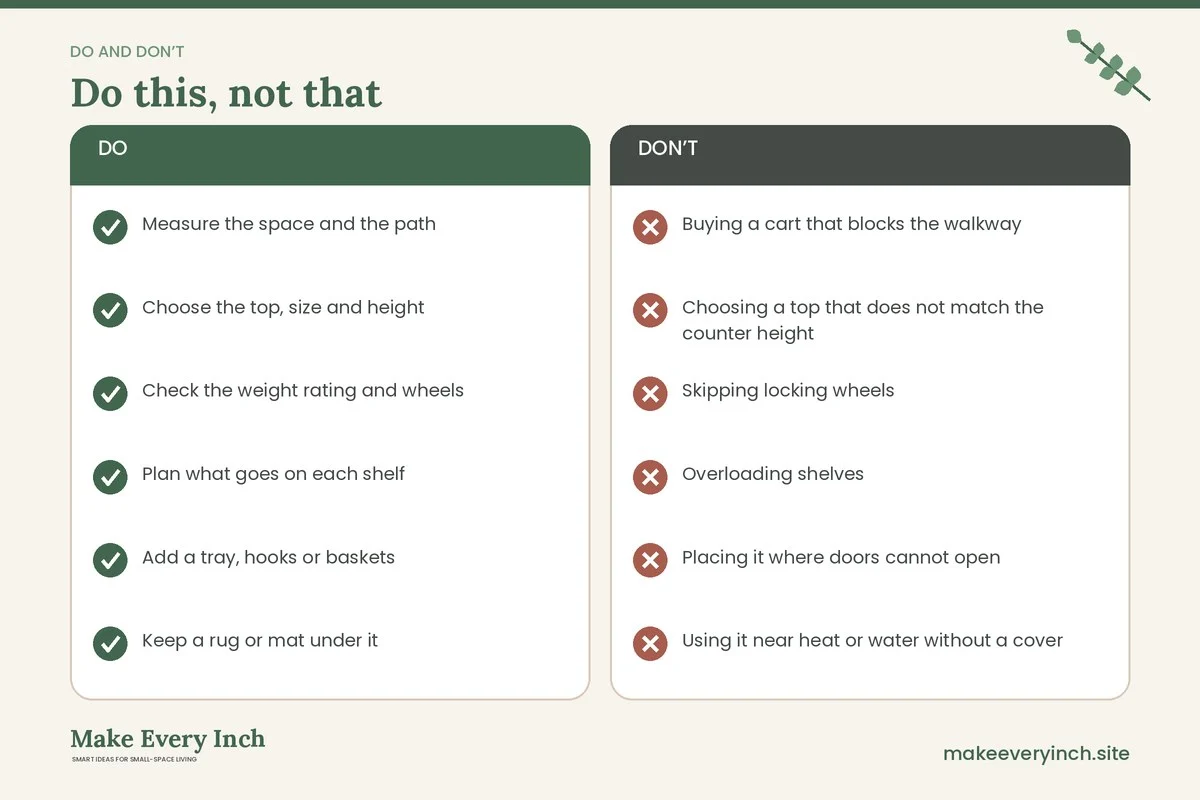
- Buying a cart that blocks the walkway
- Choosing a top that does not match the counter height
- Skipping locking wheels
- Overloading shelves
- Placing it where doors cannot open
- Using it near heat or water without a cover
- Forgetting to measure doorways
- Keeping clutter on top
When you shop, bring the dimensions of the cart’s parking spot and a photo of the kitchen so you can compare finishes in the store.
Cart checklist
- Measure the space and the path
- Choose the top, size and height
- Check the weight rating and wheels
- Plan what goes on each shelf
- Add a tray, hooks or baskets
- Keep a rug or mat under it
- Wipe and tighten regularly
- Decide where it parks
FAQ
What size kitchen cart is best for a small kitchen?
A cart 12 to 20 inches deep and 30 to 36 inches high fits most small kitchens. Measure your space and keep a 36 inch walkway.
Can a cart replace an island?
For many small kitchens, yes. A cart provides extra surface and storage and can be moved when you need space.
What should I put on a kitchen cart?
Prep tools, a coffee station, small appliances, baskets or a tray, depending on the cart’s job.
Are kitchen carts stable?
Good ones are, if they have a sturdy frame, locking wheels and a weight rating that matches your use. Keep heavy items low.
What top material is best?
Butcher block is good for chopping, stainless steel for heat and cleaning and laminate for budget.
Can renters use a kitchen cart?
Yes. A cart needs no installation, so it is ideal for rentals and moves with you.
How do I stop a cart from rolling?
Use locking casters and place a non-slip mat or rug under it.
Where should I park a cart?
Beside the fridge, at the end of an aisle or against a wall where it does not block doors.
Keep going: Explore our small kitchen ideas, small kitchen storage ideas and small kitchen makeover ideas.
Save this guide for later
Pin the ideas you like to Pinterest so you can come back to them when you plan your space.