21 Organization Ideas for Renters That Won’t Cost You Your Deposit
Quick answer: The best organization ideas for renters are freestanding and removable: tall bookcases, over-the-door racks, tension rods, adhesive hooks within weight limits, rolling carts, under-bed bins and furniture with storage. Read the lease, photograph the unit at move-in and keep everything portable.
Organization ideas for renters have one extra rule: everything must come off the wall or out of the unit without a trace. Rentals often have tiny closets, no pantry and walls you cannot drill, but you still need places for clothes, food, shoes and paperwork. The answer is portable, freestanding, removable storage that you can take to the next home. This guide covers the lease check, the rules for adhesives, 21 organization ideas, a table of storage types, room-by-room plans, move-in and move-out steps and a checklist. For the whole-home system, see small space organization ideas.
Check the lease and document the unit
Read the sections on alterations, nails and holes, painting and fixtures. Many leases allow small nail holes for pictures but not larger drilling, and many ban adhesive on certain surfaces. If it is not clear, ask the landlord in writing and keep the answer. A short email is worth more than a verbal yes.
Photograph the whole unit at move-in, including walls, floors, closets, cabinets and appliances. Note existing marks, dents and stains, and send the photos to your landlord. These photos protect your deposit at move-out, and show which changes are yours.
The renter rules of organizing
1. Choose freestanding over fixed.
2. Choose removable over permanent.
3. Check weight limits on adhesives, and use fewer, stronger pieces.
4. Keep original hardware in a labelled box.
5. Choose pieces that fit standard rooms, since your next home will differ.
6. Test adhesives in a small spot.
7. Take photos before and after.
21 organization ideas for renters
Closets and clothes
1. Add a freestanding rack or wardrobe
A rolling rack or a wardrobe adds hanging space where the closet is small.
2. Use an over-the-door organizer
Clear pockets hold shoes, accessories and cleaning supplies, and need no tools.
3. Hang a closet rod extender
A hanging rod doubles the hanging space with no drilling.
4. Use a hanging shelf organizer
A fabric organizer hangs from the rod and holds sweaters and bags.
Walls and surfaces
5. Use adhesive hooks and strips
Strong adhesive hooks hold light items such as keys, robes and mugs. Clean the surface, press firmly and respect the weight limit.
6. Use a tension rod
A tension rod fits in a window frame, a closet or under a sink, and holds curtains, cleaning bottles or towels.
7. Use a freestanding bookcase
A bookcase 10 to 12 inches deep holds books and baskets. Use a small strap to anchor it to a stud if the lease allows.
8. Lean a ladder shelf
A ladder shelf adds storage in the bathroom, the bedroom or the living room, and needs no drilling.
9. Use a leaning mirror
A large floor mirror adds light and space, and holds a hook for bags.
Kitchen
10. Add a rolling cart
A cart gives counter and storage, and goes with you when you move. See small kitchen cart ideas.
11. Use shelf risers and turntables
Cabinet risers and a lazy susan double the usable space inside cabinets.
12. Use a freestanding pantry shelf
A tall shelf on the wall or in a corner serves as a pantry. See small kitchen pantry ideas.
13. Use a magnetic knife strip with adhesive
A strip with strong adhesive holds knives or metal tools. Check weight and use it only on a smooth, clean surface.
Bedroom and bathroom
14. Use under-bed bins
Rolling bins hold off-season clothes and linens. See under bed storage ideas.
15. Use a bed with drawers
A bed with drawers replaces a dresser and goes with you.
16. Use a shower caddy on a tension pole
A pole caddy holds toiletries with no adhesive on tile. See renter-friendly bathroom ideas.
17. Use a tray and baskets on the vanity
Trays and baskets keep the counter tidy.
Entry, desk and habits
18. Use a freestanding coat rack or bench
A rack holds coats and bags, and a bench holds shoes. See small entryway organization.
19. Use a desk on a wall-hung rail only if allowed
Otherwise use a folding desk with shelves, which needs no fixing.
20. Label bins and shelves
Labels help every household member keep order, and make move-out simpler.
21. Keep a moving box of kept originals
Store the original curtain rods, shelves and hardware so you can put the unit back as you found it.
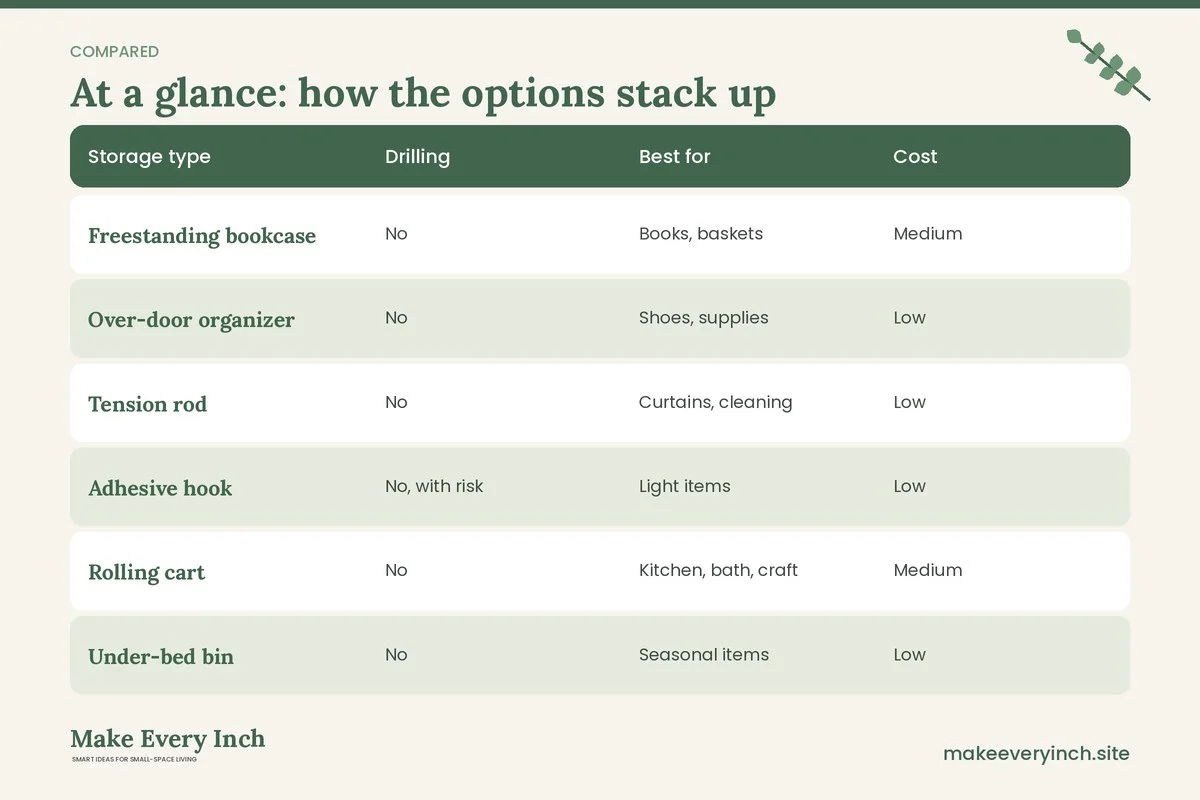
Storage types compared
| Storage type | Drilling | Best for | Cost | Takes with you |
|---|---|---|---|---|
| Freestanding bookcase | No | Books, baskets | Medium | Yes |
| Over-door organizer | No | Shoes, supplies | Low | Yes |
| Tension rod | No | Curtains, cleaning | Low | Yes |
| Adhesive hook | No, with risk | Light items | Low | Single use |
| Rolling cart | No | Kitchen, bath, craft | Medium | Yes |
| Under-bed bin | No | Seasonal items | Low | Yes |
| Storage bed | No | Clothes, linens | High | Yes |
Using adhesive hooks and strips safely
Adhesive is the biggest source of deposit disputes, so use it carefully. Clean the wall with rubbing alcohol, and let it dry. Press the hook firmly for 30 seconds, and wait an hour before hanging weight. Choose a weight rating well above the item, and avoid textured, dusty or freshly painted walls, which need weeks to cure. Never use adhesive on wallpaper or on a wall that is flaking.
To remove, pull the tab slowly and parallel to the wall until the strip stretches and releases. If it resists, warm it with a hair dryer for a few seconds. Wipe any residue with a cloth and a little rubbing alcohol. Take your time, since rushing is what tears paint.
Room-by-room plans
Studio
Use a bed with drawers, a freestanding bookcase as a divider, hooks on the door and a rolling cart in the kitchen. Keep the closet for hanging items, and use under-bed bins for the rest.
One-bedroom
Give each room a clear job and a storage piece. Add a bench in the entry, a storage ottoman in the living room and a rack in the bedroom.
Shared apartment
Give each person a shelf, a hook and a bin in common areas. Label them, and agree on a monthly reset day.
Move-in and move-out
At move-in
Photograph, report damage in writing and measure rooms. Decide what you will buy based on the lease and the layout, and avoid fixed items until you know what you need.
During the lease
Keep a folder with the lease, emails and receipts. Keep original hardware in a labelled box, and patch small marks promptly if allowed. Clean as you go.
At move-out
Remove adhesive items slowly, restore any items you changed, clean the unit thoroughly and photograph every room. Return keys and ask for a receipt. Compare your photos with the move-in photos, and keep them for several months.
Talking to your landlord about storage changes
Landlords tend to say yes to changes that are easy to undo and that protect the property. Write a short email that says what you want to do, where, how you will fix any marks and when you will do it. For example, ask whether you may anchor a bookcase to a wall stud with a single screw and patch the hole at move-out, or whether you may install a closet rod extender. Attach a photo or a product link. Keep the answer with your lease. If you get a no, take it as a design brief and choose a freestanding option. A good relationship with your landlord also makes repairs and renewals smoother.
Smart purchases that go from home to home
Rentals change, so buy pieces that adapt. Choose neutral colors and simple shapes, which suit any room. Choose adjustable shelves and modular units, which you can reconfigure to fit a new space. Buy furniture that comes apart with a screwdriver, and keep the hardware in a labelled bag taped to the piece. Measure doors and stairs, since a sofa that fits one home may not fit the next. Favor sturdy materials over cheap ones that break when moved. A few quality pieces move with you for years, while a pile of flimsy ones ends up in a dumpster.
Making a closet work in a rental
Rental closets are often shallow, with one rod and one shelf. Add a rod extender or a second tension rod, slim hangers and shelf dividers. Use a hanging shoe organizer on the door, or a narrow shoe rack on the floor. Use bins on the shelf to hold accessories, and a hanging bag for out-of-season items. If the closet is truly tiny, put a freestanding rack or a wardrobe in the bedroom. Remove the doors only if allowed, and keep them in storage. See small closet organization ideas for step-by-step instructions.
Making a kitchen work in a rental
A rental kitchen often has too few cabinets and poor counter space. Add a rolling cart, a rack over the sink, a pot rack on a tension pole and a set of shelf risers. Use the inside of the cabinet doors for lids and spices with adhesive racks within weight limits. Use a freestanding pantry cabinet or a tall shelf in a corner. Keep a tray on the counter to group the daily items. See small apartment kitchen ideas and renter-friendly kitchen upgrades.
Making a bedroom and living room work in a rental
In a bedroom, use a bed with drawers, under-bed bins, a tall dresser and wall hooks used within the lease. See small bedroom ideas for renters. In a living room, use a storage ottoman, a bookcase, a console with baskets and a coffee table with a shelf. See small living room ideas for renters. Keep cords tidy with clips and boxes, and use lamps to light dark corners instead of changing fixtures.
Packing and storing your organization system
When it is time to move, label each bin with its room and contents, and pack by zone so you can unpack in order. Keep the bin lids on and tape them. Take shelves apart and tape the hardware to the piece. Roll up rugs and tie them. Photograph your shelves before packing, and use the photo to rebuild them in the new space. Because you chose portable storage, setup in the next home takes hours and not days.
Common renter organization problems and fixes
“My landlord won’t allow any holes”
Choose freestanding furniture, over-door hooks and tension rods. Use furniture that leans against the wall.
“The adhesive keeps falling”
Clean the wall with alcohol, use the right weight rating and wait before loading. Choose a different method for heavy items.
“My closet is too small”
Add a rod extender and use under-bed bins. Add a freestanding rack in the bedroom.
“I have no pantry”
Use a tall freestanding shelf, a cart and shelf risers. Store bulk goods in clear containers.
“I do not want to buy things I cannot take with me”
Rent, borrow or buy second-hand, and choose pieces that are useful in any home.
A weekend plan for a new rental
Friday
Photograph everything, measure rooms and read the lease. Unpack essentials and make a list of the storage you need.
Saturday
Set up the closet, the kitchen and the bathroom first, since you use them every day. Place the freestanding pieces, add tension rods and hooks and unpack by zone.
Sunday
Style the living room and the entry, label bins and put the moving boxes away. Keep a box of original hardware, and file the lease and the photos. Take a final photo of the finished home.
Organization on a renter’s budget
You can organize a rental for little money. Use what you already own, such as shoeboxes, jars and baskets. Check second-hand shops, online marketplaces and free groups for furniture, since shelves, bins and racks are plentiful. Buy fewer, better pieces rather than many cheap ones. Pay attention to unit prices on bins and hooks, and buy sets that match. Use free tools such as painter’s tape to plan shelves, and borrow a drill or a stud finder from a friend if the lease allows holes. A modest budget plus a clear plan beats a big budget and no plan.
Organizing for roommates in a rental
Shared rentals need clear rules. Give each person a labelled shelf in the fridge, the pantry and the bathroom, and a hook or a bin in the entry. Use a shared basket for common items such as cleaning supplies and spare light bulbs. Keep a whiteboard for notes and a list of what needs buying. Agree on a weekly reset and a monthly review, and split costs for shared storage pieces. When someone moves out, they take their own storage, so choose items that can be easily divided.
Pets, kids and renter organization
Pets and children add stuff and risk. Use freestanding pieces that do not tip, anchor tall furniture and choose washable materials. Store pet food in sealed bins, and keep leashes and toys in a basket by the door. For children, choose low shelves, labelled bins and pegs they can reach. Keep cleaning supplies, medicine and sharp items high and locked. Check the lease for rules about pets and fixtures, and protect floors with mats and pads. A system that is safe and simple lets everyone participate, and keeps the unit in good condition.
Seasonal swaps in a small rental
Plan twice-yearly swaps of clothes, bedding and decor. Keep a few labelled bins under the bed and on the top shelf of the closet for the off-season. Wash and repair items before storing, and add a note on the lid with the date. During each swap, edit what you do not use. This keeps storage from overflowing, and makes moving easier, since you already know what you own.
Budget guide
Under $40
Adhesive hooks, a tension rod, an over-door organizer and a few bins.
About $150
Add a freestanding bookcase, a rolling cart and under-bed bins.
$400 and up
Add a bed with drawers, a storage bench and a wardrobe. Choose pieces that will fit in your next place.
Mistakes to avoid
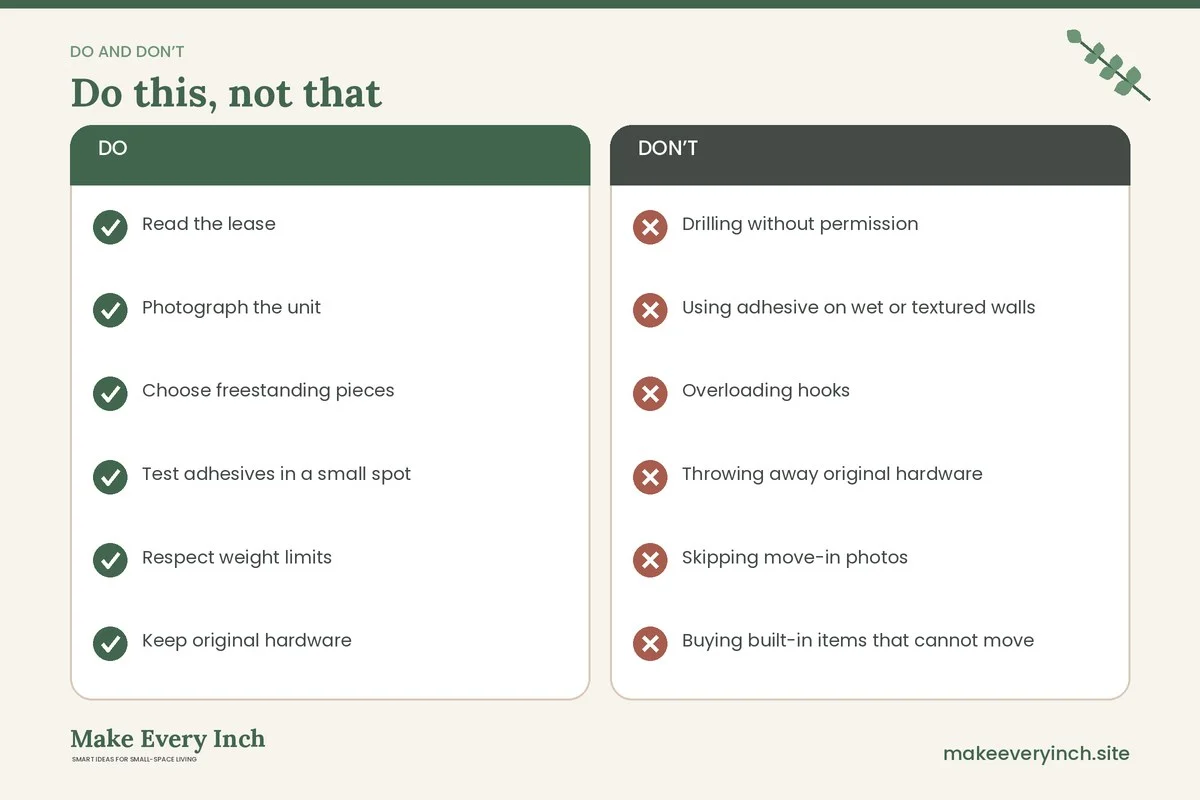
- Drilling without permission
- Using adhesive on wet or textured walls
- Overloading hooks
- Throwing away original hardware
- Skipping move-in photos
- Buying built-in items that cannot move
- Ignoring the weight limit
Checklist
- Read the lease
- Photograph the unit
- Choose freestanding pieces
- Test adhesives in a small spot
- Respect weight limits
- Keep original hardware
- Label bins and shelves
- Keep a folder of emails and receipts
- Remove adhesive slowly
- Photograph at move-out
FAQ
How do I organize a rental without drilling?
Use freestanding furniture, over-door organizers, tension rods and adhesive hooks within weight limits.
Can I use adhesive hooks in a rental?
Usually yes, but check the lease and follow the instructions for cleaning and removal.
What is the best storage for a small rental?
A tall bookcase, a bed with drawers, under-bed bins and an over-the-door organizer.
How do I protect my deposit?
Photograph the unit, avoid damage and keep original hardware.
Can I anchor a bookcase to the wall?
Ask the landlord, since small anchor holes are often allowed. Patch them at move-out.
How do I store things in a studio rental?
Use vertical and hidden storage, and choose multi-use furniture. See hidden storage ideas.
How do I take storage with me?
Choose freestanding, easy-to-assemble pieces and keep hardware in labelled bags.
What if my landlord says no to everything?
Use freestanding pieces and furniture, which need no permission.
Keep going: Explore our small space organization ideas, vertical storage ideas and no-drill storage ideas for renters.
Save this guide for later
Pin the ideas you like to Pinterest so you can come back to them when you plan your space.