15 Small Bedroom Ideas Without a Closet
Quick answer: The best small bedroom ideas without a closet use a freestanding wardrobe or garment rail, a tall dresser, under-bed storage and wall hooks. Hang what you wear weekly, fold the rest and store off-season clothes out of sight. Keep the rail or wardrobe near the door so the room stays open.
Small bedroom ideas without a closet start with a simple count: how much hangs, how much folds and how much is out of season. This guide gives 15 solutions, a comparison table, three plans and a checklist so the room does not turn into a pile of clothes.
Count what you actually own
Measure your hanging clothes by sliding a hanger rod. About 3 feet of hanging fits a minimalist wardrobe. Fold sweaters, jeans and workout clothes. Rotate seasonal items into a bin under the bed or in a hall closet. Donate what you have not worn in a year.
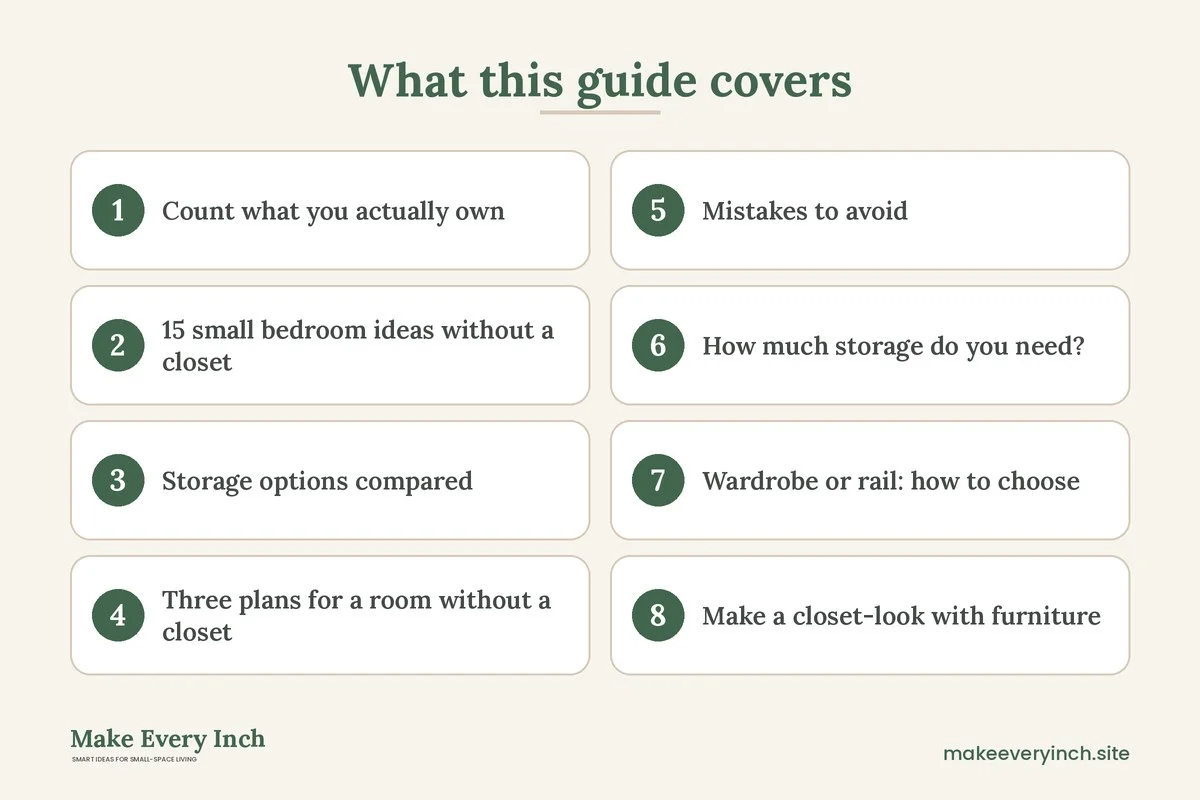
15 small bedroom ideas without a closet
1. A freestanding wardrobe
A wardrobe 30 to 40 inches wide gives you hanging space and shelves in one piece. Choose a light color so it blends in with the wall.
2. A garment rack with a curtain
An open rail 48 inches wide with a curtain hides clothes and costs much less than a wardrobe.
3. A built-in look with shelves and a rod
Install a rod between two bookcases for a custom closet effect.
4. A tall dresser
A 48 inch tall chest holds folded clothes and sits on a narrow wall. See small bedroom layout ideas.
5. Under-bed drawers
Drawers or covered bins hold off-season clothes, bedding and shoes.
6. A storage bench
A bench at the foot or by the door holds shoes, bags and extra layers.
7. Wall hooks and pegs
A row of hooks at 60 inches holds jackets, bags and robes and doubles as decor.
8. Over-the-door hooks
They add hanging space with no installation. Use sturdy ones for coats.
9. A ladder rack
A leaning ladder can hold scarves, towels and a few outfits for the week.
10. Floating shelves above the bed or door
Shelves 12 inches deep hold folded sweaters and baskets.
11. Baskets for small items
Labelled baskets keep socks, belts and accessories together.
12. Vacuum bags for off-season clothes
Bags reduce bulk by half and slide under the bed.
13. Use the space above the door
A shelf above the door holds seldom used bags and boxes.
14. A hidden storage bed
A lift-up bed holds bedding and bulky items.
15. Edit twice a year
Check your clothes each season and move out what you do not wear.
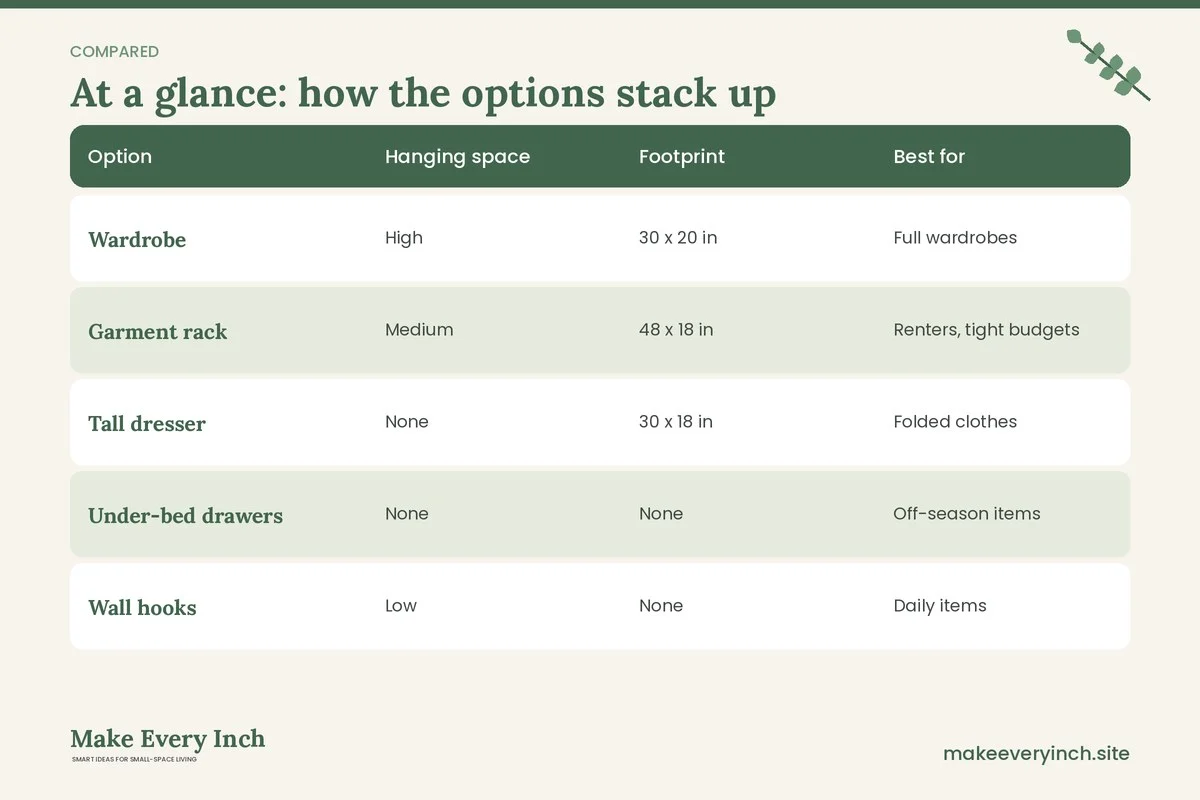
Storage options compared
| Option | Hanging space | Footprint | Best for |
|---|---|---|---|
| Wardrobe | High | 30 x 20 in | Full wardrobes |
| Garment rack | Medium | 48 x 18 in | Renters, tight budgets |
| Tall dresser | None | 30 x 18 in | Folded clothes |
| Under-bed drawers | None | None | Off-season items |
| Wall hooks | Low | None | Daily items |
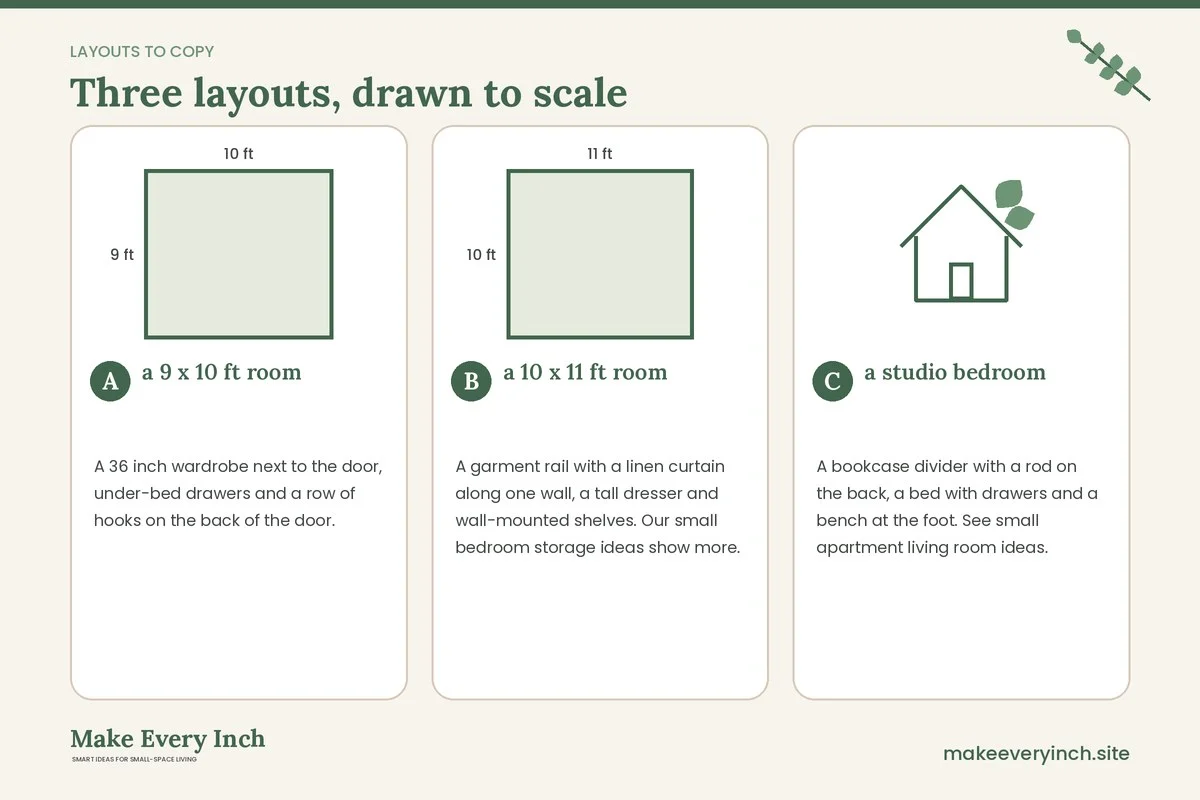
Three plans for a room without a closet
Plan A: a 9 x 10 ft room
A 36 inch wardrobe next to the door, under-bed drawers and a row of hooks on the back of the door.
Plan B: a 10 x 11 ft room
A garment rail with a linen curtain along one wall, a tall dresser and wall-mounted shelves. Our small bedroom storage ideas show more.
Plan C: a studio bedroom
A bookcase divider with a rod on the back, a bed with drawers and a bench at the foot. See small apartment living room ideas.
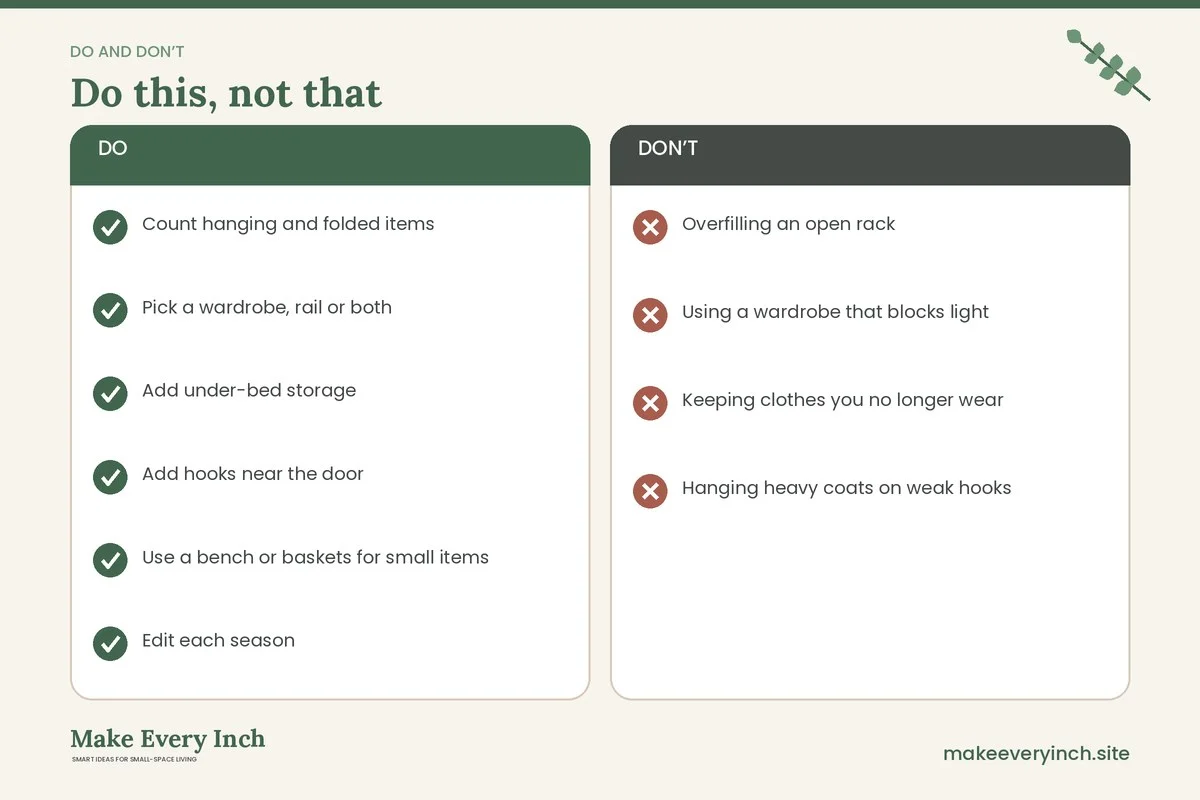
Mistakes to avoid
- Overfilling an open rack
- Using a wardrobe that blocks light
- Keeping clothes you no longer wear
- Hanging heavy coats on weak hooks
How much storage do you need?
Count the hanging items you wear in a normal week, plus the items you wear in a normal season. Most people wear about 20 percent of their wardrobe 80 percent of the time. A capsule of about 30 to 40 pieces, including shoes and outerwear, fits in a single wardrobe. Plan hanging space for shirts, dresses and coats at about 1 inch per item, and plan drawer space for jeans, knits and underwear. Add a place for shoes, bags and accessories. When you know how many inches you need, the choice of furniture becomes simple.
| Item | Space needed | Best storage |
|---|---|---|
| 20 shirts or dresses | About 24 in of rod | Wardrobe or rail |
| 5 coats | About 10 in of rod | Hooks or a rail |
| 10 sweaters | One shelf | Shelf or drawer |
| 6 jeans | One drawer | Drawer or basket |
| 8 pairs of shoes | 24 in of floor | Shoe rack or bench |
| 6 bags | One hook or shelf | Wall hooks |
Wardrobe or rail: how to choose
A freestanding wardrobe is the closest to a real closet. It hides clothes, protects them from dust and can match the room. Look for models with a rod and shelves and with doors that slide or fold if the space is tight. A garment rail is more affordable and lighter, and it suits a small wardrobe that is neat. Add a curtain or a fabric panel to hide it, or style it with matching hangers. Choose a rail with a shelf at the bottom for shoes. For heavy coats, check the weight rating.
Make a closet-look with furniture
Place two tall bookcases or dressers about 36 inches apart and fix a rod between them to create a built-in effect. Add a curtain or a pair of doors to hide the contents. Alternatively, build a closet from a corner using a tension rod and a curtain. If you rent, use freestanding pieces and avoid drilling. A neat edit, a coat of paint on the wall behind and a runner at the foot make the closet feel intentional. See layout ideas for where to place it.
Folding and hanging for small spaces
Use slim velvet hangers to save space and prevent slipping. Fold clothes using the file method so you can see each item in a drawer. Roll socks and underwear in dividers. Hang shirts by color to find them quickly. Use cascading hangers for pants and scarves, and shelf dividers to stop piles from toppling. Store out-of-season clothes in vacuum bags or boxes under the bed. These habits keep a small wardrobe organized and make daily dressing easier.
Seasonal wardrobe rotation
Each change of season, move out-of-season clothes into a labelled bin and bring in the clothes you need. Inspect each piece for stains and repairs, and wash it before you store it. Keep a donation bag for items you did not wear. Add cedar blocks or lavender to deter moths. Rotation prevents overcrowding and means your small wardrobe always has the right clothes. It also gives you a regular reason to edit, so the amount of clothing stays under control.
Look after your clothes without a closet
Dust and sun can damage clothes in an open room. Keep a garment rail away from windows and cover it with a cotton sheet. Use breathable garment bags for delicate items, and avoid plastic. Keep the room dry and ventilated, and use silica gel or a dehumidifier if needed. Check clothes on a rail every month for signs of moths or mildew. A little care keeps clothes fresh without a closet. See storage ideas for more organizing tips.
Budget plan for a closet-free bedroom
A basic setup costs about 150 to 300 dollars: a rail or wardrobe, a set of hangers, under-bed bins and hooks. Start with the rail and hangers, add hooks on the wall or door and then add under-bed storage. Look for secondhand wardrobes, which are often well made and inexpensive. Refinish with paint if the color does not suit the room. See renter ideas for ways to protect your deposit.
Ideas for bedrooms without a closet, by situation
Studio apartment
Use a bookcase as a divider and hang a rod on the back. Use a tall wardrobe near the entry and store off-season clothes in a bin beneath the bed. A curtain can separate the sleeping area from the living area and hide a rail.
Dorm or shared house
Use an over-the-door hook, a stackable cube storage unit and a small rail. Label your area so roommates do not use it. Store luggage under the bed and keep a lockable box for valuables.
Child’s room
Use low rails and hooks so a child can hang clothes. Choose a dresser with drawers a child can open and label each drawer with a picture. Keep seasonal clothes in a box on a high shelf.
Guest room
Offer a small rail, a few hangers and an empty drawer. Provide a luggage stand and hooks behind the door. Keep the guest area simple and tidy.
Furniture that works as a closet
A tall armoire, a pair of tall dressers with a rod between them, a bed with big drawers and a storage bench all do the work of a closet. Look for furniture that is deep enough to hold hangers, about 20 to 24 inches. A wide, shallow cabinet that is only 12 inches deep suits folded clothes but not hanging clothes. Use mirrors on the doors to double the use of the piece. When you choose, check the interior height, the weight limit of the rod and the door swing.
How to make a rail look good
An open rail can look cluttered, so style it. Use matching hangers and group by color, from light to dark. Keep shoes in baskets or a neat row below. Hang one bag, a hat or a scarf as a decorative detail. Add a small shelf above for baskets and a plant. Keep the number of items below the rail’s capacity to avoid sagging. If it looks messy, edit again. A well-styled rail can be a feature of the room rather than a problem.
A realistic closet-free setup for a 10 x 10 foot room
Place a queen bed on the long wall with under-bed drawers for shoes and bulky sweaters. Put a 36 inch wardrobe beside the door, with the rod at the top for dresses and shirts and shelves below for sweaters. Add a row of five hooks at 60 inches on the side wall for coats and bags, and a slim dresser opposite the bed for folded items. Hang a mirror on the door of the wardrobe and keep a basket on the floor for laundry. The room holds a full wardrobe and still leaves a 30 inch path.
Tips for travelers and part-time residents
If you only live in the room part of the year, use a small rail and a few hooks, and keep the rest in a suitcase under the bed. Pack a capsule wardrobe, and keep the suitcase as a drawer. Use packing cubes for sorting and a small hanging bag for the items you need to keep wrinkle-free. A bedroom without a closet is fine for a short stay if you keep the system simple and the floor clear. See renter ideas for temporary setups.
What to do about shoes, bags and accessories
Shoes are the hardest item to store without a closet. A narrow shoe rack by the door holds six to eight pairs, and a bench with a shelf below holds more. Under-bed shoe boxes with clear fronts make pairs easy to find. For bags, use a row of hooks or a rail, and hang the heaviest on the strongest hooks. Hats can hang on pegs or sit on a shelf, and belts and scarves fit on a hanging organizer or over-the-door rack. Jewelry fits in a shallow tray or a wall-mounted rail. Group accessories by type and keep each group in a labelled container. This approach keeps small items from spreading across the room and makes mornings faster.
Keeping the room calm with open storage
Open storage shows everything, so the calm look depends on editing. Limit the colors of hangers and clothes, keep the rail in a neutral tone and use matching baskets. Keep the floor below the rail clear except for one tray or one pair of shoes. Fold items neatly and avoid stuffing. Use a curtain or screen for days when the room has to look especially tidy. A little care makes an open wardrobe look like part of the design. See small bedroom ideas for finishing touches.
Closet-free living: a month-by-month guide
In the first month, set up a basic system with a rail or a wardrobe, a few hooks and under-bed bins. Edit your clothes and donate what you do not wear. In the second month, notice what is not working, such as a pile of coats or loose shoes, and add a bench, a rack or a second rail. In the third month, refine the look with matching hangers, labelled baskets and a curtain. By the end of three months, the system should feel natural. Review each season to remove excess and swap items. This steady approach prevents impulse purchases and makes the final result fit the way you live.
Signs that your closet-free system is working
You can find any piece of clothing in under a minute. The floor is clear of piles. The rail holds only what you wear weekly. Seasonal clothes are put away. Shoes and bags have homes. Laundry goes into a hamper on the same day. You feel calm when you walk in. If any of these is missing, adjust. A small change, such as adding a hook or removing ten items, often fixes the problem.
If you are not ready to buy a wardrobe, start with a single rail from a hardware store and a pack of matching hangers. Use the first month to learn what you wear, then invest in the pieces that fit. Many people find that a smaller wardrobe and a clear system are more useful than a full closet, and the room feels lighter as a result. Keep your receipts in case a piece does not fit the room.
Closet-free checklist
- Count hanging and folded items
- Pick a wardrobe, rail or both
- Add under-bed storage
- Add hooks near the door
- Use a bench or baskets for small items
- Edit each season
FAQ
How do I store clothes without a closet?
A wardrobe or garment rail, a tall dresser and under-bed bins cover most needs.
Is a wardrobe better than a clothing rack?
A wardrobe hides clutter. A rack is cheaper and lighter. Choose based on how tidy you are.
How do I hide a clothing rack?
Add a curtain, place it in a corner or style it with matching hangers.
What if I rent?
Use freestanding pieces and over-the-door hooks. See our renter ideas for damage-free tricks.
How do I keep clothes from wrinkling?
Use slim hangers, do not overfill the rod and fold knit items.
Where should the wardrobe go?
Near the door or on the wall opposite the bed, where drawers and doors can open fully.
Keep going: Explore our small bedroom ideas, small bedroom storage ideas and layout ideas.
Save this guide for later
Pin the ideas you like to Pinterest so you can come back to them when you plan your space.