19 Afrohemian Apartment Ideas for Colorful, Culture-Rich Small Spaces
Quick answer: The best Afrohemian apartment ideas layer African and diaspora textiles, art, wood and woven pieces with relaxed bohemian styling: warm earthy colors, plants, pattern on a few key surfaces and handmade objects bought from African and diaspora makers. Edit hard, learn what each piece is, and buy from the people who make it.
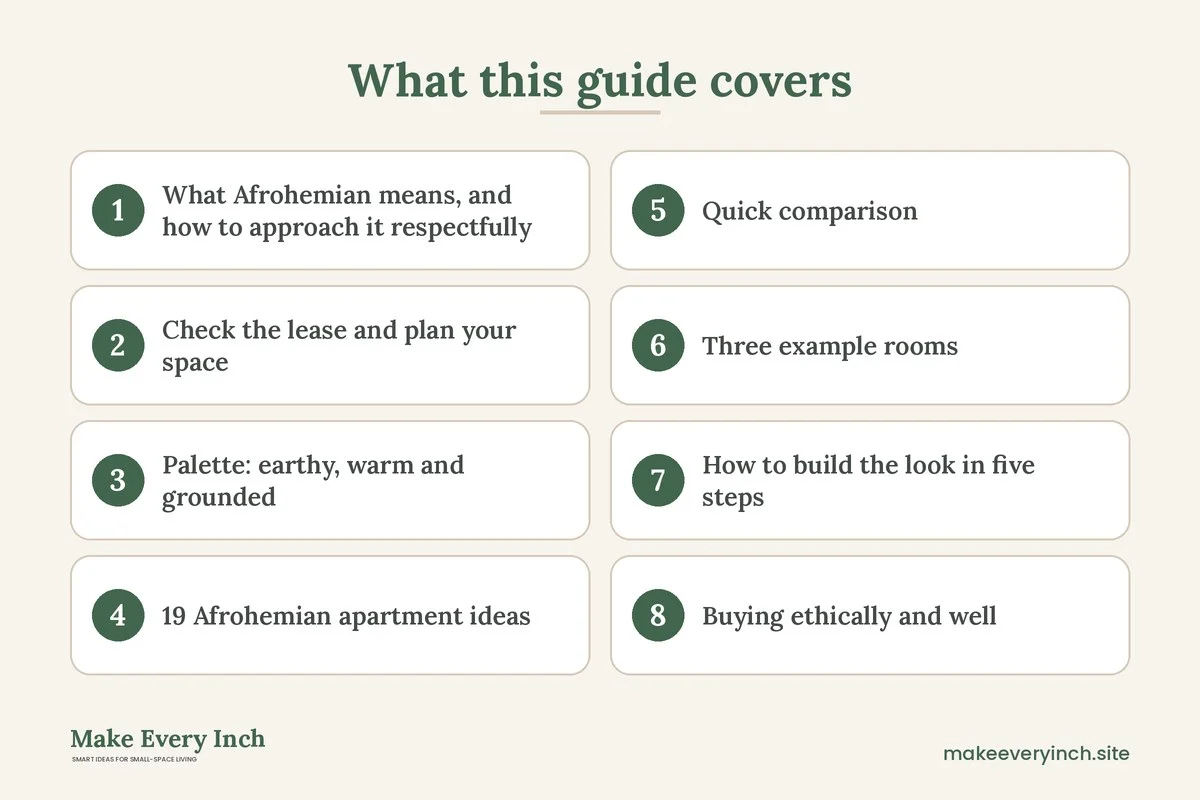
Afrohemian apartment ideas describe a look that blends African-inspired art, textiles and craft with the layered, collected feel of bohemian style. The term is used by designers and decorators rather than by any one culture, and it works best when it is built on real objects with real makers behind them. In a small apartment, the style can feel crowded unless you choose a few meaningful pieces and give them space. This guide covers the palette, 19 ideas, a comparison table, three example rooms, a method, ethical sourcing, budgets, mistakes and a checklist. If you want the wider bohemian approach first, read our boho apartment ideas, and for a bolder, more-is-more route see playful maximalist apartment ideas.
What Afrohemian means, and how to approach it respectfully
Africa is a continent of 54 countries and thousands of cultures, languages and craft traditions, so no single look represents all of it. Afrohemian is a decorating shorthand, and the most respectful way to use it is to be specific. Choose pieces from named traditions, learn what they are and how they are made, and avoid mixing sacred or ceremonial objects into casual decor. Treat the pieces as art and craft, not as a theme or a costume. A room with five well-chosen, properly sourced pieces is stronger than one stuffed with mass-produced imitations.
Check the lease and plan your space
Most of this style rests on textiles, baskets, plants and furniture, so it suits renters. Read the lease for rules on nails, paint and adhesive, and photograph the walls before you start. Measure the walls you want to fill, and sketch where the sofa, bed and shelves will go. Decide on one focal point per room, such as a large textile over the sofa, and let the rest support it.
Palette: earthy, warm and grounded
Start with a warm neutral base such as cream, sand or soft clay. Add two or three deeper colors, for example indigo, terracotta, ochre, forest green or deep brown. Keep black and white as pattern anchors, as in bogolan and many woven cloths. Limit bright accents to small items, so the colors stay balanced. Test paint or fabric in daylight and evening light before committing.
19 Afrohemian apartment ideas
Textiles and pattern
1. Mudcloth as a throw, pillow or wall piece
Mudcloth, known as bògòlanfini, comes from Mali, where Bamana makers dye handwoven cotton strips with fermented mud to create patterns in earthy brown and white. Authentic pieces are made in strips sewn together, so check the edges and ask the seller about the maker. Use one on a sofa arm, or frame a small piece, rather than covering every surface.
2. Kente cloth as a special accent
Kente is a handwoven strip cloth from Ghana, associated with the Asante and the Ewe peoples. Real kente is costly and often has ceremonial importance, so treat it with care. A smaller piece, such as a table runner or a framed strip bought from a Ghanaian weaver, is a respectful way to include it. Avoid cheap printed copies if you can.
3. Kuba cloth for texture and art
Kuba cloth comes from the Kuba kingdom in the Democratic Republic of the Congo, and is made of woven raffia with embroidery and appliquéd patterns. The geometric designs suit modern rooms, and the fiber adds texture. Genuine textiles are collectible and often antique, so work with reputable dealers and verify age and origin.
4. Wax print fabric for cushions and curtains
Wax print fabrics, often called Ankara, are widely worn and sold across West and Central Africa, with bold colors and large motifs. Buy from African and diaspora fabric sellers, then sew or order cushion covers and a table cloth. Wash before use, since some dyes bleed in the first wash.
5. Indigo adire and resist-dyed cloth
Adire is an indigo resist-dyed cloth from the Yoruba of southwest Nigeria. Its deep blues work well with warm woods and white walls. Use a piece as a bed runner, a tablecloth or a light curtain.
6. Layered rugs and kilims
Layer a flat-weave rug with a smaller textured one for depth. Choose rugs in earthy colors and simple geometric patterns, and add a rug pad to prevent slipping. A 5 by 8 foot base layer suits most living rooms.
Art and walls
7. Art by African and diaspora artists
Buy prints, photographs and paintings from living artists in Africa and the diaspora. Many sell directly online or at art fairs and markets, and prints can start at modest prices. A single large piece often does more in a small room than a crowded gallery wall.
8. A leaning gallery
Lean framed prints on a dresser or a console instead of hanging them, then layer smaller pieces in front. This works well for renters and lets you swap art freely. See our renter friendly wall decor ideas for more no-nail displays.
9. Geometric wall color inspired by Ndebele painting
Ndebele women in South Africa are known for painting bold, geometric patterns on house walls, and this tradition has inspired designers worldwide. If you borrow the idea, keep it modest: a small painted panel, a framed work by a South African artist or a removable wall panel, rather than copying sacred or community designs. Use removable wallpaper if painting is not allowed.
10. Carved masks and sculptures, chosen carefully
Many masks and figures have ceremonial or spiritual roles, and some were taken from communities unfairly. If you want sculpture, buy contemporary pieces from living artists or reputable dealers who can document provenance. Avoid souvenir copies sold as authentic.
Wood and woven pieces
11. Woven baskets as wall art and storage
Baskets from Ghana, such as Bolga baskets woven in the north near Bolgatanga from grasses, make strong wall groupings and carry blankets or shoes. Rwandan agaseke baskets are woven in coils with fine patterns. Hang a group of three to five at different sizes, or use one as a plant cover.
12. Carved wooden stools and low tables
Carved wooden stools serve as side tables, plant stands or extra seats, and a small stool takes less than a square foot of floor. Look for pieces by named makers and sustainable wood. Check the underside for stability and sand any rough edges.
13. Handmade pottery and calabash bowls
Hand-thrown pots, bowls and gourds add curved shapes and earthy tones. Group them on a shelf with space between items. Use them for keys, fruit and plants, so they are both useful and decorative.
14. Natural fiber lighting
Woven or raffia pendant shades cast patterned shadows and warm the room. Plug-in pendants and floor lamps with woven shades work without wiring, and our renter friendly lighting ideas cover more options. Use LED bulbs, which stay cool near natural fibers.
Plants, layers and small-space editing
15. Plants with strong shapes
Snake plants, fiddle-leaf figs, monstera and rubber plants fit the style and tolerate indoor light. Place them in terracotta pots or baskets with liners to protect the floor. Group three at different heights in a corner, and check each plant’s light needs.
16. Layering with intention
Bohemian style depends on layering, but small rooms need a rule. Use three layers: a base of solid colors, a middle of one or two patterns, and a top layer of objects. Repeat each color at least twice, so it looks collected, not random.
17. Edit to a few key pieces
Choose one large textile, one piece of art, one woven wall group and a handful of objects. Put the rest in storage and rotate them seasonally. Leave empty wall and shelf space so the pieces can breathe.
18. Mixed furniture with warm wood
Pair a plain sofa in a neutral fabric with wooden furniture in medium to dark tones. Vintage and secondhand pieces fit well, as in our vintage apartment ideas. A plain base lets the textiles stand out.
19. A personal story wall
Add family photos, handwritten recipes, a well-loved book or heirlooms. These make the room yours and keep it from feeling like a styled set. If you are of African descent, you may include your own heritage objects, and if not, build a collection through learning and purchase, not imitation.
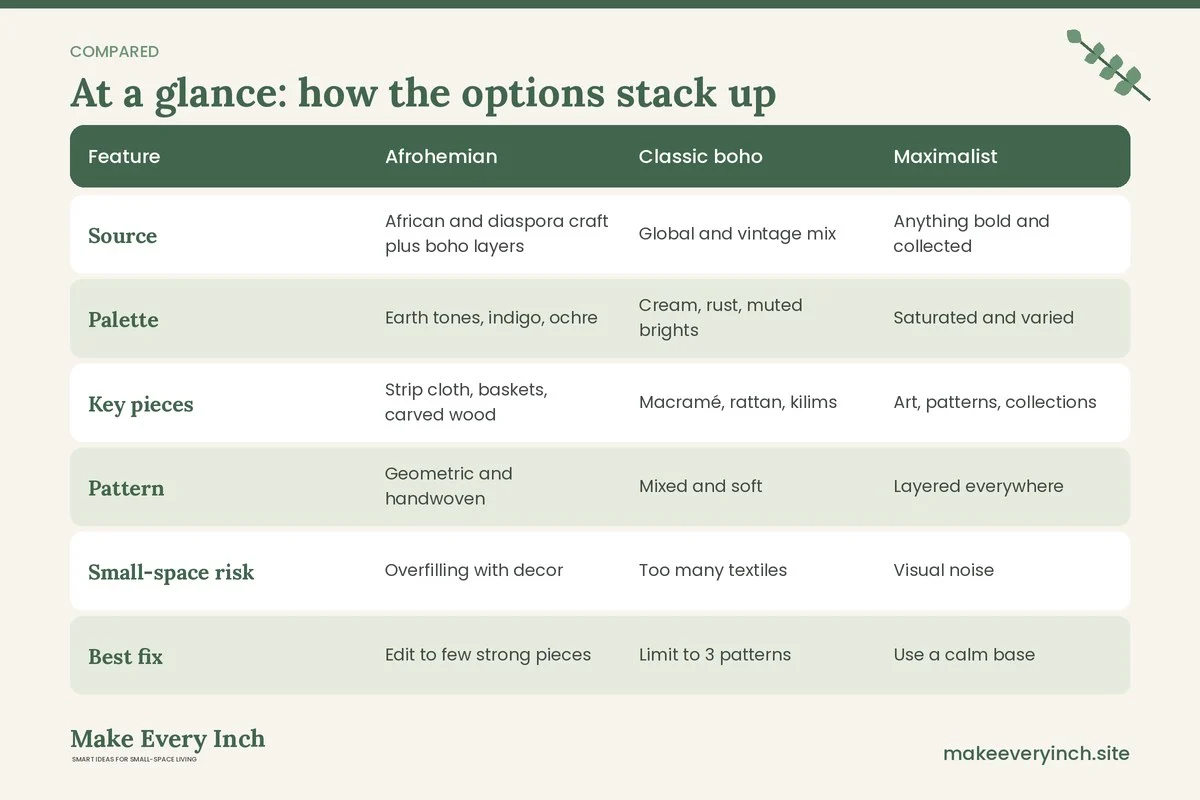
Quick comparison: Afrohemian and related styles
| Feature | Afrohemian | Classic boho | Maximalist |
|---|---|---|---|
| Source | African and diaspora craft plus boho layers | Global and vintage mix | Anything bold and collected |
| Palette | Earth tones, indigo, ochre | Cream, rust, muted brights | Saturated and varied |
| Key pieces | Strip cloth, baskets, carved wood | Macramé, rattan, kilims | Art, patterns, collections |
| Pattern | Geometric and handwoven | Mixed and soft | Layered everywhere |
| Small-space risk | Overfilling with decor | Too many textiles | Visual noise |
| Best fix | Edit to few strong pieces | Limit to 3 patterns | Use a calm base |
Three example rooms
A studio with a sofa bed
Paint is off limits, so use a cream sofa cover and a mudcloth pillow pair. Lean a large print on a console and hang three baskets above the sofa with adhesive hooks rated for their weight. A wooden stool serves as a side table, and a snake plant sits in the corner.
A one-bedroom living room
Layer a 5 by 8 foot flat-weave rug with a smaller indigo piece. Put a wax print throw over a chair, lean three prints by diaspora artists on the mantel and add a raffia pendant on a plug-in cord. Keep the walls light so the textiles lead.
A bedroom in a rental
Hang a framed adire panel behind the bed, or drape one on a tension rod. Add linen sheets in sand, a Kuba-inspired pillow from a respected maker and a woven basket for laundry. A bedside lamp with a natural shade finishes the room.
How to build the look in five steps
Step one: set the palette
Choose a neutral base and three deeper colors, then write them down. Hold swatches against your sofa and floor.
Step two: pick the anchor
Select one textile or artwork that you love, and let it set the colors. Buy this first, from a maker you can name.
Step three: add craft by type
Add one woven piece, one wooden piece and one ceramic piece. This keeps materials varied but controlled.
Step four: layer lighting and plants
Add a warm lamp at seating height, a natural shade overhead and two or three plants at different heights.
Step five: edit and rest
Take away one thing from each surface, live in the room for a week and then adjust.
Buying ethically and well
The most important part of this style is where the pieces come from. Look for African-owned shops, artisan cooperatives, fair-trade organizations and makers who sell directly online or at craft markets, and read about how and where the item was made. Ask the seller about the maker, the materials and the tradition, and be wary of vague tags such as tribal style, which can signal mass-produced copies. Pay fair prices, since handmade work takes days or weeks, and avoid bargaining down artisans who price modestly. When an object has a sacred or ceremonial role, appreciate it in context and leave it with the community. Buying fewer, better pieces serves makers more than buying many cheap imitations. Secondhand and vintage pieces from reputable dealers are also a good way to reduce waste.
Caring for textiles and woven pieces
Check care labels and ask the maker how to wash each piece. Hand-dyed and mud-dyed cloth may bleed, so spot clean, or wash gently in cold water on its own. Keep natural fibers out of direct sun, since it fades dyes, and away from damp rooms where mold can form. Vacuum baskets with a brush attachment and shake rugs outdoors. Rotate textiles every few months and store spares folded with a breathable cover, never in plastic for long periods.
Learning the stories behind your pieces
Part of the pleasure of this style is knowing what you own. Read a book or museum page on each tradition, follow the makers you buy from and keep a small card or note with each piece naming its origin and maker. When guests ask, you can tell them the story, which turns decor into conversation. Many museums and cultural institutions publish free online collections of African textiles, sculpture and contemporary art, which are a good way to train your eye before you buy. Meanings of patterns and colors differ between communities, so ask the maker rather than guessing, and do not invent a meaning for a design you like.
Budget guide
Under $150
Wax print fabric by the yard for pillow covers, a few secondhand baskets, a leaning print from an emerging artist and one or two plants. Look at community markets and vintage shops. See our small apartment makeover on a budget guide for savings ideas.
About $500
Add an adire or mudcloth piece from a verified maker, a flat-weave rug, a woven pendant and a carved stool. Prices vary by size, region and maker, so compare more than one seller.
$1,200 and up
Commission a work from a living artist, buy a larger handwoven textile or add a quality wood piece. Save for one significant item rather than several mid-quality ones.
Mistakes to avoid
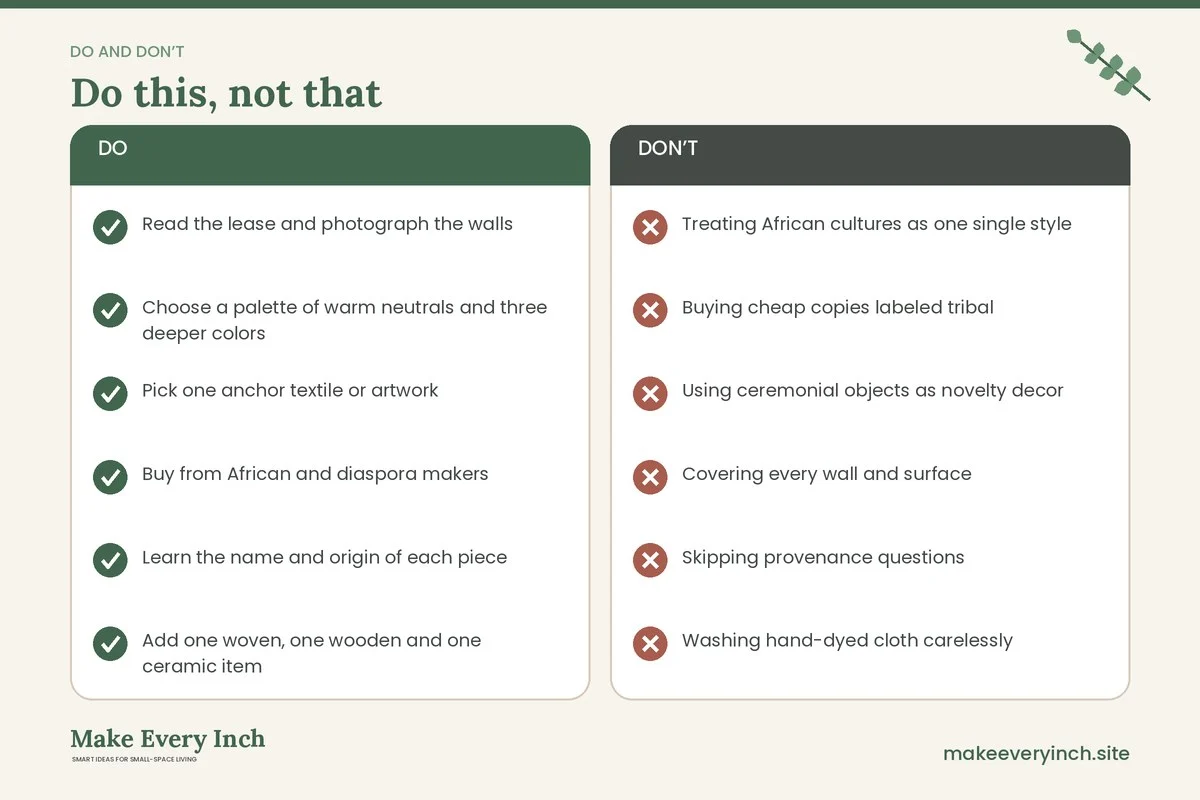
- Treating African cultures as one single style
- Buying cheap copies labeled tribal
- Using ceremonial objects as novelty decor
- Covering every wall and surface
- Skipping provenance questions
- Washing hand-dyed cloth carelessly
- Using too many patterns at once
- Hanging heavy baskets on weak adhesive
Afrohemian apartment checklist
- Read the lease and photograph the walls
- Choose a palette of warm neutrals and three deeper colors
- Pick one anchor textile or artwork
- Buy from African and diaspora makers
- Learn the name and origin of each piece
- Add one woven, one wooden and one ceramic item
- Include plants at different heights
- Use warm natural lighting
- Check weights for hooks and strips
- Leave empty space on each wall
- Follow care instructions
FAQ
What is Afrohemian style?
It is a decorating style that blends African-inspired art, textiles and craft with bohemian layering, using warm colors, plants and handmade pieces.
Is Afrohemian decor cultural appropriation?
It can be if it copies sacred or ceremonial items without respect. Buying from African and diaspora makers, learning the traditions and avoiding costume-like decor keeps it respectful.
Where can I buy authentic pieces?
Try African-owned shops, artisan cooperatives, fair-trade organizations, craft markets and artists who sell directly. Ask about the maker and materials.
What is the difference between mudcloth and wax print?
Mudcloth, or bògòlanfini, is handwoven Malian cotton dyed with mud, while wax print is a factory or workshop printed cotton in bold designs, widely worn across West and Central Africa.
How do I use it in a small apartment?
Choose a few strong pieces, leave empty space and lean art rather than hanging many items. Keep the base neutral.
Can renters do this style?
Yes. Textiles, baskets, stools, plants, leaning art and plug-in lighting need no drilling or paint.
How do I avoid a cluttered look?
Limit patterns to two, repeat colors and keep a rule of three layers. Store extras and rotate them.
Is it expensive?
Not necessarily. Start with fabric, baskets and prints, then add a large handmade piece when you can afford it.
Keep going: Explore our boho apartment ideas, vintage apartment ideas and renter-friendly apartment decorating ideas.
Save this guide for later
Pin the ideas you like to Pinterest so you can come back to them when you plan your space.