15 Small Laundry Room Lighting Ideas for Bright, Safe Spaces
Quick answer: Small laundry room lighting works best in three layers: a bright, even overhead light, task light over the folding surface and the sorting area, and a soft accent or night light. Choose bulbs with good color rendering so stains show, keep fixtures suitable for damp areas, place any outlet near water on a GFCI, and never let cords or fixtures touch a dryer vent or hot surface.
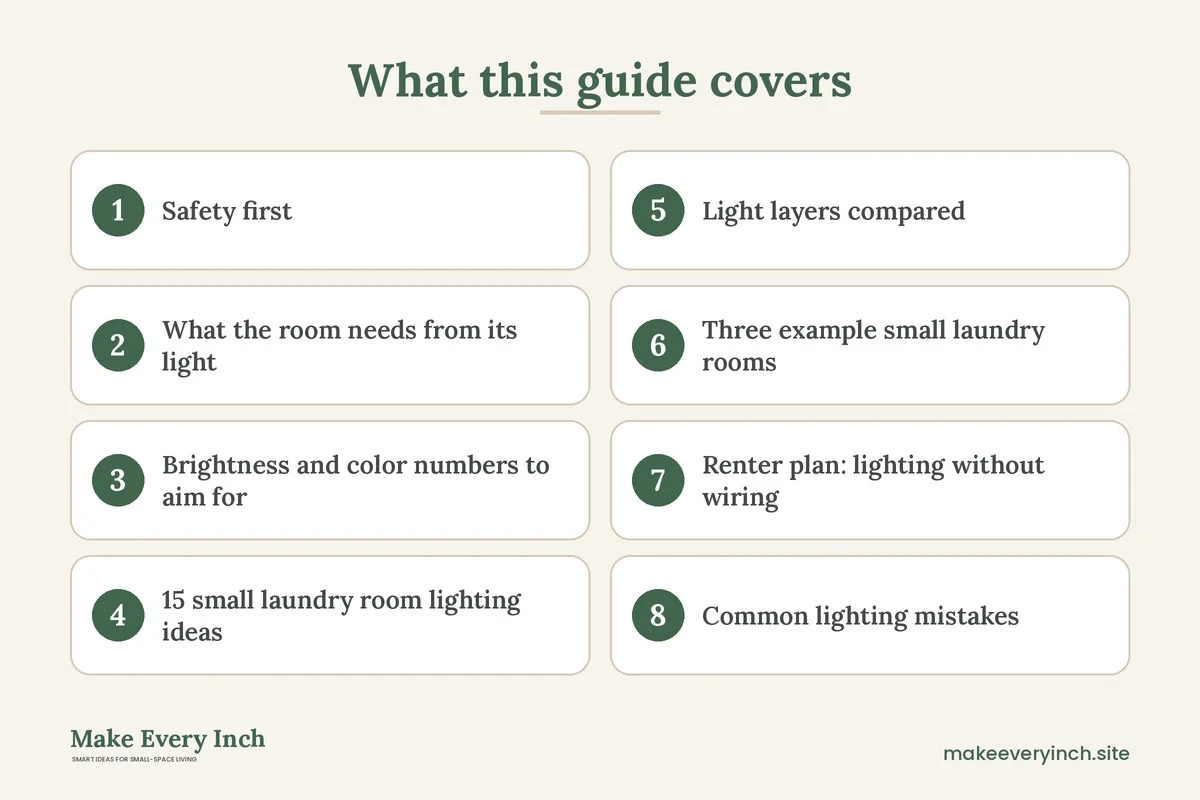
Small laundry room lighting has a harder job than lighting a bedroom or a hall. The room is usually small, often windowless, full of reflective white appliances and filled with steam, lint and splashes. You need to see a stain on a shirt, read a care label, tell navy from black, and fold quickly without squinting, and you need the fixtures to survive humidity. This guide explains how to plan light in a laundry room or a laundry closet, with the safety rules for electricity and heat, the brightness and color numbers to aim for, 15 ideas, a layer table, three example rooms, a renter plan and a checklist. For the full layout, see our main guide on small laundry room ideas, and for light in other damp rooms read small bathroom lighting ideas and small kitchen lighting ideas.
Safety first: electricity, water, heat and lint
Lighting in a laundry room mixes electricity with water, heat and flammable lint. Read these points before choosing any fixture.
- Use fixtures suited to the location. Light fixtures near a sink, a washer or a spot that can get splashed should be rated for damp or wet locations as the packaging and manual say. A fixture marked for dry locations is not meant for steam and splashes.
- GFCI protection near water. Outlets near a laundry sink or a washer are commonly required to have ground-fault circuit interrupter protection. If you plug in a lamp or a charger close to water, check that the outlet is protected, and test the GFCI button as the manufacturer advises. If it trips often, call a qualified electrician.
- Electrical work belongs to a licensed professional. Do not rewire a ceiling box, install a hardwired fixture or change a switch unless you are qualified and have permission. In a rental, ask the landlord. Plug-in, battery and adhesive lighting avoids wiring changes.
- Keep heat sources away from fixtures and cords. A dryer, a dryer vent and a hot exhaust all produce heat. Keep cords, bulbs and shades well away from them, and keep the clearances in the dryer manual.
- Lint is flammable. Lint builds up behind and under a dryer and around the vent. Do not place a lamp, a cord or a string light where lint can collect against it. Clean lint from the dryer trap each load and have the vent checked following the manufacturer’s advice.
- Do not block ventilation. A dryer needs airflow and space around it. Do not crowd the area with lamps or shelves in a way that restricts it.
- Avoid cord hazards. Never run a cord across a walkway, under a mat or through a door. A trip near a heavy basket or a hot appliance is a real risk. Use cord covers where allowed and keep cords short.
- Choose low-heat bulbs. LED bulbs run cooler than older bulbs, which matters in a small closet. Still check the maximum wattage on the fixture and never exceed it.
- Check the lease. Hardwired changes, drilling and new fixtures often need permission. Use adhesive strips and plug-in options within their rated limits.
- Check your manuals. The washer and dryer manuals describe clearances and electrical rules. Follow them.
What the room needs from its light
Start with the tasks. A laundry room is not a place for mood lighting alone. You do five things in it, and each asks something different of the light.
- Sorting: you need to tell colors apart and read labels. This needs bright, even light at about waist height.
- Stain checking: you need to see small marks under neutral light before a garment goes in the dryer.
- Folding: you need shadow-free light on a counter or a fold-down shelf.
- Hanging and ironing: you need light along a rod or an ironing area, with no glare.
- Moving through at night: you need low, gentle light so a late load does not wake the household.
Next, note the room’s conditions. Is there a window? What color are the walls and floor? How tall is the ceiling? Where is the switch? Is there a socket near the folding area? A white room with a window needs far less added light than a dark laundry closet with no window.
Brightness and color numbers to aim for
Light is measured in lumens for brightness and in kelvins for color temperature. These are rule-of-thumb ranges to help you shop. Your own needs may differ, and the fixture’s manual comes first.
- Overall brightness: a small laundry room often feels right with roughly 20 to 30 lumens per square foot as a loose planning figure. A room of 35 square feet would then need about 700 to 1,050 lumens in total from all sources. A windowless room may want the higher end, and a bright room with a window the lower.
- Task light: aim for extra, focused light at the folding surface, perhaps 300 to 500 additional lumens aimed at the counter, depending on how you use it.
- Color temperature: 3000K to 4000K gives a clean, neutral light that makes stains visible and colors accurate. Below 2700K can look yellow and hide stains, and above 5000K can feel harsh and clinical.
- Color rendering: look for a high color rendering index (CRI), often listed on the package, with 80 or above generally being acceptable and 90 or above better for color matching. Good rendering helps you tell navy from black and see a red wine stain.
- Dimming: a dimmable fixture or a dimmer on the switch lets you drop the light at night. Check that bulbs and dimmers are compatible.
15 small laundry room lighting ideas
Overhead light that spreads evenly
1. A flush-mount fixture with a diffuser
A flush-mount light with a frosted cover spreads light evenly and keeps the glare down. It sits close to the ceiling, which suits a low room. Make sure it is rated for the conditions, and choose a cover that wipes clean.
2. A swap of the bulb in the existing fixture
Often the cheapest improvement is a better bulb in the fixture you already have. Choose an LED at the right brightness and color temperature, and respect the fixture’s maximum rating. This needs no wiring and is renter-friendly. Switch the power off at the switch and let the old bulb cool first.
3. A pair of ceiling lights in a long room
In a narrow room, a single central light leaves the ends dim. Two smaller fixtures spaced along the length make the light even. This usually means electrical work, so involve a qualified electrician and the landlord.
4. A recessed ceiling light, if the building allows it
Recessed lights give a clean look but need to be installed by a professional, and the housing must be suitable for the ceiling and the insulation. In a rental, you will almost never do this yourself.
Task light where you work
5. Under-shelf LED strip over the counter
If you have a shelf above a folding counter, an LED strip stuck under it lights the work surface from above. Choose a strip rated for the humidity, wipe the surface before sticking it down, keep the driver or adapter away from water and lint and follow the instructions.
6. A plug-in under-cabinet bar
A bar light with a plug and a switch can sit under a cabinet or a shelf. Plug it into a GFCI-protected outlet if it is near water, and keep the cord short and out of the way of the dryer.
7. A clamp lamp on a shelf
A small clamp lamp on a shelf edge directs light where you need it and moves with you. Choose a model with a stable clamp and a cord long enough to reach the outlet without crossing a walkway.
8. A battery puck light in a laundry closet
In a closet with no outlet, battery-powered puck lights stick or screw to the underside of a shelf. They suit a quick load and a rental. Keep spare batteries on hand and check that the adhesive holds in humidity.
Light the sorting and storage areas
9. Motion-sensing light for the hamper corner
A small motion-activated light lights the sorting area when you walk in with your hands full. Choose one with a timer so it turns itself off, which saves batteries.
10. Light inside a cabinet or closet
A stick-on light inside a supply cabinet makes it easy to see detergent labels. Keep it away from spills, and store chemicals as the label directs. Our guide to small utility closet organization ideas covers safe storage in detail.
11. A rod light along a hanging bar
If you hang clothes to dry, a slim strip along the front of the shelf above the rod lights the garments and helps you spot stains and snags. Keep the strip away from damp fabric and from the dryer vent.
Make the most of natural and reflected light
12. Sheer or frosted window cover
If the room has a window, use a light-diffusing cover that gives privacy and lets daylight in. Avoid heavy curtains near a dryer or a hot surface, and keep fabric away from heat. See our post on renter-friendly window treatment ideas.
13. Pale, wipeable walls and shelves
Light-colored, washable surfaces bounce light around the room. A satin or semi-gloss finish is common in damp rooms because it wipes clean. Paint only if the lease allows it, and ventilate with a window or a fan while the paint dries. Choose a low-VOC product if you can. Our guide to colors that make small rooms look bigger shows how color changes brightness.
14. A mirror or a glossy shelf to bounce light
A mirror on a door or a wall opposite the light source doubles the visual brightness. Choose a plastic-backed or safety mirror in a laundry area, hang it as the lease allows with hardware rated for the weight, and keep it away from steam.
Night and mood
15. A low night light for late loads
A plug-in night light with a sensor lights the floor so you can find the machine at night without turning on the main light. Keep it away from the dryer vent and from lint, and use a GFCI-protected outlet near water.
Light layers compared
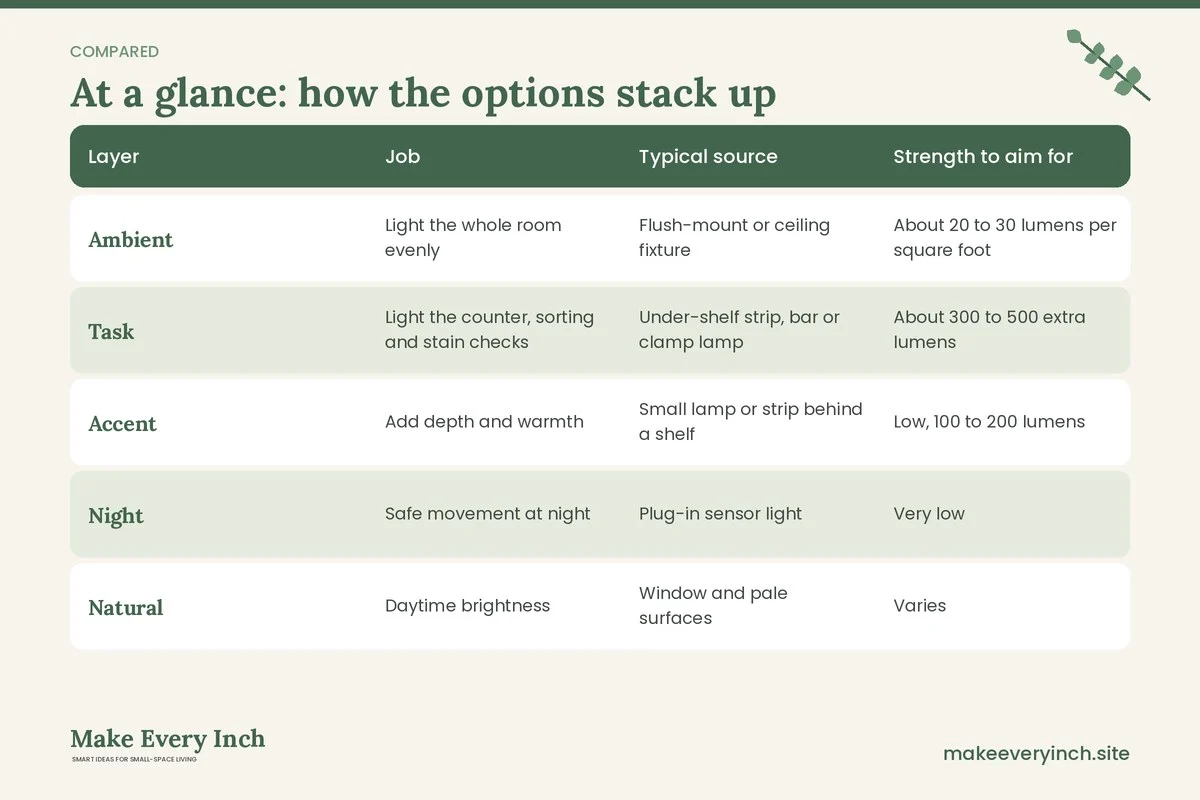
This table shows how the three layers work together, and what each one needs.
| Layer | Job | Typical source | Strength to aim for | Safety note |
|---|---|---|---|---|
| Ambient | Light the whole room evenly | Flush-mount or ceiling fixture | About 20 to 30 lumens per square foot | Use a fixture suited to damp areas |
| Task | Light the counter, sorting and stain checks | Under-shelf strip, bar or clamp lamp | About 300 to 500 extra lumens | GFCI near water, keep cords short |
| Accent | Add depth and warmth | Small lamp or strip behind a shelf | Low, 100 to 200 lumens | Keep away from lint and heat |
| Night | Safe movement at night | Plug-in sensor light | Very low | Away from the vent, check the manual |
| Natural | Daytime brightness | Window and pale surfaces | Varies | Keep fabric away from heat |
Three example small laundry rooms
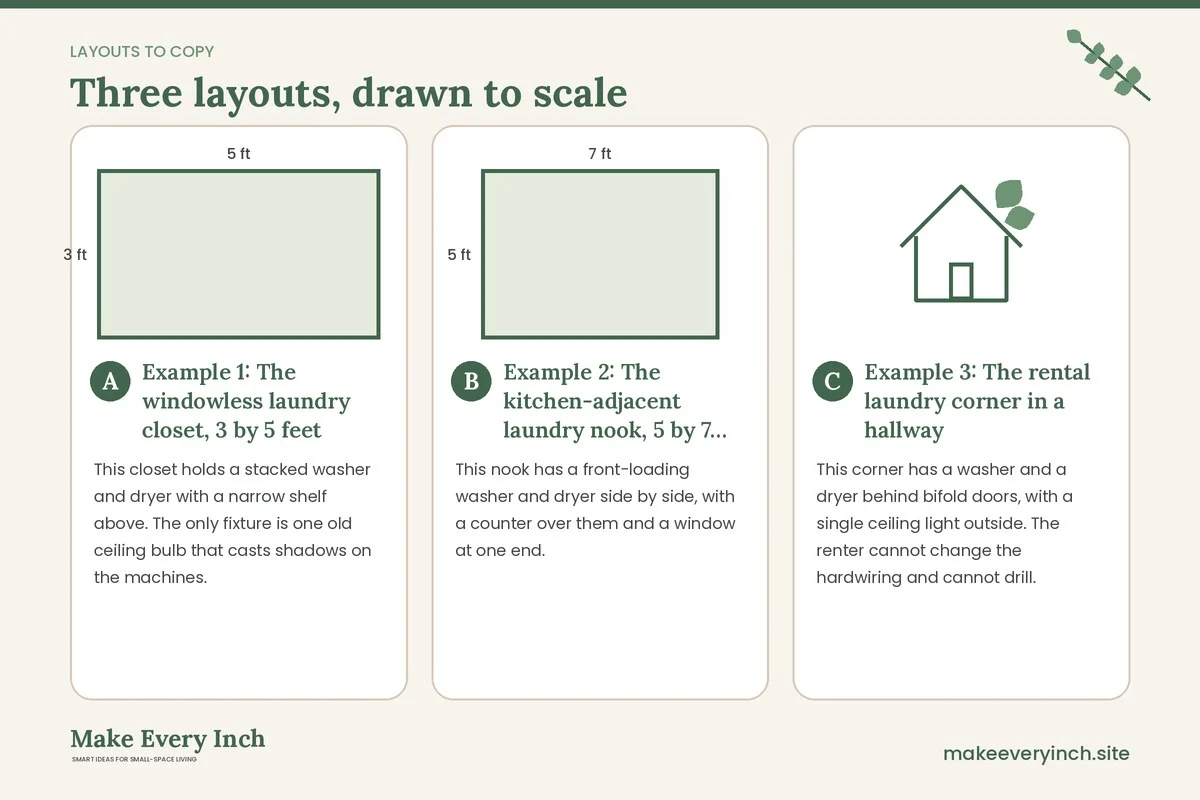
Example 1: The windowless laundry closet, 3 by 5 feet
This closet holds a stacked washer and dryer with a narrow shelf above. The only fixture is one old ceiling bulb that casts shadows on the machines. The household swaps the bulb for a brighter neutral-white LED within the fixture’s limit, then adds a battery strip under the shelf for task light. A motion-activated puck light lights the supply corner. A small mirror on the inside of the door bounces light into the closet. They keep the area around the dryer clear of cords and lint, and they never place a light where the vent could touch it. Total cost stays low, and no wiring changes are needed.
Example 2: The kitchen-adjacent laundry nook, 5 by 7 feet
This nook has a front-loading washer and dryer side by side, with a counter over them and a window at one end. The household keeps the daylight with a sheer panel and adds a plug-in bar light under a wall cabinet, plugged into a GFCI-protected outlet near the water connection. Because the counter doubles as a folding area, the bar gives shadow-free light. A low night light near the floor guides late loads. The cabinet interior light helps them find detergent. They keep the cords tidy, away from the machines, and keep the counter clear of heavy clutter so the machines can ventilate.
Example 3: The rental laundry corner in a hallway
This corner has a washer and a dryer behind bifold doors, with a single ceiling light outside. The renter cannot change the hardwiring and cannot drill. They use adhesive hooks within their rated limits to hold a rechargeable light strip inside the door frame, and a clamp lamp on a freestanding shelf. A pale, wipeable shelf and a small mirror add reflected light. The renter keeps a photo of the original setup, removes the adhesive carefully at move-out and warms the walls with a plant and a bin of laundry baskets. Lighting is plug-in and removable, so the deposit is safe.
Renter plan: lighting without wiring
If you rent, you can usually improve laundry room lighting without touching the electrics.
- Change the bulb to a better LED, within the fixture’s limit.
- Add battery or plug-in task lights under a shelf.
- Use adhesive strips or hooks within their weight limits, after testing on a hidden spot.
- Use a clamp lamp on a freestanding shelf or a counter edge.
- Add a plug-in night light on a GFCI-protected outlet near water.
- Keep every cord short and away from the dryer, the vent and walkways.
- Take photographs before and after, and remove adhesive slowly at move-out.
Our guide to renter-friendly lighting ideas goes deeper on plug-in and battery options, and the post on security deposit safe apartment upgrades lists changes that are easy to reverse.
Common lighting mistakes
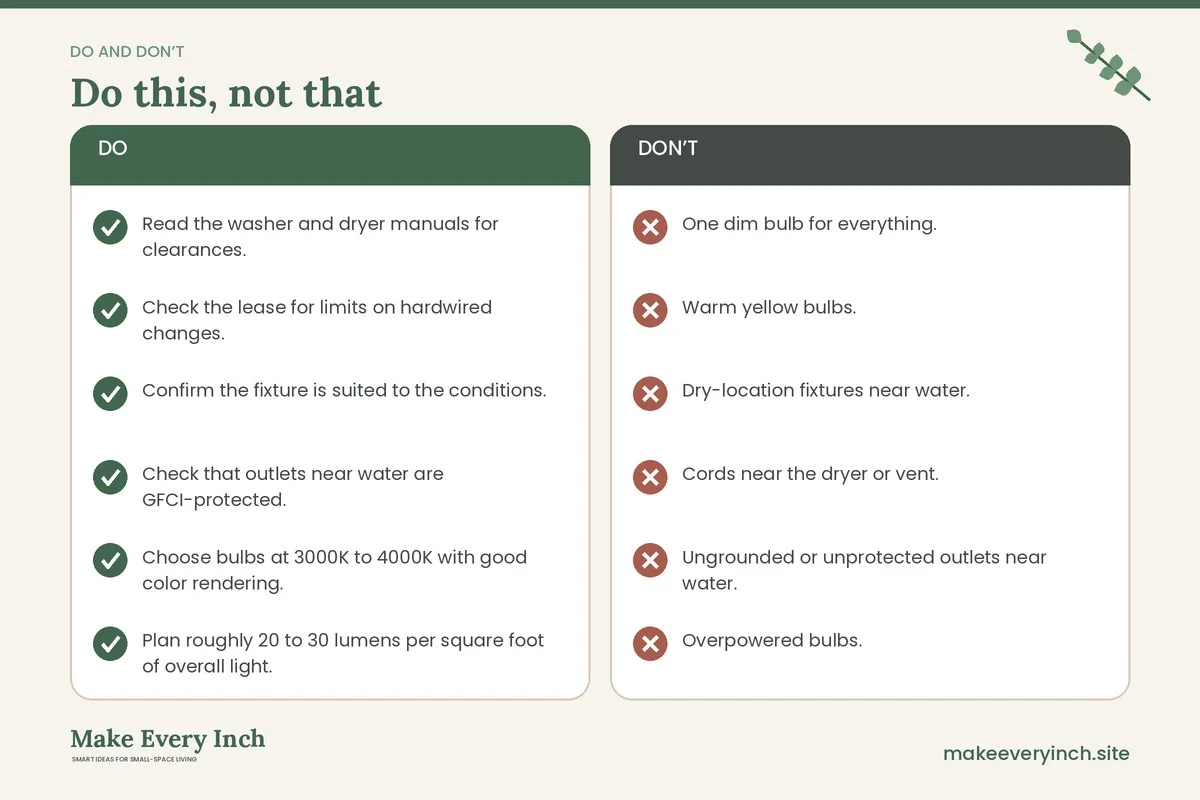
- One dim bulb for everything. A single weak light leaves shadows at the counter and the machines.
- Warm yellow bulbs. They can hide stains and make colors look wrong.
- Dry-location fixtures near water. A fixture meant for a dry room should not be used where steam and splashes reach it.
- Cords near the dryer or vent. Heat and lint make a risky combination.
- Ungrounded or unprotected outlets near water. Check for GFCI protection.
- Overpowered bulbs. Exceeding a fixture’s rating can overheat it.
- Glare from a bare bulb. Use a diffuser or a frosted cover.
- Forgetting the night. A late load in the dark leads to trips and spills.
- Hiding lights behind lint traps. Keep fixtures clear of buildup.
Maintenance: keep the light working
A laundry room is hard on fixtures, so a short routine keeps the light clean and safe.
- Wipe diffusers and covers with a damp cloth once the bulb is cool and the power is off.
- Clear lint from lights, strips and vents regularly.
- Check cords for fraying, heat marks and pinches.
- Test GFCI outlets as the manufacturer advises.
- Replace batteries in puck and motion lights before they fail.
- Check that adhesive strips still hold, especially after a hot load.
- Keep a spare bulb of the right type in the supply shelf.
Small laundry room lighting checklist
- Read the washer and dryer manuals for clearances.
- Check the lease for limits on hardwired changes.
- Confirm the fixture is suited to the conditions.
- Check that outlets near water are GFCI-protected.
- Choose bulbs at 3000K to 4000K with good color rendering.
- Plan roughly 20 to 30 lumens per square foot of overall light.
- Add task light over the folding surface.
- Add a night light for late loads.
- Keep cords short and away from the dryer and vent.
- Use a diffuser to cut glare.
- Choose pale, wipeable surfaces.
- Add a mirror to bounce light.
- Remove lint from fixtures regularly.
- Keep spare bulbs and batteries.
- Call a licensed electrician for wiring work.
FAQ
What color light is best for a laundry room?
A neutral white of roughly 3000K to 4000K is a good range because it shows stains and colors accurately without feeling harsh. Pair it with bulbs that have a high color rendering score.
How bright should a small laundry room be?
As a loose guide, plan roughly 20 to 30 lumens per square foot for the overall light, and add focused task light over the folding area. A windowless room generally needs more than a room with daylight.
Can I use a regular lamp in a laundry room?
Only if it is placed safely. Keep it away from water, steam, the dryer and the vent, plug it into a GFCI-protected outlet near water and keep the cord out of walkways. A clamp lamp or a plug-in bar is often a better fit.
Do I need a GFCI outlet in a laundry room?
Outlets near laundry sinks and washers are commonly required to have GFCI protection, but local rules vary. Check with a qualified electrician or your building manager.
How do I add light to a laundry closet with no outlet?
Use battery-powered puck lights, stick-on motion lights or a rechargeable strip. Check the adhesive in humid conditions and keep spare batteries.
Is it safe to put a light near a dryer?
Keep any light, cord or shade away from the dryer, its vent and lint buildup, and follow the dryer manual’s clearances. Heat and lint are a fire risk.
Can I change the light fixture myself in a rental?
Usually you need the landlord’s permission, and the work should be done by a qualified person. A bulb swap and plug-in lights are often the easiest options.
Keep going: Keep going with our guide to small laundry room ideas, the post on small closet ideas and the roundup of small entryway ideas.
Save this guide for later
Pin the ideas you like to Pinterest so you can come back to them when you plan your space.