23 Vertical Storage Ideas for Small Spaces That Use the Walls
Quick answer: The best vertical storage ideas use tall bookcases, wall shelves, hooks, pegboards, over-the-door racks and hanging organizers. Store heavy things low and light things high, anchor tall furniture to the wall and keep eye-level space for daily items. Vertical storage gives you more room without taking floor space.
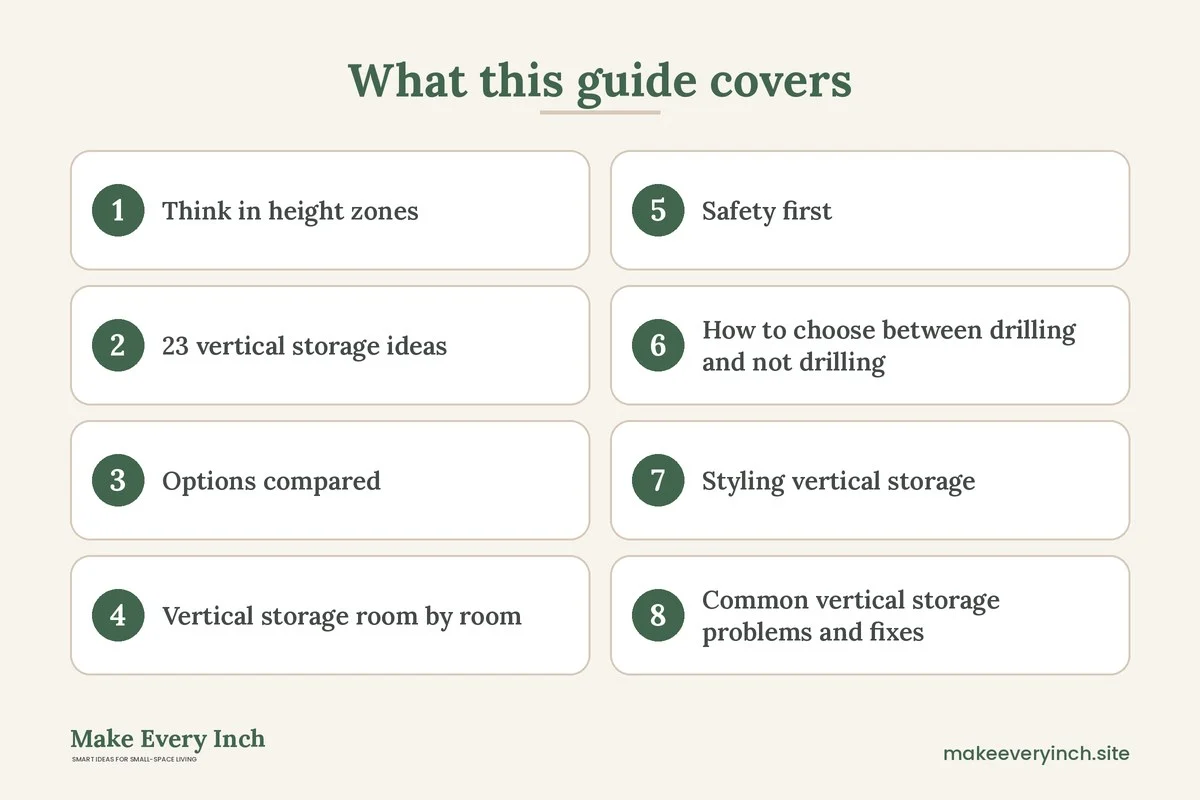
Vertical storage ideas turn bare walls and unused air into usable space. In a small home, the floor is the scarce resource, while the space above waist height is often empty. A good vertical system can double the storage of a room without making it feel smaller. This guide explains how to plan by height zone, shares 23 ideas across rooms, compares options in a table, covers safety and renters, and ends with a checklist. For the whole-home system, see small space organization ideas.
Think in height zones
Divide the wall into four zones.
- Floor to 12 inches: heavy items, shoes, bins and baskets
- 12 to 48 inches: daily-use items you reach often
- 48 to 72 inches: lighter items and display, still easy to reach
- Above 72 inches: rarely used items, seasonal goods and decor
Use the middle zone for what you touch every day, and push the rarely used items to the top and bottom. A step stool kept nearby makes the upper zone usable.
23 vertical storage ideas
Shelves and bookcases
1. Use a tall, narrow bookcase
A bookcase 10 to 12 inches deep and 72 inches high holds more than a wide, short one and takes the same floor space. Anchor it to the wall.
2. Hang floating shelves
Shelves above a desk, a sofa or a bed give extra space and look light. Use anchors rated for the load.
3. Add picture ledges
A shallow ledge holds frames, books and small items, and lets you change the display easily.
4. Use corner shelves
Corner shelves make use of dead space, and look good in a living room or bathroom.
5. Use a ladder shelf
A leaning shelf adds many levels without drilling.
6. Add shelves above doors
A shelf above a door holds baskets of seasonal items, and the space is otherwise wasted.
Hooks, rails and boards
7. Use a pegboard
A pegboard with hooks, shelves and baskets works in a kitchen, craft room or entry. You can rearrange it at any time.
8. Use rails and S-hooks
A rail in the kitchen holds pans and tools. In a bathroom it holds towels and baskets.
9. Use a hook strip
A strip of hooks inside a closet or a hall holds bags, hats and scarves.
10. Use a magnetic strip
A strip holds knives in a kitchen or metal tools in a workshop.
11. Hang baskets
Wall-mounted baskets hold toys, mail and bathroom items without taking floor space.
Door and cabinet storage
12. Use an over-the-door organizer
Pockets and racks on the back of a door hold shoes, cleaning supplies, toiletries and wraps.
13. Use the inside of cabinet doors
Add a rack or a hook to hold spices, lids, cutting boards and cleaning tools.
14. Use stackable shelves
A shelf riser adds a second layer in a cabinet and makes items visible.
15. Use a tiered cart
A tall, narrow cart with three tiers holds a kitchen, bathroom or craft supply, and rolls away when not needed.
Furniture and structure
16. Use a loft or a raised bed
A loft bed frees the floor for a desk or a dresser. Check headroom and the lease.
17. Use a tall dresser instead of a wide one
A tall chest holds the same clothes in less floor space.
18. Use a wall-mounted desk
A fold-down desk gives a workspace that disappears when you are done.
19. Use a ceiling-hung rack
A rack hung from the ceiling holds pots, plants or bikes. Anchor into joists.
20. Use a room divider with shelves
A shelf unit that divides a studio holds books and decor on both sides.
Habits and finishing touches
21. Use matching baskets on shelves
Baskets of the same color and size hide clutter and look neat.
22. Keep the top third empty
Leave some air at the top of each shelf, which makes the wall feel lighter.
23. Label the high items
Labels on the front of the top shelves help you find items without taking everything down.
Options compared
| Option | Best for | Cost | Drilling | Weight |
|---|---|---|---|---|
| Tall bookcase | Books, baskets | Medium | Anchor | High |
| Floating shelf | Decor, daily items | Low to medium | Yes | Medium |
| Pegboard | Kitchen, craft | Medium | Yes or adhesive | Low to medium |
| Over-door rack | Small items | Low | No | Low |
| Hooks and rails | Coats, tools | Low | Yes or adhesive | Medium |
| Loft bed | Studio rooms | High | Anchor | High |
| Ceiling rack | Heavy, bulky items | Medium | Yes | High |

Vertical storage room by room
Living room
Use a tall bookcase, wall shelves above the sofa and a picture ledge. A media console with doors and a wall-mounted TV save floor space. See small living room storage ideas.
Kitchen
Use a pegboard or rail for pots and tools, a shelf above the sink and cabinet riser shelves. Keep daily items at hand height. See small kitchen storage ideas.
Bedroom
Use a tall dresser, a headboard with shelves, wall hooks and an over-the-door organizer. See small bedroom storage ideas.
Bathroom
Use a shelf above the toilet, a ladder shelf and a shower caddy. See small bathroom shelving ideas.
Entry
Use hooks, a wall shelf and an over-the-door shoe organizer. See small entryway organization.
Safety first
Tall furniture can tip, and shelves can fall if overloaded. Anchor every tall bookcase or dresser to a stud with a strap or a bracket, and keep heavy items low. Use anchors rated for the weight of the load, and test by pulling down on a shelf before you load it. Keep shelves away from doors and walkways, and avoid placing heavy items above beds or cribs. If you have young children or pets, use closed storage for dangerous items and avoid shelves they can climb. In earthquake zones, add a lip or a bungee cord to keep items from sliding.
How to choose between drilling and not drilling
Drilling gives the strongest hold, so it is best for heavy loads such as books and appliances. If you own, use studs or proper anchors. If you rent, check the lease, because small holes may be allowed, and a patch kit can fix them. Without drilling, use freestanding units, tension poles, over-door racks, adhesive hooks within the weight limit and furniture that leans against the wall. Always test an adhesive on a small area and follow the instructions for cleaning the surface and curing time.
Styling vertical storage
Vertical storage can look cluttered if you fill every shelf. Use the rule of thirds: one third books or items, one third baskets and one third decor or empty space. Group items by color or by size, and put the heaviest, darkest items at the bottom. Vary heights, and place one tall item at the end of each shelf for balance. Hide small items in baskets and boxes. Use the same finish for shelves and brackets so the wall looks calm. Stand back after you finish, and remove a few things.
Common vertical storage problems and fixes
“The shelves look cluttered”
Remove half of the items, and put the rest in baskets. Leave space on each shelf.
“Shelves sag”
Add a center bracket, or use thicker boards. Reduce the load.
“I can’t reach the top”
Keep a stool nearby, use a grabber or move daily items lower.
“The wall is not strong”
Use toggle bolts or choose freestanding units. Ask a pro if the wall is plaster or concrete.
“The room feels top-heavy”
Balance the room by adding something low on the opposite wall, and keep the top shelves light and sparse.
Installing shelves and rails step by step
1. Plan the layout
Tape the shelf outline on the wall with painter’s tape, and check the height from several spots in the room. Mark where each bracket will go, and use a level.
2. Find the studs
Use a stud finder, and mark the studs with tape. Studs in most homes are 16 inches apart on center. If the studs do not line up with the shelf, use a French cleat or a rail that spans several studs and allows shelves to sit anywhere along it.
3. Drill pilot holes
Use a pilot bit slightly smaller than the screw. In tile or masonry, use the right bit and a plug. Keep the drill level.
4. Fix the brackets
Use screws long enough to go through the wall and an inch into the stud. Tighten until snug, not so much that you crack the bracket.
5. Test before loading
Press down on the shelf with your weight and watch for movement. Load the shelf gradually, putting the heaviest items nearest the wall and the brackets.
Vertical storage for specific items
Books
Books are heavy, so use thick shelves and short spans. Keep the heaviest on low shelves and stand them upright with bookends. Stack a few horizontally for variety.
Shoes
Use angled shoe shelves on the wall, a tall narrow rack or an over-door organizer. Keep the rack within reach of the door.
Bags and hats
Hang bags on hooks by their handles, and hats on a rail or a peg. Stuff bags to keep shape.
Pots and pans
A rail with S-hooks, a pot rack on the ceiling or a pegboard keeps them in reach. Keep the heaviest low.
Cleaning tools
A wall rail with spring clips holds brooms and mops, and a bucket on the floor holds sprays. Keep them near where you use them.
Craft and hobby gear
A pegboard holds tools, paper and thread in view. A rolling cart under it holds the rest. Clear jars on a shelf hold small parts.
Sports equipment
Wall hooks hold helmets and bags, and a rack holds a bike. A basket holds balls and gloves. Store in the entry or the garage.
Vertical storage for renters
Renters can still go vertical. Choose freestanding bookcases anchored with a small strap into a stud or a discreet furniture anchor. Use tension poles for corners and rods in closets and bathrooms. Use over-door hooks and racks. Use adhesive hooks and strips rated for the weight, and apply them to clean, dry paint. If you want to drill, ask your landlord, and offer to patch the holes. Keep photographs of the wall before and after, and keep the original hardware. See organization ideas for renters.
When vertical storage goes wrong
Vertical storage can become a trap if everything is up high and nothing is easy to reach. If you find yourself dragging a chair to a shelf every day, move that item lower. If the wall looks like a warehouse, edit what is on it. If your storage is hidden and forgotten, add labels or a list inside a cabinet. Check each shelf twice a year, and take down what you have not used since the last check. Good vertical storage is a living system.
Pairing vertical storage with hidden storage
The best storage is a mix of open and closed pieces. Use vertical open shelves for items you want to see, and closed cabinets, boxes and baskets for what you want to hide. Pair a tall bookcase with doors on the bottom, or a wall shelf with a basket on the top. See hidden storage ideas for ways to hide bulky items in furniture and unused spaces.
Vertical ideas for awkward spaces
Under the stairs
The area under a staircase can hold a rolling set of drawers, a coat rack, a pantry or a pet area. Use drawers that fit the angled depth, and add lighting. Check for any plumbing or wiring before you build.
Slanted ceilings
A sloped attic room needs low furniture at the edges. Use the knee wall for built-in drawers, and the tall side for a wardrobe. Use baskets on low shelves and store seasonal items in the deepest corners.
Narrow gaps beside appliances
A 6-inch gap beside the fridge or the washer can hold a slim rolling cart, with shelves at each level. Choose casters that lock, and check the cart does not touch a hot surface.
Above the toilet and the tub
Use shelves, a ladder or a cabinet. Keep a clear space around the toilet tank for access, and check that nothing blocks the shower. See small bathroom shelving ideas.
Above the bed
A shelf above the bed or the headboard holds books and lamps. Use a lip or a rail, and keep it light. For safety, avoid heavy or breakable items above where you sleep.
High ceilings
A tall room can take tall shelves, a ladder and a loft. Use the upper wall for display, and store seasonal items in labelled boxes on the highest shelf. A rolling ladder gives access to the top, and adds a look of its own.
Measuring and planning with a sketch
Before you buy anything, draw each wall to scale, marking windows, doors, outlets and switches. Mark the height zones and the studs. Cut paper templates for each shelf or piece and tape them on the wall to see how it looks. Leave 2 to 3 inches between shelves for hands, and 10 to 12 inches for tall items. Check that doors, drawers and windows open fully. A good plan avoids returns and extra holes.
A weekend plan
Saturday
Walk through the home and note blank walls, door backs and awkward corners. Measure each and choose one vertical solution per room. Edit what you own to match the space.
Sunday
Install the shelves, hooks and racks, and anchor all tall furniture. Fill the shelves following the height zones, and take a photo. Note anything that feels awkward.
Budget guide
Under $30
Adhesive hooks, an over-door organizer and a few baskets.
About $100
A tall bookcase, floating shelves and a pegboard.
$300 and up
A loft bed, a wall-mounted desk or a custom shelf system.
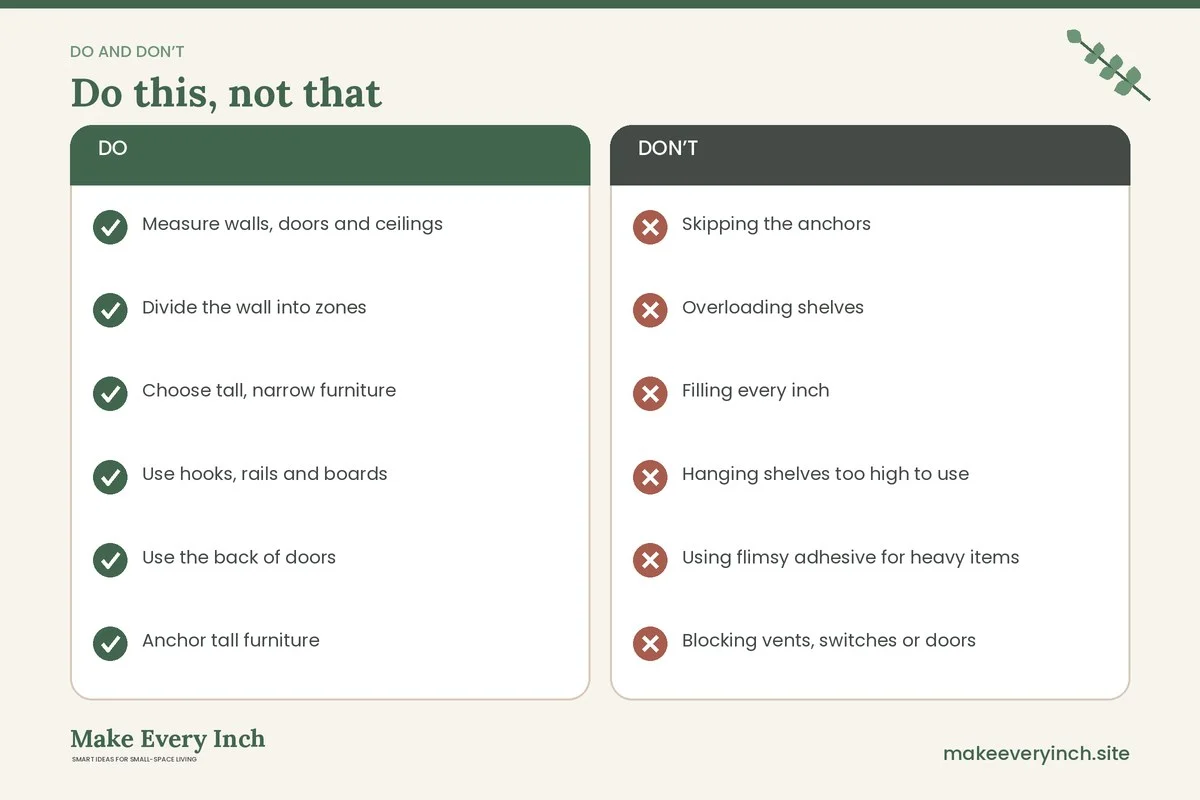
Mistakes to avoid
- Skipping the anchors
- Overloading shelves
- Filling every inch
- Hanging shelves too high to use
- Using flimsy adhesive for heavy items
- Blocking vents, switches or doors
- Forgetting the floor space
Vertical storage checklist
- Measure walls, doors and ceilings
- Divide the wall into zones
- Choose tall, narrow furniture
- Use hooks, rails and boards
- Use the back of doors
- Anchor tall furniture
- Keep heavy items low
- Leave the top third open
- Label high items
- Review each season
FAQ
What is vertical storage?
Storage that uses walls, doors and tall furniture instead of floor space.
How do I add vertical storage without drilling?
Use tall freestanding shelves, over-door racks, tension poles and adhesive hooks.
What is the best vertical storage for a small apartment?
A tall, narrow bookcase, wall hooks and an over-the-door organizer.
How do I stop tall furniture tipping?
Anchor it to a stud with a strap or a bracket.
How high should shelves be?
Keep daily items between 12 and 60 inches, and the rarely used ones above.
Do vertical shelves make a room look smaller?
Not if you keep them neat, light in color and partly empty.
Can I use vertical storage in a rental?
Yes, with freestanding pieces, hooks and approved fixings.
What can I store above the door?
Light seasonal items in baskets, as long as the shelf is secure.
Keep going: Explore our small space organization ideas, hidden storage ideas and small closet organization ideas.
Save this guide for later
Pin the ideas you like to Pinterest so you can come back to them when you plan your space.