Closet Shelf Organization Ideas
Quick answer: The best closet shelf organization ideas start with zones, not containers. Give each shelf one job, keep everyday items between hip and shoulder height, space shelves 10 to 14 inches apart for folded clothes, add dividers so stacks stay upright, use bins for small loose items, and label the front edge so everyone can put things back. Respect the weight limit of every shelf.
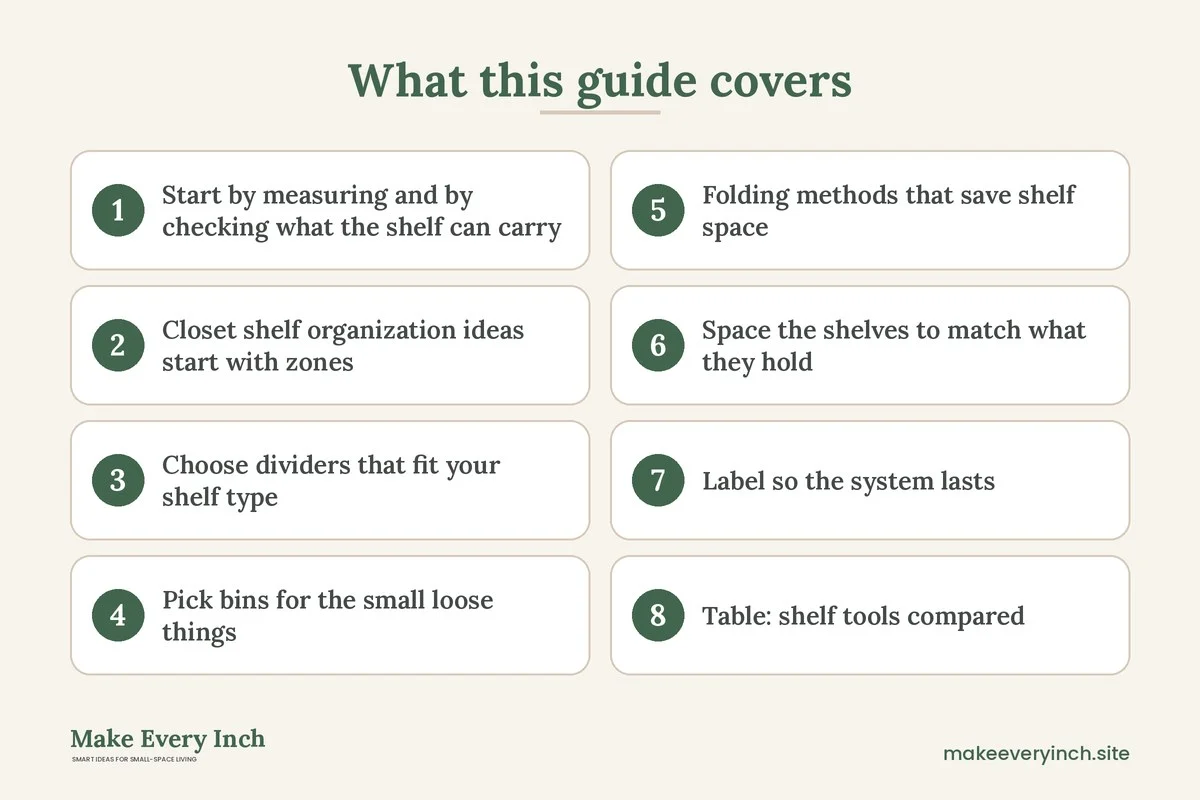
Closet shelf organization ideas matter most in a small closet, where one deep shelf above the rod is often the only horizontal storage you have. Without a plan, that shelf becomes a place where sweaters slump, bags tip over and anything you do not use every week disappears behind something you do. A good shelf system takes an hour or two to set up and then runs on small habits. This guide covers how to measure your shelves, how to split them into zones, how to choose dividers and bins, which folding methods save the most space, how far apart shelves should sit, how to label them, and how to keep the system working. It also includes a comparison table, three example closets and a checklist. For the full picture of a small closet, start with our pillar guide to small closet ideas, and for rods, hooks and hanging space see our guide to small closet organization ideas.
Start by measuring and by checking what the shelf can carry
Before buying a single container, measure what you have. Write down four numbers for each shelf: the width, the depth, the clear height above it, and the distance from the floor or the rod. A typical closet shelf is about 12 to 16 inches deep, and reach-in closets often have a single shelf near 60 to 84 inches from the floor. Measure the inside of the door frame too, because the opening is sometimes narrower than the shelf.
Then think about weight. Shelves in rental closets are often thin boards, wire or laminate, and they are meant for light loads such as folded clothes, hats and boxes of seasonal items. Heavy objects, such as stacks of books, shoe boxes full of paper, or a small appliance, can bow a shelf over time. If you cannot find a weight rating, treat the shelf as light-duty and spread the load across the full width, with the heaviest items closest to the supports. Look at the brackets too. If a shelf sags in the middle or the bracket has pulled away from the wall, fix that first or ask your landlord or building manager before loading it. Do not drill or add new brackets in a rental without written permission.
If your bedroom is short on storage overall, our guides to small bedroom storage ideas and small bedroom organization ideas show what to move out of the closet, and the wider small space organization ideas post covers the principles behind zoning.
Finally, empty the closet completely. Sort everything into four groups: wear weekly, wear seasonally, keep for special occasions, and let go. The size of the weekly group decides how much prime shelf space you need. In most closets it is smaller than people expect.
Closet shelf organization ideas start with zones
A zone is a section of shelf with one job. Zones work because the brain only has to remember a short rule, such as “sweaters are on the left of the top shelf,” rather than a list of individual items. They also stop categories from mixing, which is the main reason shelves become messy.
Use the height bands
The easiest way to assign zones is by height. Your body has a natural reach range, and the shelf that sits in it should hold the things you use most.
- Eye to shoulder height, about 50 to 60 inches: daily folded items, such as t-shirts, jeans and the sweaters you wear each week.
- Hip to chest height, about 30 to 50 inches: the most convenient band. Put the heaviest or most frequent items here, such as folded jeans or a bin of workout clothes.
- Knee to ankle height, below about 24 inches: shoes, laundry baskets and heavier bins. These are easy to lift from the floor but awkward to reach from a shelf.
- Above about 70 inches: seasonal and occasional items in labeled lidded boxes. Use a step stool and never stack boxes taller than you can safely lift down.
Match zones to habits
The best zones follow how you get dressed. If you grab a top, then trousers, then underwear, put those in a sequence from left to right or from top to bottom. A person who dresses for work and for the gym may need two clearly separate zones. A couple sharing a closet can divide the shelf by side, so each person owns a vertical column and nobody has to search the other person’s pile.
Leave 10 to 20 percent of every shelf empty. That gap is the buffer that lets you put laundry away without rearranging everything, and it is the number one reason systems survive past the first month.
Choose dividers that fit your shelf type
Dividers keep stacks upright and make each pile independent. Without them, pulling one sweater from a stack can topple three others.
Shelf dividers
A shelf divider is a vertical panel that clips or slides onto the shelf, and it usually has a lip that hooks over the front edge. Choose a divider that matches the shelf material. Wire shelves take a clip-on version, and solid boards take a slide-on or a freestanding one. Place a divider every 10 to 14 inches along a deep shelf, which is about the width of a folded sweater. Keep the divider taller than the stack by an inch or two, so the stack is still gripped when it is tall.
Freestanding dividers and book-end style panels
If you cannot attach anything to the shelf, a pair of L-shaped metal or acrylic panels works as a book end. Slide them under the stack and they hold it upright. These are renter-friendly and move with you. Make sure they do not scratch a painted shelf, and add felt pads under them.
Cardboard and DIY dividers
For a no-purchase option, cut foam board or sturdy cardboard to the height and depth of the shelf. Cover it with fabric or paper to look tidier. This option is cheap but wears out sooner, so treat it as a trial before you buy a permanent solution. Our guide to small home organization without buying bins has more ideas along this line.
Pick bins for the small loose things
Folded clothes stack well. Small items, such as socks, scarves, belts and hats, do not. Bins give those items a boundary.
Bin features that matter
- Open top or lid: open bins are faster to use for daily items. Lidded bins protect rarely used items from dust but add a step.
- Handle: choose a bin with a handle or a cutout on the front so you can pull it forward without disturbing others.
- Soft or rigid sides: soft fabric bins fit awkward shelves and squash into gaps, while rigid bins stack and hold their shape. Pick rigid for the top zones where bins will stack.
- Size: the bin should be an inch or two narrower than the shelf depth so you can reach around it, and a width that divides the shelf evenly.
- Ventilation: use breathable fabric, cotton or open weave for clothes. Avoid sealing damp clothing in a closed plastic box.
Safety around chemicals and scents
Do not use mothballs in shelf bins. Mothballs release fumes that are harmful to breathe and can be dangerous for children and pets, so check the label and keep them out of living areas. Cedar blocks and lavender sachets are gentler options, but they can still bother people with sensitivities, so use them sparingly and in a ventilated closet. If you paint or refinish shelves, use a low-VOC finish, let it cure fully with the door open, and keep the room ventilated before you put clothes back.
Folding methods that save shelf space
Folding is where a shelf either gains or loses an inch per item. The method you choose should fit the garment and your shelf height.
The file fold
Fold the item into a small rectangle, then fold it again until it stands up on its edge like a file in a drawer. Place the files side by side with the folded edge up. This method lets you see every item at a glance and take one without disturbing the rest. It works best on shelves with dividers or bins, because files need the sides of a container to stay upright. It suits t-shirts, leggings, towels and sweaters.
The stack fold
The classic fold is a flat rectangle placed in a pile. It uses the full height of the shelf, which is efficient, but only the top item is visible. Keep stacks to four to six items and use a divider. Stack fold suits bulky knitwear and items that you wear only occasionally.
The roll
Rolling saves space for soft, thin fabrics such as jersey, underwear and workout clothes. Rolled items fit snugly in bins and can sit in tight rows. Avoid rolling stiff or very bulky items, because they unroll and take more room.
The wide-fold for bulky items
Bulky sweaters and hoodies are best folded in thirds and then in half, giving a thick block. Stack no more than three and give each stack a divider. Never hang heavy knitwear if you can avoid it, because the shoulders stretch.
Fold to the shelf, not the other way around
Measure the shelf depth, then fold each type of clothing to a size that fits that depth. A folded item that is the same width as the shelf depth sits flush with the front edge and looks neat. A folded item that overhangs the edge catches on door frames and slides off.
Space the shelves to match what they hold
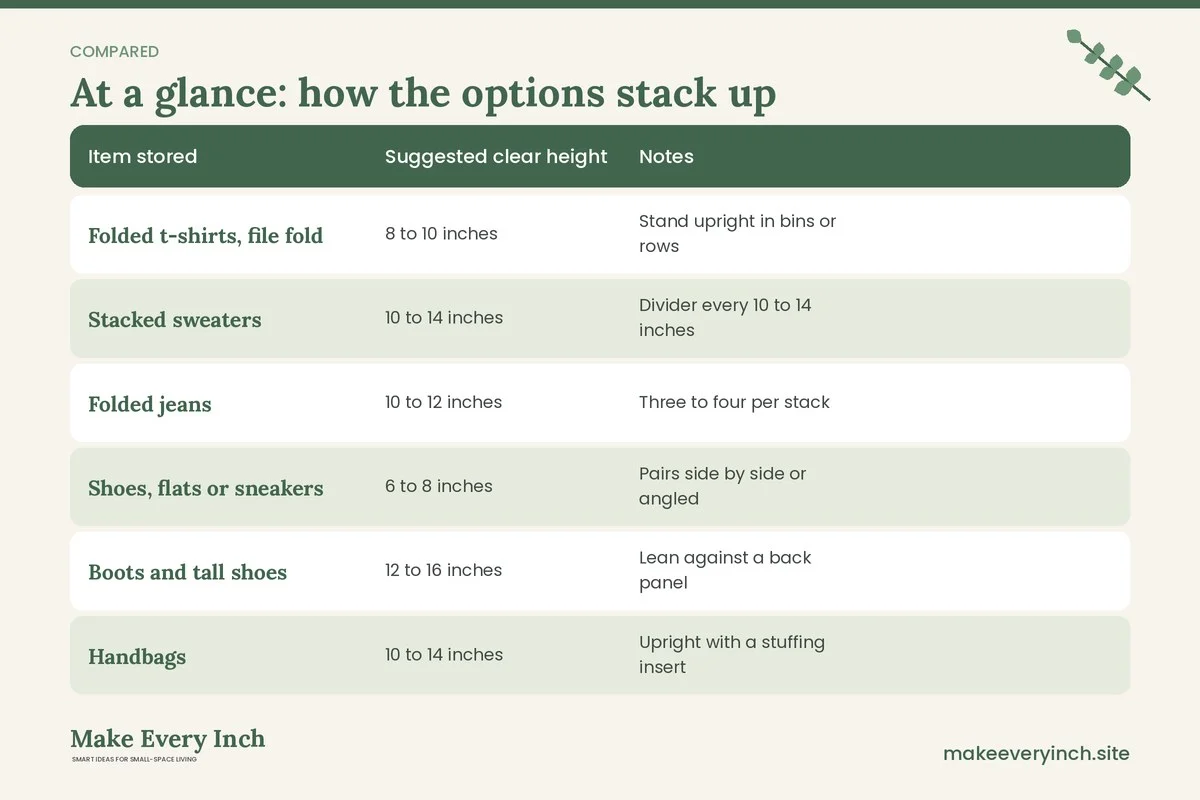
If your closet has adjustable shelves or you are able to add freestanding shelving, spacing is the biggest lever you have. Too much space wastes height, and too little leaves you stacking items awkwardly.
| Item stored | Suggested clear height | Notes | |
|---|---|---|---|
| Folded t-shirts, file fold | 8 to 10 inches | Stand upright in bins or rows | |
| Stacked sweaters | 10 to 14 inches | Divider every 10 to 14 inches | |
| Folded jeans | 10 to 12 inches | Three to four per stack | |
| Shoes, flats or sneakers | 6 to 8 inches | Pairs side by side or angled | |
| Boots and tall shoes | 12 to 16 inches | Lean against a back panel | |
| Handbags | 10 to 14 inches | Upright with a stuffing insert | |
| Seasonal lidded boxes | 12 to 16 inches | Light items only on top shelves | |
| Hats and caps | 6 to 10 inches | Stack or place in bins |
If your shelves are fixed, adapt the contents to the gaps. A 16-inch gap is too tall for t-shirt files, so add a bin or a small freestanding shelf to split it. A 6-inch gap is too short for sweaters, so use it for scarves, belts or shoes. Where shelving is freestanding, make sure tall units are anchored to the wall with the hardware the manufacturer recommends, and only with the permission of the person who owns the property.
Label so the system lasts
Labels turn a private system into a shared one. They remind you, and they tell anyone else in the home where things go.
Where to put labels
Place the label on the front edge of the shelf or on the front of a bin, at eye level when you stand in front of it. For a high shelf, put the label on the side of the bin that faces the door. Keep the wording short and specific, such as “Gym tops,” “Winter hats,” or “Spare linens.”
Label types
- Adhesive labels: quick and cheap, but they can leave residue on a rental shelf. Test on a hidden spot first.
- Clip-in or slide-in label holders: these hold a card that you can change without adhesive.
- Painter’s tape and marker: temporary, easy to remove, and a good test run before you commit to permanent labels.
- Picture labels for children: young children can place items correctly using a picture or a color, even if they cannot read yet.
Put the system in writing
Keep a short note inside the closet door or on your phone that lists the zones. When the system changes, update the note. This single step prevents a surprising amount of drift.
Table: shelf tools compared
| Tool | Best for | Space use | Rental friendly | Watch out for | |
|---|---|---|---|---|---|
| Clip-on divider | Wire and thin shelves | Very low | Yes | Does not fit thick boards | |
| Slide-in divider | Solid boards | Very low | Yes | Needs a lip or friction | |
| Fabric bin | Scarves, hats, socks | Medium | Yes | Sags if overfilled | |
| Rigid bin with handle | Heavier items | Medium | Yes | Wasted space if oversize | |
| Lidded box | Seasonal storage | Medium to high | Yes | Dust and weight on top shelves | |
| Shelf riser | Doubling a shelf’s height | Medium | Yes | Must be stable and not wobble | |
| Hanging shelf organizer | Sweaters, bags | Low | Yes | Weight limit of the rod |
Three example closets
A reach-in closet with one shelf and one rod
A single closet of about 48 inches wide has one shelf above the rod. Split the shelf into three zones: folded sweaters on the left with two dividers, a pair of bins in the middle for scarves, hats and gloves, and lidded boxes on the right for sheets or seasonal items. Use shelf risers if the shelf is deep, so a second layer holds light items. Place the heaviest items near the wall brackets and keep the total load light.
A shared bedroom closet for two
A couple sharing a 6-foot closet assigns each person one side. On each side, the shelf is divided into a daily zone near the center, where reach is easiest, and a seasonal zone near the outer edges. Matching bins in two colors let each person find theirs quickly. A shared label strip at the front edge names each zone. Both people keep one empty bin free for guests or the next change of season.
A kid’s closet with low shelves
In a child’s closet, put the daily items on shelves below 36 inches so the child can reach them without help. Use open bins with picture labels, and keep heavier items such as books or toys at the bottom. Anchor any tall freestanding shelf to the wall to prevent tipping, and keep small items such as buttons, batteries or cleaning supplies out of reach. Avoid shelves that a child could climb, and check that bins have no sharp edges.
A weekly reset that keeps the shelf tidy
The system does not need daily work, but it needs a short reset. Pick one day a week, and spend five minutes. Re-fold anything that has slumped, straighten the dividers, return stray items to their zone and check that labels still match the contents. Once a season, pull everything out and repeat the four-group sort. When a zone overflows, do not buy a bigger bin. Remove items until it fits.
If you want to go further, our guide to small home organization ideas that actually last explains how to keep a system going, and small home organization mistakes to avoid lists the habits that undo good setups.
Common mistakes to avoid
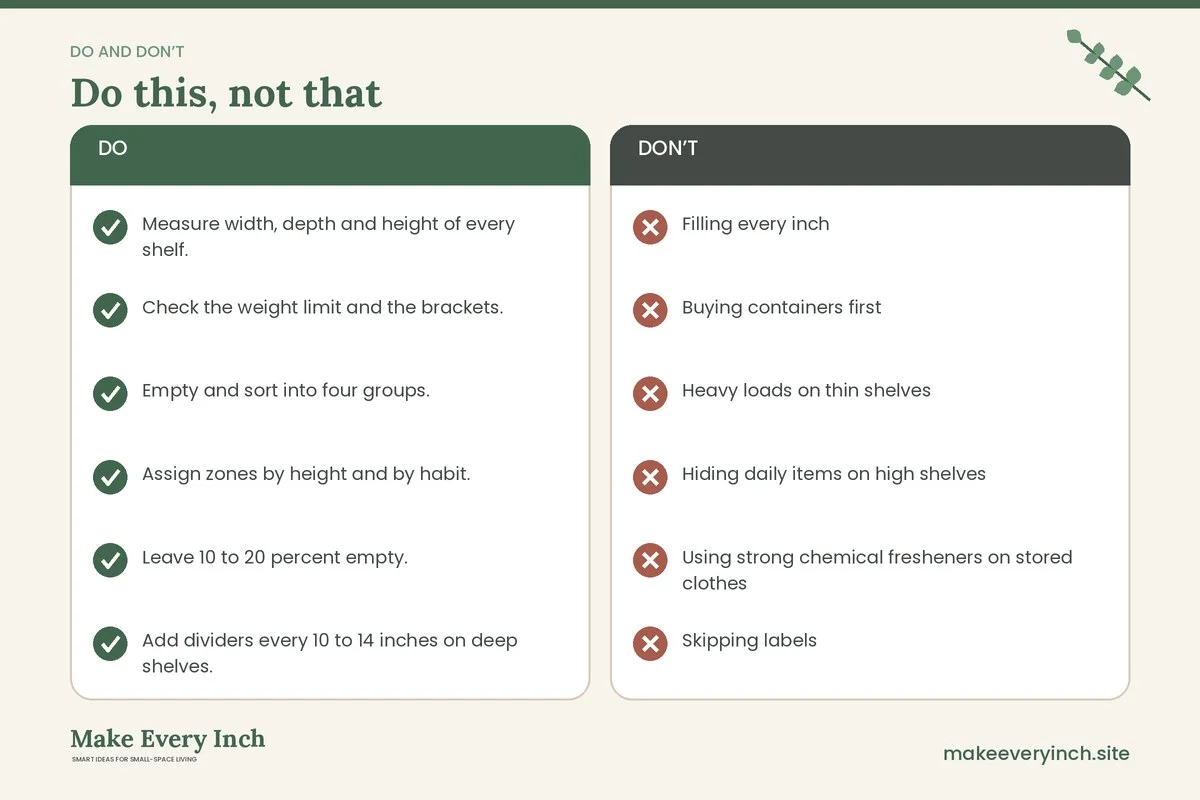
- Filling every inch: a full shelf cannot be used without a reshuffle.
- Buying containers first: measure and sort before you shop.
- Heavy loads on thin shelves: books, boxes of paper and appliances belong on sturdier furniture.
- Hiding daily items on high shelves: the items you use most should be between hip and shoulder height.
- Using strong chemical fresheners on stored clothes: keep mothballs out and ventilate the closet.
- Skipping labels: a system without labels is a system that drifts.
- Mixing categories: if a shelf holds three kinds of things, split it.
Quick checklist
- Measure width, depth and height of every shelf.
- Check the weight limit and the brackets.
- Empty and sort into four groups.
- Assign zones by height and by habit.
- Leave 10 to 20 percent empty.
- Add dividers every 10 to 14 inches on deep shelves.
- Use bins for small loose items.
- Fold to the shelf depth, using file fold where possible.
- Anchor tall freestanding units, with permission.
- Label the front edge of every shelf.
- Do a five-minute reset each week.
FAQ
How far apart should closet shelves be?
For folded clothes, 10 to 14 inches of clear height is a good range. Shoes and hats need less, and boots or bags need more. Adjust to the items you actually own.
How do I stop stacks of sweaters from falling over?
Use dividers every 10 to 14 inches, keep stacks to four to six items, and fold to the depth of the shelf. File folding in a bin also helps.
What goes on the top shelf of a closet?
Seasonal and occasional items in labeled lidded boxes. Keep them light, because lifting heavy objects overhead is awkward and can be unsafe.
Can I use wire shelves for folded clothes?
Yes, though wire can leave lines on soft fabric. Place a thin board or a shelf liner on top so the clothes sit flat. Check the liner is safe for your shelf and does not trap moisture.
How many items should I keep in each bin?
Fill a bin to about 80 percent. A full bin is harder to use, and an overfilled one pulls shelves toward their weight limit.
Is it worth labeling if I live alone?
Yes. Labels help you notice drift, and they make it easy to return to the system after a busy week.
Keep going: Keep going with our pillar on small closet ideas, the guide to small closet door storage ideas and our tips for DIY closet organization for small spaces.
Save this guide for later
Pin the ideas you like to Pinterest so you can come back to them when you plan your space.