15 Small Bathroom Ideas for Families to Beat the Morning Rush
Quick answer: A small bathroom families share works best when you plan around time and height, not just floor space. Give each person a labeled hook and a bin at their own reach height, move toiletries off the counter into shallow wall storage, keep a hamper and a step stool in the room, and stagger the morning routine so only one task needs the sink at a time. Anchor every tall unit, keep medicines and cleaners high and locked, and use GFCI-protected outlets near water.
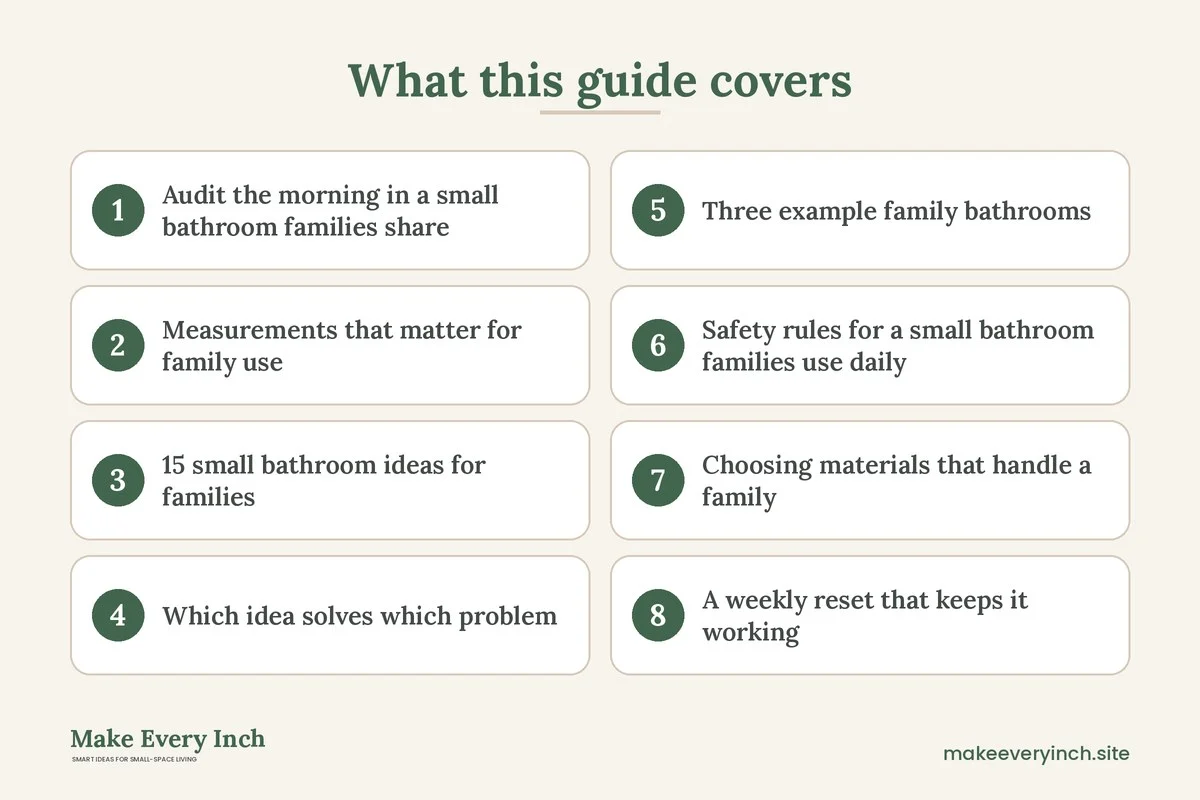
A small bathroom families use every day faces a different test from a bathroom used by one adult. Three or four people need the same sink, the same mirror and the same towel rail within the same forty minutes, and at least one of them is short, slow or still learning to brush teeth. Square footage rarely changes, so the answer is a plan that treats the room as a shared schedule as much as a shared space. This guide walks through how to audit your family’s routine, the measurements that matter for different ages, 15 practical ideas, a table matching jobs to solutions, three example layouts, safety rules and a checklist. For the full overview of the topic, start with our main guide to small bathroom ideas. If your home is a century old, the companion post on small bathroom ideas for older homes covers the quirks of period plumbing and walls.
Audit the morning in a small bathroom families share
Spend three mornings watching who does what in the bathroom and in what order. Write it down in a simple list: who showers, who brushes teeth, who does hair, who needs the toilet, who needs a mirror for glasses or makeup, and who just needs to grab something. Most families discover that the queue is the real problem, not the lack of surfaces. A tall teenager who spends twenty minutes at the mirror blocks the toddler who needs the toilet right now, and a pile of damp towels on the floor slows everybody down.
Next, count the things each person touches daily. A school-age child may need a toothbrush, toothpaste, a comb, a towel and a stool. An adult may add skincare, a razor, a hair tool, contact lens supplies and a robe. A baby adds a bath seat, bath toys, a nappy bin and wipes. Place a mark next to everything that is used every day, and those items earn a place within reach. Everything used weekly or less can go to a high shelf, a hall closet or a bin under the bed.
Finally, list the pinch points. These are the three or four moments each week when the room feels impossible: a morning when two people need the sink, bath night for small children, a Sunday hair wash, and the moment guests visit. Design for those moments first, and the quiet times will take care of themselves.
Measurements that matter for family use
Clearances that are comfortable for one adult are tight for a family. Keep these ranges in mind as you sketch the room.
- Floor space in front of the toilet: aim for 21 inches or more from the front of the bowl to the nearest obstacle, and 15 inches from the center line to a side wall or vanity. A child’s step stool and a potty seat need a little more.
- Space in front of the sink: around 30 inches of clear floor lets an adult stand and a child squat beside them.
- Towel hook height: 40 to 48 inches for adults and 36 to 42 inches for school-age children. A second row at 24 to 30 inches serves toddlers and keeps them from dragging towels.
- Mirror: the bottom edge at about 36 to 40 inches from the floor suits adults, and a second low mirror or a mirror that tilts helps a child see.
- Step stool: a stool 8 to 12 inches high lets a young child reach a standard counter, and should be stable and non-slip.
- Shelf depth: 4 to 6 inches for toiletries, 8 to 10 inches for towels and 12 to 14 inches for a hamper tower.
- Door swing: if the door hits the toilet or the vanity, consider a pocket door, a door that opens outward where code and the lease allow, or a sliding barn-style track in an owned home.
Mark the floor with painter’s tape and have everyone walk through their morning once. Trouble spots show quickly: a knee that hits a vanity, a hand that cannot reach the hook, a child who cannot see in the mirror.
15 small bathroom ideas for families
Give every person a spot
1. A hook and a color for each family member
A row of hooks with a color tag or name label gives each person one place for their towel. When the colors match the toothbrush cup, the system becomes self-explanatory for children and teens. Use two hook heights so the youngest can reach their own.
2. Personal bins on a wall shelf
A wall shelf with one open bin per person holds the daily kit: toothbrush, comb and hair ties. The bins sit at the height of the person who uses them, so a child’s bin is lower and an adult’s is higher. A bin can be pulled down and carried to the bedroom when the bathroom is busy.
3. A toothbrush holder that stands off the counter
Wall-mounted or suction holders free the counter. In a rental, choose adhesive options rated for the weight and check the lease first, or use a simple cup that is rinsed weekly. Keep brushes separated so heads do not touch.
Move the clutter up and out
4. Over-the-toilet shelves that clear the lid
An open shelving unit above the toilet holds towels, a basket and extras. Leave at least 8 inches between the top of the tank and the first shelf so you can lift the lid. A tall freestanding unit must be anchored to the wall with the hardware that suits your wall type, and only with permission in a rental. If drilling is out of the question, look at the ideas in our no-drill storage ideas for renters guide.
5. A slim cart between the vanity and the tub
A rolling cart about 6 to 8 inches wide fits in a gap that is otherwise dead. The wheels let you pull it out for bath night and park it away on a school morning. Pick one with a lip so bottles do not roll off.
6. A shower caddy that handles the whole family
Three or four people use a surprising number of bottles. Decant shared shampoo into one pump bottle and give each person a small mesh bag for their own items. A hanging caddy over the shower rod, or a corner shelf, keeps the floor of the tub free. See our guide to small bathroom organization ideas for more decanting and labeling systems.
7. A tall narrow cabinet for the high-risk items
Medicines, cleaning products, razors and anything sharp or toxic belong in a closed cabinet above a child’s reach, with a lock or latch. A narrow cabinet of 8 to 10 inches wide can sit beside the vanity or above the toilet. Anchor tall cabinets to the wall, and keep the key or code away from small hands.
Make the room work for different ages
8. A step stool that lives in the room
A stable, non-slip step stool beside the sink gives children independence, and it can slide under the vanity when not in use. A stool with a handle can be hung on a hook behind the door.
9. A hamper tower that sorts as you go
A slim hamper with two compartments, one for towels and one for clothes, ends the pile on the floor. Place it where it does not block the door. In a very small room, a hanging bag on the back of the door works well.
10. A bath mat that grips, and a rail that helps
A non-slip mat inside the tub and a firm, absorbent mat outside lower the risk of a slip. For older relatives or very small children, a grab bar installed into studs or with the right anchors adds a stable handhold. Only an owner or a person with permission should install it, and it should be mounted by someone who knows the load requirements.
11. A low shelf for bath toys
Mesh bags, a basket on a suction rail or a hanging net keep toys from taking over the tub. Let toys dry fully after bath time to prevent mold, and sort them weekly.
Make the schedule easier
12. A second mirror outside the bathroom
A mirror in the hall or bedroom takes pressure off the bathroom. A teen can do hair or makeup there while a younger sibling brushes teeth. Move a small shelf or tray with the grooming tools so the task goes with the person.
13. A timer and a rotation
A simple visual schedule on the door gives each person a time slot. The first to shower goes first, the next brushes teeth while the first dresses, and so on. A kitchen timer in the hallway keeps the shower from turning into a spa visit on a school morning.
14. Good light and fast ventilation
A bright, even light helps with tooth brushing, hair and face checks. Ventilation matters too: damp towels and steam breed mildew in a family bathroom. Run the fan during and after showers, leave the door open when possible, and hang towels fully open so they dry. If the room has no fan, see our post on small bathroom ideas without a window, and for lighting plans read small bathroom lighting ideas.
15. A guest-ready reset
Keep a small basket with a fresh hand towel, a spare roll and a candle or a diffuser stand ready under the sink or on the cart. A thirty-second reset before guests arrive makes the family bathroom feel like a clean, intentional space.
Which idea solves which problem
The table below matches common family pain points with the idea that fixes them fastest. Use it as a shopping filter.
| Problem | Best fix | Rough size | Notes |
|---|---|---|---|
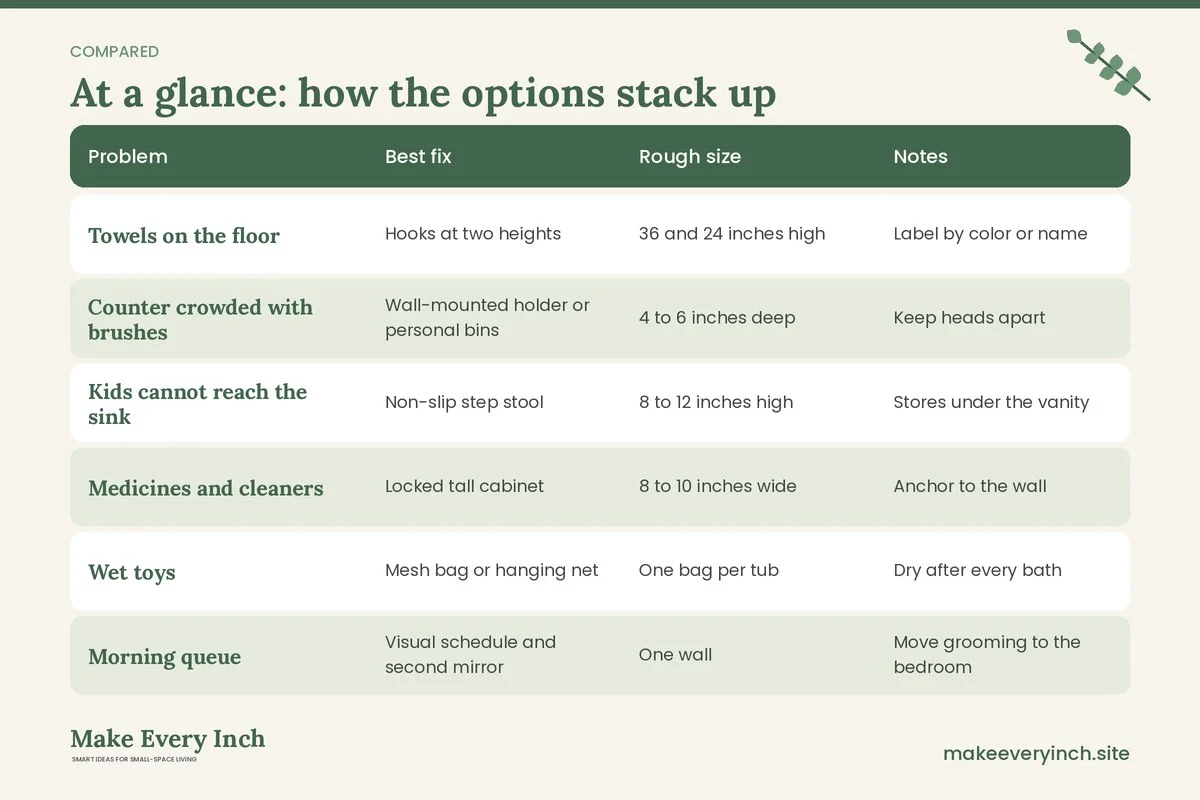
| Towels on the floor | Hooks at two heights | 36 and 24 inches high | Label by color or name |
| Counter crowded with brushes | Wall-mounted holder or personal bins | 4 to 6 inches deep | Keep heads apart |
| Kids cannot reach the sink | Non-slip step stool | 8 to 12 inches high | Stores under the vanity |
| Medicines and cleaners | Locked tall cabinet | 8 to 10 inches wide | Anchor to the wall |
| Wet toys | Mesh bag or hanging net | One bag per tub | Dry after every bath |
| Morning queue | Visual schedule and second mirror | One wall | Move grooming to the bedroom |
| Dirty clothes pile | Two-compartment hamper | 12 to 14 inches wide | Sort at the source |
| Wet floor | Absorbent mat and non-slip tub mat | Full tub length | Wash weekly |
| Steam and mildew | Fan, open door, hanging towels | Whole room | Dry the room after showers |
Three example family bathrooms
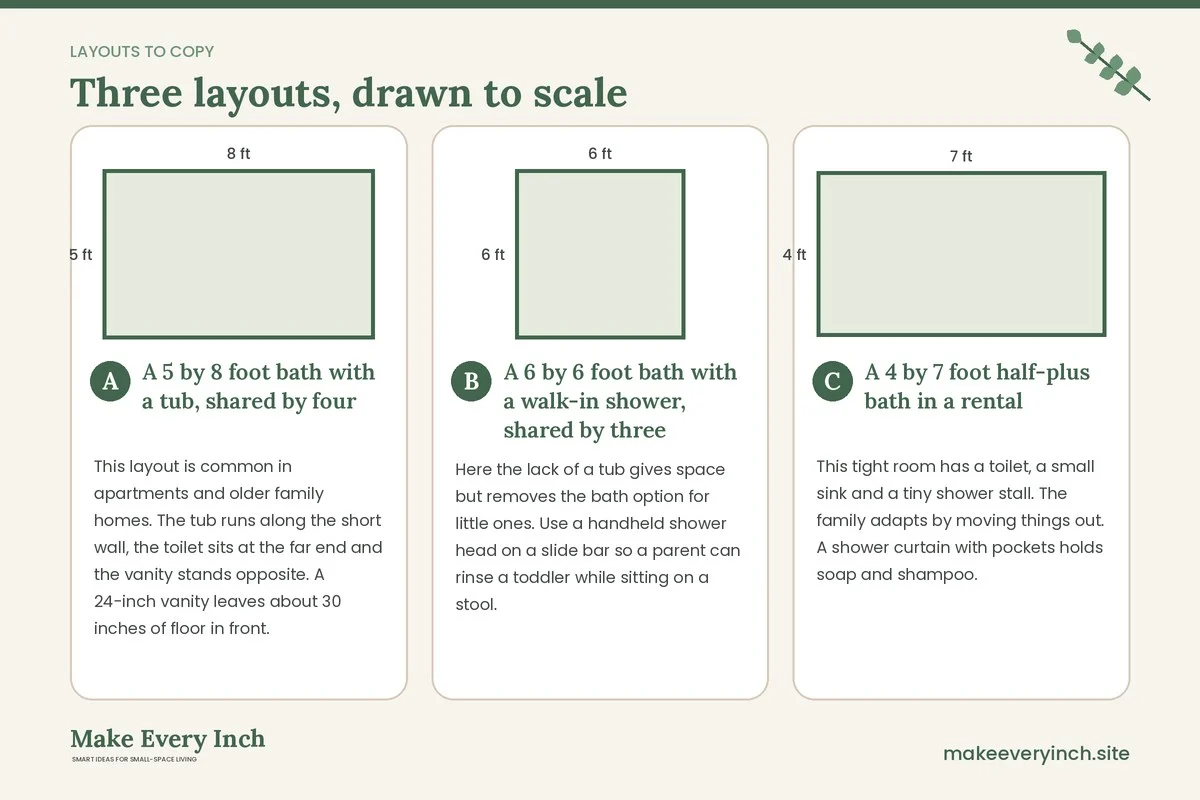
A 5 by 8 foot bath with a tub, shared by four
This layout is common in apartments and older family homes. The tub runs along the short wall, the toilet sits at the far end and the vanity stands opposite. A 24-inch vanity leaves about 30 inches of floor in front. Install a rail with four hooks at two heights, with a color per person, on the back of the door. A shelf above the toilet holds a basket per child, and the top shelf holds a spare towel and cleaning supplies in a latched box. A hamper with two compartments fits beside the vanity, and a step stool lives under it. The shower caddy holds a shared pump bottle and a mesh bag per person. Bath night works because the cart parks at the end of the tub and holds toys and washcloths.
A 6 by 6 foot bath with a walk-in shower, shared by three
Here the lack of a tub gives space but removes the bath option for little ones. Use a handheld shower head on a slide bar so a parent can rinse a toddler while sitting on a stool. A corner shelf inside the shower holds products at two levels. The vanity is 30 inches wide with a deep drawer on the left for the youngest’s things and a shallow drawer on the right for adults. A narrow open shelf over the toilet holds baskets. Because floors in a walk-in shower area are slick, add a firm, non-slip mat and a grab bar if the owner agrees. Anchor the tall cabinet to the wall, and place the medicine cabinet at least 54 inches high with a latch.
A 4 by 7 foot half-plus bath in a rental
This tight room has a toilet, a small sink and a tiny shower stall. The family adapts by moving things out. A shower curtain with pockets holds soap and shampoo. A tension pole caddy in the corner holds bottles. A small over-the-door hook set takes the towels, and a freestanding ladder shelf behind the door holds a basket per person. The grooming kit moves to a tray in the hall. A mirror hung on the back of the bedroom door takes the pressure off the sink. Since this is a rental, every item uses a tension, over-the-door or adhesive system, and adhesive products are tested on a hidden spot first. For more on rental solutions, read our guide to renter-friendly bathroom ideas.
Safety rules for a small bathroom families use daily
Safety deserves its own section, because small bathrooms combine water, electricity, hard surfaces and small people.
- Electricity: outlets within reach of water should be GFCI protected. Never use a plug-in appliance near a filled tub or sink, and unplug hair tools after use. If the bathroom lacks a GFCI outlet, ask a licensed electrician to install one. Do not run extension cords across a wet floor.
- Water temperature: scalding is a real risk for young children. Check the water heater setting with a qualified person, and test the water by hand before a child gets in.
- Supervision: never leave a small child alone in a tub, even for a moment, and empty buckets and tubs after use.
- Tall furniture: anchor shelving units, cabinets and mirrors to wall studs or use the correct anchors for your wall type. A tall unit loaded with bottles can tip if a child climbs it.
- Medicine and chemicals: keep them in a locked or latched cabinet above a child’s reach. Keep razor blades, scissors and nail clippers in the same place.
- Slip risk: use non-slip mats in the tub and absorbent ones outside. Wipe up puddles at once.
- Paint and cleaning: if you refresh the walls, choose low-VOC paint and keep the room ventilated while it dries. Read the label on any cleaner and never mix products.
- Rentals: do not drill, mount a grab bar or change fixtures without the landlord’s written permission.
Choosing materials that handle a family
A family bathroom takes more splashes, drips and wet towels than a guest bathroom, so material choices matter. Choose washable paint in a satin or semi-gloss finish for walls, as it wipes clean and resists moisture. Choose a shower curtain or a screen that dries quickly and can be washed. Look for storage in plastic, powder-coated metal or sealed wood that tolerates damp. Avoid raw wood and untreated metal, which swell or rust. Where you can, choose rounded corners on vanities and shelves, so a running child is less likely to get hurt. A light, mid-tone or patterned floor hides water spots and hair better than a dark glossy surface. For a wider look at color choices that suit a small bath, see our guide to small bathroom color schemes that open up the room.
A weekly reset that keeps it working
A system only works if it is easy to maintain. Spend ten minutes on a weekly reset, ideally Sunday evening. Wipe the counter and mirror, empty the hamper into the laundry, replace towels, clear the toy net, throw away old products and refill the pump bottles. Teach each child a single task suited to their age. A five-year-old can put toys in the net, an eight-year-old can wipe the sink, and a teen can handle the hamper. A shared checklist on the back of the door, with a tick per job, makes the chore feel fair.
Common mistakes in a family bathroom
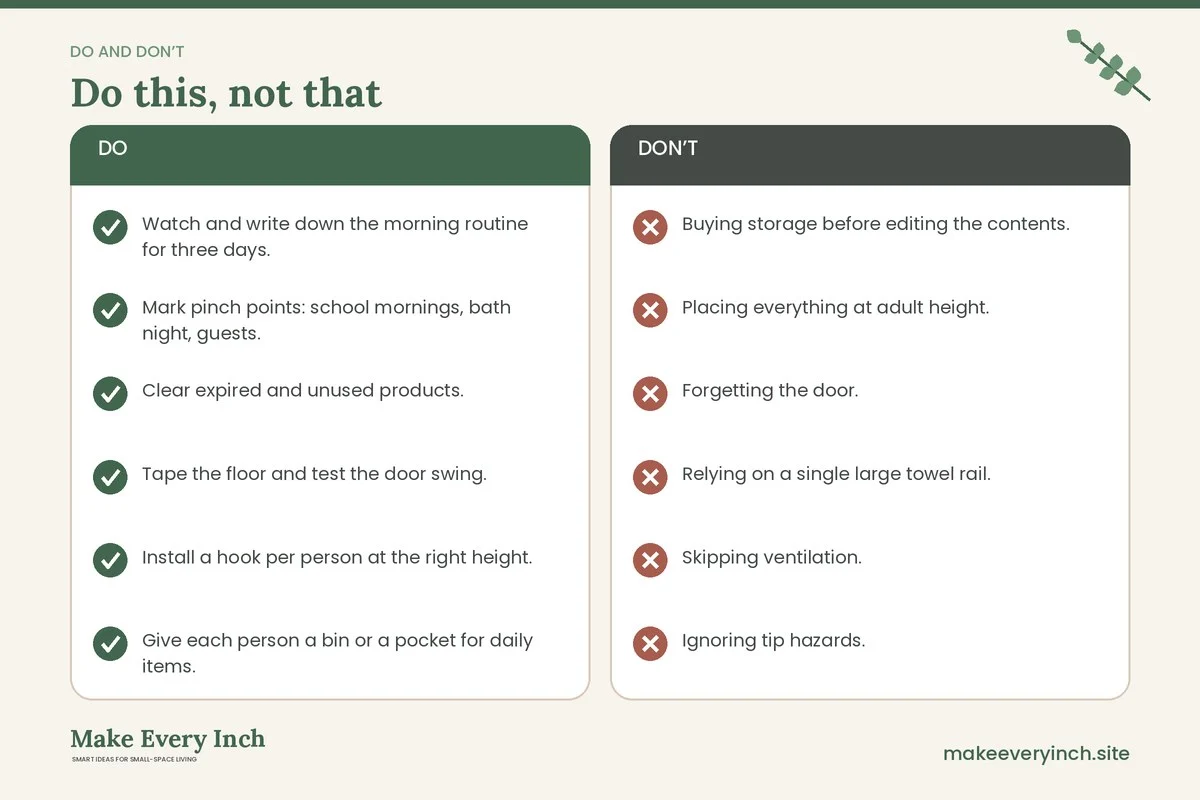
- Buying storage before editing the contents. Most bathrooms hold half-empty bottles and expired products. Clear them first.
- Placing everything at adult height. Children cannot use what they cannot reach, so they leave it on the floor.
- Forgetting the door. A door that bangs into a stool or a hamper ruins the layout, so test the swing.
- Relying on a single large towel rail. Four people with one rail means wet towels on the floor.
- Skipping ventilation. A family generates much more steam, and mildew follows.
- Ignoring tip hazards. Tall units without anchors are the most preventable danger in the room.
- Overcomplicating the system. If it takes more than three steps to put something away, it will not happen.
Family bathroom checklist
- Watch and write down the morning routine for three days.
- Mark pinch points: school mornings, bath night, guests.
- Clear expired and unused products.
- Tape the floor and test the door swing.
- Install a hook per person at the right height.
- Give each person a bin or a pocket for daily items.
- Place a stable, non-slip step stool in the room.
- Move medicines and cleaners to a latched cabinet out of reach.
- Anchor every tall unit to the wall, with permission in a rental.
- Check outlets for GFCI protection.
- Add a two-compartment hamper or a hanging bag.
- Add a second mirror outside the bathroom if mornings are crowded.
- Run the fan and open the door after showers.
- Set a weekly ten-minute reset.
FAQ
How do four people share one small bathroom?
Stagger the routine, give each person one hook and one bin, and move grooming tasks such as hair and makeup to the bedroom. A visual schedule on the door helps, and a second mirror outside the bathroom takes pressure off the sink.
What is the best storage for a small family bathroom?
Vertical storage is usually the best choice: wall shelves, over-the-toilet units, door hooks and slim carts. Choose a closed cabinet for medicine and cleaners, and open bins for daily items. Our post on small bathroom storage ideas for tight spaces lists more options.
How do I make a small bathroom child-safe?
Anchor tall furniture, store chemicals and medicines high and latched, use non-slip mats, check water temperature, and keep GFCI outlets near water. Supervise young children at bath time and empty tubs after use.
Can I do this in a rental?
Yes. Over-the-door hooks, tension rods, freestanding shelves and rolling carts need no holes. Ask permission before drilling or installing a grab bar, and test adhesive on a hidden spot.
Where should the hamper go?
Beside the door or the vanity, where it does not block the swing, or on the back of the door as a hanging bag. A two-compartment version separates towels from clothes.
How do I stop mildew in a busy family bathroom?
Ventilate during and after showers, hang towels open, dry the floor and wipe the tub edge weekly. If the bathroom has no fan, open the door and consider an approved ventilation upgrade through a licensed professional.
Keep going: Keep planning with our small bathroom layout ideas that work, small bathroom shelving ideas and small bathroom ideas with a tub.
Save this guide for later
Pin the ideas you like to Pinterest so you can come back to them when you plan your space.