Small Home Seasonal Storage Ideas for Rotating Gear Without Losing Floor Space
Quick answer: Good small home seasonal storage works like a rotation, not a pile. Sort items by season, keep the in-season set within reach, and move the off-season set to one or two dead zones such as the top of a closet, under a bed or the back of a shelf. Use matching labeled bins, store heavy items low, anchor anything tall, keep bins away from heat and damp, and set two calendar dates a year to swap.
Small home seasonal storage is a different problem from everyday storage. Everyday storage is about what you reach for daily, and it has to be fast. Seasonal storage is about what you reach for twice a year, and it has to be compact, safe and findable. In a small home the two compete for the same few cubic feet, and the usual result is a bedroom closet that holds winter coats in July and sandals in January. This guide shows how to build a rotation system that fits a small place: how to sort by season, where to find hidden zones, what size of bin to choose, how to store heavy and fragile things safely, and how to make the swap take under an hour. For the full overview, start with our small space organization ideas pillar, then read the clothing-focused seasonal clothing storage in small homes and the broader small home ideas for seasonal changes. This post is different from those because it covers everything that is not clothing alone: bedding, decor, sports gear, holiday items, tools and kitchen extras, with a zone map and a swap schedule.
What counts as seasonal in a small home
Before buying a single bin, list what actually changes with the seasons in your home. Most people underestimate this list, which is why the off-season pile keeps growing in odd corners. Walk through each room with a notepad and write down anything you have used for part of the year but not all of it.
- Clothing and shoes: heavy coats, scarves, gloves, boots, swimwear, sandals, light dresses.
- Bedding and textiles: heavy duvets, flannel sheets, light quilts, throws, extra pillows, outdoor cushions.
- Climate gear: a space heater, a fan, a humidifier, a dehumidifier, window insulation film, draft stoppers.
- Decor and holidays: wreaths, lights, tableware, artificial plants, party items.
- Sports and outdoors: skis, skates, camping gear, beach items, bikes, helmets, picnic sets.
- Kitchen extras: a slow cooker, a grill pan, an ice cream maker, big serving dishes, canning jars.
- Cleaning and garden: a snow shovel, ice melt, watering cans, seed trays, patio items.
Add rough sizes beside each item. A winter duvet in a bag may take up the space of a small suitcase, and a box of holiday lights may be the size of a shoe box. The list shows what you are really storing, and the sizes show where each can go. Anything you did not use in the last full season of its type is a candidate to donate or sell before you store it. Storing something you do not need is the most expensive kind of storage in a small home, because it takes up space every single day.
The four-pile sort
Take each seasonal category and sort into four piles: keep in season, store off season, repair or clean first, and let go. The third pile matters because putting dirty or damaged items into a bin guarantees a bad surprise six months later. Wash or dry-clean coats and bedding before storage, let everything dry fully, and set aside torn or broken items for repair this week, not next season.
The fourth pile should be firm. If you have two heavy duvets and one bed, one of them is a candidate to go. If you have three sets of holiday lights and only use one, the others can leave. A good rule is that each seasonal category should fit into a defined number of bins. If it does not, the category is bigger than the space you have, and the fix is to reduce the category, not to find more places for the overflow.
Map the hidden zones in your home
Small homes have more storage than they appear to, but it is spread across awkward zones. List the following and measure each one before you buy any container. A tape measure and a notepad will tell you more than a shopping trip.
- Top shelf of the closet: often 12 to 16 inches deep and 10 to 14 inches high above the hanging rail. Good for lightweight soft goods only.
- Under the bed: typically 6 to 18 inches of clearance depending on the frame. Good for flat items such as bedding, off-season shoes and folded clothes.
- Above the door: a shelf or a rail above a door frame uses 10 to 12 inches of otherwise wasted wall.
- Behind the sofa: a gap of 4 to 8 inches can hold flat items such as framed prints and a folded drying rack, if the sofa has legs that allow it.
- Back of a wardrobe or the base of a bookcase: low shelves behind closed doors suit heavy, rarely used items.
- High kitchen cabinets: the top shelf is for items used twice a year, such as a slow cooker or large serving platters, but only if you can reach them safely.
- Entry and utility closets: the upper half often has room for outdoor gear. See our guide to small entry closet organization.
For each zone, write the usable dimensions and a weight limit. A shelf rated for books will take a pile of blankets, but not a box of canning jars. Mark the heavier items for the lowest shelves and the lightest for the highest.
A zone map for each season
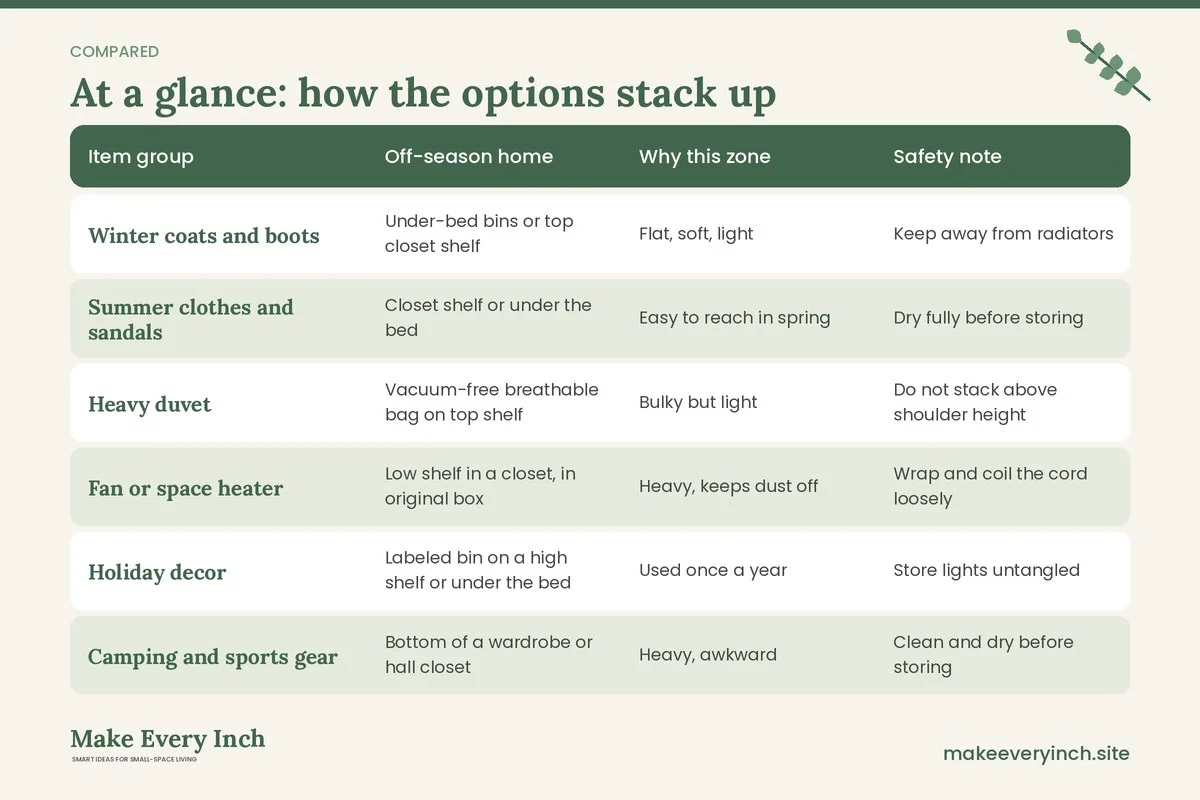
The most reliable way to avoid chaos is to assign every seasonal category to a zone in advance, so the swap becomes a matter of moving boxes between two known places. The table below shows a sample layout for a one-bedroom home. Adjust it to your own measurements.
| Item group | Off-season home | Why this zone | Safety note | |
|---|---|---|---|---|
| Winter coats and boots | Under-bed bins or top closet shelf | Flat, soft, light | Keep away from radiators | |
| Summer clothes and sandals | Closet shelf or under the bed | Easy to reach in spring | Dry fully before storing | |
| Heavy duvet | Vacuum-free breathable bag on top shelf | Bulky but light | Do not stack above shoulder height | |
| Fan or space heater | Low shelf in a closet, in original box | Heavy, keeps dust off | Wrap and coil the cord loosely | |
| Holiday decor | Labeled bin on a high shelf or under the bed | Used once a year | Store lights untangled | |
| Camping and sports gear | Bottom of a wardrobe or hall closet | Heavy, awkward | Clean and dry before storing | |
| Kitchen extras | High cabinet shelf or a pantry rack | Used rarely | Place heavy items low | |
| Garden items | Balcony box, wall hooks or shed | Dirty, bulky | Keep chemicals locked away from children and pets |
Copy the table onto a sheet of paper and tape the sheet inside a closet door. When the season changes, the sheet tells you where everything goes. This turns a vague chore into a short checklist.
Choose the right bin, bag or box
Small homes need containers that match the shape of the space, not the shape of a catalog. Measure the zone first, then pick a container that is 1 to 2 inches smaller on each side so it slides in without scraping.
- Rigid lidded bins: best for heavy or fragile items, stackable and good for protecting against dust and pests. A clear body helps you see what is inside.
- Under-bed boxes: flat and low, often 6 to 8 inches high with wheels or handles. Suit bedding, shoes and folded clothing.
- Fabric cubes with handles: light, breathable and easy to slide out. Good for scarves, hats and soft goods, but they hold their shape only if filled.
- Breathable garment bags: for wool coats and dresses on a closet rail. Avoid airtight plastic for natural fibers, which can trap moisture.
- Vacuum bags: compress bulky bedding, but over-compressing down or wool can flatten the fill. Use a gentle level and take items out well before you need them.
- Hanging organizers: pockets for gloves, hats and small gear on the back of a door.
Choose one or two sizes and stick to them across the home. A matched set stacks neatly, shifts easily and makes the whole thing look deliberate. A random mix of boxes costs more floor space than it saves.
Label for the person who is not you
Good labels save arguments and lost afternoons. A label should say what is in the bin, which season it belongs to and the date it was packed. Place the label on the short end that faces outward, so you can read it without pulling the bin out. Add a short inventory list inside the lid with the main items. For bins with multiple categories, a colored tag per season, such as one color per quarter, allows you to see the swap pile at a glance.
If you share a home, agree on the system together. A partner or flatmate who has to hunt for a winter coat will quickly undo the structure. A photo of each bin taken before closing, kept in a folder on your phone, replaces a long written list and takes seconds.
Safe storage: weight, height, heat and damp
Seasonal storage often involves heavy items placed high. This is where small homes meet their biggest risks, so take these rules seriously.
- Heavy low, light high: place the heaviest bins on the lowest shelf or floor. Only place light, soft items above shoulder height.
- Use a stable step stool: never climb on a chair, a box or furniture to reach a top shelf. A proper step stool with a wide base is safer.
- Anchor tall furniture: any bookcase, wardrobe or tall shelving unit holding stored goods should be fixed to the wall using the correct anchoring kit. In a rental, ask permission first and never drill without it. If you cannot anchor, do not stack weight on top.
- Check weight limits: shelves, closet rods and wall brackets have limits. Do not exceed the stated load, and spread weight evenly.
- Do not block exits or access: keep the path to a door, a window, a breaker panel and a water shutoff clear.
- Keep away from heat sources: radiators, heaters and water heaters can warp plastic and damage fabrics. Leave a gap and never place bins against a hot surface.
- Watch for damp: basements, bathrooms and exterior walls may get moisture. Raise bins off the floor a few inches and add a moisture absorber if the area is known to be damp.
- Handle chemicals carefully: store paints, ice melt, fertilizers and cleaning products in their original containers, sealed, well ventilated and out of reach of children and pets.
- Batteries and heaters: store small heaters unplugged and cool. Store batteries separately from metal objects and away from heat.
- Low-VOC paint: if you repaint a storage area, choose low-VOC paint and ventilate the room, then let the walls cure fully before placing boxes against them.
Textiles and bedding: storing soft goods well
Bedding makes up the largest share of seasonal bulk in many small homes. A few habits keep it fresh and compact.
Wash and dry everything fully before storage. A damp blanket in a bin grows mold quickly. Fold items neatly instead of stuffing, and place a breathable cotton cover or pillowcase over the stack to reduce dust. Cedar blocks or dried lavender sachets can help deter moths, but keep them from direct contact with fabric and keep them out of reach of pets and children. Replace or refresh them each year.
For duvets, consider a fabric storage bag with handles over a sealed plastic bag. The fabric allows air exchange. If you use vacuum bags, do not compress for months at a time. Take them out a few weeks early and let them fluff in a dry room. If you rely on a bed with built-in drawers, our guides on under-bed storage ideas and the best storage beds for small bedrooms show how to use that space well.
Heavy and awkward items: heaters, fans and sports gear
A fan or a space heater needs a home that is dry, low and clean. Unplug, let it cool, wipe off dust, wrap the cord loosely and place the item in its original box or a bin that fits. Do not wrap cords tightly around the body, which can strain them. Label the box with the item and its purpose. If an electrical item shows damage, frayed cords or a burnt smell, have it checked or replace it before use. Never use an extension cord for a space heater and never leave one running unattended near fabric.
For sports gear, clean and dry everything before storage. Skis, skates and poles can lean against a wall in a corner with a strap or a hook, but tall items must not tip. Use a wall-mounted rack if allowed, and check with your landlord. A freestanding rack that sits on the floor and leans on the wall is an option for renters. For bikes, a wall hook that holds the weight needs correct fixings and permission, so consider a floor stand or a folding bike that tucks into a closet. Our post on vertical storage ideas covers racks and hooks in more detail.
Holiday and decor storage without a spare room
Holiday decor is the classic hidden space-eater. A few tactics make it manageable.
- Choose a theme and keep to one or two bins per holiday. If the bin is full, something must go.
- Wrap fragile ornaments in tissue paper or soft cloth, and use a divided box or an egg carton for small pieces.
- Wind lights around a cardboard tube or a piece of stiff card, so they do not tangle.
- Store artificial wreaths flat in a shallow box under the bed, or on a hook in a closet.
- Use flat storage for framed prints and art. Slide a stack behind a wardrobe or under a bed, with a sheet of cardboard between each piece.
- Keep candles away from heat and sunlight, which can soften them.
For apartments with no spare room, consider a single large bin per year that holds all decor, and make it the rule that if a new item comes in, an old item goes out.
Three example homes
Studio apartment, 450 square feet
The studio has one closet and a bed on a frame. The owner uses two shallow under-bed bins for off-season clothing and one top-shelf fabric cube for scarves and hats. A narrow shelf above the door holds a labeled bin of holiday lights. A fan and a small heater live in their original boxes on the floor of the closet, behind the hanging clothes. The swap takes about 40 minutes in March and again in October. For more on studio planning, see studio apartment storage ideas.
One-bedroom with a hall closet
This couple has a hall closet with a high shelf and a low floor. They place bulky sports gear and camping equipment on the floor, with the heavy bins at the back. The high shelf holds two lightweight bins of bedding. A third bin on top of the wardrobe in the bedroom holds holiday decor, with a stable step stool stored beside it. The tall wardrobe is anchored to the wall, with the landlord’s permission. They keep the heater in the closet, unplugged, with the cord coiled loosely.
Two-bedroom with a child and a pet
This family has less top-shelf room and more safety to think about. Heavy bins stay on low shelves. Chemicals such as ice melt and garden fertilizers are stored in a locked cabinet. Holiday decor lives in a high cabinet that the child cannot reach, and the cat cannot climb. Outdoor toys store in a lidded deck box on the balcony, which has drainage holes. A wall-mounted rack in the hall is secured with proper fixings into studs. For families, see our guide on small home storage ideas for every room.
Rooms that share the load
You can spread seasonal storage across rooms to avoid overloading one zone. Bedrooms suit clothing and bedding. Entries suit coats, boots and umbrellas, which you can learn more about in our companion post on small home entryway organization ideas. Kitchens suit appliances and serving ware. Bathrooms rarely suit long-term storage because of humidity, though a small shelf for spare towels works. Living rooms suit decor and games in closed furniture, such as an ottoman with storage. The aim is to keep each item near its point of use.
A two-date swap schedule
Pick two fixed dates each year and add them to your calendar with a reminder a week before. Many people choose the first weekend after the clocks change, or the start of spring and autumn. Whatever the dates, keep them fixed.
1. Week before: check the weather forecast, empty a laundry basket and clear a work surface.
2. Hour one: take down the off-season bins and set them in the room. Open them and take out the items for the new season.
3. Hour two: wash or air the items you took out. Fold or hang them in the daily closet.
4. Hour three: inspect the in-season items now going into storage. Wash, dry and repair. Pack them into the empty bins with a label and date.
5. Finish: return the bins to their zones, check weight and stability, and update the zone map.
Take a photo of each packed bin before closing it. A quick scroll through the photos later will tell you what is where without opening anything.
Common mistakes to avoid
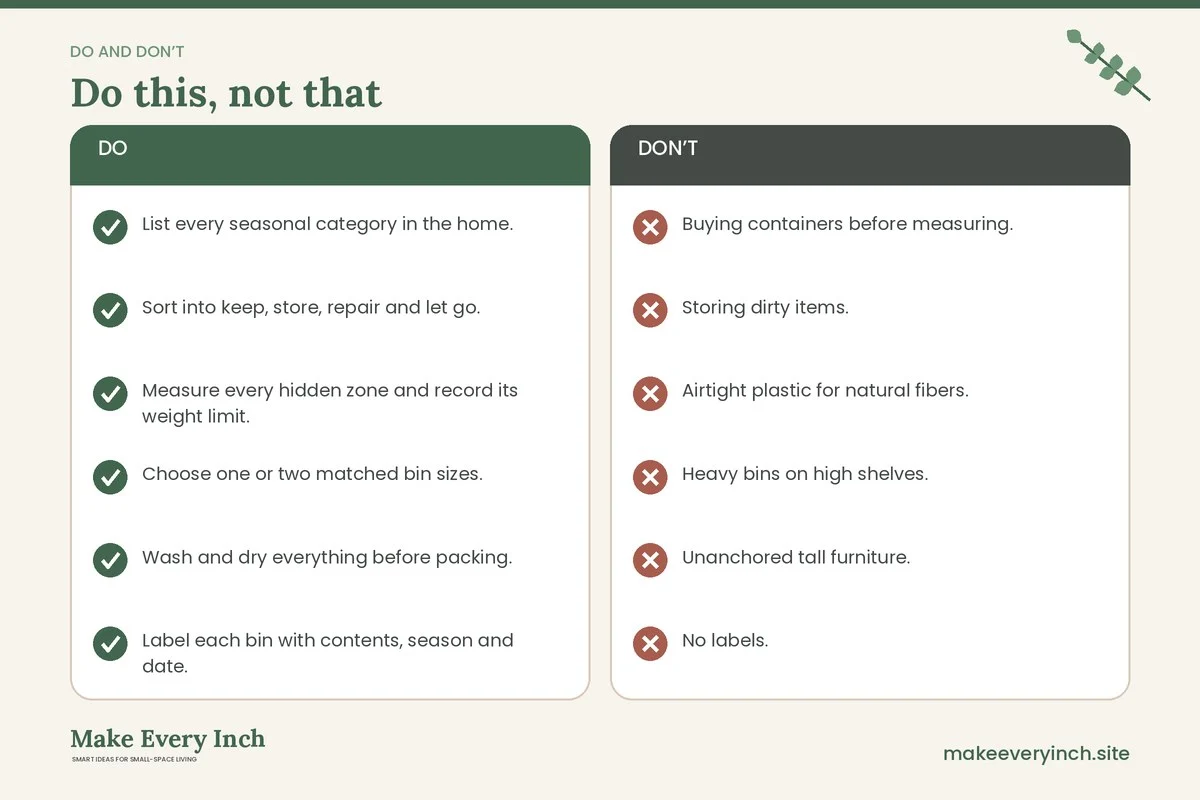
- Buying containers before measuring. The wrong size wastes space and money.
- Storing dirty items. Odors and stains set in over months.
- Airtight plastic for natural fibers. Moisture can build up. Use breathable covers.
- Heavy bins on high shelves. This is a safety risk. Place heavy items low.
- Unanchored tall furniture. Fix it to the wall with the right kit and permission.
- No labels. You will not remember what is where.
- Storing near heat or damp. Plastic warps and fabric spoils.
- Keeping the same pile year after year. Reduce the category at each swap.
- Blocking access. Keep paths to exits, windows and panels clear.
Seasonal storage checklist
- List every seasonal category in the home.
- Sort into keep, store, repair and let go.
- Measure every hidden zone and record its weight limit.
- Choose one or two matched bin sizes.
- Wash and dry everything before packing.
- Label each bin with contents, season and date.
- Store heavy items low and light items high.
- Anchor tall furniture and use a stable step stool.
- Keep bins away from heat, damp and exits.
- Photograph each packed bin.
- Add two swap dates to your calendar.
- Review the sort at each swap and reduce what you do not use.
FAQ
How much space should I set aside for seasonal storage? It depends on climate and lifestyle, but many small homes can manage with the equivalent of two to four medium bins, plus a place for bulky bedding. If you need more, reduce the category before adding space.
Can I store clothes in vacuum bags? For short periods and for synthetic items, often yes. Natural fibers such as wool and down can lose loft if compressed for a long time, so use a gentle level, take them out early and let them recover.
Where should I store seasonal items if I rent and cannot drill? Use freestanding shelving, under-bed boxes, door-hung organizers that use no screws, and over-the-door hooks. Our guide to no-drill storage ideas for renters lists options. Always check your lease.
Is a balcony safe for storage? A covered balcony with a lidded box can work for outdoor items. Check weight limits, rain exposure and building rules. Keep chemicals indoors in a locked cabinet if children or pets are present.
How do I stop moths and mildew? Wash everything before storing, keep the zone dry and ventilated, use breathable covers and keep natural deterrents away from pets and children. If you notice signs of damp or pests, deal with the cause first.
How often should I rotate? Twice a year suits most climates. If you live in a place with four distinct seasons you might make a lighter swap each quarter.
Keep going: Keep going with small space organization ideas, under bed storage ideas and small home storage ideas for every room.
Save this guide for later
Pin the ideas you like to Pinterest so you can come back to them when you plan your space.