14 Small Home Ideas for Seasonal Changes and Rotating Storage
Quick answer: Small home seasonal changes work best as a rotation across the whole home, not a redecoration of one room. Keep a fixed core, swap a few flexible layers (textiles, lighting, furniture position, off-season storage), reset circulation paths twice a year, and follow safety basics such as clear exits, anchored furniture, safe heater use and low-VOC finishes.
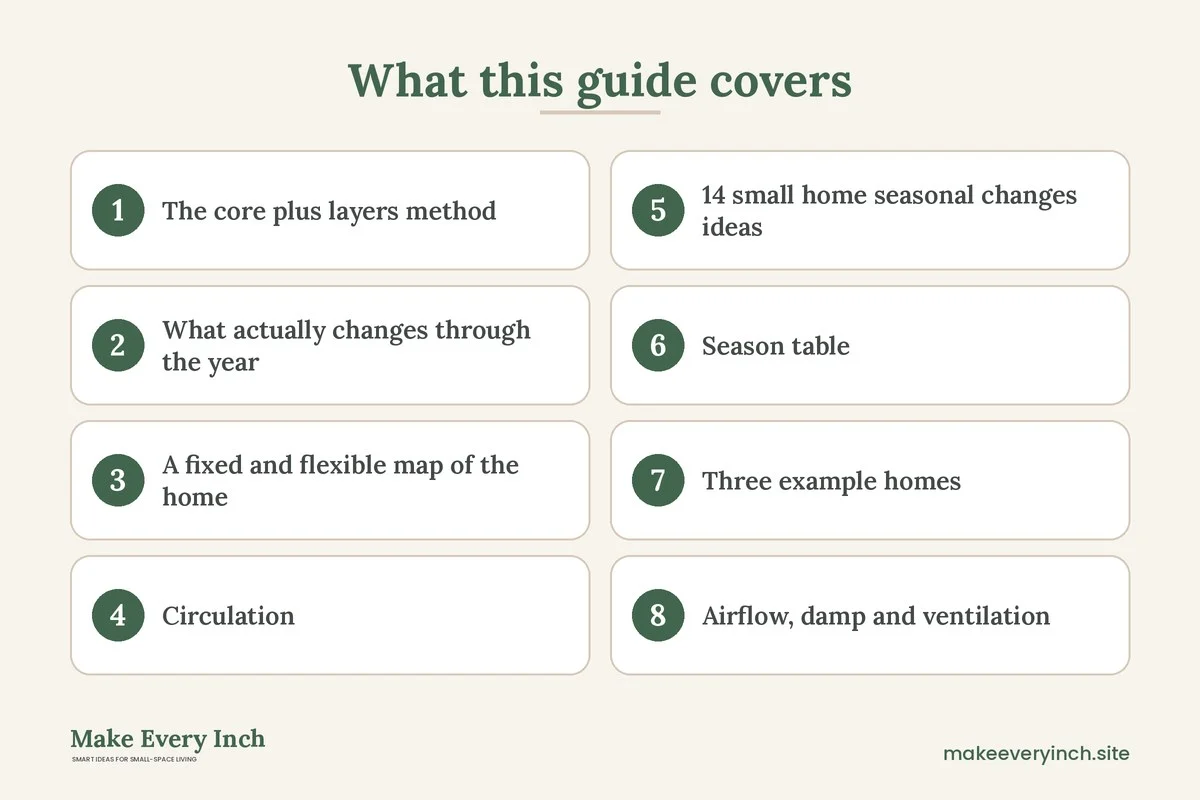
Small home seasonal changes can feel like a lot of extra work in a place with little spare room, yet a gentle rotation often makes the home feel bigger, not more crowded. Light, temperature, outdoor activity and clothing all change through the year, so the way you use each room changes too. A sofa that sits well against a cold window in winter may be better pulled forward in summer for airflow. A closet that holds a wool coat for four months can hand the space to sandals in spring. This guide gives you a whole-home method: a fixed core plus a few flexible layers, a seasonal reset of circulation, a storage rotation that moves things between rooms, 14 ideas, a season table, three example homes, safety notes and a checklist. For the wider view, start with our pillar guide on small home ideas, and for the clothing side of the story see seasonal clothing storage in small homes.
The core plus layers method
The easiest way to handle small home seasonal changes is to split your belongings into two groups. The core is everything you use all year: the bed, the sofa, the main table, daily kitchen tools and everyday clothes. It stays put. The layers are the things that change with the season: bedding weight, throws, curtains, rugs, lamp bulbs, cushions, coats, fans, heaters and a few pieces of furniture that can shift.
Keep the core small and calm. Keep the layers few and easy to swap. If a change takes more than an afternoon, it will not happen. A good test is whether one person can complete the whole rotation in about two to three hours, with a short list to follow.
Plan on two main resets a year, one in early spring and one in early autumn, with a light touch at the solstices. Four full resets is too many for a small home. Two resets plus a quick tidy at each season change is enough for most households.
What actually changes through the year
Think about five things that move with the seasons across the whole home.
- Light: winter has weaker, lower sun and early dark. Summer has strong, high sun and long evenings.
- Temperature and airflow: cold windows and drafts in winter, heat build-up and the need for cross-breezes in summer.
- Clothing and gear: coats, boots and heavy blankets in winter, and sandals, fans and sports gear in warm months.
- Activities: more time indoors in winter, more time on a balcony, window or outdoor space in summer.
- Moisture and mood: damp laundry in winter, open windows and pollen in spring, and dust in dry months.
Each of these affects more than one room. Heavy coats, for instance, affect the entryway, the closet and the bedroom. Writing the changes out by room helps you see how a single action, like moving coats to a high shelf, frees space in three places.
A fixed and flexible map of the home
Draw your home as a simple plan. Color the fixed items in one color and the flexible ones in another. The fixed items include beds, large storage, the dining table and anything bolted or anchored to a wall. The flexible items include accent chairs, floor lamps, small tables, rugs, plants, drying racks and storage bins.
For each flexible item, ask where it would work best in each season. A reading chair, for example, might sit near the window in winter to catch weak daylight and move closer to a lamp or into a corner in summer to avoid glare. Make a note beside each item. These notes become your seasonal checklist and speed up later swaps.
Circulation: reset the paths twice a year
Circulation means how people move through the home. A summer layout that opens the balcony door needs a clear path to it. A winter layout that places a drying rack near a radiator should not block the route to the front door. Each reset, walk the paths in order: front door to kitchen, kitchen to living area, living area to bedroom, bedroom to bathroom, and any route to a balcony or yard.
Use these rough guides and adapt them to your home.
- Main routes: about 30 to 36 inches wide.
- Secondary routes: about 24 to 30 inches, if the route is used by one person at a time.
- Space in front of doors and appliances: enough to open them fully, often 30 to 36 inches.
- Exit routes: keep at least one route to an exit and an openable window clear at all times, and never block it with seasonal storage or a heater.
If a seasonal item, such as a Christmas tree or a pile of coats, interrupts a main route, move it, even if the layout looks pretty. For routes that need help, see narrow hallway ideas.
14 small home seasonal changes ideas
Layout and furniture
1. Shift the seating with the light
Move the sofa or chair a foot or two to follow the sun in winter and to avoid it in summer. If the sofa floats, check cords and keep paths open. See our post on small living room layout ideas for arrangements that adapt.
2. Open the room for summer airflow
Pull heavy furniture away from windows and doors, and leave a straight line between two openings if you can. Cross-ventilation cools the home with no extra equipment.
3. Create a winter nook
In cold months, group seating with a rug and a lamp, pulled away from a cold window. A smaller, warmer zone feels cozy and cuts the sense of a large cold room.
4. Swap the dining table orientation
A table that sits along a wall in winter may move out into the room in summer, so more people can sit and use the window. Choose a table with a footprint that suits both positions. Our guide to small dining room layout ideas covers positions.
5. Turn a balcony or window into a seasonal room
In warm months, a balcony or a wide sill can become a breakfast spot or a reading corner. In winter it can turn into a plant shelf or a drying area. See small balcony ideas for options, and check the lease and the building rules.
Textiles, color and light
6. Rotate bedding weights
Keep two weights of bedding, one light and one warm, rather than a mountain of covers. Store the off-season set in a vacuum-free breathable bag on a high shelf or under the bed. See under-bed storage ideas.
7. Change curtains or add a liner layer
A thermal liner or heavier curtain helps in winter, and a sheer panel lets in light in summer. Hang both on a double rod, or swap them once a year. Our post on small space curtain ideas to add height shows how to hang them for a taller look.
8. Swap rugs and throws
A thick rug or a layered rug brings warmth in winter. Rolled and stored, it frees a surprising amount of floor in summer. Choose a size based on the zone, using our guide to rug size for a small living room. Use a non-slip pad, and tape down edges to avoid trips.
9. Adjust lamp bulbs and positions
Winter evenings arrive early, so add warm lamps at seat height. In summer, you may need fewer lamps. Keep bulbs within the maximum wattage on the lamp label. Read about layered lighting ideas for small apartments for planning.
10. Refresh color with small items
Change a few cushions, a throw and one piece of art to alter the mood. Warm, deeper tones for winter, and lighter, cooler tones for summer. This takes minutes and leaves the core intact. See small room decor ideas for more.
Storage rotation across rooms
11. A two-zone storage plan
Pick one high, hard-to-reach zone for off-season items, such as the top of a closet, a high shelf in the hall or a bin under the bed. Fill it with next season’s things only. Keep the easy zone for what you use now. The rotation moves items between the two zones twice a year.
12. A coat and boots swap in the entryway
Winter brings bulky coats, boots and gloves into the entry. In spring, store them in a high closet shelf or a lidded box, and bring out lighter jackets and sandals. See small coat storage ideas and small shoe storage ideas.
13. A kitchen shift
Move heavy stews, baking and slow-cooker tools to the front in winter. In summer, bring picnic gear, a blender or grilling tools forward. Put the off-season items on a high shelf or in a labeled box. See how to organize a small kitchen.
14. A fan, heater and humidifier station
Give seasonal appliances one home, such as a closet shelf, with a dust bag and a list. Fans go out in spring, and heaters in autumn. Clean each one before storage, and store cords tied up neatly. A single station prevents the scatter of cords across rooms.
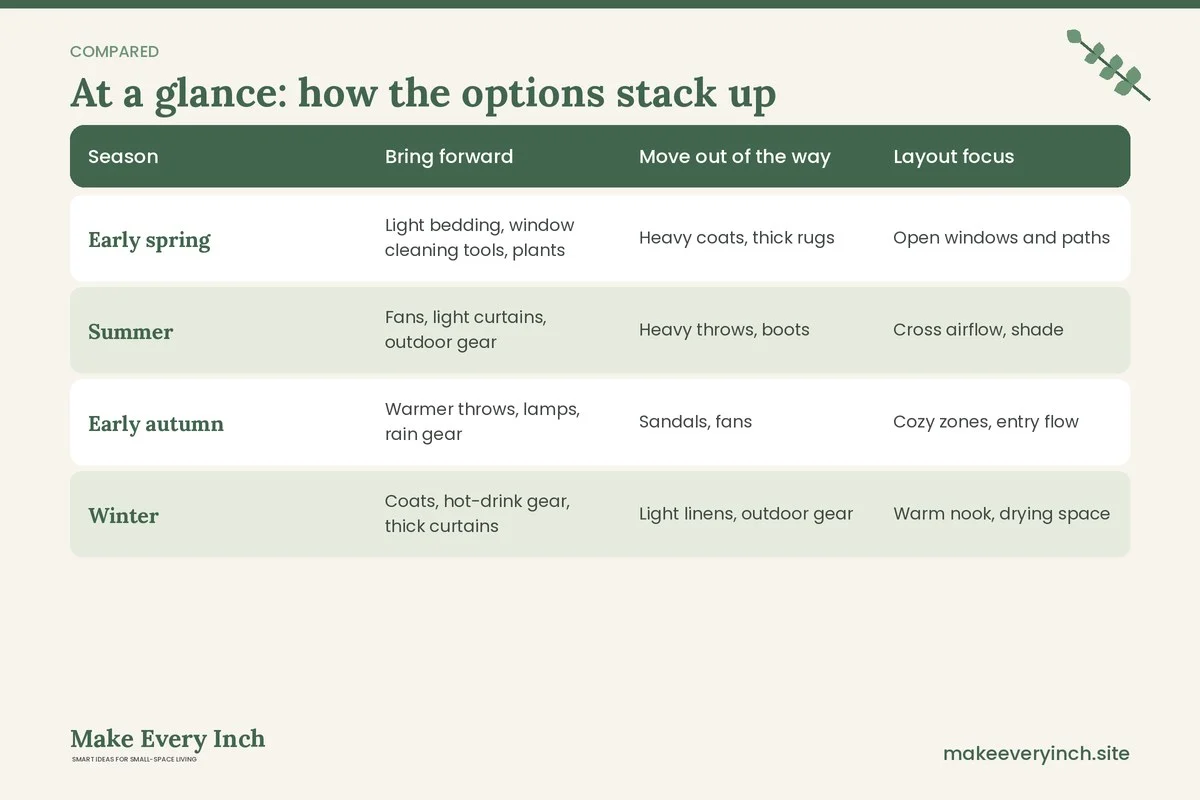
Season table: what to move, where, and why
| Season | Bring forward | Move out of the way | Layout focus | Safety check |
|---|---|---|---|---|
| Early spring | Light bedding, window cleaning tools, plants | Heavy coats, thick rugs | Open windows and paths | Test smoke and carbon monoxide alarms |
| Summer | Fans, light curtains, outdoor gear | Heavy throws, boots | Cross airflow, shade | Keep fan cords clear and stable |
| Early autumn | Warmer throws, lamps, rain gear | Sandals, fans | Cozy zones, entry flow | Check heater clearances |
| Winter | Coats, hot-drink gear, thick curtains | Light linens, outdoor gear | Warm nook, drying space | Never block exits or vents |
Three example homes
A 500 square foot studio
The studio has one large window, a sofa bed and a small table. In winter, the sofa sits near the window to catch light and the table sits against the wall. A thick rug and a lined curtain make the corner warm. In summer, the sofa moves 18 inches back, the table moves to the middle for friends and the rug is rolled and stored on a closet shelf. Off-season bedding sits in a bag under the sofa bed. The whole change takes about two hours. See also our guide to studio apartment layout ideas that create zones.
A 750 square foot one-bedroom with a balcony
The balcony is a seasonal room. In spring and summer it holds two folding chairs, a small table and herbs. In winter, the chairs fold flat and stand behind the door, and a plant shelf moves inside near the brightest window. A drying rack takes the balcony place when laundry would otherwise clutter the living room, if the building allows it. The entry swaps from sandals and sun hats to boots and scarves, and the bedroom changes its bedding weight. The balcony door gets a clear 30-inch path in summer so it is easy to use.
A 900 square foot two-bedroom with children
Children’s gear changes fast. A high shelf in the hall closet holds next season’s clothes in labeled boxes. A shoe tray near the door holds the current pairs only, and outgrown pairs go into a donate bag. In summer, the second bedroom holds a fan, which sits on a stable surface out of reach. In winter, a safe distance from any heater is kept. A seasonal chart on the fridge lists what moves, and children help with the swap, so the home resets as a team.
Airflow, damp and ventilation
Seasonal changes affect moisture. In winter, a closed home traps damp from cooking, showers and drying clothes. Use extractor fans or open a window for a few minutes each day, and keep furniture a few inches from cold external walls so air can move. Watch for condensation on windows and for musty smells in closets, since they can point to a damp problem that needs your landlord or a professional.
In summer, heat gathers near ceilings and in west-facing rooms. Light curtains, blinds and cross-ventilation help. A fan should sit on a stable, level surface where nobody trips on the cord. In pollen season, close windows during peak hours if anyone has allergies, and wash textiles more often.
When painting a room as part of a seasonal refresh, choose low-VOC paint, open windows, and allow the room to air before sleeping in it. For renters, check the lease before any repainting.
Safety notes for seasonal changes
- Exits and egress: never block a door, an openable window or a route to an exit with seasonal storage, a tree or a heater.
- Heaters: keep portable heaters on a flat floor, away from curtains, bedding and furniture, follow the maker’s clearance guidance and never leave them unattended or use them to dry clothes.
- Electrical load: do not plug heaters, fans and humidifiers into overloaded power strips or chain strips together. Spread appliances across outlets and check labels.
- Anchoring: anchor tall bookcases, dressers and wardrobes to the wall studs, especially when you move them, and put heavy items low. Ask your landlord before drilling.
- Ladders and high shelves: use a stable step stool, keep heavy boxes low and do not overload high shelves.
- Children and pets: keep cords, small decorations, plants and heaters out of reach. Some seasonal plants and foods are harmful to pets, so check with a vet.
- Candles and lights: use them with care, away from fabrics, and never leave them burning when you go out. String lights should have intact cords.
- Smoke and carbon monoxide alarms: test them at each reset and replace batteries as the instructions say.
- Walls: never remove or alter a wall for extra seasonal space without a professional and the right permits.
- Lease: confirm what you may do before you drill, paint or attach hooks.
The seasonal reset in five steps
1. Empty and clean one zone at a time. Start with the entry, then the living room, kitchen, bedroom and bathroom. Work in short bursts.
2. Sort into four piles. Keep now, store for later, donate and discard. Be honest about what you did not use last season.
3. Move the layers. Swap textiles, lamps, rugs and small furniture.
4. Walk the paths. Check each route and each exit.
5. Update the list. Note what worked, so the next reset takes less time.
Keep the list in a note on your phone or on a card inside a cupboard. A short list helps you repeat the process and teaches the rest of the household what to do.
Mistakes to avoid
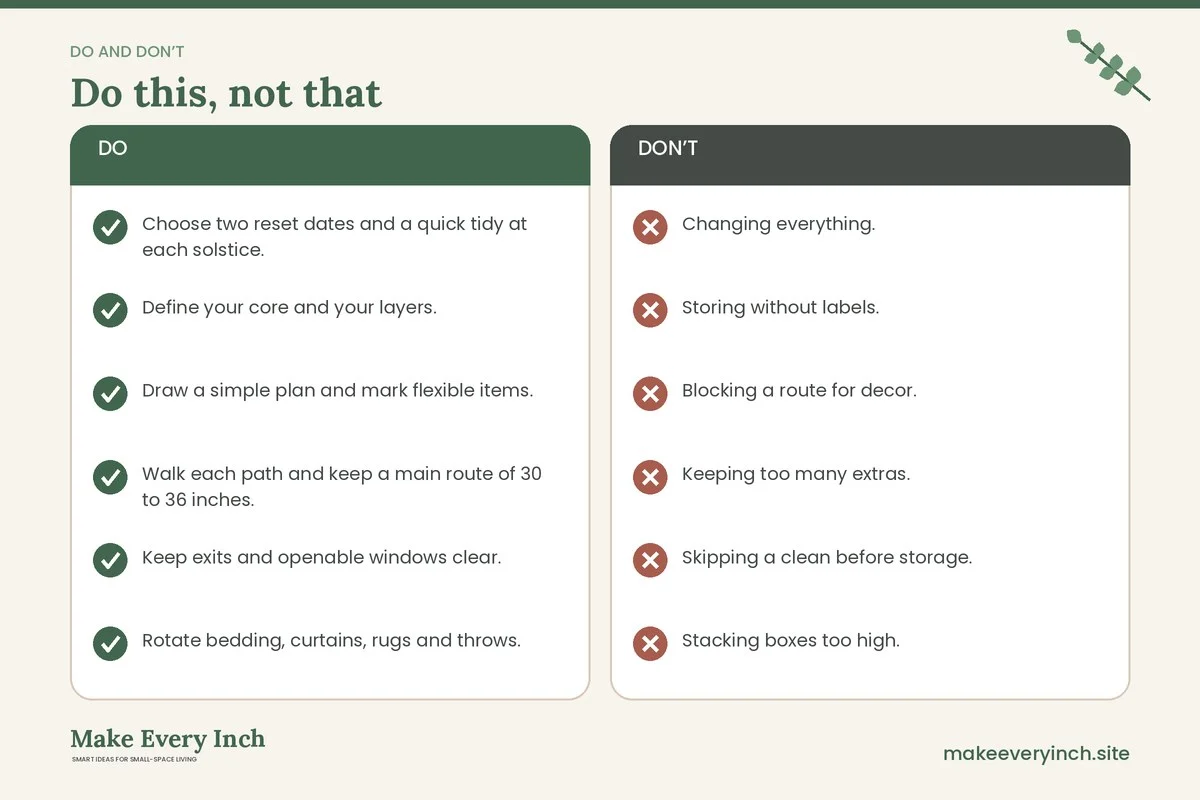
- Changing everything. Alter only a few layers at a time.
- Storing without labels. A box you cannot identify is a box you will not open.
- Blocking a route for decor. A tree or a pile of bins in a main path is a trip hazard.
- Keeping too many extras. Two sets of bedding is enough for most people.
- Skipping a clean before storage. Dirty items can attract pests or smell.
- Stacking boxes too high. Keep towers low and stable.
- Ignoring the lease. Hooks, paint and window film may need permission.
Seasonal changes checklist
- Choose two reset dates and a quick tidy at each solstice.
- Define your core and your layers.
- Draw a simple plan and mark flexible items.
- Walk each path and keep a main route of 30 to 36 inches.
- Keep exits and openable windows clear.
- Rotate bedding, curtains, rugs and throws.
- Move off-season clothing to a high or under-bed zone.
- Give appliances one storage home.
- Test smoke and carbon monoxide alarms.
- Check heater clearances and cords.
- Anchor tall furniture after moving it.
- Use low-VOC paint and ventilate.
- Write down what worked.
FAQ
How often should I change a small home for the seasons?
Most households do well with two main resets and a short tidy at each season change. More than that can feel like a chore.
Where do I store off-season items in a small home?
Use high closet shelves, under-bed bins, the tops of wardrobes and any room that can hold a few labeled boxes. Spread them across the home rather than in a single pile. See small home storage ideas for every room.
Do I need to move furniture every season?
No. Move only the flexible pieces, and keep the core in place. A change of a foot or two can be enough.
How can renters make seasonal changes without damage?
Use textiles, freestanding lamps, tension rods and removable hooks. Check the lease before drilling or painting. See our guide to security deposit safe apartment upgrades.
How do I keep the home from feeling cluttered during holidays?
Set a limit on decorations, store them in one labeled box, keep the main routes clear and take everything down by a set date.
What if I have no storage at all?
Use furniture that stores things, such as an ottoman with storage, a bed with drawers or a bench. Sell or donate what you no longer need. Our guide on hidden storage ideas has more.
Keep going: Keep planning with our small space organization ideas, budget small space ideas and how to organize a small home room by room.
Save this guide for later
Pin the ideas you like to Pinterest so you can come back to them when you plan your space.