Handbag Storage Ideas for Small Closets
Quick answer: The best handbag storage ideas for small closets use vertical space: a row of hooks on the side wall or door, one shelf kept for structured bags, a hanging organizer for soft totes and clutches, and a seasonal rotation so only the bags you carry are within reach. Stuff bags lightly to hold their shape, keep straps untangled, never overload a shelf or rod, and decide which bags to display and which to hide.
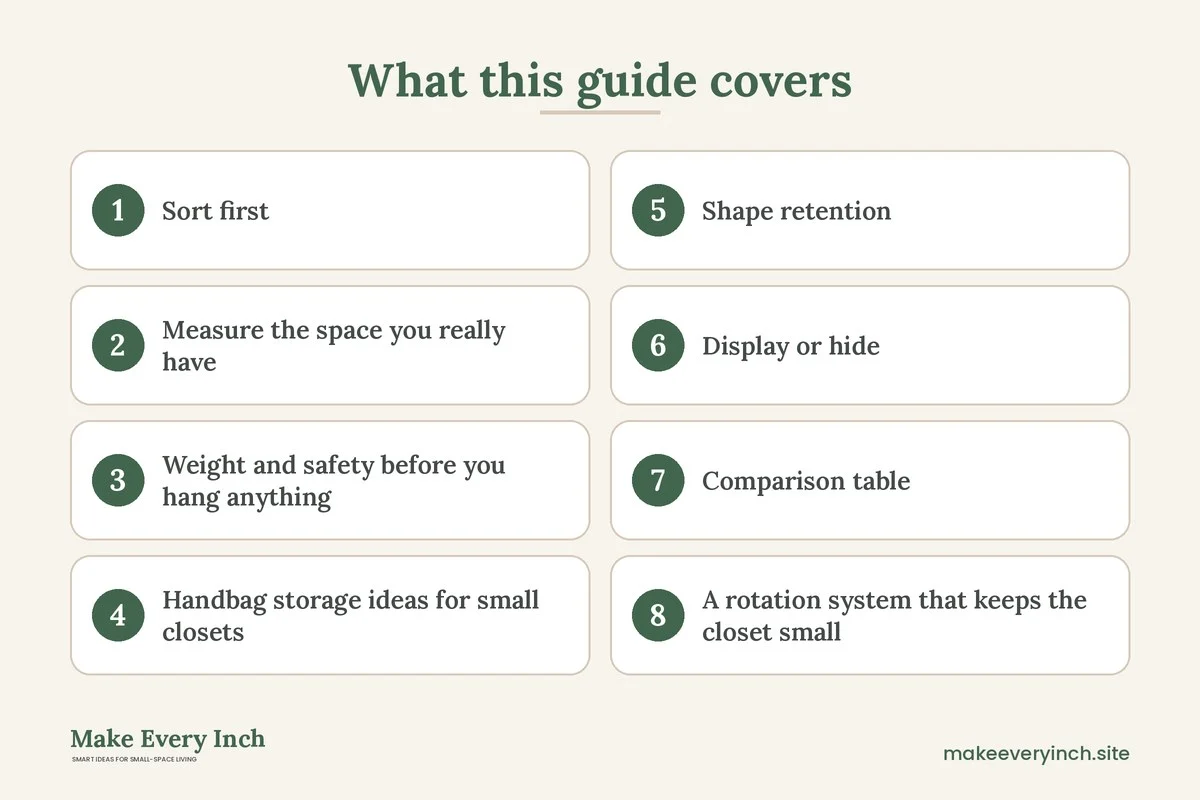
Handbag storage ideas for small closets start with a frustrating truth: bags are bulky, awkward and oddly shaped, and a small closet has almost no room for objects like that. A shoulder bag does not fold, a structured tote does not stack well and a clutch gets lost in the pile. Yet most people own more bags than they carry. This guide shows how to sort your collection, measure the space, choose between hooks, shelves and hanging organizers, protect the shape of each bag and rotate the collection by season. It also covers the choice between displaying bags and hiding them, three example closets, a comparison table, a checklist and an FAQ. For the full approach to the room, start with our pillar guide to small closet ideas, and for the companion topic of clothing, see seasonal clothing storage in small homes.
Sort first: the bags you carry, the bags you keep
Before you buy a single hook, empty every bag onto the bed and sort them into four groups. The first group is the daily bags, the two or three you reach for every week. The second is the occasional group, such as an evening clutch or a travel tote. The third is the seasonal group, such as a straw summer bag or a heavy winter satchel. The fourth is the bags you have not used in a year. Be honest about the fourth group. A bag you never use takes the same shelf space as one you love, and in a small closet space is the real cost.
Check the condition as you sort. Empty the pockets and shake out crumbs. Wipe the inside with a barely damp cloth, and let each bag air out for a day. Pen marks, loose coins and old receipts do more damage than you expect when a bag sits closed for months. Remove any bag from the keep pile that has a broken zipper or a cracked strap you will never fix. If you want a wider decluttering approach, read our guide to decluttering rules for small homes for a simple rule for sorting anything.
A useful limit is one bag per slot. If your closet has room for eight bags, own eight bags. When you want a new one, an old one leaves. This rule keeps the closet from refilling and makes every choice easy.
Measure the space you really have
Small closets hide more space than they show. Measure these before choosing a system.
- Door height and width: the inside of a standard closet door is often 78 to 80 inches tall and 24 to 36 inches wide. Check clearance before using an over-the-door product, since a closet with a tight frame may not close.
- Side wall depth: the wall beside the rod is often bare. A hook rail 24 to 48 inches long here holds six to ten soft bags.
- Shelf depth and height: most closet shelves are 12 to 14 inches deep. A medium handbag is often 10 to 14 inches wide, so many fit sideways with a little to spare. Measure the gap between the shelf and the rod too, because a bag stored upright can need 12 to 16 inches.
- Rod clearance: hanging bags on the clothes rod needs a few inches between clothes. Plan one section of rod for bags, not a few bags tucked between jackets.
- Floor and corner space: the floor is rarely a good place for bags, but a corner can hold a small bin or a basket for travel totes and gym bags.
Write the numbers on a sketch, with the bag sizes next to them. A bag collection of ten bags usually needs about 24 to 36 inches of shelf length or 30 to 40 inches of hook rail, depending on the mix. Use the lower number only if the bags are soft and slim.
Weight and safety before you hang anything
Handbags weigh more than they look. A leather tote with a laptop in it can weigh several pounds, and a rod or a shelf has a limit. Treat these notes as a short safety list.
- Check the load rating. Adhesive hooks, over-door hooks and hanging organizers all list a maximum weight. Stay well under it, and remember that a swinging door adds force.
- Do not overload the closet rod. A standard rod can hold a lot of clothing, but dozens of heavy bags on one spot may sag a thin rod or loosen the brackets. Spread the weight toward the bracket ends.
- Never drill without permission. In a rental, ask the landlord before putting screws into the wall or door. Use no-drill options when you cannot get permission. Our guide to no-drill storage ideas for renters shows what holds up.
- Anchor tall units. If you add a narrow bookcase, a shelving tower or a tall cabinet for bags, anchor it to the wall with the hardware made for it. Ask permission first in a rental. A tall unit loaded with bags is top-heavy, and it can tip, especially around children.
- Keep small items out of reach of kids. Hardware, zippers and small charms are choking risks for toddlers. Store bags with loose parts on a high shelf.
Handbag storage ideas for small closets
Hooks
1. A hook rail on the side wall
A single rail with five to eight hooks turns a bare closet side wall into storage. Space the hooks 5 to 6 inches apart so straps do not tangle. Hang bags by the straps, with the largest bag at the end nearest the door and the smallest at the back. The rail should sit at about 60 to 66 inches from the floor, high enough for the bag bottoms to clear shoes and low enough to reach. If you cannot drill, use a rail that hangs over the door.
2. Over-the-door hooks
Over-the-door hooks are the fastest fix in a rental. A row of four to six hooks holds your daily bags where you can see them. Check that the door still closes, and stay within the weight limit printed on the product. A door full of heavy bags also puts stress on the hinges, so keep the heavier items low and close to the hinge side.
3. Adhesive hooks for light bags
For clutches, small crossbody bags and canvas totes, adhesive hooks are enough. Clean the surface with a damp cloth, let it dry, follow the product’s wait time and keep each hook under its stated weight. Test one in a hidden spot first. Painted surfaces that are fresh or flaking may pull away when you remove the hook.
4. S-hooks on the closet rod
A few S-hooks on the rod can hold bags in a row, one hook per bag. They are cheap and flexible, but they slide, so place them at the ends of the rod and use one per bag. Choose hooks wide enough for the rod and with a rounded tip that does not scratch straps.
5. A hook strip on the back of a bedroom door
If the closet is too crowded, use the back of the bedroom door for the bags you carry daily. It is also the place most people want them, because you grab a bag as you leave. For the same idea in the hall, see our guide to small entryway ideas with no closet.
Shelves
6. One shelf, structured bags only
Reserve a single shelf for bags that hold their shape, such as boxy totes and top-handle bags. Stand them upright with the front facing out and leave a hand’s width between bags. A bag lying on its side loses its shape faster than one standing up. Do not stack structured bags on top of one another.
7. A shelf divider
A divider made of acrylic, wire or fabric keeps bags upright so they do not slump into a neighbor. One divider per two bags is a good rule. Place it where the shelf is not at risk of sagging, and do not rest any load beyond the shelf rating.
8. A second shelf in a tall closet
Many closets waste the space between the top shelf and the ceiling. A freestanding shelf riser or a stackable shelf adds a second level for off-season bags. Keep heavy bags low and light ones high, and make sure nothing hangs over the front edge.
9. The top shelf for the rotation
The top shelf is awkward for daily use, so use it for the seasonal group. Put a clear label on each bag’s dust bag or box so you can find it without lifting five. Use a stable stool to reach it, and never climb on a chair or a shelf.
10. Open cubes for clutches
A small stack of open cubes can hold clutches and slim bags in a vertical file. Use one cube per bag type, and stand them on edge like files in a drawer so the front is visible.
Hanging organizers
11. A fabric hanging organizer for soft bags
A hanging organizer with four to six shelves hangs on the rod and holds soft bags, pouches and small totes. It keeps them off the shelf and clear of the floor. Pick one with stiff sides, since a floppy organizer lets bags sag.
12. A clear pocket organizer on the door
A clear pocket organizer, made for shoes or toiletries, holds clutches and small crossbody bags. The clear pockets show the contents at a glance. Do not use it for heavy bags, and check the door weight rating.
13. A multi-hook hanger
A hanger with several hooks hangs on the rod and holds four to six bags in a small footprint. It works for light bags only, since a tall stack of heavy bags will pull the hanger and the rod. Put the heaviest bag on the lowest hook, so the hanger does not tip.
14. A garment bag section for delicate bags
Delicate bags, like beaded or suede ones, do better inside a breathable bag on a hanger or a shelf. Choose cotton rather than plastic. Plastic traps moisture and can cause color transfer on some materials.
Under, behind and beside
15. A basket or bin for casual bags
A fabric bin on the closet floor holds beach totes, gym bags and canvas shoulder bags. These bags tolerate being squashed, so they are good candidates for a bin. Choose one with handles and a label.
16. Storage beneath the bed
Flat clutches and folded fabric totes can slide under the bed in a low box. Keep the box clean, dry and clear of the floor dust. Our guide to under-bed storage ideas has more on what works.
17. The back of a tall dresser
A narrow hook on the side of a tall dresser or wardrobe holds a bag or two. Anchor the dresser to the wall, since hanging weight on one side changes how it balances.
Shape retention: how to keep bags looking new
Bags last longer when they keep their shape. The main enemies are weight, creasing and moisture.
- Stuff lightly. Fill the body of the bag with acid-free tissue paper, a clean towel or a small pillow made for the purpose. Do not pack it tight, since a bag that is too full will stretch at the seams. Avoid newspaper, since the ink can transfer to light linings.
- Support the handles. Straps stored folded or bent can crease at the fold. Stand the handles upright, or lay them over the bag front with a bit of tissue under them.
- Hang only the right bags. Soft bags with wide straps are fine on a hook. Thin straps on heavy or delicate bags can stretch over time, so store those on a shelf instead.
- Use dust bags. A breathable cotton bag keeps off dust and light. If you lost the original, a clean pillowcase works as a substitute. Avoid sealed plastic.
- Let them breathe. Leather and natural fabrics benefit from some airflow. Open the closet door now and then, and avoid damp walls and basements.
- Keep hardware from scratching. Zippers, studs and metal clasps can mark neighbors. Put a layer of fabric or tissue between bags.
- Watch light and heat. Direct sun fades most materials, and heat from a radiator can dry out leather. Keep bags away from windows and vents.
Cleaning products and leather conditioners vary, so follow the care label for each bag. If you are unsure, test on a hidden spot or ask a professional cleaner. Do not use harsh chemicals in a closed closet, and open a window when you use any product with a strong smell.
Display or hide: choosing for your closet
Display and hiding both have merits, and the right balance depends on the closet and on how you use bags.
Display suits the bags you carry often and love to see. An open hook rail or a bare shelf puts them at hand, and a good bag can act as decor. The cost is dust, light exposure and a busier look. Display works best when the closet is a walk-in or when the wall is on show, such as on a bedroom wall or in an entry.
Hide suits bags that are delicate, seasonal or simply not pretty. Boxes, bins and dust bags in a closed closet protect them and keep the room calm. The cost is that a hidden bag is a forgotten bag. Label the box with a photo or a short list so you can still see what you own.
A balanced approach works well in small spaces. Display three to five daily bags, and hide the rest. Keep the display in the closet, near the door, and refresh it by season. If the display starts to look crowded, remove a bag. Our guide to small closet organization ideas covers how to keep an open closet tidy without making it look cluttered.
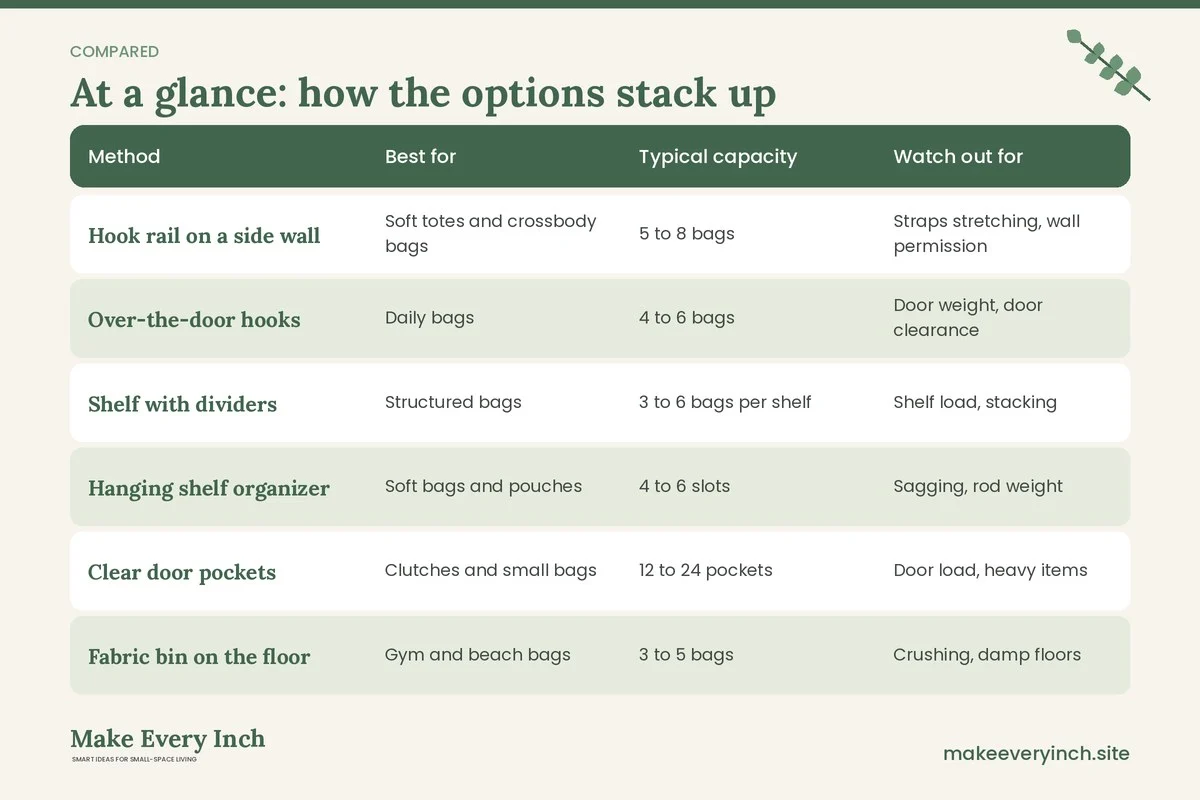
Comparison table: which method for which bag
| Method | Best for | Typical capacity | Watch out for |
|---|---|---|---|
| Hook rail on a side wall | Soft totes and crossbody bags | 5 to 8 bags | Straps stretching, wall permission |
| Over-the-door hooks | Daily bags | 4 to 6 bags | Door weight, door clearance |
| Shelf with dividers | Structured bags | 3 to 6 bags per shelf | Shelf load, stacking |
| Hanging shelf organizer | Soft bags and pouches | 4 to 6 slots | Sagging, rod weight |
| Clear door pockets | Clutches and small bags | 12 to 24 pockets | Door load, heavy items |
| Fabric bin on the floor | Gym and beach bags | 3 to 5 bags | Crushing, damp floors |
| Under-bed box | Flat clutches, folded totes | 4 to 8 bags | Dust, moisture |
| Dust bag and top shelf | Seasonal and delicate bags | 4 to 8 bags | Reaching safely, labeling |
A rotation system that keeps the closet small
Rotation is the best habit for a small closet, because it keeps the bags you actually use in the easiest places. Follow a simple routine twice a year.
1. Pick the season’s bags. Choose three to six bags for the coming season, such as lighter totes and a straw bag for summer.
2. Clean and empty. Empty each bag, wipe the inside and let it air.
3. Pack the off-season bags. Stuff lightly, wrap in a dust bag and put them in a labeled box on the top shelf or under the bed.
4. Move the in-season bags forward. Hang or stand them at eye level, near the door.
5. Check the condition. Note any repair or cleaning that is needed and decide whether the bag is worth keeping.
6. Update the list. A note on your phone with a photo of each bag helps you see what you own.
The clothing you store seasonally follows the same rhythm, so do both on the same weekend. For the clothes side, see our post on seasonal clothing storage in small homes.
Three example closets
A reach-in closet of 4 feet wide
A 48-inch closet with one rod and one shelf has little to spare. Put a hook rail with six hooks on the side wall at 62 inches, which holds the daily bags. Place a divider on the shelf for two structured totes, and add a hanging organizer on the end of the rod for clutches. Store off-season bags in a labeled box on the top shelf. The closet holds around ten bags without losing a hanging inch of clothing space. See our broader post on DIY closet organization for small spaces for rod and shelf ideas.
A rental closet with no permission to drill
Here everything has to hang, rest or lean. Use an over-the-door hook set for four daily bags, a hanging shelf organizer on the rod for soft bags and a fabric bin on the floor for gym and beach bags. Keep the weight under the limits listed on each product. Put two clutches in a clear pocket organizer on the door. When you move out, everything goes with you.
A bedroom with no closet
Without a closet, the bags need a visible home. Use a slim hook rail on the wall of a hallway or an entry, and add a tall narrow shelf, anchored to the wall, with one shelf for bags. Hide delicate bags in a lidded box under the bed. The result is a display that doubles as decor. For more ideas, read our guide to small bedroom ideas without a closet.
Mistakes to avoid
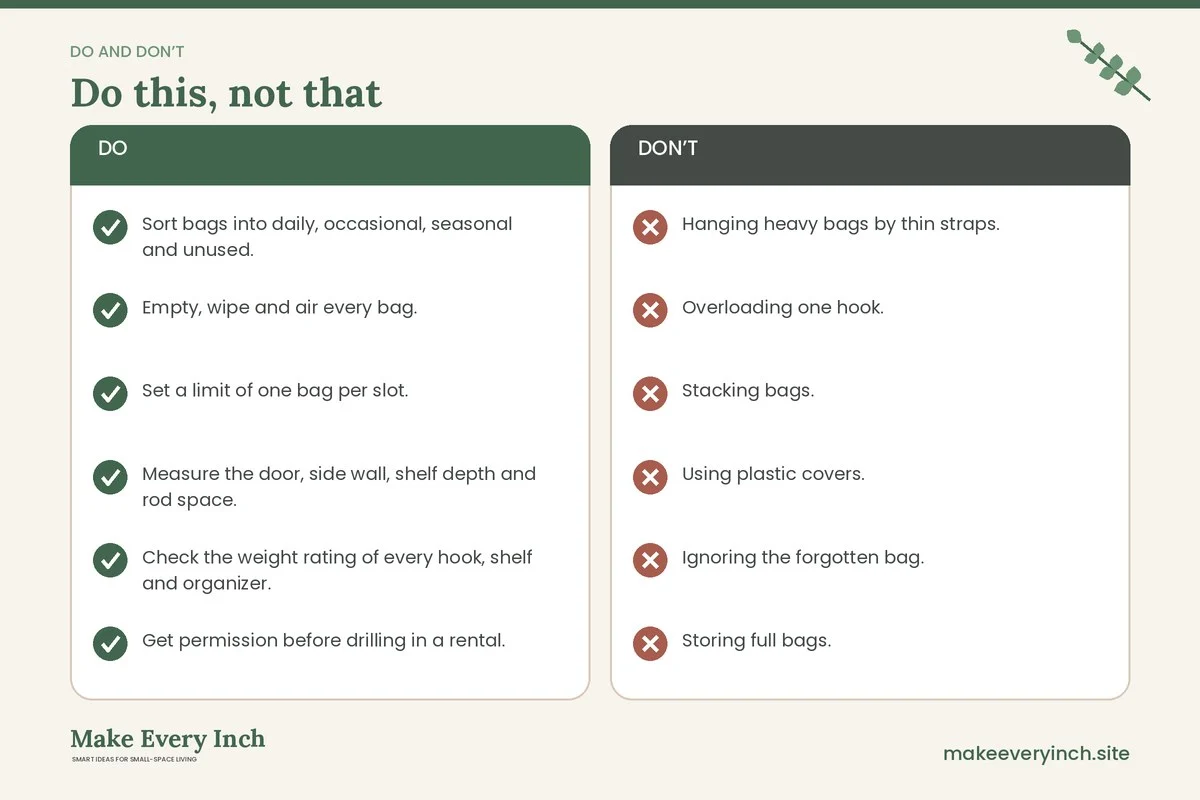
- Hanging heavy bags by thin straps. The straps can stretch and the hook can fail.
- Overloading one hook. A hook meant for one bag will not hold three.
- Stacking bags. The bottom bag loses shape and the zippers scratch each other.
- Using plastic covers. They trap moisture and can mark leather.
- Ignoring the forgotten bag. If you have not used it for a year, it is a candidate to sell, donate or pass on.
- Storing full bags. Keep personal items out so the bag is not strained by contents.
- Forgetting about light. A sunny shelf can fade a bag in a single season.
Handbag closet checklist
- Sort bags into daily, occasional, seasonal and unused.
- Empty, wipe and air every bag.
- Set a limit of one bag per slot.
- Measure the door, side wall, shelf depth and rod space.
- Check the weight rating of every hook, shelf and organizer.
- Get permission before drilling in a rental.
- Anchor any tall shelving or cabinets to the wall.
- Add a hook rail or over-door hooks for daily bags.
- Reserve one shelf for structured bags with dividers.
- Stuff bags lightly and use breathable dust bags.
- Choose which bags to display and which to hide.
- Set a twice-a-year rotation date.
FAQ
What is the best way to store handbags in a small closet?
Use a mix: hooks for soft daily bags, a shelf with dividers for structured ones and a box or dust bag for seasonal bags. Match the method to the bag, and stay within the weight rating of each product.
Should I hang or stack my handbags?
Hanging suits soft bags with wide straps. Standing upright on a shelf suits structured bags. Avoid stacking, since weight on top deforms the bags below.
How do I keep my handbags from losing shape?
Stuff them lightly with acid-free tissue or a clean towel, support the handles and store them upright when possible. Do not overfill, and keep them away from heat and damp.
Is it better to display or hide handbags?
Display the few you use often, and hide the rest. Open storage is convenient but collects dust and light, while closed storage protects bags but can make you forget them.
How many bags can a small closet hold?
A reach-in closet of 4 feet can often hold eight to twelve bags if you use the side wall, the door and one shelf. The exact number depends on size, so measure first and set a limit.
Can I store handbags in plastic bags?
It is better to avoid sealed plastic, which traps moisture. Use cotton dust bags or a clean pillowcase, and let the bag breathe.
How do I store handbags in a rental without drilling?
Use over-the-door hooks, hanging organizers, tension-style shelves and freestanding units, and always check the weight rating. Our guide to small bedroom storage ideas has more renter-friendly options.
Keep going: Keep going with our pillar guide to small closet ideas, the companion post on seasonal clothing storage in small homes and our broader small space organization ideas.
Save this guide for later
Pin the ideas you like to Pinterest so you can come back to them when you plan your space.