13 Small Entryway Ideas for Pet Owners: Leash, Paw and Door
Quick answer: A small entryway pet owners can live with is built around the daily loop: leash on, walk, paws wiped, leash off. Give the leash, bags, towel and treats one home at pet height or adult reach, keep a washable mat for muddy paws, make the door a safe stop with a gate or a calm routine, and keep cords, plants and small objects out of the pet’s reach.
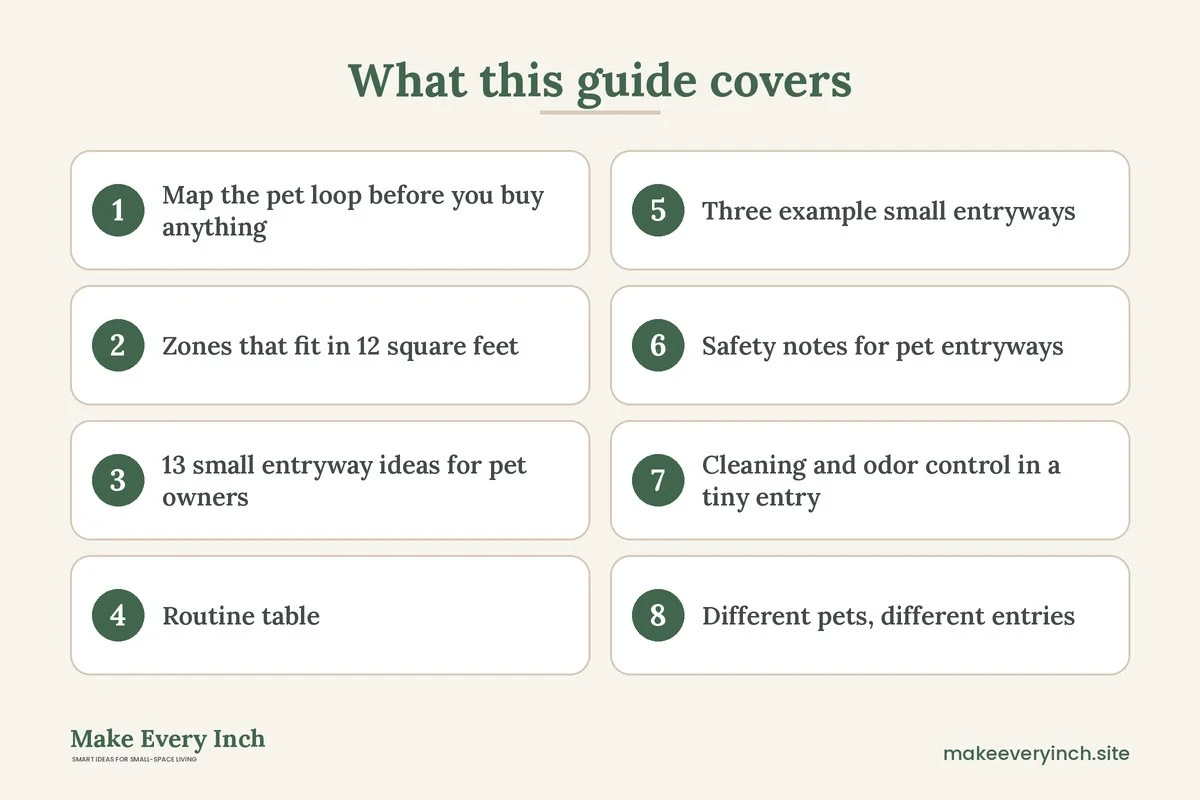
A small entryway pet owners rely on every day has to do two jobs at once. It is the place where you leave and return, and it is the place where a dog or cat is most excited, most muddy and most likely to bolt. A foot of floor makes the difference between a calm routine and a tangle of leashes, wet towels and shoes. This guide is about the pet side of the entry. It looks at the loop of a walk, the gear that goes with it, the layout that keeps animals safe at the door and the cleaning that keeps a small hall from smelling. You will find 13 ideas, a routine table, three example entries, safety notes, a checklist and an FAQ. For the wider topic, see our main guide to small entryway ideas, then pair it with our small home ideas for pet owners and our post on small entryway storage.
Map the pet loop before you buy anything
The best layout comes from watching what actually happens at the door. For a few days, note each step in the loop and where it takes place.
- Before the walk: where does the leash or harness live? Where do you put shoes on? Do you grab bags, treats or a ball?
- At the door: does your pet wait, jump or pull? Does the door swing into the animal or into a gate?
- After the walk: where do muddy paws get wiped? Where does the wet towel go? Where do the bags go? Where do the shoes dry?
- Between walks: where do the food, the water and the carrier live? Does the pet nap near the door?
Write the answers on a sticky note. Every place where you walked more than five steps is a place to move something closer. A small entryway works when items are within one arm’s reach of the spot where you use them.
Zones that fit in 12 square feet
You can split even a very small entry into three zones. They do not need separate walls, only separate heights and spots.
- The grab zone is at the wall by the door, at about 48 to 66 inches: leash hooks, a small tray for keys, a pouch for bags and treats.
- The wipe zone is on the floor just inside the door: a washable mat or tray, 24 by 36 inches or smaller, with a towel on a hook above.
- The pet zone is low, below 18 inches: a bowl, a bed or a crate, if the entry is wide enough.
Keep the human path at 30 to 36 inches wide. Pets move fast, so the path should never be blocked by a bench, a tray or a basket.
13 small entryway ideas for pet owners
The leash and gear station
1. A hook rail at two heights
A single rail with two rows lets an adult hang a leash at about 54 inches and a harness lower. Hooks should have rounded ends. If you live with children or a large dog, check that cords and straps cannot loop around a neck. Use adhesive hooks only within their stated weight limit, since a wet coat plus a leash can add up. Our renter friendly entryway organization ideas post covers adhesive checks.
2. A pouch or box for bags and treats
Hang a small fabric pouch or a lidded box at adult height for waste bags, treats and a flashlight. Keep treats out of the dog’s reach and in a closed container, since many dogs can open soft pouches. A narrow wall-mounted box 4 to 5 inches deep fits in a hallway of any width.
3. A small shelf for the pet bag
One shelf at 40 to 48 inches, 6 to 8 inches deep, can hold a travel bowl, a first-aid pouch and a collapsible water bottle. Mount it only with permission, or use a freestanding narrow unit. If the unit is tall, anchor it to the wall to prevent tipping, and never let a pet climb it.
Paws, mud and wet fur
4. A washable mat and a tray
A low-pile mat 24 by 36 inches catches muddy paws. Place a boot tray or a plastic liner under it to protect the floor. Choose a mat that you can shake out, rinse or toss into the wash. Avoid thick-pile rugs that trap mud. Let the mat dry fully before you put it back, because damp fabric grows odors.
5. A hook for a dedicated towel
A single hook at 40 inches holds the paw towel, so you never reach for a dish towel. Wash the towel often. Keep a second one in rotation. If you use a cleaning spray for paws, choose a pet-safe one and read the label, and never use essential oil diffusers near cats or birds, which can be harmful.
6. A shoe tray that doubles as a drip zone
Wet boots and muddy shoes go on a tray next to the mat. A tray with a lip of at least an inch keeps water off the floor. If the entry is shared with a building corridor, keep everything inside the unit.
Doors, gates and escape-proofing
7. A pet gate at the door zone
A pressure-mounted or freestanding gate stops a dog from bolting when you open the door. Choose a gate that fits the doorway width, swings away from the door and has a latch that adults can operate with one hand. Check that the gate does not leave a gap a small animal or a child can slip through. Never use a gate as a barrier on stairs unless it is rated for that use. For rentals, a pressure-mounted gate avoids drilling. Do not drill into door frames or walls without permission.
8. A stop-and-sit routine
Training does more than hardware. A short cue such as sit or wait before the door opens is a habit worth teaching with a trainer or a reliable guide. Keep a treat pouch within reach so the reward is instant. A calm door saves an animal from running into the hallway or onto the street.
9. An ID and microchip reminder near the door
Place a tag, a spare collar and a card with your contact details near the door. If your pet slips out, you can find the details quickly. Check that the collar tag is legible and that the microchip contact information is current.
Pet comfort without clutter
10. A low bed or mat under the shelf
If your pet naps near the door, a low bed or a folded blanket under a bench or shelf keeps the floor tidy. Make sure it does not sit in the door’s arc or in the path you walk. A pet that is calm and has a spot of its own is less likely to tangle with your feet.
11. A closed bin for food and toys
Store dry food in a sealed container on a shelf or in a closet, never loose in the entry. Keep toys in a lidded basket. A basket 12 to 14 inches wide fits under a bench. Pick up small chew toys and cords at night so they are not swallowed.
12. A small litter or carrier spot, if needed
In a one-room home, a cat carrier might live near the door for vet visits. Place it on a low shelf or a corner floor. Keep the litter box elsewhere. Odors from litter in the entry are not welcome, and a litter box near the door also encourages escape attempts. See the small laundry area ideas for apartments post for ideas that keep pet supplies out of the main path.
13. A mirror and a light at human height
A mirror helps you check your appearance on the way out, and a light helps you see muddy paws when it is dark. Hang a lightweight mirror with removable strips rated for its weight. Choose a plug-in or battery light and keep the cord off the floor so a pet cannot chew it. Read our small hallway lighting ideas for options.
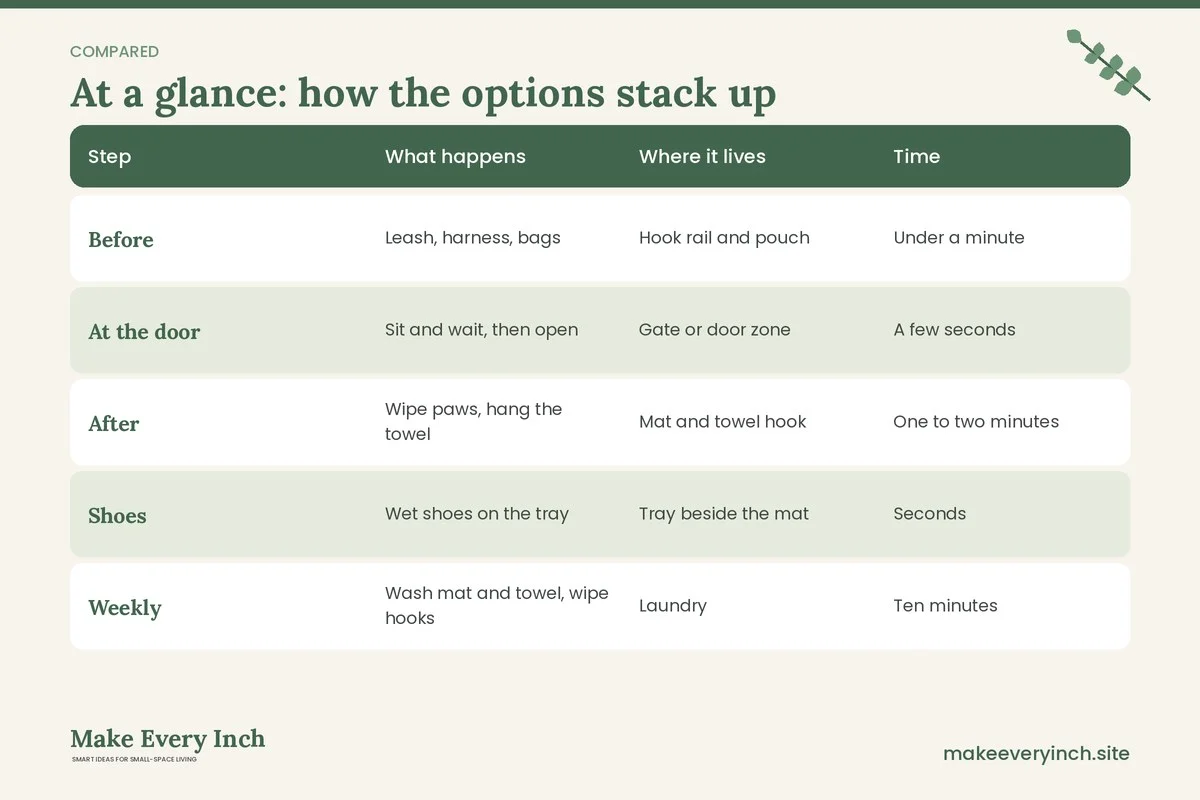
Routine table: the walk loop, step by step
| Step | What happens | Where it lives | Time | |
|---|---|---|---|---|
| Before | Leash, harness, bags | Hook rail and pouch | Under a minute | |
| At the door | Sit and wait, then open | Gate or door zone | A few seconds | |
| After | Wipe paws, hang the towel | Mat and towel hook | One to two minutes | |
| Shoes | Wet shoes on the tray | Tray beside the mat | Seconds | |
| Weekly | Wash mat and towel, wipe hooks | Laundry | Ten minutes |
Three example small entryways
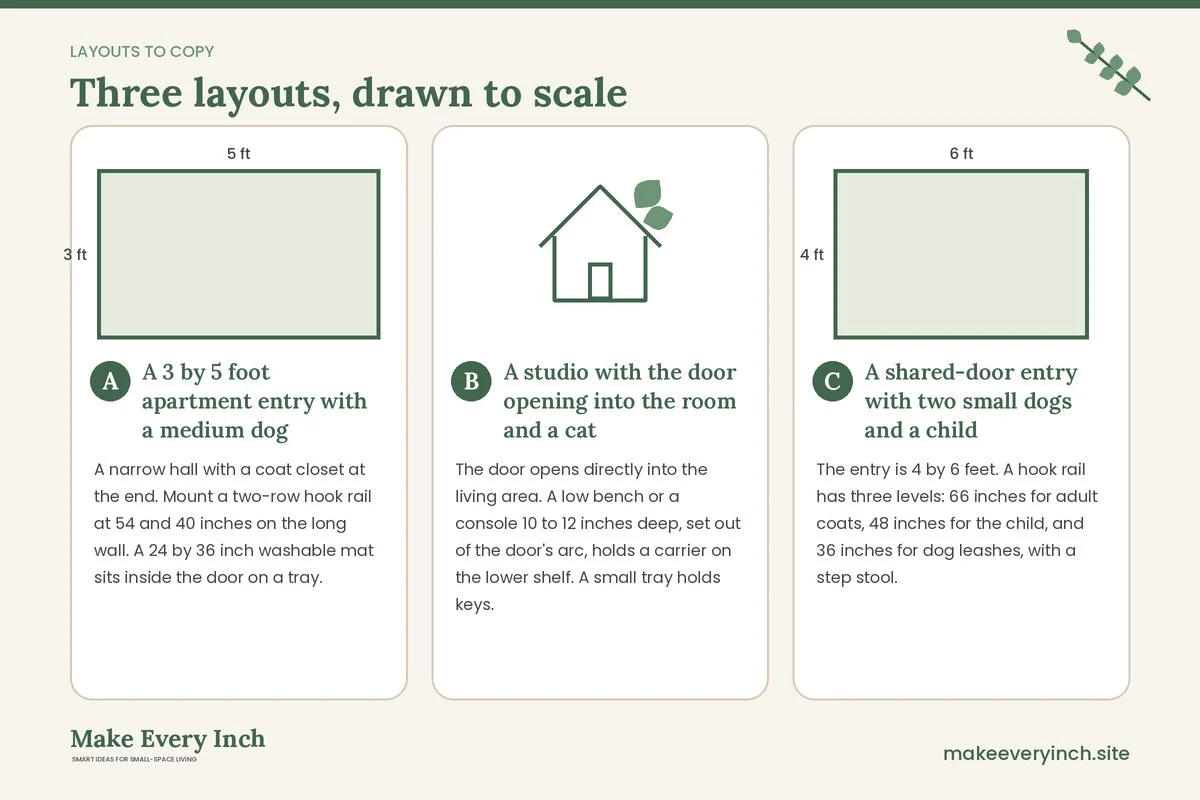
A 3 by 5 foot apartment entry with a medium dog
A narrow hall with a coat closet at the end. Mount a two-row hook rail at 54 and 40 inches on the long wall. A 24 by 36 inch washable mat sits inside the door on a tray. A small pouch for bags and treats hangs beside the rail. The towel hangs on a hook above the mat. A pressure-mounted gate sits across the hall 3 feet from the door, so the dog can sit behind it while you put on your shoes. The human path stays at 34 inches.
A studio with the door opening into the room and a cat
The door opens directly into the living area. A low bench or a console 10 to 12 inches deep, set out of the door’s arc, holds a carrier on the lower shelf. A small tray holds keys. A mat marks the landing. The cat’s food and the litter box live in the kitchen corner, not in the entry. A window latch is secured, and a screen is checked so the cat cannot push through. A plug-in light is set high on the wall to avoid cords on the floor. See our post on studio apartment entryway ideas for the layout.
A shared-door entry with two small dogs and a child
The entry is 4 by 6 feet. A hook rail has three levels: 66 inches for adult coats, 48 inches for the child, and 36 inches for dog leashes, with a step stool. A closed bench 14 inches deep holds shoe baskets inside and a towel on top. A mat and tray sit just inside the door. A freestanding gate separates the entry from the living room so the dogs cannot dash through while the child puts on shoes. Everything tall is anchored with the landlord’s permission. For more family ideas, read our small entryway organization for families.
Safety notes for pet entryways
- Never drill without permission. Use pressure-mounted gates and adhesive hooks within their weight limits. Read your lease and photograph walls first.
- Anchor tall furniture. Tall shelves and cabinets can tip when a pet or child climbs. Anchor them with permission, or choose low pieces.
- Keep cords out of reach. Chewed cords are an electrical and choking hazard. Use cord covers and keep lamps out of paw reach.
- Choose pet-safe plants. Many common houseplants are harmful if chewed. Check a reliable list or skip plants near the door.
- Ventilate when cleaning. Use low-VOC paint and pet-safe cleaners, and open a window while using them. Keep animals away until surfaces are dry.
- Avoid slip hazards. A rug that slides on hard floor can hurt a dog’s joints and a person’s ankles. Use a grip pad.
- Keep the exit clear. The entry is an escape route for people and pets. Do not block it with gates that are hard to open in an emergency.
- Keep treats and medicine out of reach. Many human foods and medicines are dangerous to pets.
- Avoid hanging cords with loops. Dog leashes and cords can strangle a young child or a pet.
Cleaning and odor control in a tiny entry
Small entries smell faster because the air does not move. Wash the mat weekly and the towel more often. Wipe the floor with a pet-safe cleaner after wet days. Let shoes and leashes dry in open air, not in a closed cabinet. Leave a window or a vent open for a few minutes a day if the building allows it. A small bin with a lid for used bags keeps the entry clean until you take it out. Do not block vents or radiators with baskets. Our small laundry room mistakes to avoid post explains why damp fabric needs airflow.
Different pets, different entries
Large dogs
Large dogs need wider paths and sturdier hooks. A 24-inch-wide path will feel tight, so keep the main path 36 inches and keep the leash hooks away from the dog’s reach. Skip a tall shoe rack that a big dog can knock over.
Small dogs and puppies
Small dogs are easy to lose underfoot. Use a gate with narrow slats and keep the floor clear. A low bed within sight of you keeps a puppy calm.
Cats
Cats climb. Secure tall shelves and keep breakables off high edges. Keep carriers on a low shelf with the door open so the cat does not fear it. Window and door screens should be secure.
Birds, rabbits and other small pets
Cages and hutches should stay away from drafts and the door. Fumes from paint, candles and some sprays can be harmful to birds, so ventilate and choose unscented products.
Mistakes pet owners make in small entries
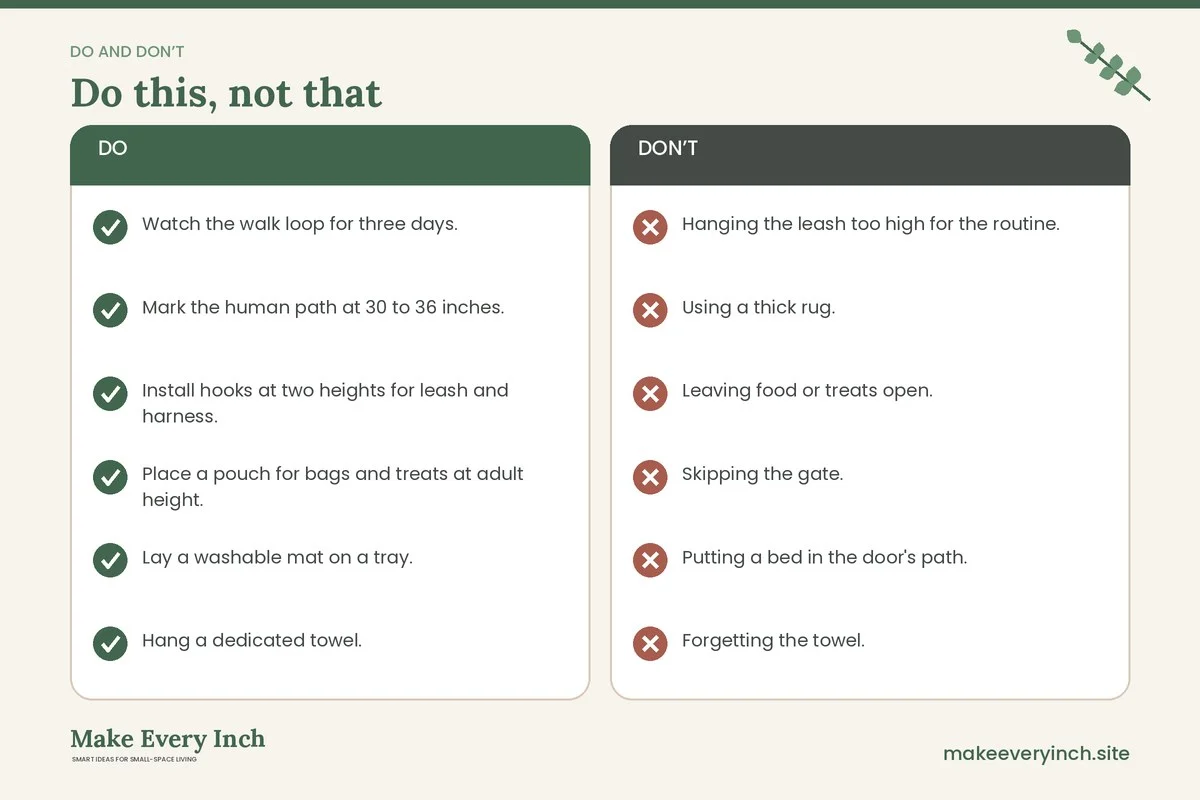
- Hanging the leash too high for the routine. If you have to reach, you will drop it on the floor.
- Using a thick rug. It traps mud and slides.
- Leaving food or treats open. It teaches the pet to wait by the door.
- Skipping the gate. A gate takes seconds to install and prevents a dash.
- Putting a bed in the door’s path. It becomes a trip hazard.
- Forgetting the towel. Without a towel hook, a wet dog dries on the sofa.
- Choosing delicate finishes. Wipeable paint and washable surfaces survive claws.
Entry checklist for pet owners
- Watch the walk loop for three days.
- Mark the human path at 30 to 36 inches.
- Install hooks at two heights for leash and harness.
- Place a pouch for bags and treats at adult height.
- Lay a washable mat on a tray.
- Hang a dedicated towel.
- Add a gate that swings away from the door.
- Teach a sit-and-wait cue.
- Check the ID tag and microchip details.
- Anchor tall furniture with permission.
- Cover or hide cords.
- Wash the mat and towel weekly.
FAQ
How do I stop my dog from bolting out the door?
Combine a gate or a leash on a hook with a calm routine of sit and wait before the door opens. Ask a trainer for help if the habit is strong.
Where should I keep the leash in a small entry?
On a hook within adult reach, close to the door, and out of the pet’s reach. A second hook lower down is useful if a child helps.
What is the best mat for muddy paws?
A washable, low-pile mat on a tray. It should dry quickly and sit flat with a grip pad.
Can I keep a litter box near the front door?
It is better to keep it elsewhere. Odors, door drafts and escape attempts all make the entry a poor spot.
What if I rent and cannot drill?
Use pressure-mounted gates, adhesive hooks within their weight limits and freestanding units. Our no-drill storage ideas for renters post lists more.
How do I keep the entry from smelling?
Wash the mat and towel weekly, wipe the floor with a pet-safe cleaner, and let shoes and leashes dry in open air. Our small home drop zone ideas post has more tips.
Keep going: Keep planning with our small balcony ideas for pet owners, small entryway organization and small foyer ideas for apartments.
Save this guide for later
Pin the ideas you like to Pinterest so you can come back to them when you plan your space.