13 Affordable Small Space Lighting Ideas, Ranked by What to Buy First
Quick answer: Affordable small space lighting works best when you spend in order: fix the darkest task area first, add one lamp at a different height, then swap bulbs for a consistent warm color. Aim for three light sources per room at different heights, use plug-in and no-drill fixtures in rentals, and keep cords, bulbs and power strips within their safe limits.
Affordable small space lighting is less about finding cheap fixtures and more about spending in the right order. A small room often has a single ceiling fixture, one dark corner and a desk that gets too little light. Replacing everything at once costs more than most people want to spend, and it often misses the real problem. A better approach is to find the weak spot, fix that first, and add layers one at a time. This guide gives you a buying order, a lumen worksheet, 13 ideas, a table of what each idea fixes, three example rooms, the safety rules for cords, bulbs and wet areas, and a checklist. For the wider topic, read our pillar on budget small space ideas, and for the layered approach see layered lighting ideas for small apartments.
Start by finding the real problem
Walk through your home at three times of day: early morning, late afternoon and evening. Stand in each room and ask where you struggle to see. Common problems include a shadowed kitchen counter, a dim reading chair, a bathroom mirror with a dark face, a desk with glare on the screen and a hallway that feels like a tunnel. Write down the three worst spots.
Next, look at your light bulbs. In many homes, bulbs are a mix of colors, with one warm, one cool and one that has faded. A mix of colors makes a room feel patchy and smaller. A consistent color is one of the cheapest upgrades you can make.
Finally, look at your walls and ceiling. Light colors reflect light, and dark ones absorb it. A room with dark walls needs more light than a pale one for the same feeling of brightness. If you can repaint, choose a light, low-VOC paint and ventilate the room while it dries. If you rent, ask permission before you paint.
The simple lumen worksheet
Lumens measure how much light a bulb gives out. Watts measure how much power it uses. Packaging for modern bulbs lists both. As a rough guide, many small rooms feel comfortable with a total of 10 to 20 lumens per square foot, with the higher end for kitchens, bathrooms and work areas. Treat these figures as a starting range, since wall color, window size and personal eyesight all change what feels right.
Here is how to work it out.
- Measure the room in feet, and multiply length by width to get square feet. A 10 by 12 foot room has 120 square feet.
- Multiply by 10 for a calm bedroom or living room, and by 20 for a kitchen or workroom. That gives 1,200 to 2,400 lumens for the 120 square foot room.
- Add up the lumens on your existing bulbs and lamps. If the total falls short, add light where you need it, not everywhere.
- Split the total across three heights: overhead, mid-height such as a table lamp, and low such as a floor lamp or a strip under a shelf.
Do not treat the numbers as rules. They are a way to notice that a room with one 400 lumen bulb and 120 square feet is likely to feel dim.
Color temperature and bulb choice
Color temperature is measured in kelvins. Warm light, around 2,700 kelvins, feels cozy and suits bedrooms and living areas. Neutral light, around 3,000 to 4,000 kelvins, feels clean and suits kitchens, bathrooms and desks. Very cool light, above 5,000 kelvins, can feel harsh at home. Pick one family of color for each room and stick with it.
Choose LED bulbs when you can, since they use less power and run cooler. Check that the bulb fits the fixture and is rated for it, especially in enclosed fixtures, where heat can build up. If a lamp has a maximum wattage on the label, never exceed it. If you use dimmers, check that the bulb is marked dimmable, or it may flicker or buzz. Colors look more natural when a bulb has a high color rendering rating, which is listed on many packages.
13 affordable small space lighting ideas
Fix the worst task area first
1. A clip-on or adjustable desk lamp
A desk lamp puts light where you read or work and leaves the rest of the room dim and calm. Position it on the side opposite your writing hand to avoid shadows, and angle it so the bulb is not in your line of sight. A lamp with a flexible neck suits a narrow desk.
2. Under-cabinet strips in the kitchen
A stick-on or plug-in strip under a wall cabinet lights the counter and removes shadow from your hands. Choose a strip with a plug-in power supply so no wiring is needed. Keep the strip away from the cooktop’s heat and steam, follow the maker’s instructions on wet areas, and do not run a cord across a hot surface. Our guide to small kitchen lighting ideas shows more layouts.
3. A bright mirror light in the bathroom
Light on both sides of the face reduces shadows better than a single fixture above. A plug-in sconce or a stick-on bar can help in a rental, but any electrical item near water needs care. Bathrooms need fixtures rated for damp locations and sockets protected by a ground fault circuit interrupter, often called a GFCI. If you are unsure, ask a licensed electrician. See small bathroom lighting ideas for the layout.
Add a second height
4. A slim floor lamp in the dark corner
A corner that is empty and dark makes a room feel smaller. A floor lamp with an upward-facing shade bounces light off the ceiling and softens the whole room. Choose a stable base, and keep it away from curtains and anything that can touch a hot bulb.
5. A pair of small table lamps
Two lamps at the ends of a sofa or a bed give warm pools of light that are easier on the eyes than one ceiling fixture. Place the bulb centers at about eye level when seated, and use a shade that hides the bulb. If your bedside table is narrow, consider small bedroom lighting ideas for wall-mounted options.
6. A plug-in wall sconce
A sconce with a cord and a plug saves floor and table space. The cord can run down the wall in a cover. Do not use a hook that is not rated for the fixture’s weight, and never drill in a rental without permission. Adhesive-mounted options are available for light fixtures, though you must check the weight limit and the wall surface.
7. A shelf-top uplight
A small lamp on the top of a bookcase throws light up the wall and ceiling. It adds height without taking up floor space. Anchor tall bookcases to the wall, and keep the bulb away from papers and fabric.
Swap and upgrade what you already have
8. Matching bulbs in every fixture
Replacing mismatched bulbs with a single color temperature is the cheapest and quickest improvement. Turn off the power and let the old bulb cool before you change it. Dispose of used bulbs as your local rules advise.
9. Light shades and clean fixtures
A thick, dusty shade can cut the light a lot. Clean shades and diffusers, and consider replacing a dark shade with a light, translucent one. The change costs little and the effect is immediate. Wait until the lamp is unplugged and cool before you clean it.
10. A swap for the ceiling shade in a rental
In many rentals the ceiling fixture is a dim, builder-grade dome. Ask the landlord whether you may swap it, and keep the original to put back at move-out. If the landlord agrees, switch off the power at the breaker before you touch the fixture, and consider hiring a licensed electrician for any wiring. If you may not change it, use lamps and let the ceiling light play a smaller role. See our guide to renter friendly lighting ideas.
Add atmosphere cheaply
11. String lights as a headboard or shelf edge
String lights add soft light and mood. Choose a set rated for indoor use, with a plug and a safe low-heat bulb, and hang it with clips or removable hooks. Do not staple the cord, do not cover it with fabric that can trap heat, and do not leave a long run on a single outlet extension.
12. Strip lights behind the TV or desk
A low-glare strip behind a screen reduces eye strain by softening the contrast between the screen and the wall. Use a strip that plugs into the wall or a USB port, stick it to a clean, dry surface, and keep the controller where children and pets cannot chew it.
13. A plug-in timer or smart plug
A timer turns a lamp on at dusk, so you come home to a lit entry. It also makes the home feel lived in. Check that the lamp’s wattage is within the timer’s rating, and avoid plugging heaters into small timers.
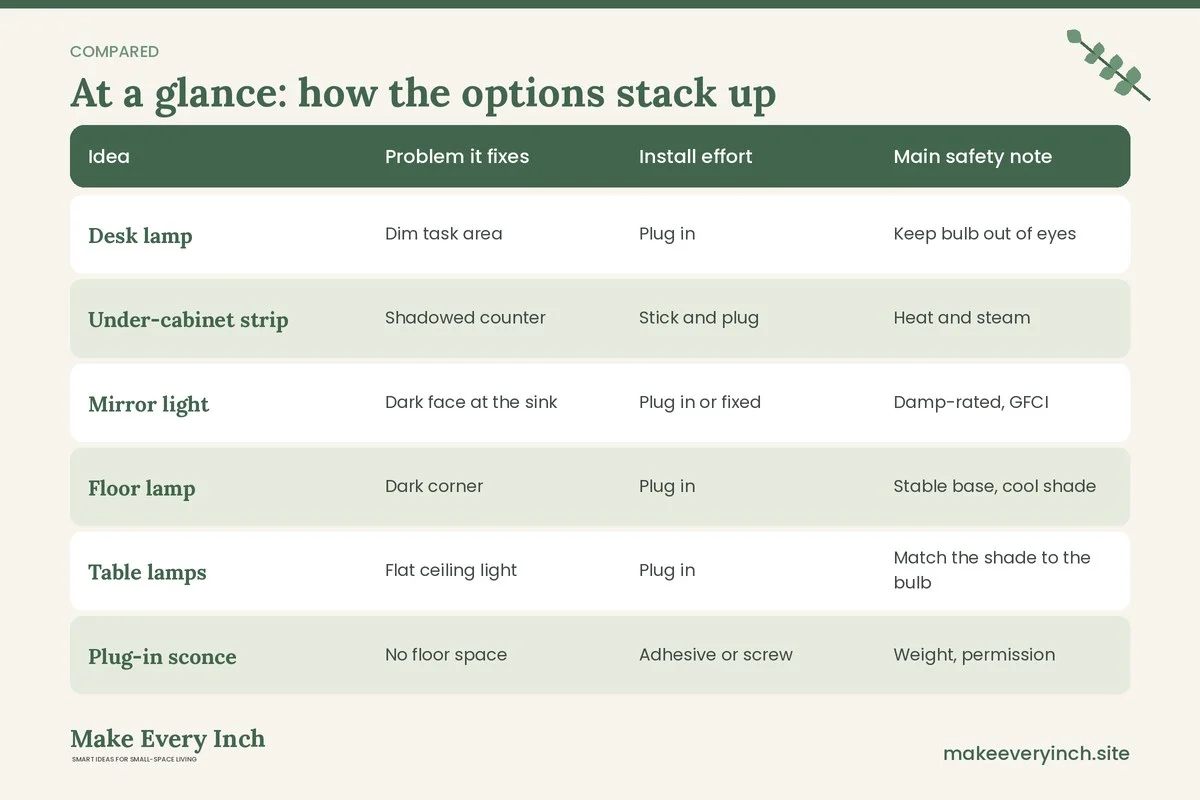
What each idea fixes
| Idea | Problem it fixes | Install effort | Main safety note |
|---|---|---|---|
| Desk lamp | Dim task area | Plug in | Keep bulb out of eyes |
| Under-cabinet strip | Shadowed counter | Stick and plug | Heat and steam |
| Mirror light | Dark face at the sink | Plug in or fixed | Damp-rated, GFCI |
| Floor lamp | Dark corner | Plug in | Stable base, cool shade |
| Table lamps | Flat ceiling light | Plug in | Match the shade to the bulb |
| Plug-in sconce | No floor space | Adhesive or screw | Weight, permission |
| Shelf uplight | Low ceiling feel | Plug in | Anchor the shelf |
| Matching bulbs | Patchy color | Swap | Wattage limits |
| Shade cleaning | Dim lamps | Wipe | Unplug first |
| Ceiling swap | Builder dome | Wiring | Breaker off, permission |
| String lights | Mood | Clip | Indoor rating, no heat trap |
| Strip behind screen | Eye strain | Stick | Keep away from pets |
| Timer | Dark arrival | Plug in | Check the rating |
Three example rooms
Example 1: A 9 by 11 foot bedroom with one ceiling light
The bedroom has a bare ceiling bulb that makes the room look flat, and the owner reads in bed. The fix, in order: swap the ceiling bulb for a warm one, add a small lamp on each side of the bed, and add a clip-on reading light for the person who reads late. The ceiling light stays off in the evening. The total work takes minutes, and no wall is touched. The room now has three heights of light, and the owner can see to read without lighting the whole room.
Example 2: A galley kitchen 7 feet wide
The galley kitchen has a single ceiling panel, and the counters are in shadow because the cabinets block the light. Start with under-cabinet strips on both sides, then replace the ceiling bulb with a neutral, bright one. Keep the strips about 2 to 4 inches back from the cabinet front so the light spreads on the counter and does not glare in the eyes. Check that the cords sit away from the cooktop and the sink, and that the outlets near water have GFCI protection. If you are not sure they do, ask a licensed electrician or your landlord to check.
Example 3: A studio with a desk by the window
The studio has a bed, a sofa and a desk. The desk is in front of a window, so the screen glares by day and the corner goes dark at night. Add a desk lamp with a neutral bulb, and put a warm floor lamp by the sofa. Use a timer to bring on the lamp near the bed at dusk. Place the lamp so that the screen does not reflect the bulb. Dividing the studio into a work zone and a rest zone with light means you can switch zones off at night. Our post on studio apartment lighting ideas goes further.
Electrical and fire safety
Affordable lighting is only a good deal if it is safe.
- Respect the wattage label: never put a bulb above the maximum wattage on a lamp or fixture.
- Do not overload: plugging many lamps and strips into one extension or power strip can overheat it. Keep the total load within the rating, and plug high-draw items directly into a wall socket.
- Protect cords: do not run cords under rugs, over door thresholds or through places where they can be pinched. Use cord covers on walls and keep cords out of reach of children and pets.
- Wet areas: use fixtures marked for damp or wet locations in bathrooms and near sinks, and make sure sockets there are protected by a GFCI.
- Clearance: keep bulbs away from fabric, paper and curtains. Do not drape cloth over a lamp.
- Ventilation: enclosed fixtures can trap heat, so use bulbs rated for enclosed use.
- Hardwired work: switch off the breaker and ask a licensed electrician for any change to wiring. Never work on a live circuit.
- Lease and drilling: check your lease before you swap a fixture or drill, and use removable options if you are unsure.
- Children and pets: secure cords, avoid small battery lights that can be swallowed, and choose lamps with stable bases.
- Anchoring: if you use a tall bookcase or shelf for an uplight, anchor it to the wall with permission.
Mistakes that waste money
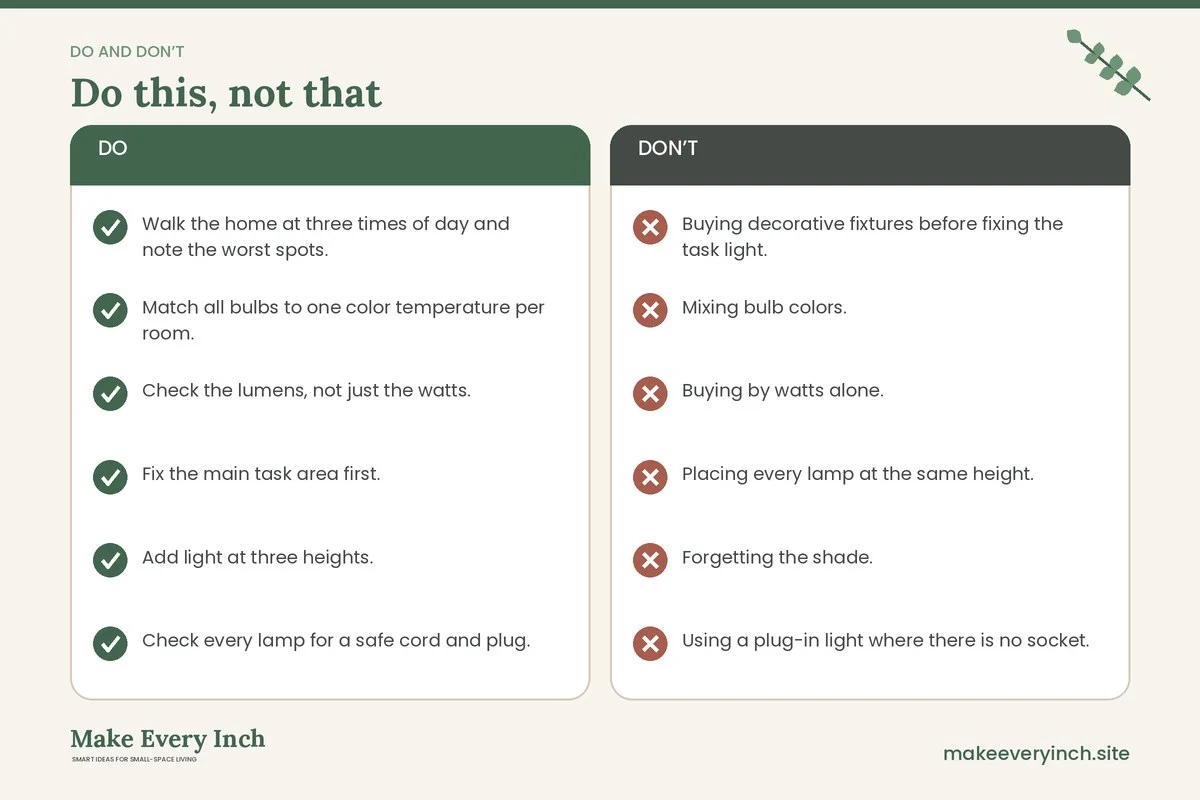
- Buying decorative fixtures before fixing the task light. A pretty pendant does not help you chop onions.
- Mixing bulb colors. One cool bulb among warm ones makes the room look patchy.
- Buying by watts alone. Look at the lumens, since watts only tell you how much power the bulb uses.
- Placing every lamp at the same height. Three heights give depth.
- Forgetting the shade. A dark, thick shade can block most of the light.
- Using a plug-in light where there is no socket. Plan the cord route before you buy.
- Ignoring daylight. Clean the window, move a tall item that blocks it, and use sheer curtains. Free light is the cheapest light there is. See small home design ideas with natural light.
A buying order that fits a tight budget
If you have a limited budget, follow this order.
- Step 1: Swap mismatched bulbs for one color temperature.
- Step 2: Add task light at the place where you do your most important job, such as the desk or the counter.
- Step 3: Add a lamp at a different height in the darkest corner.
- Step 4: Add a second lamp to balance the room.
- Step 5: Add mood lights such as strips or string lights.
- Step 6: Add a timer or a smart plug.
Second-hand shops and community groups often carry lamps and shades. Check each lamp for a damaged cord, a cracked socket or a missing plug guard before you plug it in. Do not use a lamp with frayed wires. If you want to extend your savings, learn how to build a cheap storage and lighting upgrade in a weekend, or explore budget renter upgrades.
Room-by-room quick plan
- Living room: two table lamps, one floor lamp and a bulb swap. See small living room lighting ideas.
- Bedroom: two bedside lamps and a warm ceiling bulb.
- Kitchen: under-cabinet strips and a neutral ceiling bulb.
- Bathroom: a damp-rated mirror light and a bright bulb.
- Desk: an adjustable lamp and a screen backlight.
- Hallway: a plug-in sconce or a small lamp on a console. See small hallway lighting ideas.
- Corner of any room: a slim floor lamp with an upward shade. See small room lighting ideas for every corner.
Checklist
- Walk the home at three times of day and note the worst spots.
- Match all bulbs to one color temperature per room.
- Check the lumens, not just the watts.
- Fix the main task area first.
- Add light at three heights.
- Check every lamp for a safe cord and plug.
- Keep the load on each power strip within its rating.
- Use damp-rated fixtures and GFCI sockets near water.
- Keep bulbs away from fabric and paper.
- Ask permission before swapping a fixture or drilling.
- Keep cords out of reach of children and pets.
- Anchor tall furniture used as a lamp base or uplight stand.
FAQ
What is the cheapest way to improve lighting in a small room?
Swap mismatched bulbs for one warm or neutral color, clean the shades and add one lamp at a different height. These steps cost little and make a visible difference.
How many lumens does a small room need?
Many small rooms feel comfortable with roughly 10 to 20 lumens per square foot, with the higher end for kitchens and work areas. Treat that as a starting range and adjust to taste.
Can I add lighting in a rental without drilling?
Yes. Use plug-in lamps, adhesive strips rated for the weight, clip lights and freestanding fixtures. Ask your landlord before changing any fixture that is wired in.
Are stick-on strip lights safe?
They can be, when you use a set made for indoor use, keep it within its rating, keep it away from heat and water, and plug it into a safe socket. Do not leave a damaged strip in use.
What color temperature is best for a small bedroom?
Warm light, around 2,700 kelvins, suits most bedrooms. It feels calm and does not push you awake.
Do I need a smart plug?
No. A basic timer does the same job for a lamp. A smart plug is useful if you want control from a phone, though it is not necessary.
How do I make a small room look bigger with light?
Light the corners and the walls, not only the center. Layers at different heights, light walls and a mirror opposite a window all help the room feel open.
Keep going: Keep going with our guides to budget small space ideas, renter friendly lighting ideas and cheap storage ideas for apartments.
Save this guide for later
Pin the ideas you like to Pinterest so you can come back to them when you plan your space.