21 Small Kitchen Pantry Ideas for Kitchens With No Pantry
Quick answer: Small kitchen pantry ideas make a pantry out of whatever you have: a tall cabinet, a pull-out beside the fridge, a rolling cart, a shelf or the back of a door. Group food by category in clear containers, keep daily items at eye level and rotate older items to the front.
Small kitchen pantry ideas are for the many kitchens that have no walk-in pantry, or any pantry at all. You can still store a week or two of food neatly if you choose the right spot, the right containers and a simple system. This guide shares 21 ideas, a category plan, a container guide, a table of pantry types, three example pantries, a shopping routine and a checklist.
Decide where the pantry will live
Look at the kitchen and pick the best location for food. A pantry works best close to where you cook and unload groceries. Options include a tall cabinet, a base cabinet with pull-out shelves, a gap beside the refrigerator, the space above the fridge, a section of open shelves, a rolling cart or a closet near the kitchen. Measure the height, width and depth of the spot and check that you can reach every shelf without a stool. If the pantry sits in another room, keep a small daily bin in the kitchen.
Think about volume. A couple needs about 8 to 12 cubic feet for a week or two of dry goods, canned food, oils and snacks, which is roughly one tall 24 inch cabinet. If you buy in bulk, you need more, but a tiny kitchen is better served by smaller, more frequent shopping.
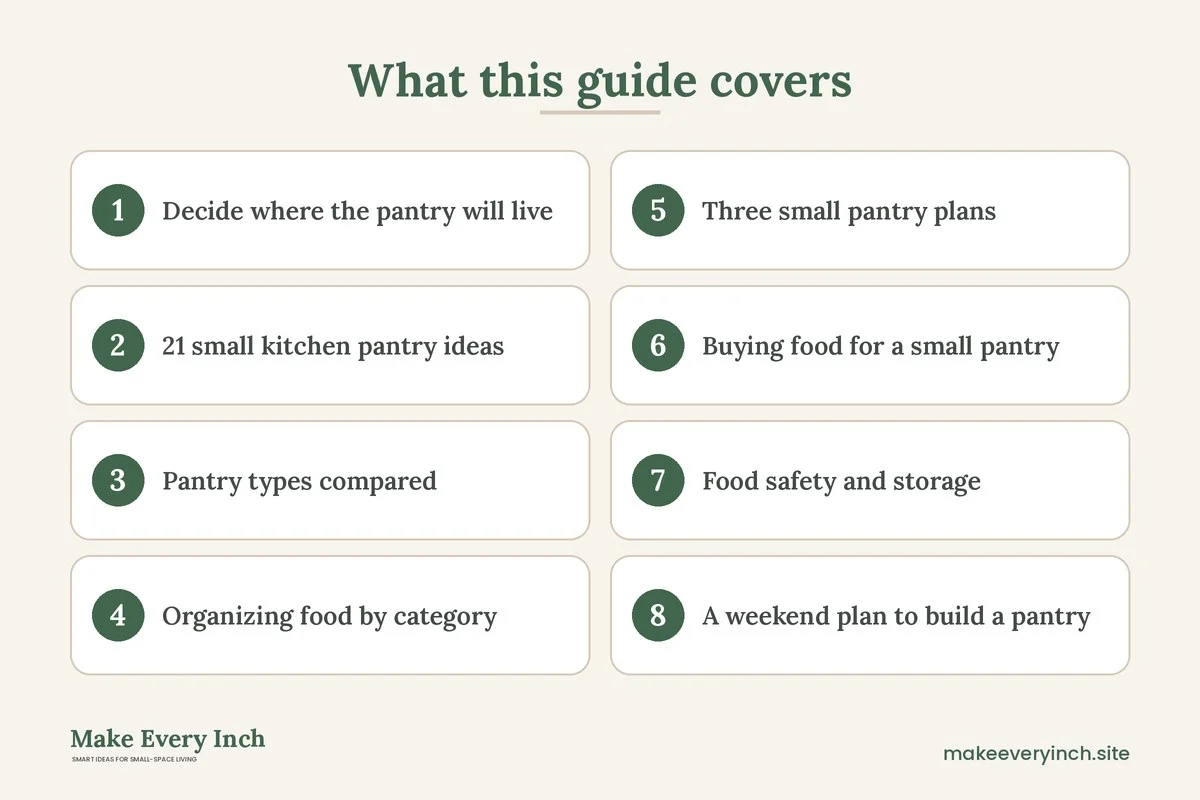
21 small kitchen pantry ideas
1. Turn a tall cabinet into a pantry
Add adjustable shelves every 10 to 12 inches, use door racks and keep the top shelf for backups. A tall cabinet can hold as much as a small closet pantry.
2. Add a pull-out pantry
A pull-out unit 6 to 9 inches wide slides into a gap beside the refrigerator or between cabinets and holds cans, jars and spices. Install it on full-extension slides.
3. Use a rolling pantry cart
A narrow cart 8 to 12 inches wide with three or four tiers rolls into a gap and out for use. Choose locking wheels.
4. Hang an over-the-door rack
A rack on the back of a door holds spices, cans, snacks and wraps. Choose one that fits the door and leaves room for the shelves.
5. Use shelf risers
A riser lets you see cans and jars at the back and doubles the shelf space.
6. Use clear containers for dry goods
Square, airtight containers hold flour, sugar, rice, pasta, cereal and snacks. Label each with the contents and the date.
7. Use baskets and bins for categories
A basket for snacks, one for baking and one for breakfast keeps categories together and lets you pull out a whole group at once.
8. Use a lazy Susan
A turntable on a shelf or in a corner brings oils, sauces and jars to the front.
9. Use a tiered can organizer
A tiered shelf or a can dispenser keeps cans visible and first in, first out.
10. Use the top of the fridge
A basket on the fridge holds light items such as bread, snacks and cereal.
11. Use a shelf above the door
A shelf above the door or the window holds backups and seldom-used items. Keep items light and labelled.
12. Use a bookcase as a pantry
A narrow bookcase with baskets holds dry goods in a studio or a hallway. Add a curtain if you want to hide it.
13. Use a closet or a hallway cupboard
A shallow closet with adjustable shelves makes a pantry near the kitchen. Use door racks and labelled bins.
14. Use a slim rolling bin for potatoes and onions
A ventilated bin stores root vegetables in a cool place and keeps them off the counter.
15. Use hooks for bags and aprons
Hooks inside a cabinet or on a door hold reusable bags, aprons and towels.
16. Use a spice drawer or a wall rack
A drawer insert or a narrow rack keeps spices visible and out of the main shelves.
17. Use stackable containers for leftovers and bulk food
Matching containers nest and stack, and you can see the contents through clear sides.
18. Add a snack station
A basket or a drawer with snacks in an accessible place keeps the rest of the pantry tidy and makes it easy for children.
19. Keep a “use first” bin
A small bin for items that need to be eaten soon helps prevent waste.
20. Use a chalkboard or a list
A list on the door of the pantry shows what you have and what you need. Update it when you shop.
21. Edit regularly
Every month, check dates and remove items you will not use. Keep the pantry at the size you can manage.
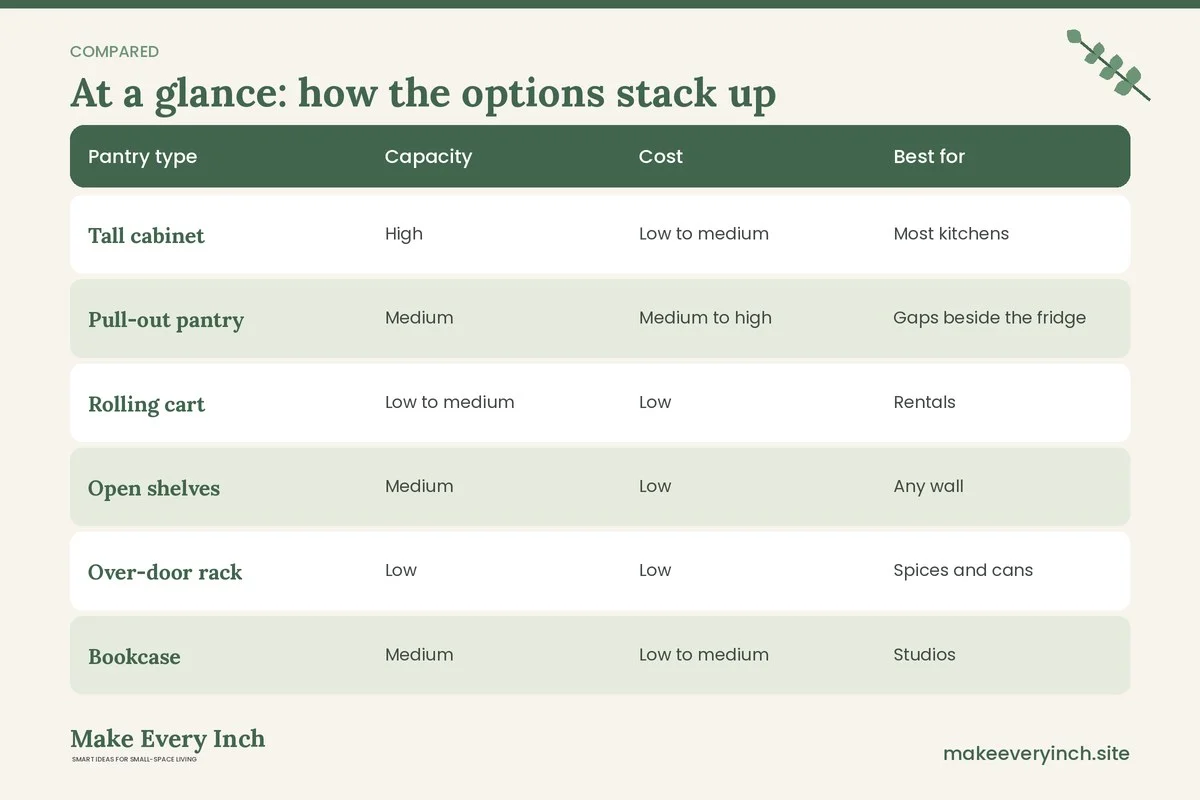
Pantry types compared
| Pantry type | Capacity | Cost | Best for | Notes |
|---|---|---|---|---|
| Tall cabinet | High | Low to medium | Most kitchens | Add shelves and racks |
| Pull-out pantry | Medium | Medium to high | Gaps beside the fridge | Needs a gap of 6 to 9 in |
| Rolling cart | Low to medium | Low | Rentals | Needs floor space |
| Open shelves | Medium | Low | Any wall | Keep neat |
| Over-door rack | Low | Low | Spices and cans | Check door clearance |
| Bookcase | Medium | Low to medium | Studios | Use baskets |
| Closet pantry | High | Medium | Homes with a closet | Add shelves and bins |
Organizing food by category
Grains and pasta
Keep rice, pasta, oats and flour in airtight containers on a middle shelf. Label with the cook time or the use. Store heavier bags on the lower shelf.
Canned and jarred goods
Keep cans on a tiered shelf or a rolling dispenser. Put the newest at the back. Group by type, such as tomatoes, beans and soups.
Baking supplies
Keep flour, sugar, baking powder, extracts and chips together in a bin that you can pull out. Store a measuring set inside the lid.
Breakfast and snacks
Use a basket for cereals, bars and snacks, and a second for tea and coffee. Keep them at eye level for easy access.
Oils, sauces and spices
Keep daily oils near the stove, backups on a shelf. Use a lazy Susan for sauces and a rack for spices. Keep oils away from heat and light.
Fresh produce that does not need a fridge
Use a ventilated basket for potatoes, onions and garlic, and a bowl for fruit. Keep onions and potatoes apart.
Household items
Keep trash bags, foil, wraps and cleaning products in a different spot from food, or in a separate bin.
Three small pantry plans
Plan A: a kitchen with one tall cabinet
Add four adjustable shelves, a door rack for spices and a lazy Susan on the bottom shelf. Keep baking on the top, grains in the middle and cans at the bottom. Use clear containers and label each.
Plan B: a studio kitchen with no cabinet space
Use a rolling cart beside the fridge for cans and jars, a basket on the fridge for bread and snacks and a narrow bookcase for dry goods. Use an over-door rack on the entry door for spices. See tiny kitchen ideas.
Plan C: a rental kitchen with limited shelves
Use freestanding shelves, stackable containers and adhesive hooks. Add a small cart and a shelf riser in each cabinet. See renter kitchen ideas.
Buying food for a small pantry
Shop with a list and check what you have before you go. Buy smaller packs of items that go stale, such as flour or cereal, and larger packs of items that keep, such as rice or beans. Plan meals so ingredients overlap, and buy fresh items for the first half of the week. Use the “first in, first out” method: place new items at the back and older items at the front. Keep a running list on the door and add items as you run out. Avoid buying duplicates of unfamiliar items, which crowd the shelves.
Food safety and storage
Store dry goods in a cool, dry place away from the stove and sink. Use airtight containers to keep pests out and food fresh. Keep flour and grains in the freezer for a day after you buy them if you worry about insects. Check dates monthly and discard anything that smells or looks off. Keep cleaning products on a lower shelf separate from food. Wipe shelves each month and vacuum crumbs from corners. Store opened packages in sealed containers and label them with the date. A clean, dry pantry reduces waste and keeps food safe.
A weekend plan to build a pantry
On Saturday morning, empty the spot you chose and every cabinet that holds food. Check dates and discard anything expired or stale, and group what is left by category on the table. Wipe the shelves. On Saturday afternoon, measure the shelves and buy only the containers, risers and baskets you need, matched to your measurements. On Sunday morning, fill the containers, label them and place each category on its shelf, with daily items at eye level and backups high or low. On Sunday afternoon, make a shopping list from the gaps you found and set a reminder to review the pantry each month. By Sunday evening you will have a working pantry without a remodel.
Pantry layouts by shelf height
Use the height of the shelves to match how often you use each item. Eye level, about 48 to 66 inches, holds daily items such as breakfast foods, snacks and the oils you cook with. Waist level, about 30 to 48 inches, holds heavier items such as cans, flour and bottles. Below waist, from the floor to 30 inches, holds the heaviest and bulkiest items, such as bags of rice, a bin of potatoes or cases of water. Above eye level, over 66 inches, holds backups and light, rarely used items such as serving dishes. Keep a step stool in the kitchen so you can reach the top safely, and never store heavy items overhead.
Pantry organization for specific diets and habits
A household that cooks from scratch
Store staples in bulk containers, keep a baking bin and place spices close to the stove. Use a lazy Susan for oils and vinegars, and label containers with the cook time for grains and beans.
A household that relies on quick meals
Keep a quick-meal bin with pasta, sauce, canned beans and frozen vegetables, so dinner can be assembled in a few minutes. Use a basket for snacks and keep a stock of staples that make meals stretch.
A household with allergies or dietary needs
Keep allergen-free food in a separate bin and label it clearly. Use color-coded lids, and keep a list on the door of what is safe. Store cross-contact items on different shelves and clean the shelves often.
A household with children
Use a low basket for snacks that children may take, and a high shelf for items they should not reach. Teach children to put items back and use pictures on labels for younger ones.
A single person
Buy small and use clear containers for partial packs. Keep a freezer bin for portions and a small selection of go-to ingredients. Avoid bulk packs that spoil before you can use them.
Pantry on a budget
- Under 20 dollars: shelf risers, a few baskets and labels
- Under 60 dollars: clear containers, a lazy Susan and an over-door rack
- Under 150 dollars: a rolling cart, a tiered can organizer and extra shelves
- Over 150 dollars: a pull-out pantry or a built-in unit
Start with a declutter and labels, which cost almost nothing. Then add containers, then storage furniture. Secondhand shelves and baskets work well, and you can reuse jars for dry goods.
Pantry staples worth keeping in a small kitchen
A small pantry works best with a short list of reliable staples that cover many meals. A good core includes rice, pasta, oats, flour, sugar, canned tomatoes, canned beans, stock, olive oil, a neutral cooking oil, vinegar, soy sauce, salt, pepper, a few spices and a jar of something for toast. Add a small selection of snacks and tea or coffee. From these you can make dozens of meals when you add fresh produce, eggs or a protein. Keep the list on the inside of a cabinet door and restock when an item is down to its last unit. Everything beyond the list should earn its place by being eaten within a few weeks.
Keeping the pantry fresh
Wipe each shelf once a month and vacuum crumbs from the corners. Rotate stock by moving new purchases to the back and older ones forward. Check opened packages for stale smells or signs of pests, and move flour, nuts and whole grains to the freezer if you keep them for long. Keep a small bin for items you will not eat and donate unopened, unexpired items. A fresh, tidy pantry makes meal planning easier and cuts food waste, which saves money and space.
Pantry mistakes to avoid
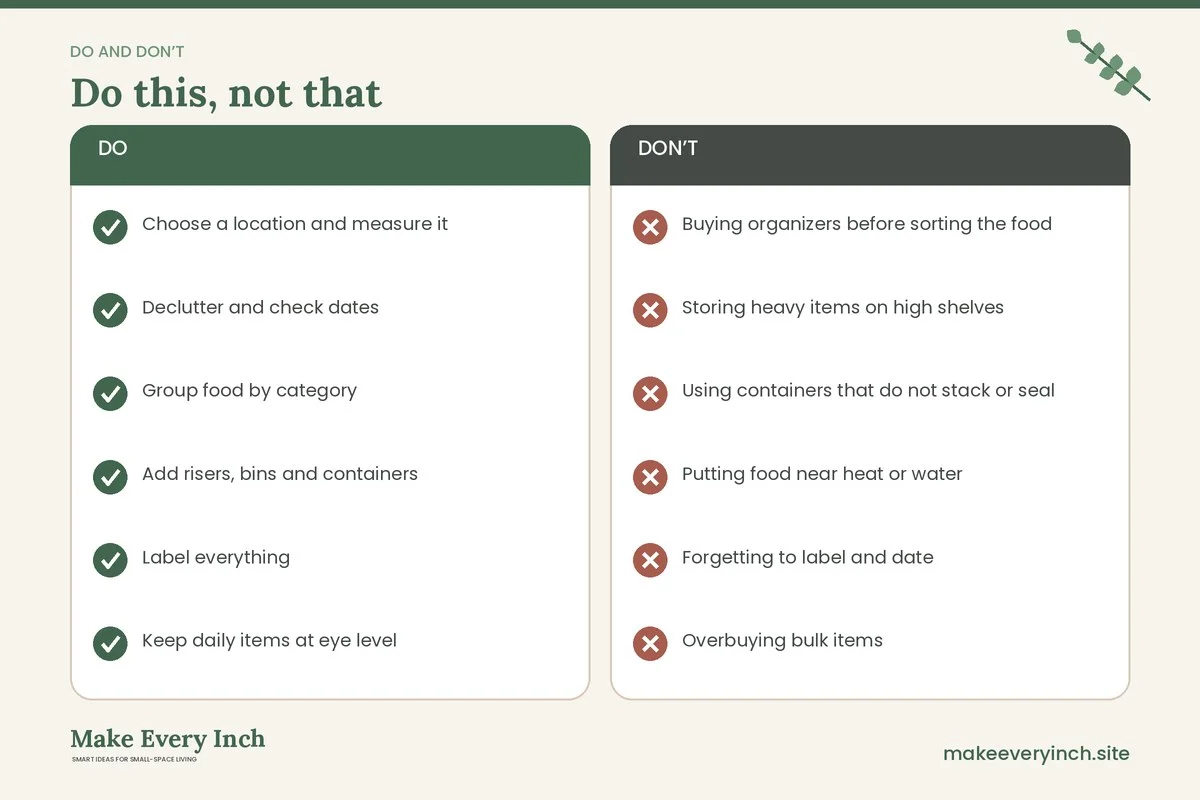
- Buying organizers before sorting the food
- Storing heavy items on high shelves
- Using containers that do not stack or seal
- Putting food near heat or water
- Forgetting to label and date
- Overbuying bulk items
- Letting old items hide at the back
- Ignoring the door
Treat the pantry as a living system: when a shelf is always overfull or a container always empty, adjust the layout rather than adding more containers.
Pantry checklist
- Choose a location and measure it
- Declutter and check dates
- Group food by category
- Add risers, bins and containers
- Label everything
- Keep daily items at eye level
- Set up a “use first” bin
- Review monthly
FAQ
How do I make a pantry in a small kitchen?
Use a tall cabinet, a pull-out, a cart or a bookcase, and group food by category in clear containers.
How do I store food with no pantry?
Use cabinets, a rolling cart, over-door racks and shelves, and keep only a week or two of food in the kitchen.
What containers are best for a small pantry?
Square, airtight, stackable containers in clear plastic or glass, with labels.
How do I organize a small pantry?
Group by category, put daily items at eye level, rotate older items to the front and label each shelf.
How do I stop pests in a pantry?
Use airtight containers, wipe shelves, store flour and grains in sealed bags and check for signs of moths.
How much food should I keep in a small kitchen?
About one to two weeks for dry goods, and a smaller amount for items with a short shelf life.
How can renters make a pantry?
Use freestanding shelves, a rolling cart, adhesive hooks and over-door racks.
How do I keep a pantry tidy?
Keep a list, check dates monthly and return items to the same spot every time.
Keep going: Explore our small kitchen ideas, small kitchen counter organization and small kitchen storage ideas.
Save this guide for later
Pin the ideas you like to Pinterest so you can come back to them when you plan your space.