Small Balcony Ideas with Vertical Gardens: 15 Ways to Grow Up
Quick answer: The safest small balcony vertical gardens use lightweight planters, secure hooks or freestanding frames, and plants chosen for your light. Check your lease and the building’s weight rules first, keep everything away from the railing edge, secure every pot against wind, plan drainage so water never reaches the neighbours below, and avoid plants that are toxic to pets and children.
Small balcony vertical gardens turn a few square feet of floor into a wall of green, which is exactly what a narrow balcony needs. When the floor is only 3 to 5 feet deep, a chair and a small table already fill it, so every pot placed on the ground steals walking room. Growing upward on a rack, a trellis, a pocket planter or a shelf frees the floor and puts the plants at eye level where you can enjoy them. This guide covers the safety rules that matter before you hang a single pot, how to read your light, 15 ideas, a comparison table of the main systems, three example balconies, a seasonal routine, mistakes to avoid and a checklist. For the wider topic, start with our main guide to small balcony ideas, then read the companion post on small balcony decor for cozy evenings and our guide to renter friendly small balcony ideas.
Safety first: read this before you buy anything
A vertical garden adds weight, water and height to a space that was not necessarily designed for them. A few minutes of checking prevents the problems that matter most: a fall, a leak or a complaint from the people below.
Weight limits and building rules
Balconies and decks are rated for a certain load, and wet soil is heavy. A medium container of damp soil can weigh far more than it looks, and a wall of ten of them adds up quickly. Ask your landlord, building manager or HOA for the rated load of the balcony and any rules about planters, and do not overload it. If you cannot get a clear answer, choose the lightest options: fabric pockets, small pots, light potting mix and a few well-spaced containers rather than a full wall. Spread weight out instead of concentrating it in one corner, and place the heaviest items near the wall of the building rather than the middle of the span.
Lease, HOA and landlord permission
Many leases limit what can be attached to railings, walls and ceilings, and some HOAs set rules about plants, colors and visible hardware. Read yours and ask in writing if anything is unclear. Never drill into a railing, a wall or the ceiling without permission. A freestanding rack, a tension pole or a rail-free hanging system is usually the safer route for renters, and our guide to renter friendly small balcony ideas covers more no-damage options.
Railings, children and pets
Railing height and gaps vary, and a climbable structure near the edge can be a risk for children and pets. Keep furniture, tall planters and shelving frames at a distance from the railing so nothing works as a step. Do not stack boxes or crates near the edge, and avoid placing a planter where a child could climb it to reach the top rail. If small children or curious pets use the space, keep the vertical garden on the wall side and leave the railing zone clear.
Falling objects and wind
Anything on a balcony can fall, and a pot dropping from several floors is dangerous for people below. Secure every planter with clips, wire, straps or a rail-free frame rated for the weight, and check them regularly. Wind makes tall, light frames tip and swing, so choose a sturdy base, add ballast low down and avoid top-heavy arrangements. Bring light items inside before a storm, and treat a strong gust as a reason to clear the shelves.
Drainage and water damage
Water that runs off a balcony can stain the floor below, drip on a neighbour’s furniture or damage the structure. Use saucers or trays under pots, empty them after watering and check that the balcony drain stays clear of leaves and soil. Water slowly and in small amounts, and do not hose the plants in a way that sends water through the floor gaps. Dripping from hanging pots is a common complaint, so hang those over a tray or keep them over your own side of the space.
Toxic plants and sun heat
Some popular plants are toxic to pets and children if chewed or swallowed. Check each plant against a reliable pet-safe list before you buy, and choose edible herbs and clearly safe species where animals or kids visit. Sun also heats metal rails, dark pots and paving to a level that can burn skin or dry roots, so test surfaces with the back of your hand and keep children and pets away from hot spots.
Fire, grills and electrical safety
If your vertical garden includes lighting, use only outdoor-rated string lights and extension cords, plug them into a GFCI-protected outlet and do not overload sockets. Never run wires through wet areas or across water trays. Many leases and local codes prohibit grills and open flame on balconies, so check before you add candles, a fire pit or a barbecue, and keep dry plant material, such as straw or dried grasses, away from any ignition source. Our companion post on small balcony decor for cozy evenings looks at lighting safety in more detail.
Read your light before you choose plants
The most common vertical garden failure is the wrong plant in the wrong light. Spend a day watching the balcony and note how many hours of direct sun each wall gets. As a general guide, full sun means about six hours or more, part sun is three to six hours and shade is under three. The exact numbers vary by climate and season, so treat them as a starting range.
South-facing balconies in the northern hemisphere usually get the most sun, while north-facing ones stay shaded. East-facing walls get gentle morning light and often suit leafy plants. West-facing walls get hot afternoon sun that can scorch tender leaves. Note also what your railing, the building opposite and any awning do to the light. A wall that looks bright from indoors may be shaded at the plant level.
Wind and heat matter as much as light. A high balcony is windier, which dries soil faster and can shred big leaves. Choose compact, sturdy plants for exposed spots, and keep delicate ones against the wall where the building gives shelter. If you are unsure, start with a few plants and see which ones thrive before you fill the whole wall.
15 small balcony vertical gardens ideas
Freestanding structures
1. A tiered plant ladder
A leaning ladder shelf holds pots at several heights while taking up a footprint of about 12 to 16 inches deep. It stands on its own, needs no drilling and moves if you rearrange. Keep the heaviest pots on the lowest shelves and make sure the frame is stable and does not lean toward the railing.
2. A narrow shelving rack
A slim outdoor rack against the wall makes a stack of planting shelves. Choose a weather-resistant material and a base that sits flat. Anchor it to the wall only if your landlord allows it, and otherwise add ballast low down or place it where it cannot tip. Keep the top shelf for the lightest plants.
3. A trellis in a long planter
A trellis fixed into a deep, heavy planter gives climbing plants a place to go. The planter’s weight keeps it steady, and the vines cover the wall with greenery. Pick a trellis that fits the planter securely, and keep it away from the railing so it does not become a ladder for children or pets.
4. A tension pole garden
A floor-to-ceiling tension pole holds hanging baskets and small shelves without drilling. Check that your ceiling is sound and that the rating suits the load, and ask whether the lease allows a pole pressed against the ceiling. Hang lightweight pots and avoid heavy ceramic.
Wall-mounted and hanging options
5. Fabric pocket planters
A felt or fabric pocket panel hangs from a rail or a freestanding frame, and each pocket holds a small plant. They are light and breathe well, but they dry out quickly, so water often in warm weather. Only attach one to a wall if the landlord permits it, and otherwise mount it on a freestanding frame.
6. A modular tray wall
Plastic or metal trays that clip onto a frame create a grid of small planters. They are easy to reconfigure and let you grow herbs, flowers and trailing plants in one panel. Make sure the trays have drainage and sit over a catch tray.
7. Hanging baskets at staggered heights
Baskets hung from a bracket or pole give height without floor use. Stagger the heights so the plants do not crowd, and keep them inside the balcony line so they cannot swing out over the edge. Secure each hook and check it each season.
8. A rail-free wall rack
If walls may be used, a rack or rail that sits on a lease-approved fixing can hold a row of small pots. Ask first, use fixings that suit the wall and respect the weight rating. If drilling is not allowed, use a freestanding or tension-based option instead.
9. Rail planters, used with care
Planters that hook over the railing are common, but they add weight and a fall risk. If your building allows them, choose a style designed for your railing shape, secure it with a locking strap and keep it light. Many buildings prohibit railing planters altogether, so ask before you use one.
Climbers and living walls
10. A climbing vine on a net or wire
A light net or wire stretched on a freestanding frame lets beans, sweet peas or morning glories climb. Annual climbers grow fast in a season, give shade and flowers and finish in autumn. Check that the frame is stable and the plants are not toxic if pets or children might chew them.
11. A herb tower
A stacked herb planter holds a compact kitchen garden in a single column. Mint, parsley, chives and thyme suit small pockets, and keeping them near the door makes them easy to use. Put mint in its own pot, since it spreads.
12. A strawberry or salad wall
A pocket frame or tiered trough can grow strawberries, lettuce and other shallow-rooted crops. Pick the sunniest wall and water consistently. Tidy fallen leaves and fruit so they do not clog drains or attract insects.
13. A mixed foliage panel
A mix of trailing, upright and mounding foliage plants gives a lush backdrop without needing flowers. Ivy-like trailers, ferns for shade and succulents for sun fill a panel with texture. Check each species for pet safety, since several common foliage plants are toxic.
Small-footprint extras
14. A bench with planting space beneath
A bench with a shelf or storage underneath seats you and holds a row of small pots below. It keeps the plants close to the floor, which is safer on windy balconies, and doubles as seating. See our guide to small space seating ideas for guests for compact seat options.
15. A planter that doubles as a screen
A tall, narrow planter with a trellis can serve as a privacy screen at one end of the balcony. It adds greenery, blocks the view from the neighbours and defines a seating zone. Anchor it so it cannot tip and keep it away from the railing.
Comparison table: which vertical system fits your balcony?
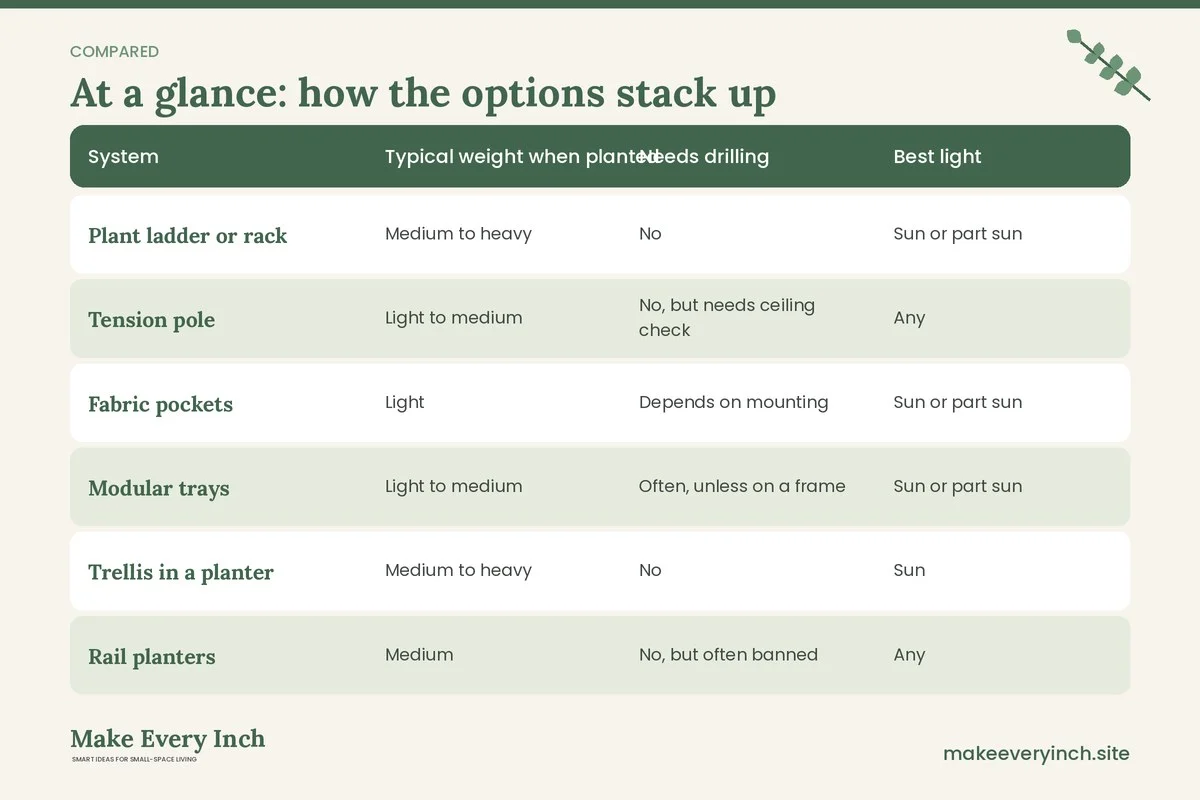
Use this table to narrow the choice by weight, effort and rule-friendliness. The figures are hedged ranges, not guarantees, so check your own balcony’s rules and load rating.
| System | Typical weight when planted | Needs drilling | Best light | Watering effort | Best for |
|---|---|---|---|---|---|
| Plant ladder or rack | Medium to heavy | No | Sun or part sun | Moderate | Mixed pots and herbs |
| Tension pole | Light to medium | No, but needs ceiling check | Any | Moderate | Hanging baskets |
| Fabric pockets | Light | Depends on mounting | Sun or part sun | High | Herbs and salads |
| Modular trays | Light to medium | Often, unless on a frame | Sun or part sun | Moderate | Flexible herb grids |
| Trellis in a planter | Medium to heavy | No | Sun | Moderate | Climbers and screens |
| Rail planters | Medium | No, but often banned | Any | High | Trailing flowers |
| Hanging baskets | Light to medium | Needs a secure hook | Any | High | Trailing plants |
| Herb tower | Medium | No | Sun | Moderate | Kitchen herbs |
Choosing plants that suit vertical growing
Start with the light you measured, then match plants to the system. Vertical gardens dry out faster than ground-level pots because they have less soil and more exposure, so lean toward plants that tolerate occasional dryness unless you can water daily.
- Sunny and dry: succulents, sedum, rosemary, thyme and lavender suit hot walls and small pockets.
- Part sun: salad leaves, parsley, chives, strawberries and many trailing flowers do well with a few hours of light.
- Shade: ferns, hostas, heuchera and some ivy types tolerate lower light, though ivy can be toxic to pets.
- Edibles: herbs and salad greens are low-risk and useful, and they reward regular picking.
- Climbers: beans, sweet peas and morning glories cover a frame in a season, but check toxicity first.
- Pet-safe choices: confirm every plant on a trusted pet-safe list before buying, because several popular houseplants and garden flowers are harmful if chewed.
Choose lightweight potting mix designed for containers, since garden soil is heavy and compacts. Group plants with similar water needs on the same level, so you do not drown the thirsty ones or dry the hardy ones. Put the thirstiest plants on the lowest tier, where water running down can reach them, and the driest plants at the top.
Watering and drainage without annoying your neighbours
Watering is the daily chore of a vertical garden, so design it before you plant. A watering can with a narrow spout gives control, and a slow trickle lets soil absorb water instead of letting it run through. Water in the morning or evening to reduce evaporation, and stop as soon as water appears at the base.
Put a tray under every tier, and consider a deep tray along the base of the whole system. Empty trays after rain so they do not overflow and so mosquitoes cannot breed. Keep the balcony drain clear of leaves and soil, and sweep up spilled mix before it washes away.
If you travel, a simple wick system or a self-watering planter can bridge a few days, but do not rely on it for long absences. Ask a neighbour to water, and bring delicate plants indoors. Avoid dripping systems unless you can control where excess water goes, because an unnoticed leak is the quickest route to a complaint from below.
Three example balconies
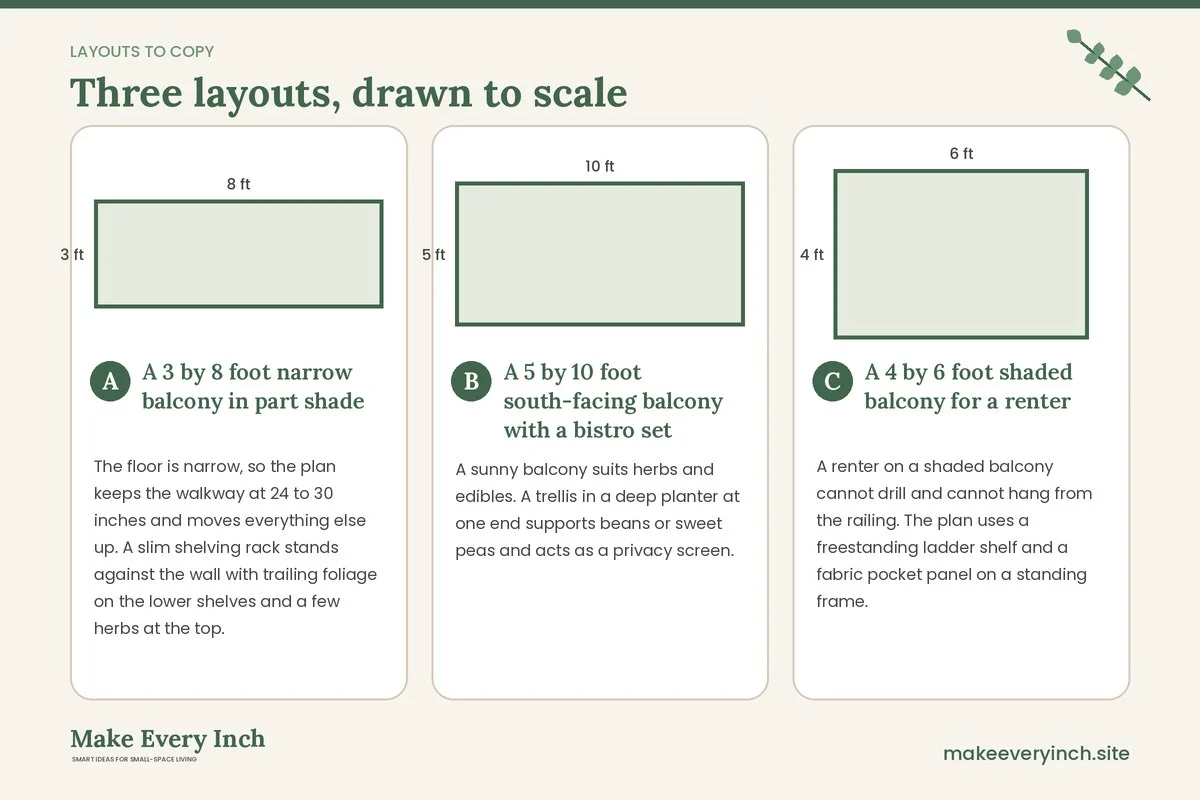
A 3 by 8 foot narrow balcony in part shade
The floor is narrow, so the plan keeps the walkway at 24 to 30 inches and moves everything else up. A slim shelving rack stands against the wall with trailing foliage on the lower shelves and a few herbs at the top. A tension pole near the door holds two lightweight hanging baskets. A folding chair stores flat when not in use. All pots sit in trays, the rack is weighted at the base and nothing is placed near the railing. The result is a green wall with enough room to step through and sit for a coffee.
A 5 by 10 foot south-facing balcony with a bistro set
A sunny balcony suits herbs and edibles. A trellis in a deep planter at one end supports beans or sweet peas and acts as a privacy screen. A herb tower stands beside the door for easy picking, and a bench with pots beneath seats two. The bistro set keeps a 30-inch clearance, and the heaviest planters sit near the wall. The owner checks the weight rule with the building manager before adding more, keeps the railing clear and uses outdoor-rated lights on a GFCI outlet for evenings.
A 4 by 6 foot shaded balcony for a renter
A renter on a shaded balcony cannot drill and cannot hang from the railing. The plan uses a freestanding ladder shelf and a fabric pocket panel on a standing frame. Ferns, hostas and pet-safe foliage thrive in the shade, and a mirror leaned against the wall bounces light around. Everything is freestanding, nothing attaches to the building and the whole arrangement can be removed at move-out. The renter photographs the balcony before starting and keeps the lease details on file.
A simple seasonal routine
A vertical garden needs less time than a lawn but more than a houseplant. A quick pattern keeps it healthy.
- Spring: clean the frame, refresh the mix, check hooks and straps, and plant after the last frost in your area.
- Summer: water daily or nearly, trim often, watch for heat on dark pots and move delicate plants out of the harshest sun.
- Autumn: harvest, cut back, collect fallen leaves and bring tender plants inside before the first cold night.
- Winter: empty the trays, protect or remove pots that could crack, secure frames against wind and clear snow or ice from the base.
A monthly check of every hook, strap, bracket and pot is worth putting on the calendar. Metal fatigues, ties stretch and soil settles, so fixings that were secure in spring may be loose by autumn.
Mistakes to avoid
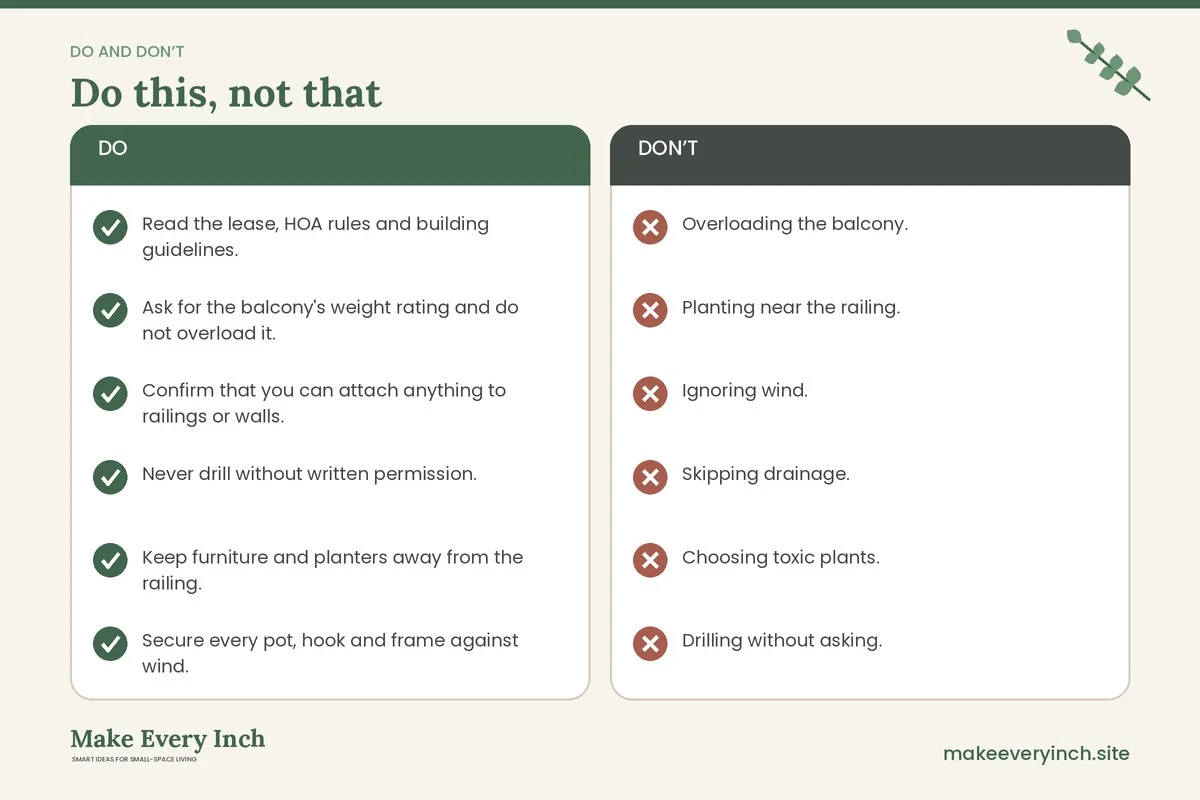
- Overloading the balcony. Wet soil is heavy, so count the weight before adding more.
- Planting near the railing. Pots and climbable frames near the edge are a fall risk for people and pets.
- Ignoring wind. Tall, light frames tip, so ballast the base and secure everything.
- Skipping drainage. Water on the floor below is a quick path to a dispute.
- Choosing toxic plants. Check pet and child safety before you buy.
- Drilling without asking. Even small holes can break a lease.
- Overcrowding. Plants need air and light, and a packed wall hides pests.
- Forgetting the light. A shade plant in full sun will scorch, and the reverse starves.
Budget and sourcing approach
You can build a vertical garden slowly. Start with one rack or a few pockets and a handful of herbs, see how they grow and add more. Check second-hand shops and local swap groups for ladders, shelves and pots. Reuse sturdy crates only if they are safe, clean and drain well, and avoid wood that has been treated with chemicals if you plan to grow food. Grow from seed or cuttings when you can, and share cuttings with neighbours. A small, thriving garden beats a large, struggling one.
For more affordable approaches across the home, see our guide to budget small space ideas and the post on vertical storage ideas, which uses the same logic of building upward. For choosing containers, small space plants and planters ideas covers pot sizes and plant pairing in more detail.
Styling the wall so it looks calm, not cluttered
A vertical garden can look chaotic if every pot is different. Choose a limited palette of pot colors, such as two neutrals and one accent, and repeat them up the wall. Mix textures by pairing fine trailing leaves with broad, bold ones. Leave gaps between pots so each plant can be seen, and keep the lowest tier uncluttered. A plain wall behind the plants, painted or covered with a lease-friendly screen, makes the greenery stand out.
Lighting adds a second life to the wall in the evening, but only if it is safe. Use outdoor-rated string lights, plug them into a GFCI outlet and avoid overloading the socket. A small solar lantern is another low-effort option that needs no outlet. Candles and open flames are best avoided near dry foliage and may be banned by your lease. Our guide to renter friendly lighting ideas lists no-wire options that work well outdoors and in.
Connecting the balcony to your indoor space
A balcony garden feels bigger if it reads as an extension of the room behind it. Repeat a color or material from the interior in the pots, and place a plant just inside the door so the green flows through. If you can see the balcony from your sofa, your small living room ideas plan benefits from the view. A dining table near the door can borrow the herb wall, and a small dining room with a window onto the balcony gains instant atmosphere. If you need a fuller furniture plan, the best furniture for small apartments guide covers compact pieces that suit both indoor and outdoor corners.
Vertical garden checklist
- Read the lease, HOA rules and building guidelines.
- Ask for the balcony’s weight rating and do not overload it.
- Confirm that you can attach anything to railings or walls.
- Never drill without written permission.
- Keep furniture and planters away from the railing.
- Secure every pot, hook and frame against wind.
- Place saucers or trays under all pots.
- Check that the balcony drain is clear.
- Choose pet-safe and child-safe plants.
- Test surfaces for sun heat before letting children or pets near.
- Use outdoor-rated lights on a GFCI outlet.
- Check local rules before using a grill or open flame.
- Photograph the balcony before and after for your records.
- Inspect fixings once a month.
FAQ
How much weight can my balcony hold?
Ratings differ by building and structure, so ask your landlord, building manager or HOA for the figure and do not exceed it. Wet soil is heavy, so favor light mixes, fabric pockets and a small number of containers. When in doubt, ask a qualified professional.
Can I hang planters from my balcony railing?
Only if your building permits it. Many forbid railing planters because of the fall risk to people below. If permitted, use a design made for your railing shape, secure it with a locking strap and keep it light.
What are the best plants for a shady vertical garden?
Ferns, hostas and heuchera suit shade, and many foliage plants tolerate low light. Check each plant against a pet-safe list, since some shade-loving plants are toxic if chewed.
How do I stop water dripping on my neighbours?
Use trays under every pot, water slowly, empty trays after rain and keep the balcony drain clear. Avoid hanging pots over an edge where water can fall.
Do vertical gardens need more water than ordinary pots?
Often yes, because the soil volume is small and the wall is exposed to wind and sun. Check daily in hot weather and group plants by their water needs.
Can I keep a vertical garden if I rent?
Yes, with freestanding racks, tension poles and fabric pockets on standing frames, and with your landlord’s permission for anything that attaches to the building. Our guide to renter friendly apartment decorating ideas covers lease-safe thinking more broadly.
Keep going: Keep going with our pillar guide to small balcony ideas, the companion post on small balcony decor for cozy evenings and our small space organization ideas.
Save this guide for later
Pin the ideas you like to Pinterest so you can come back to them when you plan your space.