12 Small Living Room Ideas for Studio Apartments
Quick answer: In small living room studio apartments, the living area is not a room but a zone, so define it with a rug, a sofa that faces or backs onto the sleeping area, and light that changes by task. Aim for a 30 to 36 inch main path, about 7 to 9 feet between sofa and screen, and keep tall furniture anchored and low enough to leave sight lines open.
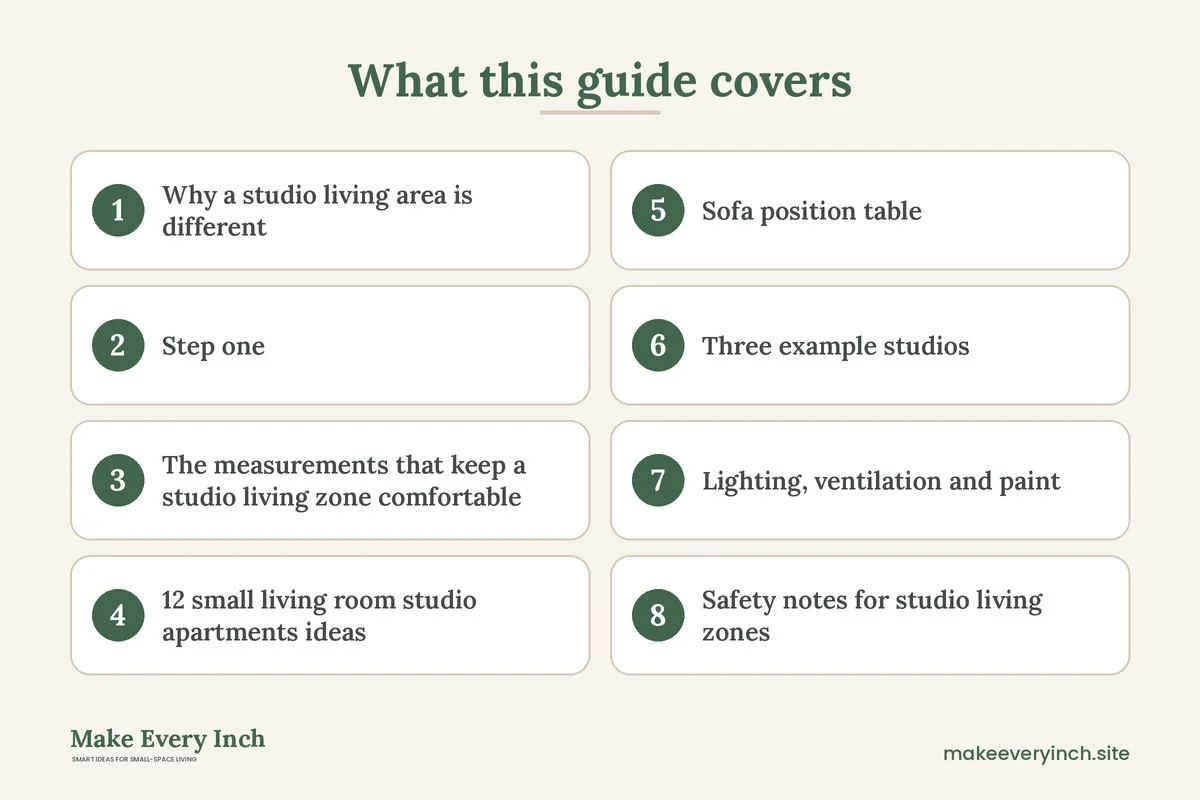
Small living room studio apartments share one challenge that ordinary living rooms do not: the sofa has to share space with a bed, a kitchen edge and often a desk, all in view at once. There is no door to close and no spare wall to hide things behind. That changes how you plan. Instead of asking what a living room needs, you ask where the living zone begins and ends, and what the rest of the space needs from it. This guide covers how to carve out the zone, the measurements that keep it comfortable, 12 ideas, a table of sofa positions, three example studios, lighting, safety, a mistakes list and a checklist. For the wider topic, read our main guide to small living room ideas, and for the whole apartment see studio apartment layout ideas that create zones.
Why a studio living area is different
In a one-bedroom, the living room can be sized and furnished on its own terms. In a studio, the living area is judged by how it relates to everything else. The sofa is often the biggest object in the space, and where it sits decides how the whole room reads. Put it against the wall nearest the bed and the apartment looks like a bedroom with a sofa in it. Float it so its back faces the bed and the apartment reads as two spaces.
Studios also run on shared surfaces. The sofa is where you eat, work, entertain and sometimes sleep, so every piece has to do more than one job. That is why the best plans stack functions into a few well-chosen items instead of adding more furniture. If you want ideas on that front, our guide to convertible furniture ideas for studio apartments goes deeper.
Step one: draw the zone before you choose furniture
Measure the whole studio, then mark the living zone with painter’s tape on the floor. Most studio living zones are rectangles of about 8 by 10 feet to 10 by 12 feet. Anything smaller feels like a corner, and anything larger usually steals from the sleeping or cooking zones.
Test three things before you commit to the tape.
- Entry line: stand at the front door and look into the room. The first thing you see should not be the unmade bed or the back of the sofa. If it is, consider a console, a plant or a shelf in the line of sight.
- Window access: keep the window clear enough to open fully, and keep radiators, vents and baseboard heaters free of fabric. Furniture should sit at least a few inches away from any heat source, and ideally more.
- Bed distance: if the bed is in the same room, leave at least 24 to 30 inches of walking space between the bed and the nearest sofa edge so the two zones do not run together.
When the tape is down, walk the room several times. Carry a laundry basket or a bag of groceries, because those are the real tests of a path.
The measurements that keep a studio living zone comfortable
- Main path: 30 to 36 inches wide from the door to the kitchen and from the kitchen to the bed. A side path used only occasionally can be 24 inches.
- Sofa to screen: about 7 to 9 feet for a small wall-mounted screen. In a very short zone, 6 feet can work with a smaller screen, and a projector on a wall can solve the problem entirely.
- Seat height and table height: a side or coffee table should sit within a couple of inches of the seat cushion height, usually 16 to 20 inches for a coffee table and 20 to 26 inches for a side table.
- Sofa depth: a sofa 32 to 36 inches deep is comfortable and still leaves floor space. Deeper sofas feel luxurious but can swallow a short zone.
- Rug size: big enough that the front legs of the sofa and any chair sit on it. In many studios that means 5 by 8 feet or 6 by 9 feet. See our guide on how to choose rug size for a small living room.
- Back of a floating sofa to the bed or wall: 12 to 16 inches if you place a narrow console behind it, and 30 inches or more if you want people to walk behind.
Treat these as starting ranges, not rules. A studio with a very long and narrow footprint may push you toward the lower end of every number.
12 small living room studio apartments ideas
Define the zone
1. A rug that sets the boundary
A rug is the cheapest wall you can lay down. Choose one with a pattern or color that differs from the sleeping area, so the eye notices a border even though nothing stands in the way. Look at small room rug ideas to define zones for placement examples. In a rental, use a thin rug pad to keep the rug from sliding and to protect the floor, and check that rug edges do not create a trip hazard near the door.
2. Float the sofa with its back to the bed
Turning the sofa so its back faces the sleeping area is the single strongest move in a studio. The sofa back becomes a low wall, and the living zone gains a face. Leave room behind the sofa for a narrow console or a plant. Keep the sofa low, since a high back hides the window.
3. A console behind the sofa
A console of 10 to 14 inches deep, placed behind a floating sofa, gives you a drop spot for keys, a lamp and a bowl. It also hides the sofa back from the sleeping side. If it is tall, anchor it to the wall or the floor according to its instructions, and only drill with the landlord’s permission.
4. A low open bookcase as a divider
An open bookcase at waist or chest height divides without blocking light. A freestanding unit should be wide enough to be stable, and any shelving taller than about 30 inches should be anchored or secured, especially where children or pets live. For more, see our guide on diy room divider ideas for studio apartments.
Make the sofa work harder
5. A sofa with storage or a pull-out
A sofa that opens for storage or doubles as a guest bed takes the place of a separate bed or chest. Check the mechanism for pinch points, and keep the floor clear in front of it so it can open fully. If a sofa bed is your main sleeping spot, leave extra floor around it. For more, read about sofa alternatives for small living rooms.
6. A loveseat plus a chair instead of a full sofa
In a short zone, a loveseat and one armchair set at an angle can seat three people and still allow a path. Choose a chair with a slim profile, and place it so it faces both the sofa and the screen.
7. Nesting tables or a tray ottoman in place of a coffee table
A fixed coffee table can eat a quarter of a studio living zone. Nesting tables or a tray on an ottoman can move away when the floor is needed for exercise or guests. Our post on small living room ideas without a coffee table covers this approach in full.
Use walls and height without overloading them
8. Vertical storage along one wall
Run a tall bookcase or shelf unit along one wall, ideally the one that is not the sofa wall. Keep the heaviest items low and anchor the unit to the wall or the floor if the lease and the wall allow. If you cannot drill, use a heavy, low unit and keep the upper shelves for light objects. Our guide on no-drill storage ideas for renters lists freestanding options.
9. A wall-mounted screen or a projector
A screen on the wall frees the floor of a media console. Mounting needs the right fixings for your wall type and a stud or approved anchor, and a rental needs written permission. If you cannot drill, use a low console, a rolling stand, or a projector and a light-colored wall. Plan cables so they do not cross a path. For the wall itself, see our small living room TV wall ideas.
10. Curtains that cover storage
A curtain on a tension rod can hide a shelf or a rolling rack in a corner. Keep fabric away from heaters, candles and stove areas, and choose a rod rated for the curtain weight.
Light and look
11. Three light layers, not one
A single ceiling light flattens a studio. Add a floor lamp by the sofa, a small lamp on a side table and a warm light near the bed. Keep each cord out of the path, and avoid overloading a power strip or an extension cord. Our guide to small living room lighting ideas and best floor lamps for small rooms cover options.
12. A mirror to extend the zone
A large mirror across from a window reflects light and makes the living zone feel deeper. Lean a heavy mirror on the floor against the wall with a secure base, or hang it with the right fixings if you have permission. Do not place a mirror where it will reflect clutter or direct sun onto fabric. For more, see small room mirror placement ideas.
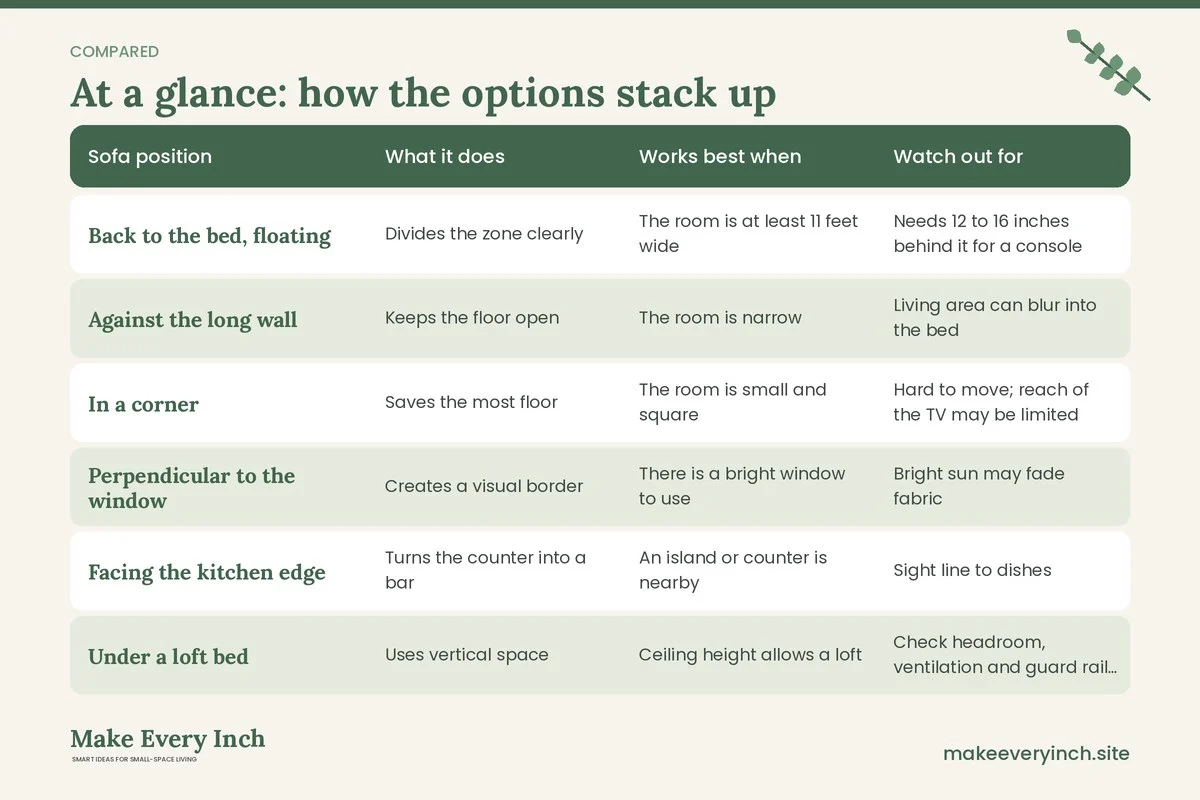
Sofa position table
The position of the sofa decides the feel of the whole studio. Use this table as a quick filter before you move anything heavy.
| Sofa position | What it does | Works best when | Watch out for |
|---|---|---|---|
| Back to the bed, floating | Divides the zone clearly | The room is at least 11 feet wide | Needs 12 to 16 inches behind it for a console |
| Against the long wall | Keeps the floor open | The room is narrow | Living area can blur into the bed |
| In a corner | Saves the most floor | The room is small and square | Hard to move; reach of the TV may be limited |
| Perpendicular to the window | Creates a visual border | There is a bright window to use | Bright sun may fade fabric |
| Facing the kitchen edge | Turns the counter into a bar | An island or counter is nearby | Sight line to dishes |
| Under a loft bed | Uses vertical space | Ceiling height allows a loft | Check headroom, ventilation and guard rail rules |
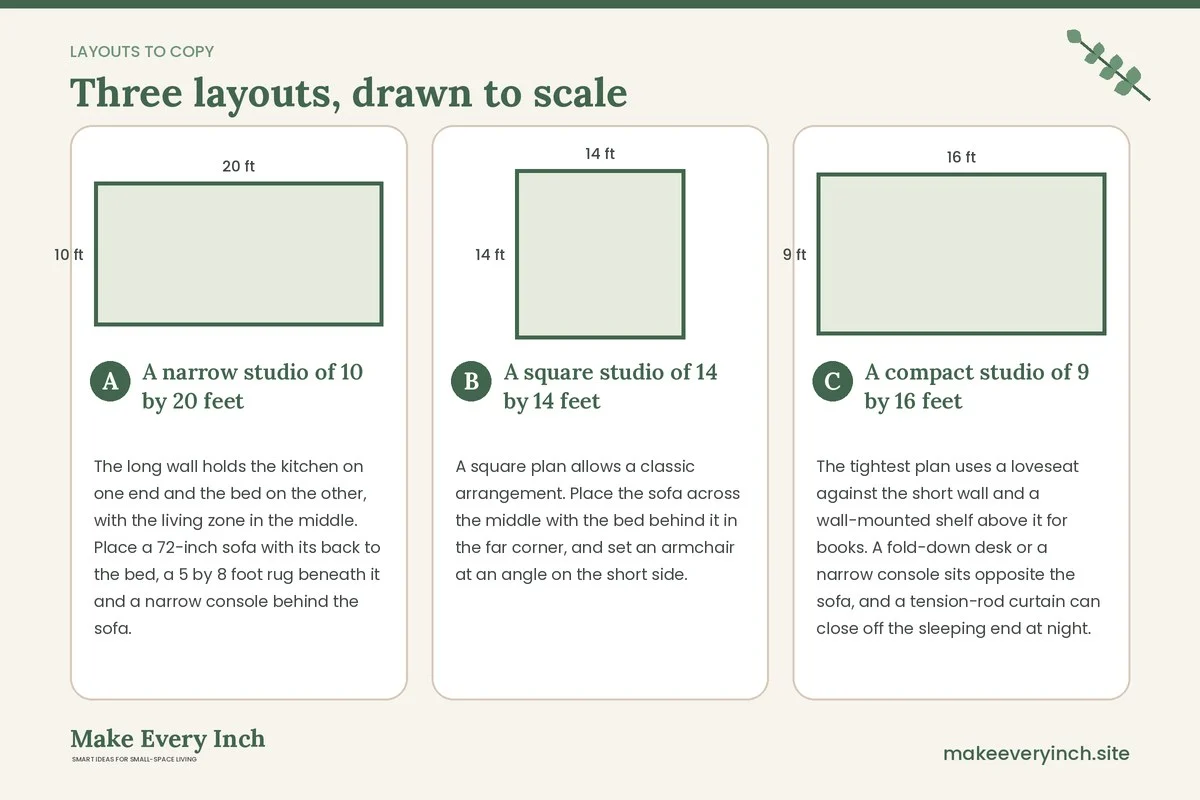
Three example studios
A narrow studio of 10 by 20 feet
The long wall holds the kitchen on one end and the bed on the other, with the living zone in the middle. Place a 72-inch sofa with its back to the bed, a 5 by 8 foot rug beneath it and a narrow console behind the sofa. A pair of nesting tables replaces the coffee table. The main path runs along the window wall at 30 to 36 inches. The result is a clear sequence of kitchen, living, sleeping with a visual stop at each end.
A square studio of 14 by 14 feet
A square plan allows a classic arrangement. Place the sofa across the middle with the bed behind it in the far corner, and set an armchair at an angle on the short side. A 6 by 9 foot rug fills the zone, and an open bookcase on the bed side acts as a gentle divider. Because the square is easy to cross, leave a 36-inch path from the door to the window and keep the kitchen counter free of seating overflow.
A compact studio of 9 by 16 feet
The tightest plan uses a loveseat against the short wall and a wall-mounted shelf above it for books. A fold-down desk or a narrow console sits opposite the sofa, and a tension-rod curtain can close off the sleeping end at night. Keep cords short and tidy. Here every item has to earn its place, so choose multi-use pieces and leave one wall nearly empty to give the eye somewhere to rest.
Lighting, ventilation and paint
Studios put sleeping, cooking and sitting in one air volume, so ventilation matters. Open a window when cooking, run the exhaust fan if you have one, and keep furniture from blocking vents or radiators. If you repaint, choose a low-VOC paint, get written permission first, and leave the windows open while it dries. Give any new furniture or rug time to air out before you sleep in the room.
For color, light tones with one or two deeper accents help a small zone feel airy. See our guide to studio apartment color schemes for combinations that keep the zones distinct without making the room feel busy.
Safety notes for studio living zones
- Anchor tall furniture. Bookcases, dressers and shelving units can tip, especially with children or pets nearby. Use the anchoring hardware that comes with the piece, and drill only if the lease allows. If it does not, choose lower furniture or heavier, wider-based units.
- Respect weight limits. Adhesive hooks, tension rods and floating shelves each carry a rated load. Stay well under it.
- Keep paths clear of cords. A cord across a walkway is a trip hazard, and a cord under a rug can wear and overheat. Use cord covers or route cables along the wall.
- Do not overload sockets. Studios often have few outlets, so a power strip with surge protection and a safe load is better than daisy-chained extension cords.
- Keep heat sources clear. Radiators, heaters, lamps and candles need space around them.
- Watch the sofa bed. If you use a fold-out, check the frame and the mattress for pinch points, and keep small hands and paws clear.
- Lofts and raised beds. Follow the manufacturer’s headroom and guard rail rules, and avoid sleeping under a low ceiling without ventilation.
Mistakes to avoid
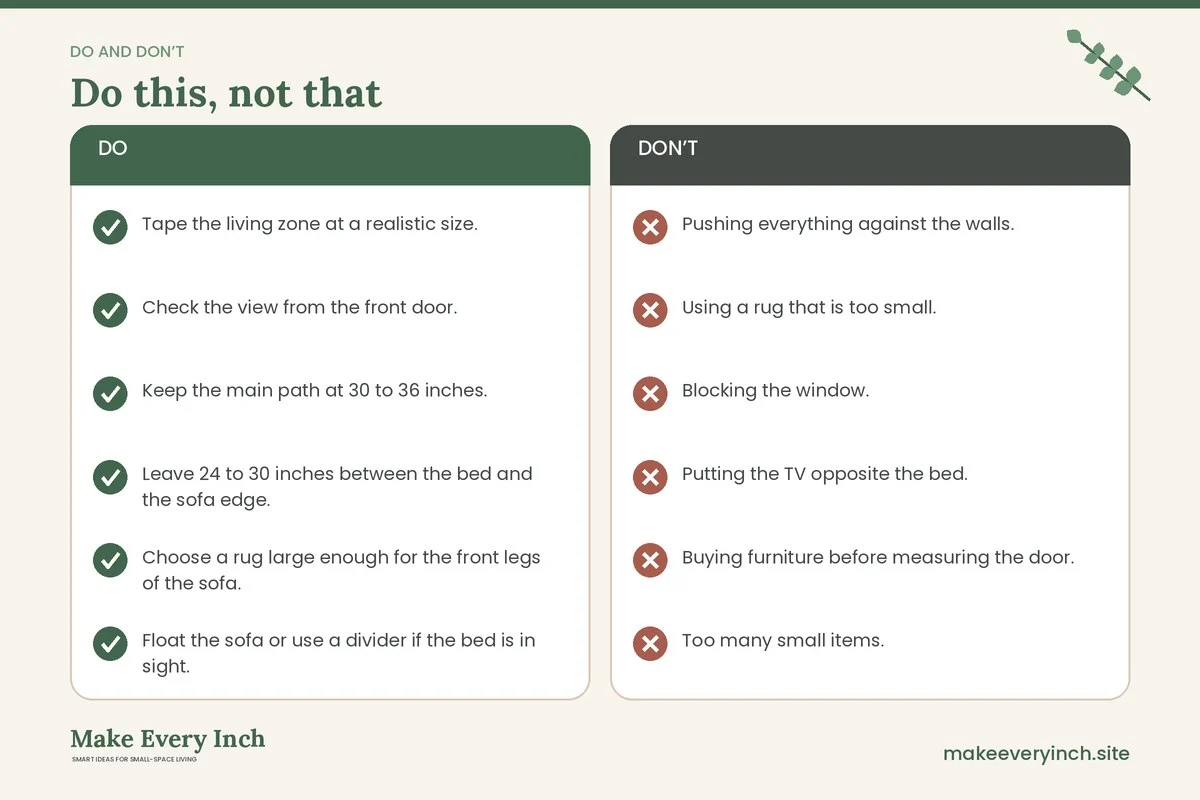
- Pushing everything against the walls. It makes the middle of the room feel empty and the edges feel crowded. Floating the sofa often works better.
- Using a rug that is too small. A small rug looks like a mat and does not define a zone.
- Blocking the window. A high sofa back or tall shelf in front of the window removes natural light, which is the most valuable asset in a studio.
- Putting the TV opposite the bed. If the screen faces the bed, the sleeping zone and the living zone merge. Aim the screen at the sofa.
- Buying furniture before measuring the door. Check the width of the door, the stairwell and the elevator before you order a large sofa.
- Too many small items. A scatter of small tables and baskets looks messy. Pick a few larger, multi-use pieces.
- Forgetting storage. Without a closet, the living zone becomes the storage zone. Plan a place for coats, shoes and bags. See studio apartment storage ideas.
A weekend plan to set it up
1. Friday evening: measure the room, mark the zone with tape and photograph the starting layout.
2. Saturday morning: move the sofa into its new position and walk the paths. Adjust by a few inches at a time.
3. Saturday afternoon: place the rug, the side table and the lamp. Check cords and outlets.
4. Sunday morning: add storage, secure tall furniture and check the doors and the windows open fully.
5. Sunday evening: live in it for an evening and note anything that annoys you. Change one thing at a time.
Studio living zone checklist
- Tape the living zone at a realistic size.
- Check the view from the front door.
- Keep the main path at 30 to 36 inches.
- Leave 24 to 30 inches between the bed and the sofa edge.
- Choose a rug large enough for the front legs of the sofa.
- Float the sofa or use a divider if the bed is in sight.
- Place a lamp near the sofa and a second light elsewhere.
- Anchor tall furniture, and ask before drilling.
- Keep cords out of walkways and avoid overloaded sockets.
- Keep heaters and vents clear.
- Plan a spot for coats, shoes and bags.
- Check door and elevator width before buying large items.
FAQ
How do I separate the living room from the bed in a studio?
Use a floating sofa, an open bookcase, a rug and a change in lighting. A curtain on a tension rod can close off the sleeping end at night. Each of these defines a border without a wall.
What size sofa suits a small studio living zone?
A sofa 70 to 80 inches long and 32 to 36 inches deep suits many studios. A loveseat of 55 to 65 inches suits very short zones. Always measure the zone and the door first.
Can I put the TV on a wall in a rental?
Only with written permission from the landlord, and with the right fixings for the wall. If you cannot drill, use a low console or a rolling stand and secure the screen according to the stand’s instructions.
How much walking space do I need?
A main path of 30 to 36 inches is comfortable. A side path used rarely can be 24 inches. Test with a laundry basket.
Should I paint to define the living zone?
Paint can mark a zone, but check the lease first and use a low-VOC paint with good ventilation. A rug, lighting and furniture placement often do the same job without paint.
Is a sectional a good idea in a studio?
It can be, if the zone is large enough to hold one without blocking the path. See our post on small living room ideas with a sectional for sizes and layouts.
Keep going: Keep planning with our studio apartment decorating ideas, studio apartment ideas with a room divider and how to arrange furniture in a small living room.
Save this guide for later
Pin the ideas you like to Pinterest so you can come back to them when you plan your space.