16 Small Space Plants and Planters Ideas for Tight Rooms
Quick answer: For small space plants planters, go vertical and light-aware: choose compact or trailing plants that match your window light, use planters that are 1 to 2 inches wider than the root ball, add drainage trays, and park pots on shelves, rails, stands and ledges rather than the floor. Check which plants are toxic to pets, and never overload a shelf or drill without permission.
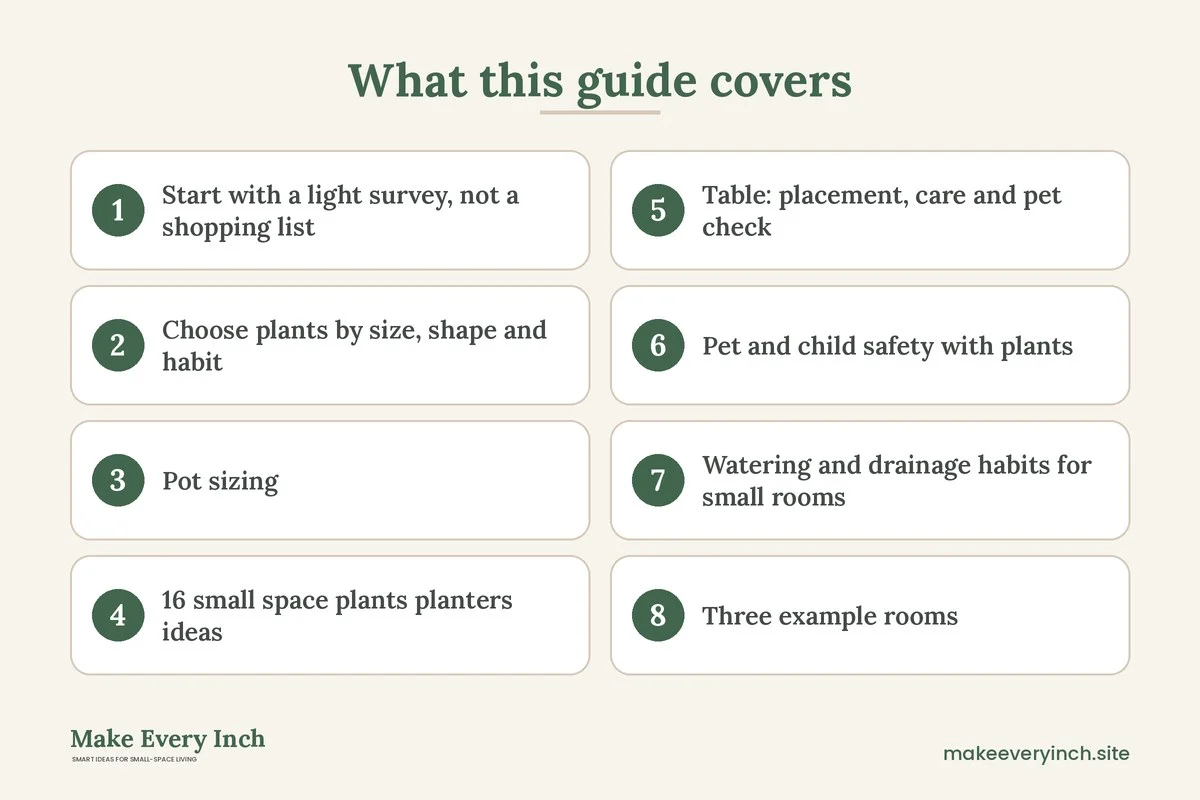
Small space plants planters decisions are really three decisions at once: which plant fits the light, which pot fits the plant and where the whole arrangement fits the room. Get all three right and a few plants make a cramped room feel alive, soft and bigger. Get one wrong and you end up with a leggy plant, a water ring on a table and a pot in the walkway. This guide starts with a light survey, then covers plant choices, pot sizing, 16 placement ideas, a table of pet safety and care, three example rooms, watering and drainage habits, safety notes, mistakes and a checklist. For the wider topic, read our main guide on small room decor ideas, and for the height side of the story, see the companion post on small room ceiling ideas that draw the eye up.
Start with a light survey, not a shopping list
Plants die more often from the wrong light than from any other mistake. Before you buy anything, spend a day with your room.
- Note each window’s direction. In the northern hemisphere, south-facing windows generally give the strongest light, east-facing windows give gentle morning light, west-facing windows give hot afternoon light and north-facing windows give the softest light.
- Watch the sun patch. Mark where direct sun lands in the morning, noon and afternoon with a sticky note or a photo. Direct sun can scorch some leaves through glass.
- Check the distance. Light drops quickly as you move away from a window. A spot 6 feet from a window may be much dimmer than the sill itself.
- Look for obstacles. Curtains, buildings, trees and furniture all cut light.
- Be honest about your habits. If you travel, forget to water or work late, pick forgiving plants.
Once you know the light, sort the room into three zones: bright, medium and low. Match plants to zones and not the other way around. If the room has little natural light, a plug-in grow light is one option. Use one rated for the socket, keep it away from fabric and water, and do not overload a power strip.
Choose plants by size, shape and habit
Small rooms reward plants with a clear shape and a modest footprint. Think about the plant at its mature size, not the size in the shop.
- Upright and slim plants suit corners, beside a sofa or beside a bed. They add height without taking width.
- Trailing plants suit shelves, high ledges and hanging pots. They soften edges and draw the eye along the wall.
- Compact and bushy plants suit tables and sills. They fill a small gap without sprawling.
- Climbing plants suit a trellis, a rail or a hook. They use wall height instead of floor.
- Low-maintenance plants suit shelves that are hard to reach, because they tolerate a missed watering.
Mix two or three shapes in a room rather than ten of the same. A group of small pots of one kind in a row can look tidy. Then add one larger plant as the anchor. Avoid plants that grow into big trees if you live in a studio, since they eat the room. Our companion hub on cozy apartment ideas shows how plants fit into the wider mood of a home.
Pot sizing: the numbers that keep roots happy
Planters do two jobs: they hold the plant and they decide how it looks. The size must serve the roots first.
- Pot width: choose a pot about 1 to 2 inches wider than the root ball for small plants, and 2 to 3 inches wider for larger ones. A pot that is much too large holds wet soil for too long.
- Pot depth: most small houseplants do well in a pot as deep as it is wide. Shallow-rooted plants can use a shallower bowl.
- Drainage: a hole in the bottom is the safest option. If you love a pot without a hole, keep the plant in a plain nursery pot with holes and drop it inside the decorative one. Lift it out to water, let it drain, then return it.
- Saucers and trays: always put something under a draining pot, and empty it after watering so roots do not sit in water.
- Weight: a wet pot can be heavy. Check the weight rating of shelves, stands and hooks, and keep the heaviest pots low.
- Material: terracotta breathes and dries faster, glazed ceramic holds water longer, and plastic is light. Choose by how often you water.
When you repot, go up one size only. A cramped plant is usually happier than one in a pot that is too large.
16 small space plants planters ideas
Use the window
1. A sill row of small pots
A narrow window sill holds three to five small pots in a row. Choose plants that like the light from that window, and place a tray under each. Use pots that fit the depth of the sill so nothing hangs over the edge.
2. A tension rod garden in the window
A tension rod across the window lets you hang light pots from hooks. Keep the weight low and spread it across the rod, and check the rod’s rating. Do not hang anything over a radiator or heater.
3. A two-tier stand by the glass
A slim stand with two or three levels uses the window zone vertically. Put the sun lovers on the top tier and the shade tolerant ones lower. Choose a stand with a stable base so it does not tip.
Go vertical
4. A freestanding ladder shelf
A leaning ladder shelf holds pots on steps without touching the floor much. Anchor it to the wall with the hardware provided, because a loaded ladder can tip. Put heavy pots on the lowest steps.
5. A wall shelf for trailing plants
A shelf at about 60 to 72 inches lets vines trail down the wall. Check the shelf’s weight rating and the wall fixings, and never drill without permission. See our guide to renter friendly shelving ideas without drilling.
6. A hanging planter from a ceiling hook
A hanging planter frees all surfaces. Only use a hook that is fixed into a joist or a rated anchor, and ask your landlord before you install one. Stay away from stoves, vents and heaters. For the effect on the room, our post on ceiling ideas that draw the eye up explains why plants at height help.
7. A trellis or rail behind a pot
A freestanding trellis, a rail or a few cords behind a pot lets climbing plants use wall height. A freestanding frame works better in a rental than anything fixed to the wall.
8. A plant stand that lifts the pot
A stand lifts a pot 8 to 20 inches, so the foliage sits at eye level and the floor space beneath stays useful. It also protects the plant from pets and sweeping brooms.
Make furniture do the work
9. A plant on the end of a bookcase
Use the top shelf of a bookcase for a trailing plant, so the vine drapes along the side. Keep the pot on a tray, and keep the weight low on the shelf. See the best narrow bookshelves for options.
10. A planter on a console or sideboard
A pair of matching pots on a console frames a mirror or a lamp. Use a tray under each, and wipe the surface so that water never sits on wood.
11. A planter on a rolling cart
A narrow cart holds several pots and rolls toward the window in the morning. Choose a cart with a lip and locking wheels, and do not park it in a walkway.
12. A planter box on a radiator shelf or a ledge
A ledge above a radiator can look tempting, yet heat dries soil quickly and may harm leaves. If the ledge is the only spot, leave a gap and pick tough plants. Do not rest plants directly on a heater.
Corners and small gaps
13. A tall plant in the corner
A tall, slim plant in a corner fills the dead space beside a sofa and gives the room height. Pick a heavy, stable pot so the plant does not tip. For layout reasons, see our small living room ideas.
14. A trio of different heights
Three pots of different heights in a corner look better than one lonely plant. Put the tallest at the back, the middle one at the side and the lowest in front. Keep the group within a 2 foot circle.
15. A bedside plant that suits low light
A small, tolerant plant on the nightstand gives the bedroom a calm touch. Keep it away from heat and bright artificial light, and choose pet-safe varieties if animals sleep in the room. Our guide to small bedroom ideas covers other bedside touches.
16. A bathroom or kitchen plant for humidity
Plants that like humidity can live on a bathroom shelf or beside the kitchen sink if the light is good. Keep them away from steam jets, cooking oil and cleaning products. See our posts on small bathroom ideas and small kitchen ideas.
Table: placement, care and pet check
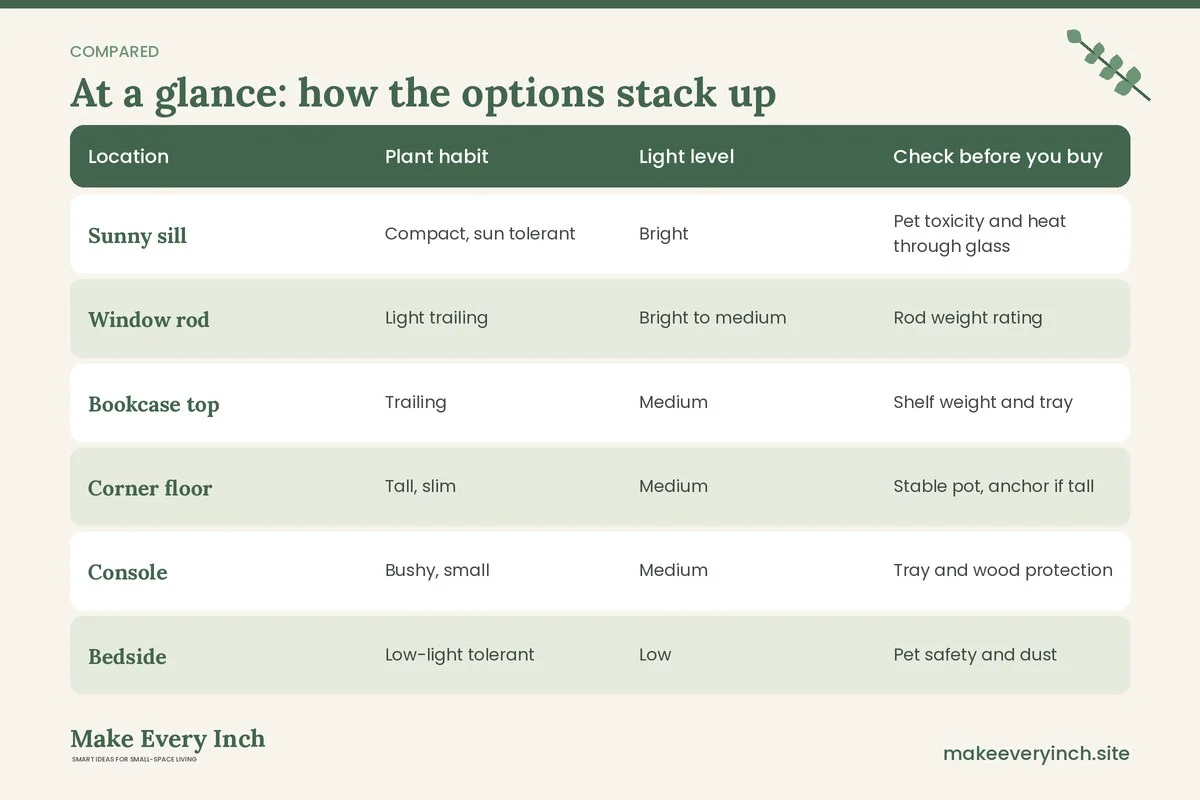
The table below links each location to the plant habit that suits it and the check to make before you buy. It is a guide only. Always confirm the exact plant name with a trusted source, because some plants are toxic to pets and children.
| Location | Plant habit | Light level | Check before you buy |
|---|---|---|---|
| Sunny sill | Compact, sun tolerant | Bright | Pet toxicity and heat through glass |
| Window rod | Light trailing | Bright to medium | Rod weight rating |
| Bookcase top | Trailing | Medium | Shelf weight and tray |
| Corner floor | Tall, slim | Medium | Stable pot, anchor if tall |
| Console | Bushy, small | Medium | Tray and wood protection |
| Bedside | Low-light tolerant | Low | Pet safety and dust |
| Bathroom shelf | Humidity lover | Medium | Light level and drainage |
| Hanging | Trailing | Medium | Fixing permission and rating |
Pet and child safety with plants
Many popular houseplants are harmful if chewed or swallowed by cats, dogs, rabbits and children. Sap can irritate skin, and some leaves can upset a stomach or worse. Before you bring a plant home, look up its exact name in a trusted pet poison source and ask a vet if you are unsure. Choose varieties that are listed as pet safe if animals live with you. Keep risky plants out of reach and out of sight, or skip them. Also watch for these hazards.
- Fertilizer and soil additives. Keep them in a closed container out of reach.
- Standing water in trays. Pets may drink from it. Empty trays after watering.
- Cords and grow lights. Pets chew cords, so route them safely and tidy them.
- Heavy pots on high shelves. A pet or child can knock one down. Keep heavy items low.
- Small stones and decorative mulch. They are choking hazards for small pets and children.
Watering and drainage habits for small rooms
Water on furniture and floors ruins finishes and can cause damage you must pay for as a renter. Build habits that protect the room.
1. Water in the sink or the bathtub when you can, and let the pot drain fully before returning it.
2. Use a tray under every pot and empty it within an hour.
3. Put a cork mat, a felt pad or a waterproof coaster under trays on wood.
4. Check the soil with a finger before watering. Many plants prefer to dry a little between waterings.
5. Water slowly and evenly so water does not run down the side of the pot.
6. Keep a small towel or cloth near your watering spot for spills.
7. Rotate each pot a quarter turn every week or so, so growth stays even.
8. Dust leaves with a soft damp cloth so the plant can use the light.
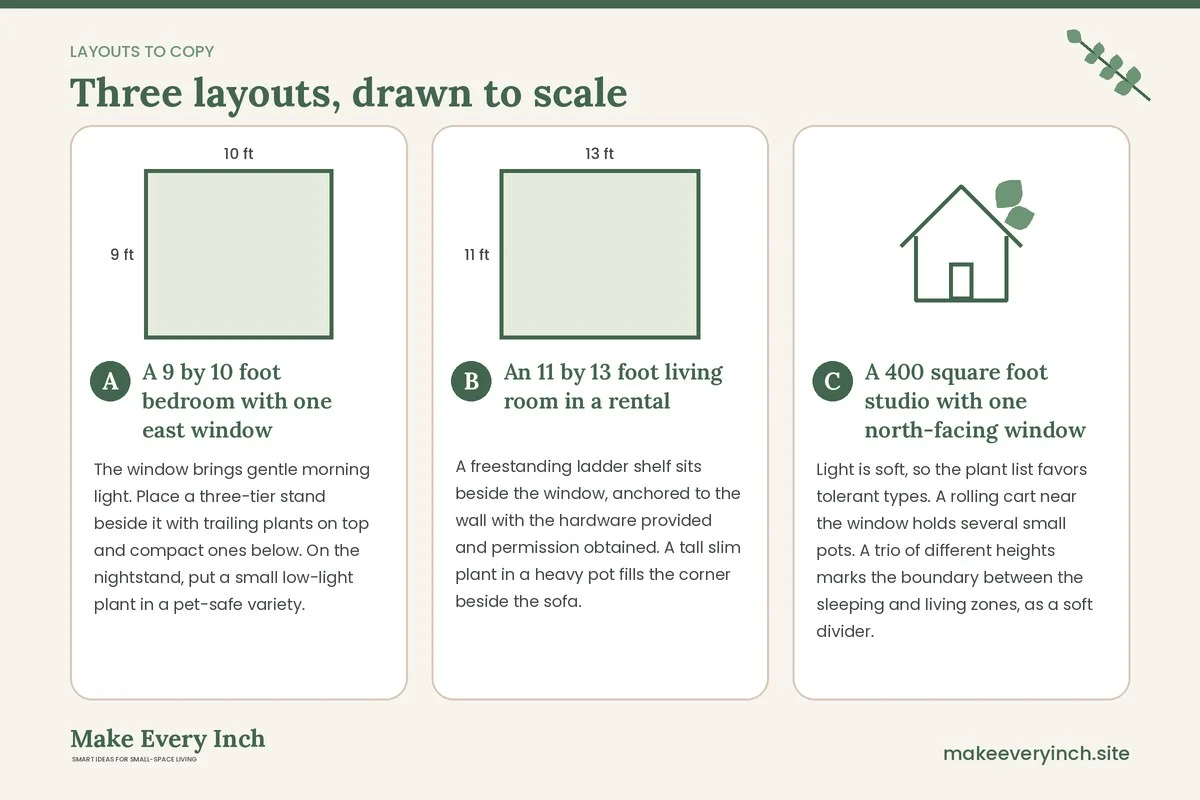
Three example rooms
A 9 by 10 foot bedroom with one east window
The window brings gentle morning light. Place a three-tier stand beside it with trailing plants on top and compact ones below. On the nightstand, put a small low-light plant in a pet-safe variety. Add a hanging planter only if the landlord approves a ceiling hook. Keep the walkway beside the bed at 24 inches or more. The whole plan takes up less than 2 square feet of floor. Compare with our post on small bedroom ideas that make the room feel bigger.
An 11 by 13 foot living room in a rental
A freestanding ladder shelf sits beside the window, anchored to the wall with the hardware provided and permission obtained. A tall slim plant in a heavy pot fills the corner beside the sofa. A pair of small pots on the console frames a lamp. Because drilling is limited, use a tension rod in the window for two light pots. For more rental-safe ideas, see our guide to small living room ideas for renters.
A 400 square foot studio with one north-facing window
Light is soft, so the plant list favors tolerant types. A rolling cart near the window holds several small pots. A trio of different heights marks the boundary between the sleeping and living zones, as a soft divider. Add a small plug-in grow light on a timer if the light is too dim, keep it away from fabric and water and avoid daisy-chaining power strips. For zoning ideas, see studio apartment layout ideas that create zones.
Styling planters so the room looks calm
Plants can look messy in a small room unless you give the display a rule.
- Repeat a material. Use pots in two or three finishes, such as matte ceramic, woven basket and terracotta.
- Keep a color family. Neutral pots let the foliage be the color. A single accent pot can echo a cushion or art.
- Group in odd numbers. Three pots at different heights look more natural than two or four of the same height.
- Leave negative space. Give each group some bare surface around it.
- Edit seasonally. Rotate plants between spots as the light changes, and take a plant away if it is struggling.
- Hide the plastic. Put a plain nursery pot inside a decorative cover pot or a basket with a liner.
For more style direction, see our guide to apartment decorating styles and the boho apartment ideas post for a leafy look.
Safety notes
- Never drill or fix anything to walls or ceilings without permission from your landlord or building.
- Check weight ratings of shelves, rods, hooks and stands, and remember that wet soil adds weight.
- Anchor tall stands and ladder shelves to the wall to prevent tipping.
- Keep plants clear of heaters, radiators, candles and hot lamps. Heat dries and damages plants, and some fixtures get hot.
- Respect electrical limits. Grow lights and fans should use a socket properly rated for the load. Never overload a socket or daisy-chain strips, and keep cords out of walkways and away from water.
- Keep water away from outlets and electronics.
- Check toxicity for pets and children before purchase.
- Ventilate and use gentle products. If you treat pests or use sprays, follow the label, ventilate and keep pets and children away until dry.
- Watch for mold. Constantly damp soil in a closed room can encourage mold, so avoid overwatering and keep air moving.
Mistakes to avoid
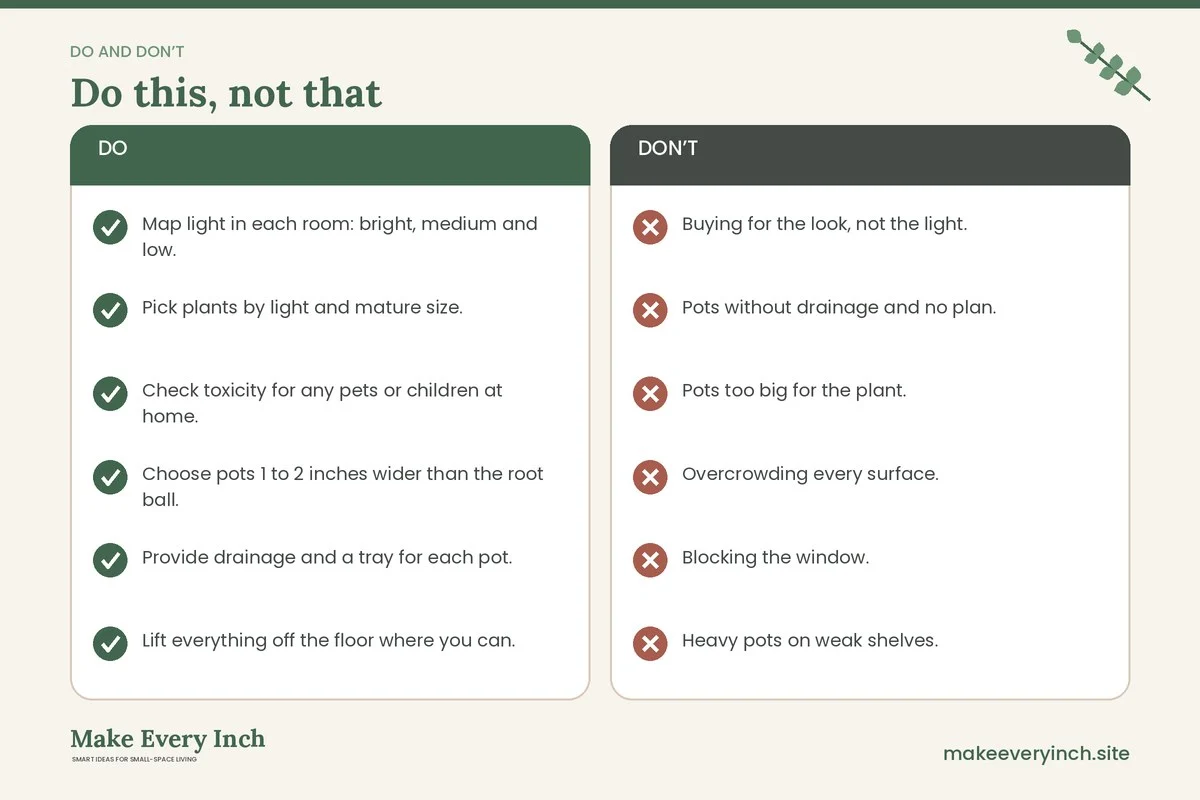
- Buying for the look, not the light. A plant in a dark corner will decline.
- Pots without drainage and no plan. Water collects and roots rot.
- Pots too big for the plant. The soil stays wet.
- Overcrowding every surface. Too many pots make a small room look cluttered.
- Blocking the window. Large plants can cut the light you need and the view.
- Heavy pots on weak shelves. Always check the rating.
- Ignoring pets. Choose carefully and keep risky plants out of reach.
- Placing plants over a heater or a draft. Sudden heat or cold stresses them.
- Forgetting the walkway. Keep 24 to 30 inches of floor clear in main paths.
Budget approach
Start small. Pick one or two plants and one or two planters. Look for cuttings from friends, second-hand pots and plain nursery pots you can dress with a basket. Rotate plants between spots before buying more. Our guide to budget small space ideas and the small apartment decor under 100 post show how to stretch a limited budget, and the small space organization ideas post helps you keep watering tools tidy.
Checklist
- Map light in each room: bright, medium and low.
- Pick plants by light and mature size.
- Check toxicity for any pets or children at home.
- Choose pots 1 to 2 inches wider than the root ball.
- Provide drainage and a tray for each pot.
- Lift everything off the floor where you can.
- Check weight ratings for shelves, hooks and stands.
- Anchor tall stands and ladder shelves.
- Get permission before drilling or hanging from the ceiling.
- Keep plants away from heaters and cords.
- Use a safe, rated socket for any grow light.
- Plan a weekly watering and wiping routine.
- Keep walkways at 24 to 30 inches.
FAQ
What are the best plants for a small space?
It depends on your light. Compact, trailing and climbing varieties suit small rooms best, and tolerant ones suit low light. Choose by light level first and style second.
What size planter should I use?
Pick a pot about 1 to 2 inches wider than the root ball for small plants. A pot much larger than the plant keeps the soil wet for too long.
Can I use a pot without drainage holes?
Yes, if you keep the plant in a nursery pot with holes inside it and empty the outer pot after watering. Or use a pot with holes and a tray.
How do I add plants in a rental with no drilling?
Use freestanding stands, ladder shelves, tension rods, rolling carts and furniture tops. Ask your landlord before using any hook or fixing.
Are plants safe around cats and dogs?
Some are not. Look up the exact plant name in a trusted pet poison list before you buy, and keep risky plants out of reach, or choose pet safe varieties.
How do I stop water damage on furniture?
Use trays and mats, water in the sink, empty trays quickly and keep pots off unsealed wood.
Do plants help a small room feel bigger?
They can, because they add height, soften corners and draw the eye along walls. Keep the display tidy and leave space around it.
Keep going: Keep going with our small room decor ideas, small space organization ideas and renter friendly lighting ideas.
Save this guide for later
Pin the ideas you like to Pinterest so you can come back to them when you plan your space.