Small Bathroom Ideas for Older Homes: 14 Fixes for Quirky Rooms
Quick answer: A small bathroom in an older home usually comes with plaster walls, a deep tub, a single ceiling light, few outlets and a tight footprint. Work with those traits: keep the original tub or sink if it is sound, use freestanding and wall-hung storage that respects fragile plaster, add layered light and a fan through a qualified electrician, and treat peeling paint, old tile and old flooring as possible lead or asbestos until tested.
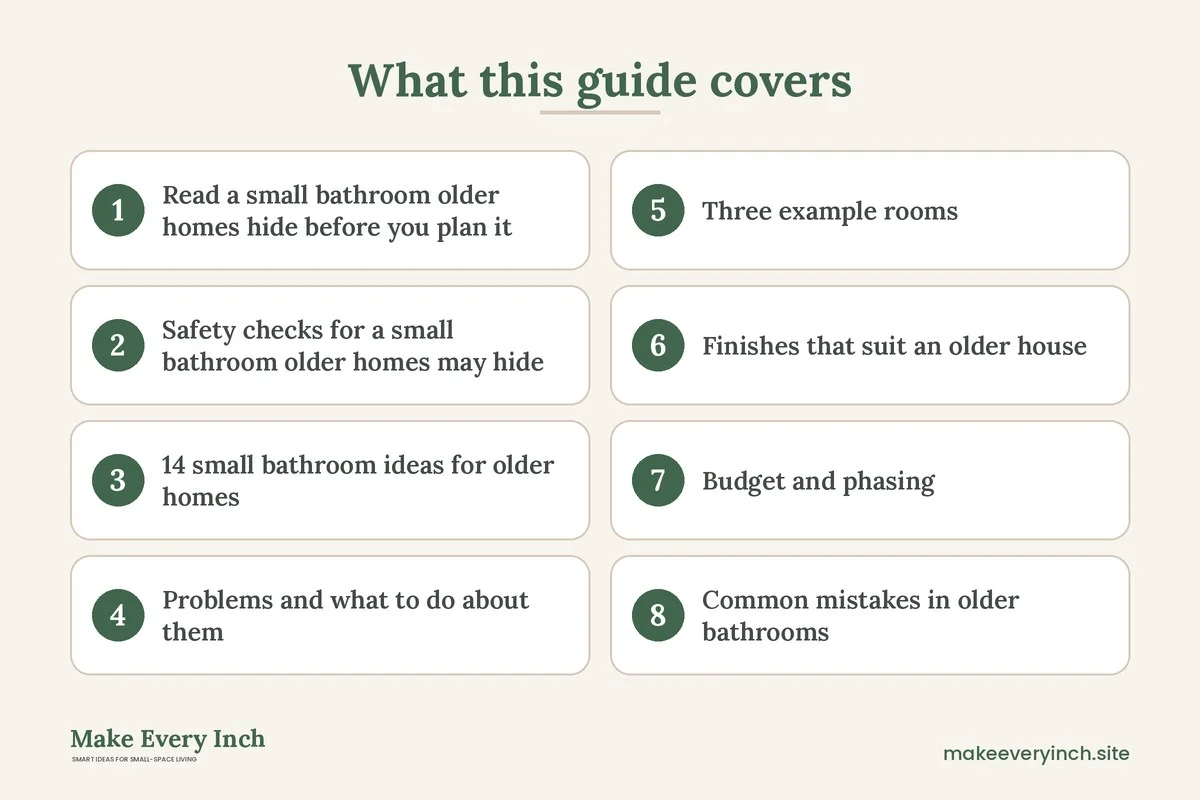
A small bathroom older homes often contain was built for a different way of living. It may have a tub three feet deep, a pedestal sink with no counter, a window that sticks, a floor of tiny hex tile and one outlet that was added decades later. These rooms have charm, but they also have quirks that modern advice ignores: plaster that cracks under a drill, plumbing that does not follow current layouts, and finishes that need caution before you sand or scrape. This guide focuses on those quirks. It covers how to read what you have, the checks to make before touching a wall, 14 ideas that respect the age of the room, a table of common problems, three example rooms, finishes and a checklist. For the general overview, see our main guide to small bathroom ideas. If you share the room with children, the sibling post on small bathroom ideas for families covers kid-height storage and morning schedules.
Read a small bathroom older homes hide before you plan it
Start by learning what the room is made of. Walk through it with a notebook and a tape measure, and note each of the following.
- Walls: knock gently. A hollow, brittle sound often means plaster over wood lath, and a dull, solid sound may be plaster over masonry or tile over cement board. Plaster holds a screw poorly unless the screw reaches a stud or a proper anchor, and it can crack or crumble around a fixing.
- Floor: small hex or square tile, linoleum, or boards under vinyl. Floors in older bathrooms may slope slightly toward a drain or a wall. A level helps you check.
- Fixtures: a pedestal sink, a wall-hung sink, a clawfoot or a deep rectangular tub. Check whether fixtures wobble, drip or show rust.
- Plumbing: exposed pipes, a radiator or a floor drain. Do not move or cap anything without a licensed plumber.
- Electrics: count the outlets and light switches. Older rooms often have one ceiling fixture and one outlet, and some have outlets that are not grounded or protected.
- Ventilation: a window, a rusted fan or nothing at all. Damp is the main enemy of old plaster and paint.
- Dimensions: note every measurement in inches, including ceiling height, which is often taller than in modern homes, and the width of the door, which is often narrower.
Draw a rough plan with the door swing and window position. Take photographs of every wall, and mark where pipes enter. This record helps you, a plumber and an electrician make decisions without guessing.
Safety checks for a small bathroom older homes may hide
Older homes bring risks that newer rooms do not. Read these before you begin any project.
- Lead paint: homes built before the late 1970s may contain lead-based paint on walls, trim, windows and old fixtures. Do not sand, scrape or heat-strip paint that may contain lead. Dust from disturbed lead paint is hazardous, especially to children and pregnant people. Use a test kit or a qualified inspector, and hire a certified professional if the paint is deteriorating.
- Asbestos: some old floor tiles, adhesives, wall boards and pipe wrap contain asbestos. Do not break, sand or drill suspect materials. A lab test tells you for sure.
- Electrical: bathrooms should have GFCI-protected outlets and wiring that meets current rules. Old wiring may be ungrounded or overloaded. Ask a licensed electrician to inspect before you add lights, a fan or an outlet. Never run extension cords across a damp floor or use a plug-in heater near water.
- Ventilation: damp causes mold and rot. A properly ducted fan, run during and after showers, protects plaster and paint.
- Low-VOC paint: when you repaint, choose low-VOC products and ventilate the room while the paint cures.
- Anchoring: tall mirrors, cabinets and shelves must be anchored to studs or with the correct anchors for plaster or masonry, so they cannot tip.
- Lease and permission: in a rental, never drill, remove fixtures or paint without the landlord’s written permission. Period fixtures may also be protected in listed or historic buildings.
- Water: shutoff valves in old homes can seize or leak. Know where the main shutoff is.
14 small bathroom ideas for older homes
Keep the character you already have
1. Keep a sound clawfoot or deep tub
A deep tub takes a big share of a small room, but it also gives the bathroom its soul. If the finish is sound, keep it and let it be the focal point. Clear the floor around it, add a wall-mounted tub caddy or a tray, and hang a ring-mounted curtain rod from the ceiling or a freestanding frame. A tub that sits free of the wall needs a floor that can bear its weight, so ask a professional before moving a heavy fixture.
2. Make a pedestal sink do more
A pedestal sink saves floor space, but it has no storage and little counter. Add a slim shelf above the faucet to hold a cup and soap. A wall-mounted glass or metal shelf of 4 to 5 inches deep works, and a narrow floor shelf beside the pedestal can hold towels. See our guide to small bathroom ideas with no counter space for more surface ideas, and small bathroom vanity ideas if you consider replacing the pedestal.
3. Celebrate small hex or subway tile
Original tile is often charming. Clean the grout with a gentle product, reseal where needed and replace only damaged pieces. If the tile is original and you are not sure what is under it, test for asbestos before drilling or demolition. For ideas to enrich the look without replacing it, read our post on small bathroom tile ideas.
4. Restore the window instead of covering it
An old window gives natural light, which is a gift in a small room. Make sure it opens and closes, add privacy with frosted film or a lined cafe curtain on a tension rod, and keep the sill clear so air moves. If the window is the only ventilation, leave it cracked during showers. For rooms with no window, see our guide to small bathroom ideas without a window.
Storage that respects plaster and tile
5. Tall, freestanding, and anchored
In many period bathrooms, drilling into plaster and tile is risky. A slim freestanding cabinet or ladder shelf, 8 to 12 inches deep, can stand beside the tub or behind the door. Anchor it with a method suited to the wall, with permission in a rental, or choose a low unit that does not need anchoring. Keep heavy items on the bottom shelf.
6. Hooks on the door rather than the wall
Over-the-door hooks and rails need no holes. Use two or three for towels and robes. If the door is thick or old, check the clearance before you buy, and protect the paint with a felt pad.
7. A tension pole in the corner
A floor-to-ceiling tension pole with shelves or baskets holds soap, shampoo and toys in a tub corner. Old ceilings may be plaster, which can be fragile, so check that the pole’s pressure does not crack the surface. Test it gently, and remove it if you see hairline cracks.
8. A radiator shelf done safely
If the room has a radiator, a shelf above it can hold folded towels that warm up. Leave a clear gap between the radiator and anything stored, and never place plastic, aerosol cans or flammable items near heat. In a rental, use a freestanding shelf rather than one fixed to the wall.
9. Use the height
Ceilings in older homes are often 8 to 10 feet. Use the upper wall with a high shelf or a hanging basket for items used rarely, such as spare toilet paper or guest towels. Use a step stool for access, and never store heavy items overhead. For more ways to use height, read about vertical storage ideas and small bathroom shelving ideas.
Light, air, and surface
10. Layer the light, with an electrician’s help
A single ceiling fixture is rarely enough. Ask a licensed electrician about a damp-rated fixture near the shower, a sconce pair beside the mirror and a dimmer. Check that every fixture is rated for the zone it sits in. If you rent, use a plug-in sconce placed away from water on a GFCI-protected outlet, or a battery light. Our post on small bathroom lighting ideas covers layers and color temperature in more depth.
11. Fix the ventilation first
Many older bathrooms have no fan. A properly vented fan, installed by a professional, protects plaster, paint and wood trim. Until then, open the window or door during and after showers, wipe wet surfaces and hang towels fully open. A dehumidifier in a hallway can help in a damp season, but it does not replace a vent.
12. Paint with care
Use a low-VOC, mold-resistant paint in satin or semi-gloss for the walls. Repair cracks and loose plaster with the right filler before painting, and prime bare patches. If the existing paint is old or peeling, test for lead before sanding. Pale, warm tones and soft whites open a small, dark room, as our post on small bathroom color schemes that open up the room explains.
13. Mirrors that fit the proportions
A tall, narrow mirror suits a tall, narrow room. Hang it on a picture-rail hook if the room has one, or lean a floor mirror against the wall in a safe position. Anchor a large mirror well, and use a mirror with a safety backing in a room where children are present. Our post on small room mirror placement ideas offers more layouts.
14. A runner that suits the floor
A short, washable runner beside the tub protects old flooring and gives a warm step. Choose one with a non-slip backing, and lift it weekly to let the floor dry. Do not lay a rug that traps water over old wood boards.
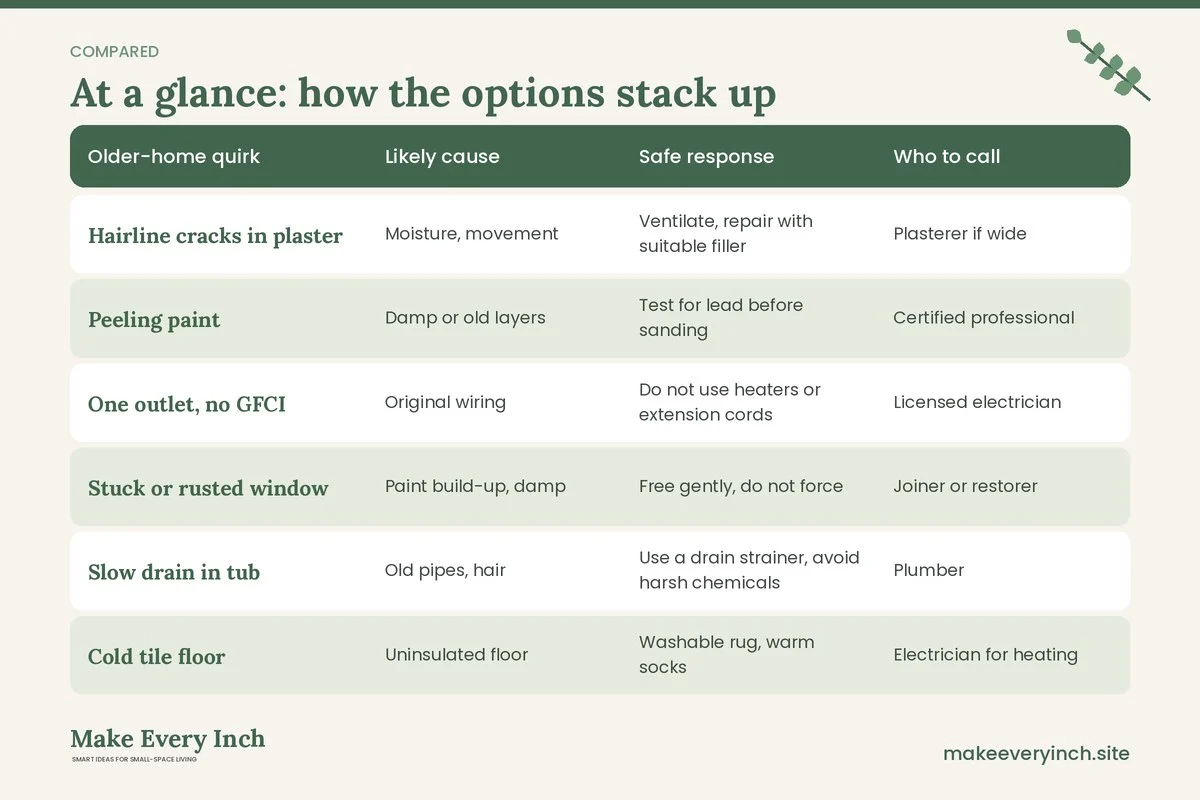
Problems and what to do about them
| Older-home quirk | Likely cause | Safe response | Who to call |
|---|---|---|---|
| Hairline cracks in plaster | Moisture, movement | Ventilate, repair with suitable filler | Plasterer if wide |
| Peeling paint | Damp or old layers | Test for lead before sanding | Certified professional |
| One outlet, no GFCI | Original wiring | Do not use heaters or extension cords | Licensed electrician |
| Stuck or rusted window | Paint build-up, damp | Free gently, do not force | Joiner or restorer |
| Slow drain in tub | Old pipes, hair | Use a drain strainer, avoid harsh chemicals | Plumber |
| Cold tile floor | Uninsulated floor | Washable rug, warm socks | Electrician for heating |
| Smell of damp | Poor ventilation | Open window, run fan, dry surfaces | Plumber or builder |
| Loose tiles | Failed adhesive | Seal gaps, avoid water on area | Tiler |
| Sloped floor | Settling | Use stable, short-legged furniture | Builder if severe |
Three example rooms: a small bathroom older homes often have
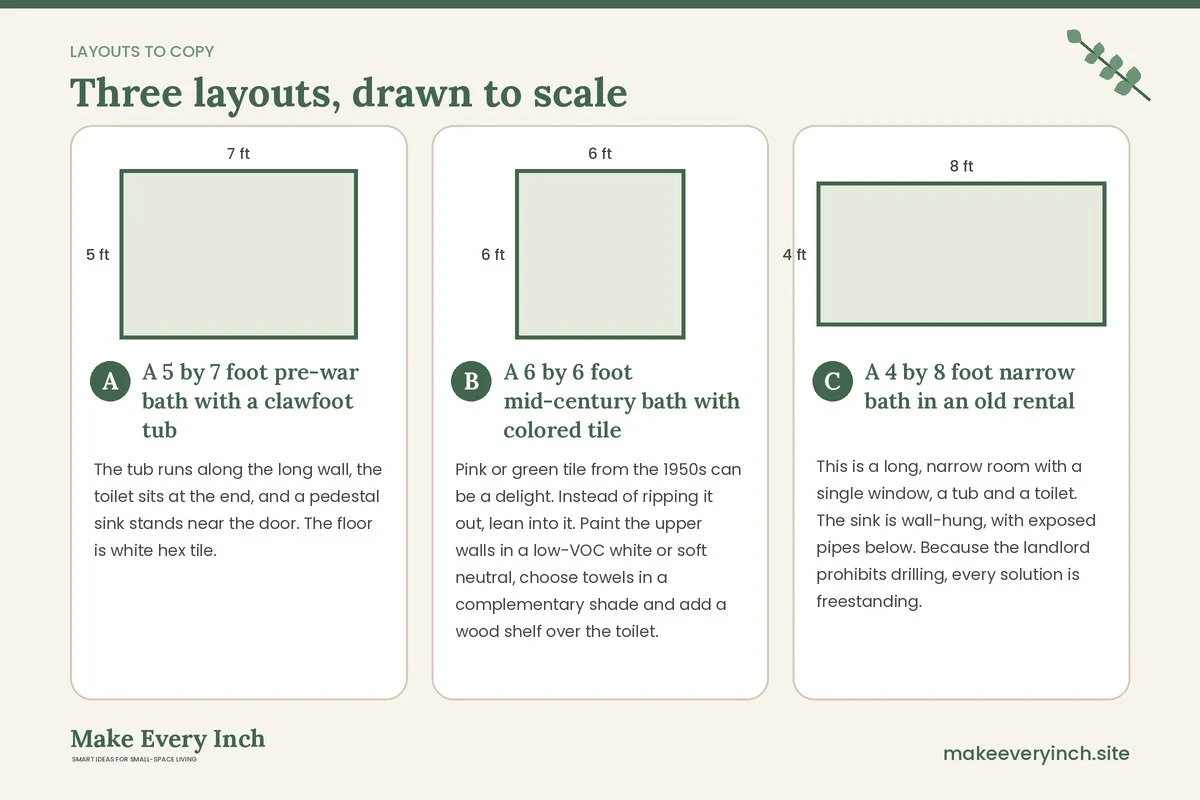
A 5 by 7 foot pre-war bath with a clawfoot tub
The tub runs along the long wall, the toilet sits at the end, and a pedestal sink stands near the door. The floor is white hex tile. Keep the tub and sink, and add a ring-mounted curtain on a freestanding frame so no plaster is drilled. Place a narrow ladder shelf, 10 inches deep, against the wall beside the sink, anchored with permission or weighted with heavy items at the bottom. A ceiling-mounted pendant stays, with an electrician-installed damp-rated fixture. Add a plug-in sconce away from water if the lease allows it. A washable runner sits beside the tub. The result keeps the period look and adds only the storage the room needs.
A 6 by 6 foot mid-century bath with colored tile
Pink or green tile from the 1950s can be a delight. Instead of ripping it out, lean into it. Paint the upper walls in a low-VOC white or soft neutral, choose towels in a complementary shade and add a wood shelf over the toilet. A recessed medicine cabinet is a bonus, so use it for daily items. If the tile is original, do not drill without checking the material. A simple stand-alone rack beside the tub holds towels. A fan upgrade by a professional protects the finish for years. This approach is gentler than a full renovation and is a good option if you need to stay within a modest plan, as in our small bathroom makeover ideas.
A 4 by 8 foot narrow bath in an old rental
This is a long, narrow room with a single window, a tub and a toilet. The sink is wall-hung, with exposed pipes below. Because the landlord prohibits drilling, every solution is freestanding. A tall, slim cabinet stands at the end of the tub and holds towels and supplies, anchored with a landlord-approved method. A cart with wheels fits between the tub and the toilet. A tension rod across the end of the tub holds a washcloth and a shower caddy. A mirror leans on a shelf above the sink, and a plug-in light sits on a GFCI outlet. A pipe cover tidies the exposed plumbing, with permission. The room feels bigger because the floor stays clear. For more on narrow plans, take a look at narrow bathroom ideas and small bathroom ideas for narrow rooms.
Finishes that suit an older house
Old rooms look best when new finishes echo the age of the house without copying it exactly. Choose a few warm metals, such as nickel or aged brass tones, in the hardware for a soft period feel. Pick white or cream tile in classic shapes if you must replace any. Use wood sparingly and keep it sealed against moisture. Add a woven basket, a linen towel and a plant that tolerates humidity. Avoid overly shiny, modern pieces that fight the room. If you are weighing a bigger update, remember that structural, plumbing and electrical work in older homes should be assessed by professionals, and some work needs permits.
Budget and phasing
Older bathrooms reward patience. Begin with the safety items: ventilation, electrical checks and lead or asbestos testing if needed. Move on to repairs: sealing, re-grouting and fixing leaks. Then add storage and light. Finish with decor. Phasing the work lets you spread the cost without compromising safety, and avoids tearing out finishes that could have been saved. If the room is part of a larger house of the same age, you may find that the problems repeat, so a plan for the whole home saves effort. For another room with similar issues, see our post on small kitchen ideas for older homes and small laundry room ideas for older homes.
Common mistakes in older bathrooms
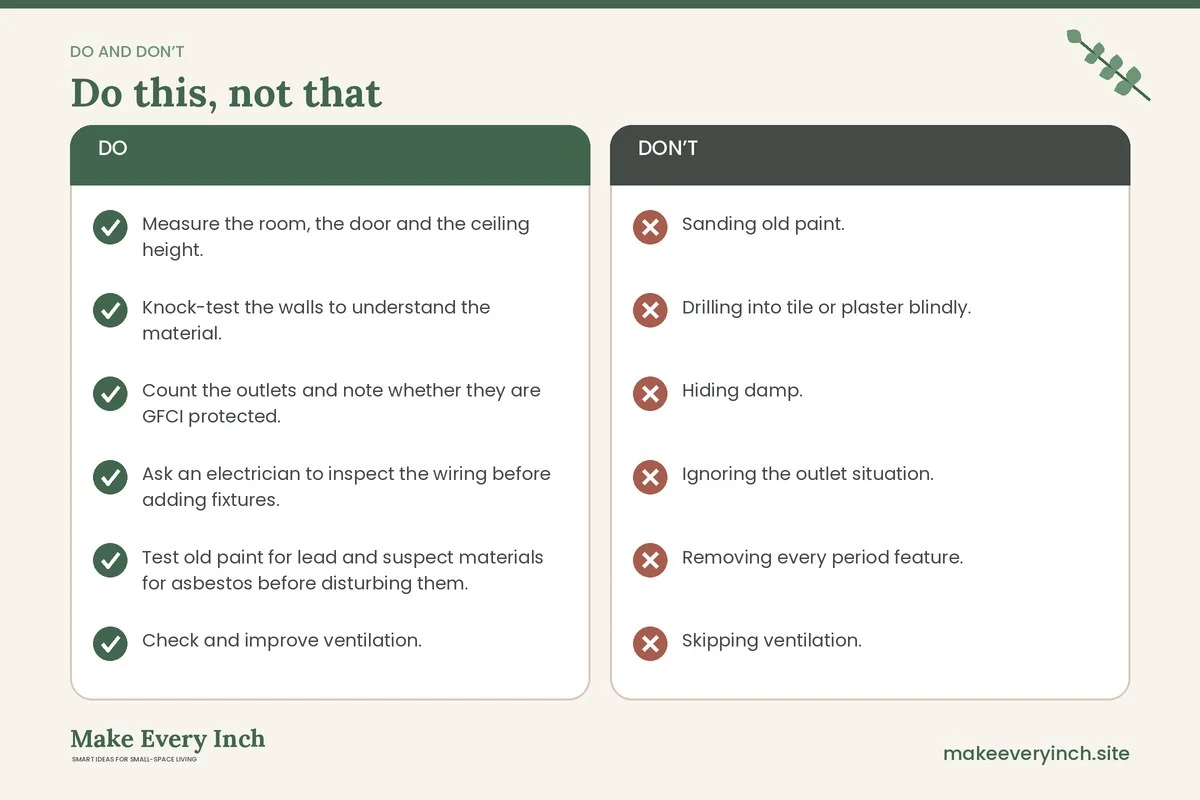
- Sanding old paint. Test for lead first and use a professional if needed.
- Drilling into tile or plaster blindly. Cracks and hidden pipes are costly, so locate pipes and studs first.
- Hiding damp. Covering a damp wall with paint or panels only hides the problem. Fix the source.
- Ignoring the outlet situation. Using extension cords near water is unsafe. Ask an electrician to add protected outlets.
- Removing every period feature. Original tile, tubs and windows are often worth keeping.
- Skipping ventilation. Old plaster and wood suffer most from steam.
- Buying furniture without measuring the door. Older doors are narrow, and tall furniture may not fit through.
- Putting tall pieces on a sloped floor. Shim them and anchor them to avoid tipping.
Older bathroom checklist
- Measure the room, the door and the ceiling height.
- Knock-test the walls to understand the material.
- Count the outlets and note whether they are GFCI protected.
- Ask an electrician to inspect the wiring before adding fixtures.
- Test old paint for lead and suspect materials for asbestos before disturbing them.
- Check and improve ventilation.
- Keep sound tubs, tiles and sinks.
- Choose freestanding or anchored storage that suits plaster.
- Seek written permission before drilling in a rental.
- Anchor tall furniture and large mirrors.
- Use low-VOC, mold-resistant paint.
- Add layered light with damp-rated fixtures.
- Place a non-slip, washable runner by the tub.
- Phase the work: safety, repairs, storage, decor.
FAQ
Should I keep an old clawfoot tub in a small bathroom?
If it is sound and you like it, yes. It becomes a focal point, and a ring-mounted curtain or a freestanding frame handles the shower. Ask a professional about floor strength before moving a heavy tub.
How do I add storage to plaster walls?
Use freestanding units, over-the-door hooks or tension poles. If you must fix something to the wall, find a stud or use an anchor made for plaster, and ask for permission in a rental.
Is it safe to paint over old paint?
Not always. If the house is old, test for lead before sanding or scraping. Painting over intact paint with a primer is lower risk than disturbing it, but a professional can advise.
Can I add an outlet or light myself?
Electrical work in a bathroom should be done by a licensed electrician, since water raises the risk. Ask about GFCI protection and damp-rated fixtures.
How do I deal with damp in an old bathroom?
Improve ventilation first, with an installed fan, an open window and dry towels. Find and fix any leaks, because cosmetic fixes will not last. For a long-term solution, consult a builder.
Can I use these ideas in a rental?
Yes, if every item is freestanding, over-the-door or tension-based. Read our guide to renter-friendly bathroom ideas and ask your landlord before changing fixtures.
Keep going: Keep planning with our small bathroom storage ideas for tight spaces, small bathroom layout ideas that work and vintage apartment ideas.
Save this guide for later
Pin the ideas you like to Pinterest so you can come back to them when you plan your space.