Small Bedroom Ideas Budget Edition: 18 Low-Cost Ways to Feel Calm, Not Cheap
Quick answer: The best small bedroom ideas budget plans spend first on what you touch and see every night: bedding, bulbs, a rug and curtains. Next they add vertical storage, a second-hand nightstand and a few DIY touches. Set a total cap, split it into rough percentages, keep 24 to 30 inches of clear floor beside the bed, and buy in stages so each purchase solves a real problem.
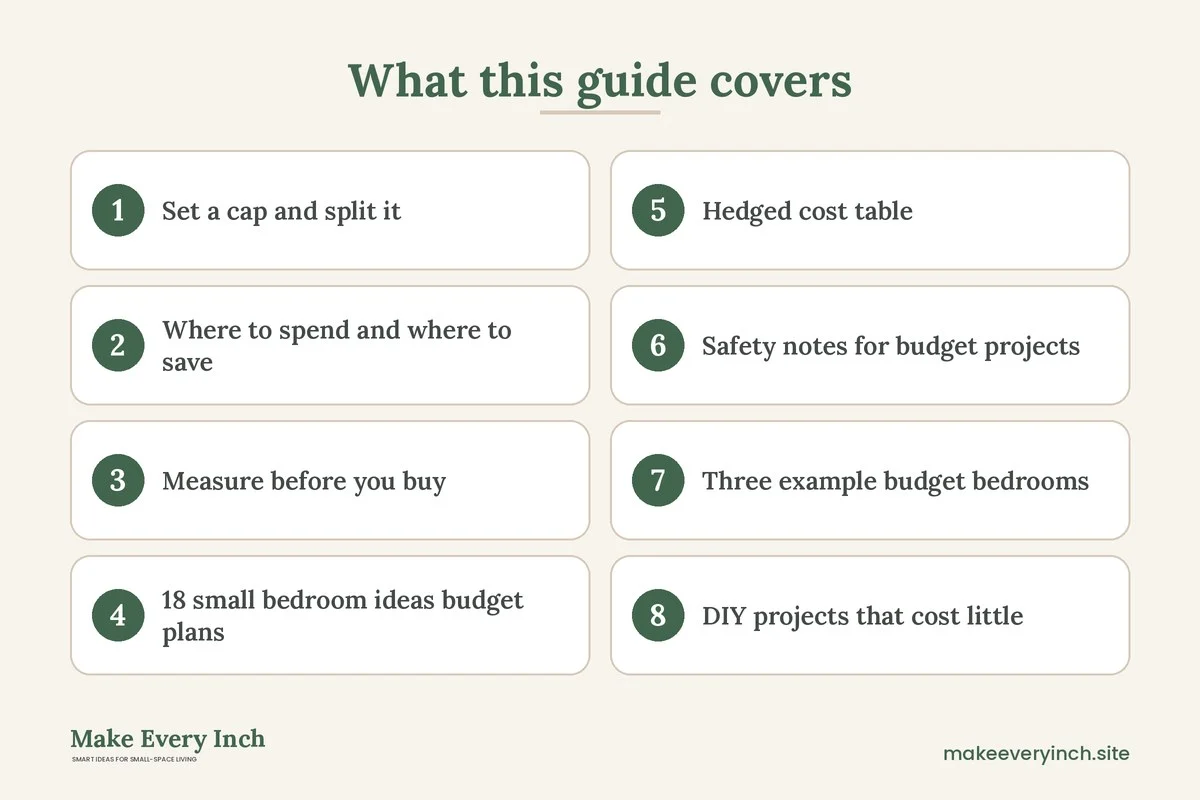
Small bedroom ideas budget plans begin with a different question than most design guides ask. Instead of “what would look best?” the question is “what would make the biggest difference to sleep and space for the smallest spend?” A bedroom is a private room that you use every night, so the best money goes into comfort, light and storage, not into decoration. This guide is about the bedroom only, not the living room, and it is built around staged spending. It covers a budget-setting method, where to spend and where to save, 18 ideas, a hedged cost table, safety notes, three example rooms, a four-week plan, a checklist and an FAQ. For the full topic, see our main guide to small bedroom ideas, and if you rent, read small bedroom ideas for renters so your changes can be undone.
A note on money before we start. Prices change by region, season and store, so every figure in this post is a rough, hedged range meant to help you compare options, not a quote. Check local prices before you shop.
Set a cap and split it
Decide on one total number you are comfortable spending, and write it down. A cap stops small purchases from adding up unnoticed. If you want a fuller plan at a fixed amount, our post on small bedroom makeover under 200 shows how one cap can be spread across a whole room.
Then split the cap into rough shares. One workable split is:
- About 30 to 40 percent for sleep comfort: bedding, pillows, a mattress topper if needed.
- About 20 to 25 percent for light: bulbs, a lamp, a plug-in sconce, curtains that block morning glare.
- About 20 to 25 percent for storage: boxes, hooks, a shelf, a second-hand nightstand.
- About 10 to 15 percent for the finish: a rug, one piece of art, a plant.
- About 5 to 10 percent held back for the surprise you always find halfway through.
These shares are starting points. If your pillows are fine and the room is dim, shift money toward light. The goal is to spend where you notice the problem every day.
Where to spend and where to save
Some items repay a higher spend because you use them every night. Others look expensive but work just as well when bought cheaply or second-hand.
Spend a little more on
- Pillows and sheets. You touch them for hours every night. A mid-range set often lasts longer than the cheapest option.
- A mattress topper or protector, if sleep is poor. Fixing comfort can matter more than any decor.
- Blackout or lined curtains. They help sleep and also add insulation.
- Safe lighting. Buy bulbs and lamps that are certified for your region and used within their rated wattage.
Save on
- Nightstands. Second-hand wood or a sturdy crate often does the job.
- Frames and art. Print free images, fabric or your own photos, and use thrifted or plain frames.
- Storage boxes. Boxes from a discount shop or even sturdy shoeboxes under the bed work well.
- Baskets, trays and hooks. Buy plain ones, then paint or label them yourself.
- Decor accents. Plants from cuttings, branches and ceramics from thrift shops cost little.
For other low-cost ideas that work across the home, see cheap storage ideas for apartments and budget renter upgrades.
Measure before you buy
The most expensive mistake is buying something that does not fit. Measure first, then shop.
- Room: note the length, width and ceiling height, and mark the window, door and radiator positions.
- Bed: a twin is about 38 by 75 inches, a full about 54 by 75, a queen about 60 by 80. Leave 24 to 30 inches of clear floor beside the bed where you can.
- Nightstand: 12 to 18 inches wide often suffices. A shelf mounted at mattress height can replace a table.
- Rug: a 5 by 8 foot rug usually fits a small bedroom, with 18 to 24 inches showing at the sides of a double or queen bed.
- Curtains: measure from the rod to the floor, and add 4 to 6 inches above the window frame for the rod.
Carry a tape measure and a note on your phone, and photograph the room from the doorway for proportions. Check that each new piece fits through the door and any stairwell too. Our guide to small bedroom furniture ideas gives sizes for common pieces.
18 small bedroom ideas budget plans
Sleep comfort first
1. Wash and rotate what you have
Before buying anything, wash your pillows and duvet as the labels allow, flip your mattress if it is designed for it and air the room. Fresh bedding can change how a room feels at almost no cost.
2. Upgrade pillows and sheets only
Replace tired pillows and one set of sheets in a calm color. A single color family makes the bed look neat even when it is unmade. Cotton or washed linen blends are often available in a modest range.
3. A second set of sheets
Two sets let you wash one while the other is on the bed. The pair often costs less than one big bedding upgrade and makes the room easier to keep fresh.
4. A simple topper or protector
If the mattress is lumpy or old, a topper in a modest range may help for a time. A protector keeps the mattress clean and extends its life. Neither replaces a mattress that is truly worn out.
Light that costs little
5. Swap bulbs for warm ones
Warm LED bulbs of about 2200 to 2700 K make the evening feel calmer. Bulbs are usually among the cheapest changes you can make. Check the maximum wattage on each lamp and never exceed it.
6. One bedside lamp instead of a ceiling glare
A small lamp on a stack of books or a shelf lights a book without waking a partner. See our guide to small bedroom lighting ideas for more layers.
7. Plug-in wall lights
A plug-in sconce frees up the nightstand and avoids wiring, which is good for renters. Tidy the cord with clips, and do not run it under rugs or across walkways. More options are in our guide to renter-friendly lighting ideas.
8. Lined curtains on a tension rod
A tension rod and lined panels block morning light and cut drafts. Check the rod’s weight rating before hanging heavy curtains, and hang them high to make the ceiling look taller.
Storage on a small budget
9. Use the space under the bed
Flat boxes or bins can hold off-season clothes, shoes and spare bedding. Lift the bed on sturdy risers if you need more clearance, and make sure the risers are rated for the weight of the bed and sleepers. Our post on small bedroom storage ideas has more.
10. Hooks, rails and over-the-door racks
Hooks behind the door and a rail on a spare wall hold bags, robes and daily clothes. Choose adhesive types that match your wall and weight needs, and test in a hidden spot. See no-drill storage ideas for renters.
11. A second-hand nightstand or stool
A thrifted drawer unit, a small stool or a crate stack makes a nightstand at a modest price. Sand rough edges, wipe it clean and, if you paint, use low-VOC paint with the window open.
12. A narrow shelf above the bed or door
A shelf above the headboard or over the door adds a surface for books and a plant. Fix it into studs or use rated anchors for the wall type, and keep heavy items low. In a rental, a leaning shelf may be better.
13. A clothing rail instead of a wardrobe
A freestanding rail can hold daily clothes when there is no closet. Add a shelf above for boxes and shoes below. See small bedroom ideas without a closet for layouts.
Style on a budget
14. A headboard made from fabric or wood
Wrap a board in batting and fabric, or paint a wide arch on the wall behind the bed. A headboard adds a focal point for a small outlay. A fabric board should hang securely and stay away from candles and heaters.
15. A paint refresh in one color
A single wall in a soft, muted shade can change the room. Choose a low-VOC paint, ventilate while painting and drying, and wait until the smell has faded before you sleep there. Ask your landlord first if you rent.
16. A rug that is the right size
A rug that is too small makes a room feel smaller. Aim for a rug that reaches under the lower two thirds of the bed, and add a thin non-slip pad on hard floors.
17. Thrifted frames and your own art
Fill a frame with a print, a page of fabric or a pressed leaf. Group two or three on one wall at about eye level from the bed, and leave the rest plain.
18. A plant or branches
One plant or a vase of branches adds life for a very small spend. Choose a plant that tolerates your light, and avoid anything that is toxic to pets if you have any.
Hedged cost table
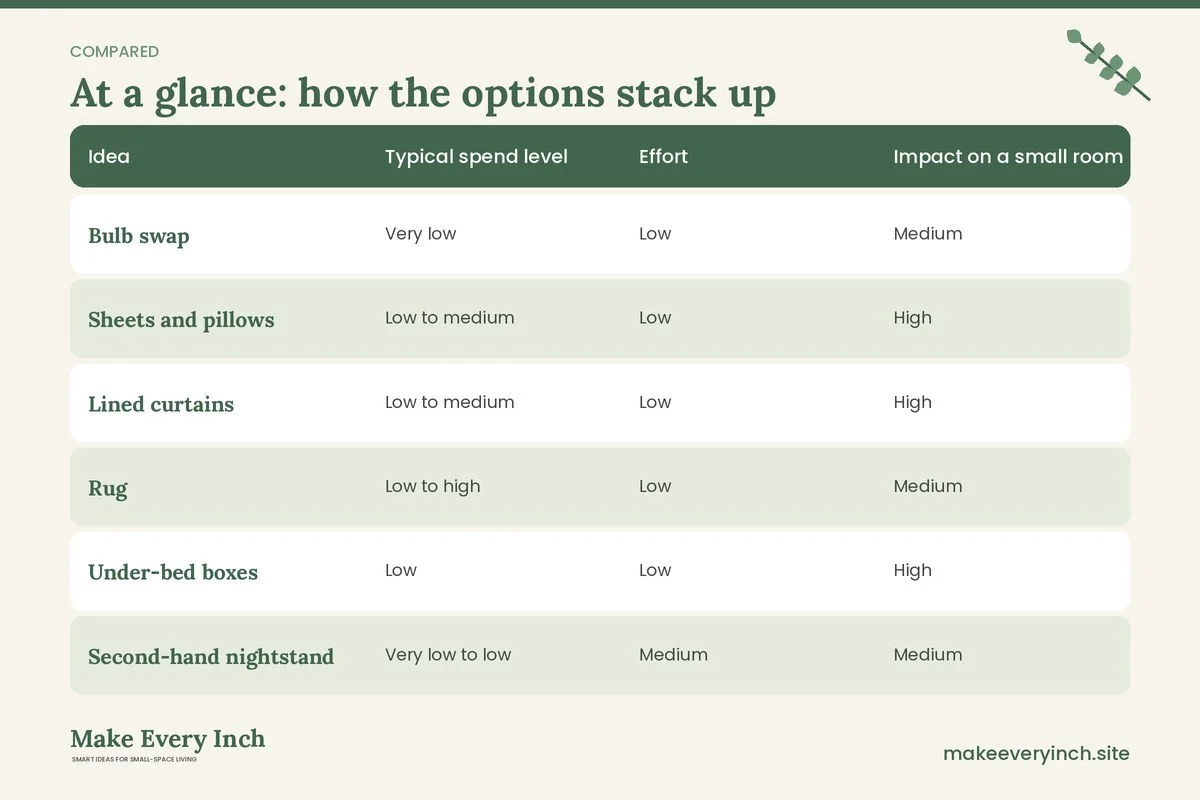
Use this table to compare options. Ranges are rough and vary by place and time, so treat them as a guide and not a promise.
| Idea | Typical spend level | Effort | Impact on a small room | Notes |
|---|---|---|---|---|
| Bulb swap | Very low | Low | Medium | Check wattage |
| Sheets and pillows | Low to medium | Low | High | Buy in one color family |
| Lined curtains | Low to medium | Low | High | Hang high |
| Rug | Low to high | Low | Medium | Size matters more than price |
| Under-bed boxes | Low | Low | High | Measure clearance first |
| Second-hand nightstand | Very low to low | Medium | Medium | Clean and sand |
| Plug-in sconce | Low to medium | Low | Medium | Hide the cord |
| Clothing rail | Low to medium | Low | High | Anchor if tall |
| DIY headboard | Low to medium | Medium | Medium | Fix securely |
| Paint one wall | Low to medium | Medium | High | Ventilate well |
Safety notes for budget projects
Saving money should never mean cutting safety. A few checks cost nothing.
- Anchor tall furniture. A cheap second-hand wardrobe or tall dresser can tip. Use anti-tip straps fixed into studs or appropriate wall anchors, and keep heavier items low. If you rent, ask about anchoring or choose lower pieces.
- Respect electrical limits. Do not overload sockets or daisy-chain extension cords. Use certified bulbs, plugs and strips, and replace frayed cords. Keep chargers off bedding.
- Check second-hand items. Wipe them down, look for pests, wobble the joints and avoid peeling paint on very old pieces, which may contain lead if the item is decades old.
- Ventilate when painting or sanding. Open windows, run a fan and wear a mask when sanding. Use low-VOC paint where you can.
- Keep heat sources away from fabric. Lamps, heaters and candles need space from curtains and paper shades. Flameless candles are safer in a bedroom.
- Do not block the exit. Keep the path from the bed to the door clear.
Three example budget bedrooms
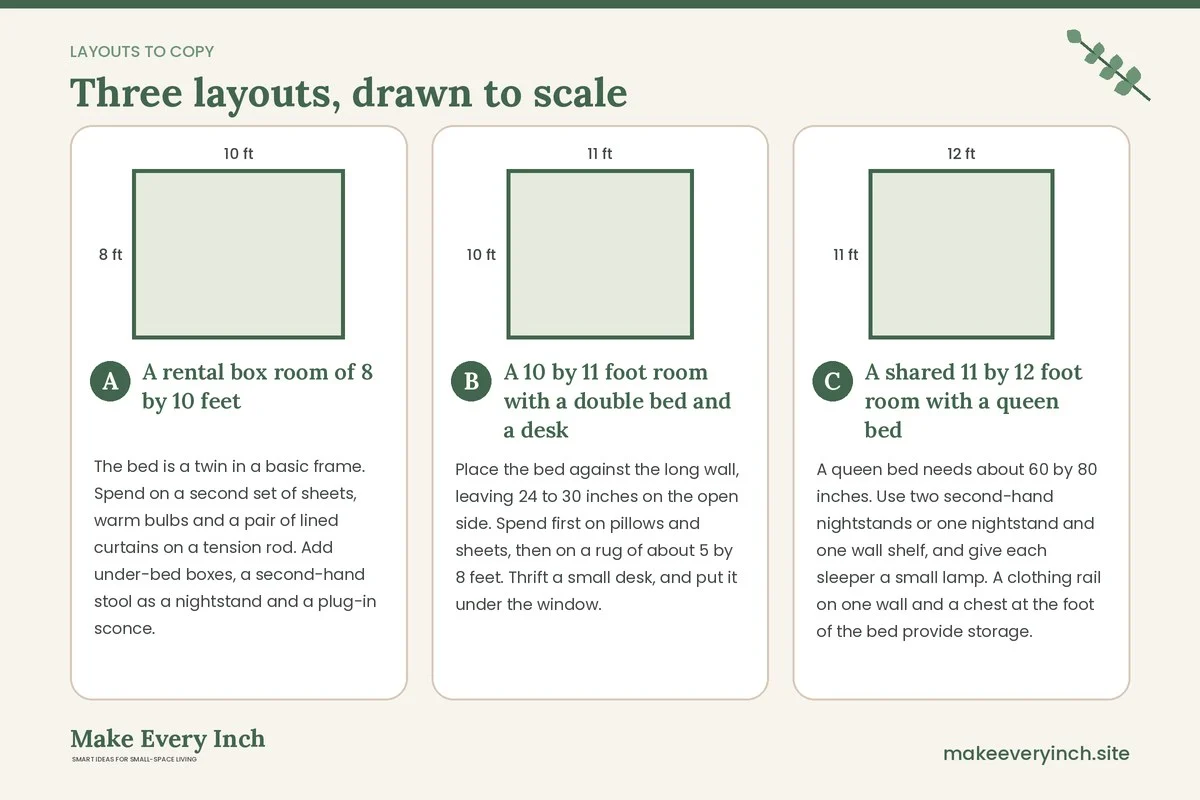
A rental box room of 8 by 10 feet
The bed is a twin in a basic frame. Spend on a second set of sheets, warm bulbs and a pair of lined curtains on a tension rod. Add under-bed boxes, a second-hand stool as a nightstand and a plug-in sconce. Hang two adhesive hooks behind the door. Keep the walls untouched and use a leaning mirror and one print. Everything can leave with the tenant. Read more in small bedroom ideas for renters.
A 10 by 11 foot room with a double bed and a desk
Place the bed against the long wall, leaving 24 to 30 inches on the open side. Spend first on pillows and sheets, then on a rug of about 5 by 8 feet. Thrift a small desk, and put it under the window. A narrow shelf above the desk holds books. A DIY fabric headboard adds a focal point. Consider the ideas in small bedroom desk ideas for a compact setup.
A shared 11 by 12 foot room with a queen bed
A queen bed needs about 60 by 80 inches. Use two second-hand nightstands or one nightstand and one wall shelf, and give each sleeper a small lamp. A clothing rail on one wall and a chest at the foot of the bed provide storage. Lined curtains help two people with different schedules. Add one painted wall in a muted shade, and a plant. See small bedroom ideas with a queen bed for layouts.
DIY projects that cost little
If you have time but little money, a few projects offer big visual returns.
- A fabric headboard. A sheet of thin plywood or a firm board, a layer of batting and a fabric cover give a soft headboard. Hang it with a secure cleat, and keep it clear of heat sources.
- Painted arch or block. Tape an arch on the wall behind the bed and fill it with paint. It creates a headboard effect with no furniture.
- A crate nightstand. Stack one or two sturdy crates, sand the edges and add a tray on top.
- Fabric-covered boxes. Cover shoeboxes with fabric or paper for matching under-bed storage.
- A hanging rail. A wooden dowel on two rope loops makes a simple clothes rail, as long as the fixing is rated for the load.
For more projects, our guide to DIY apartment upgrades offers further ideas.
A four-week spending plan
Stage the work. Each week has a goal, and you can stop at any point.
- Week 1: declutter and measure. Clear the room, sort what to keep, measure everything and set your cap. Wash the bedding.
- Week 2: sleep and light. Buy pillows or sheets if needed, swap the bulbs, add a lamp and hang curtains.
- Week 3: storage. Add under-bed boxes, hooks and a second-hand nightstand. Anchor anything tall.
- Week 4: finish. Add a rug, hang one piece of art and add a plant. Review what is left of the cap and decide whether anything else is truly needed.
Skipping a week is fine. A room that you live in for a month before the last purchase will tell you what it really needs. For a larger project, see small bedroom makeover ideas.
Common budget mistakes
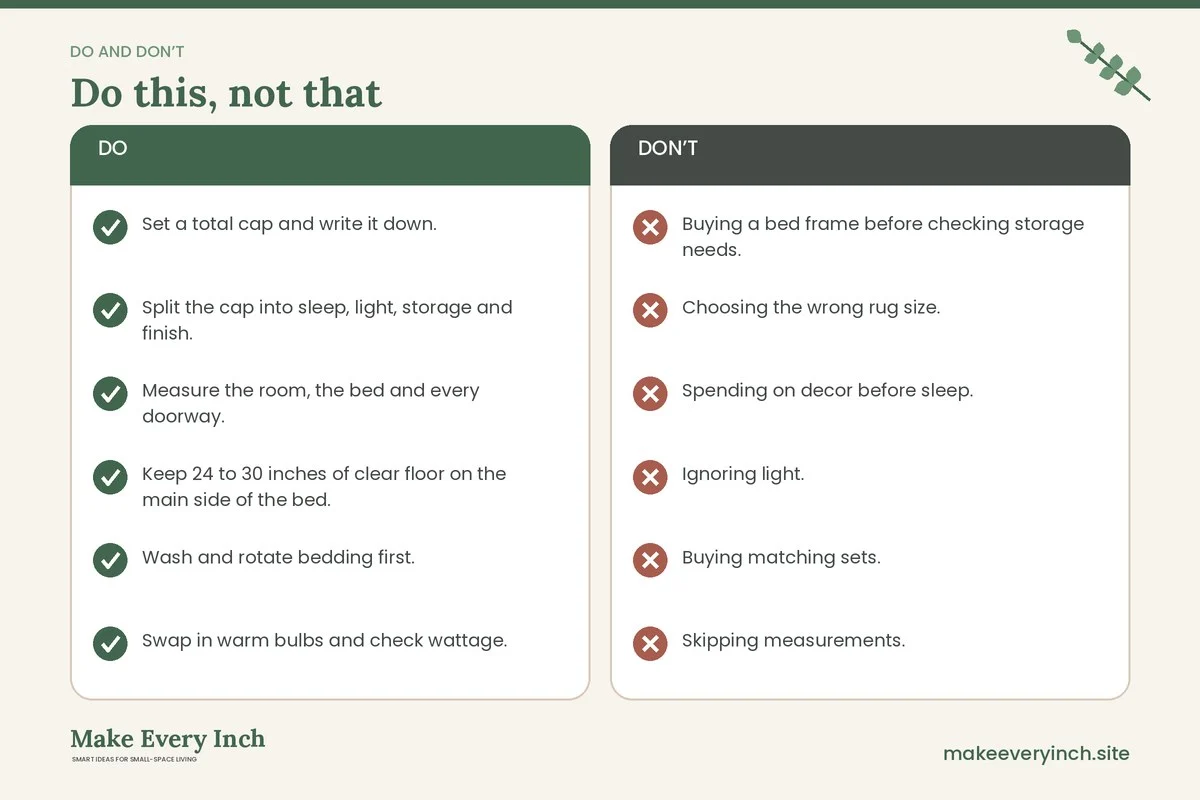
- Buying a bed frame before checking storage needs. A frame with drawers can replace a dresser, but only if the room can handle the extra size.
- Choosing the wrong rug size. A tiny rug looks cheap and shrinks the room.
- Spending on decor before sleep. A beautiful room with bad pillows still feels bad at night.
- Ignoring light. Harsh overhead light can make any room feel cheap.
- Buying matching sets. Mixed second-hand pieces in one color family often look better and cost less.
- Skipping measurements. A piece that does not fit is the most costly purchase of all.
- Over-filling shelves. Empty space is free, and it makes small rooms feel bigger.
Budget bedroom checklist
- Set a total cap and write it down.
- Split the cap into sleep, light, storage and finish.
- Measure the room, the bed and every doorway.
- Keep 24 to 30 inches of clear floor on the main side of the bed.
- Wash and rotate bedding first.
- Swap in warm bulbs and check wattage.
- Hang lined curtains high.
- Add under-bed storage.
- Look second-hand for nightstands and shelves.
- Anchor tall furniture.
- Ventilate when painting or sanding.
- Add a rug of a sensible size.
- Keep a small reserve for surprises.
FAQ
What is the cheapest way to make a small bedroom feel bigger?
Clear the floor, swap harsh bulbs for warm ones and hang curtains high. These steps are usually among the cheapest and change how the room looks and feels.
How much should I spend on small bedroom ideas budget plans?
There is no set amount. Pick a cap you are comfortable with, split it between sleep, light, storage and finish, and spend in stages. Many people find that a modest cap goes a long way if they shop second-hand.
Is it worth buying a new bed frame?
Only if your current one is broken or if a storage frame replaces other furniture. Otherwise, spend on bedding and lighting first.
Where can I find cheap furniture?
Second-hand shops, local marketplaces, community groups and clearance sections often carry nightstands, shelves and stools. Inspect them in person when you can, and clean them well.
Can I do this as a renter?
Yes. Use tension rods, adhesive hooks, plug-in lights and freestanding storage, and ask before painting. See our guide to small bedroom ideas for renters.
How do I make a budget bedroom look cohesive?
Stick to one color family and two or three materials. Repeating them across bedding, curtains and accessories ties mixed pieces together.
Do I need a closet?
Not necessarily. A clothing rail, a chest and under-bed boxes can replace one. Our post on small bedroom organization ideas covers systems for keeping it tidy.
Keep going: Keep planning with our small bedroom ideas, small bedroom ideas for renters and small bedroom makeover under 200.
Save this guide for later
Pin the ideas you like to Pinterest so you can come back to them when you plan your space.