Small Reach-In Closet Organization Ideas
Quick answer: The best small reach-in closet organization ideas work with the box you have: one rod, one shelf and a pair of doors. Split the closet into zones, add a second rod or a shelf divider set to cut wasted air, use the deep corners for rarely used items, and put hooks, slim racks and pockets on the doors. Check the weight limit of every rod and shelf, and ask before you drill.
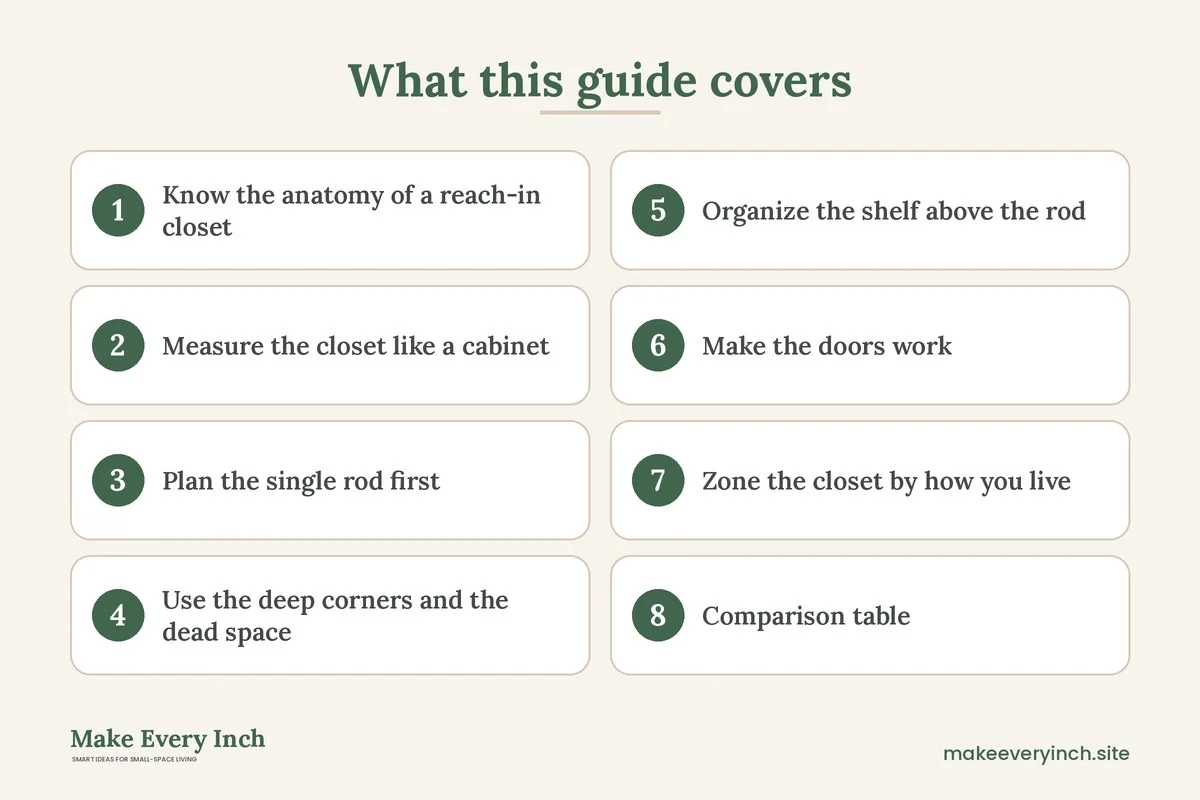
Small reach-in closet organization ideas are different from general closet advice because a reach-in is a very particular kind of space. It is a shallow box, often 24 inches deep and anywhere from 3 to 6 feet wide, with one rod, one shelf above it, and a pair of sliding or bifold doors that block half the opening. There is no room to walk in, no side wall to hang things on, and no way to see the whole interior at once. That changes what works. This guide covers the anatomy of a reach-in, how to measure it, how to handle a single rod, how to use the deep corners and the dead space at the sides, how to organize the shelf and the doors, and how to zone everything so you can find a shirt in ten seconds. It also includes a comparison table, three example closets, a weekly routine, a checklist and an FAQ. For the broader topic, start with our pillar guide to small closet ideas, then see the general post on small closet organization ideas. If you want a build-it-yourself angle, the guide to DIY closet organization for small spaces pairs well with this one, and the companion post on clothing storage ideas for small bedrooms covers where clothes live when the closet is full.
Know the anatomy of a reach-in closet
Before buying anything, learn the parts of the box. Most reach-in closets share the same layout. A single rod hangs at around 66 to 72 inches from the floor, a single shelf sits a few inches above the rod, and the floor underneath is either bare or holds a heap of shoes. The doors are usually sliding, bifold or hinged, and each type hides something different.
- Sliding doors: two panels on tracks. You can only reach half of the closet at a time, because one panel always covers the other half. Items placed behind the fixed panel are hard to get to, so those areas suit seasonal items.
- Bifold doors: folding panels that open most of the width but still leave a narrow strip of the opening blocked by the folded stack. The panels are usually too light for heavy loads.
- Hinged doors: the best case, because they open the full width. They also swing into the room, so check the clearance before adding anything to the inside face.
- Single rod and shelf: this is the default, and it wastes the most space. Hanging clothes occupy only about the top half of the vertical range, while the lower half sits empty or holds a pile.
- Deep corners: the far left and far right ends of a wide closet are dark and hard to reach. They are useful for the least-used items, but only if you plan for them.
Next, note what the closet is actually asked to do. A reach-in in a shared bedroom may hold two people’s clothes, bags, a vacuum cleaner and a box of winter bedding. Write the list before you design. The plan is easier to hold together when you know the proportions: how much hanging, how much folded, how many pairs of shoes, how many bags, and what odd items live there.
Measure the closet like a cabinet
A reach-in closet is a cabinet you walk past, so measure it as one. Use a tape measure and write the numbers on paper. Take each measurement twice, and record the smaller number if the two disagree. Walls are rarely perfectly square.
- Width at the floor, at the rod and at the shelf. Walls may bow or the trim may narrow the opening.
- Depth at the floor and at the shelf. Many closets are 24 inches deep at the rod level, but only 12 to 14 inches at the shelf.
- Height from the floor to the rod, from the rod to the shelf, and from the shelf to the ceiling. These three numbers show how much vertical space you can reclaim.
- Door opening. Measure the clear width you can actually reach. For sliding doors, divide the closet width by two and add the overlap.
- Obstructions. Note light switches, vents, pipes, baseboards, door tracks on the floor and the bottom door guide.
- Depth of the door swing. For hinged doors, measure how far the door sweeps into the room, so any door-mounted rack does not hit furniture.
Sketch a front view and a top view. Mark where the rod, the shelf, the tracks and the corner dead zones are. That simple drawing is the main tool of the whole project. You will usually discover that the rod sits higher than needed and that the space above the shelf is a useful but unreachable zone.
Plan the single rod first
The single rod is the heart of the reach-in. A rod at 66 to 72 inches suits long dresses and coats, but most clothing is shorter. A shirt on a hanger needs about 36 to 40 inches, pants folded over a hanger need about 32 to 36 inches, and a skirt can be shorter still. If most of your clothes are short, a lot of air sits below them.
Option 1: Keep the rod and add a hanging shelf below
Fabric hanging shelves with a few compartments fit under short clothes and hold sweaters or tees. Pick one that hangs from the rod and fits the depth of the closet. It adds three to six shelf levels without any drilling.
Option 2: Double the rod with a hang-down extender
A rod extender hangs from the main rod on two straps and gives you a second rod about 36 inches below the first. It works best when you have a run of shirts, blouses and folded pants. Before adding one, check the rod’s rated load and the strength of its brackets. A single wooden rod under heavy coats can already be near its limit, so do not stack more weight on it without checking.
Option 3: Install a second rod at mid height
If you own the home or have written permission, a true second rod, set about 40 inches above the floor, splits the closet into a high zone and a low zone. Anchor into studs or the right anchors, and never drill without permission. A rented closet may allow a freestanding tower with its own rods instead.
Option 4: Adjust the rod height
Sometimes the right fix is simply to lower the rod to fit your clothes, which frees the upper section for storage. If the rod is held by plain sockets, it may lift out and move. In a rental, ask first.
Rod weight limits
Every rod has a limit, and a fully loaded closet can be heavy. A rod across a wide span may sag if it carries many winter coats, and a sagging rod can pull its brackets from the wall. Add a center support for any span over about 48 inches, and spread heavy items across the rod instead of piling them on one end. Do not hang wet laundry or heavy bags on a rod that is already full. If the rod bows, remove items and redistribute.
Use the deep corners and the dead space
The ends of a reach-in are the hardest parts to use. They are dark, deep and half-hidden by doors. Treat them as a different zone from the middle.
What belongs in the corners
- Seasonal items such as heavy winter coats, spare bedding and out-of-season shoes.
- Memory items, such as keepsake boxes, in labeled bins.
- Items used less than once a month, such as formal wear or travel gear.
Make the corners reachable
- Pull-out bins on slides or wheels. A low bin on wheels can be dragged out of a corner, loaded with items and slid back in.
- Clear bins with labels on the front. You see what is inside without pulling the bin out.
- Leave a gap in the middle of the shelf. If you use the shelf for baskets, put the smaller, more used baskets in the middle and the bigger ones at the ends.
- A step stool. A small folding stool stored on a hook inside the door lets you reach the high ends safely. Do not climb on shelves.
- A small battery light. A stick-on LED light, battery powered and removable, makes a deep corner visible. Keep batteries and cords away from fabric, and never use an open flame.
Dead space at the sides
If the closet is wider than the opening, the side areas hide behind the wall or the door frame. Put in tall, narrow storage here, such as a stack of drawer units or a tall bin, and leave the middle open for the rod.
Organize the shelf above the rod
The shelf in a reach-in often holds a haphazard stack of hats, bags and boxes. It needs rules.
- Use shelf dividers. Vertical dividers keep stacks of sweaters from sliding into each other. A divider set every 12 to 14 inches makes tidy columns.
- Use baskets or bins in matching sizes. Fabric baskets with handles are easy to pull toward you. Choose a size that leaves at least an inch of clearance above so you can slide them out.
- Store the lightest items highest. Hats, scarves and spare linens suit the top. Heavy items, such as boots and boxes of books, belong low.
- Mind the shelf’s load. A typical shelf is a thin board on brackets, and it is not built for heavy loads. Keep to light and medium items, and look for sagging. If the shelf bows, remove weight.
- Add a second shelf. A freestanding shelf unit placed on the floor can create a second tier above the first. Keep it stable so it cannot tip.
- Use the gap above the shelf. A few inches under the ceiling can hold flat boxes for wrapping paper or a small suitcase. Do not stack higher than you can safely reach.
Make the doors work
Doors are the biggest unused surface in a reach-in. What you can add depends on the type.
Sliding and bifold doors
These doors are light and move, so avoid adding weight. Thin stick-on hooks hold a belt or a scarf, and a slim fabric organizer can hang from the top track on a short strap. Check that the door still slides freely, and that you do not add more than the door or track can bear. Skip any rack that would catch in the track.
Hinged doors
Hinged doors can take a full-length over-the-door organizer with pockets, hooks and racks. Pick one with padded hooks, and check the door’s clearance at the top and at the hinge side, so it still closes. Weight matters here too, since the door’s hinges can sag. Keep to light items such as scarves, belts, small bags and shoes in lightweight pockets.
Over-the-door hooks
Hooks suit the next day’s outfit, a robe or a bag you use daily. Do not drape heavy coats on them, because the door will sag. If you have small children at home, keep dangling cords and straps out of reach.
Mirror and stick-on options
A lightweight mirror on a door is useful, but only fix it with proper hardware and permission, or use a freestanding mirror leaning against the wall. Never glue or drill without checking the lease.
Zone the closet by how you live
Zoning is the idea that makes a reach-in feel bigger. Instead of one long rod where everything is mixed, divide the closet into zones and put each category in its own area.
- Daily zone: the part you can reach without opening the door fully. Keep the work week there: shirts, trousers, the jacket you wear most.
- Weekly zone: the next reach out. Weekend clothes, gym wear, casual jackets.
- Seasonal zone: deep corners and the high shelf. Heavy coats, extra bedding, swimwear.
- Floor zone: shoes and bags, in a low rack or on a tray.
- Door zone: accessories, belts, scarves, small bags and the outfit for tomorrow.
Within the rod, group by type, then by color or length. A consistent order lets you scan the closet in a glance. Put sleeveless pieces together, then short sleeves, then long sleeves, then jackets. Matching hangers help, since slim ones add up to a lot of space across a full rod. Remove dry-cleaning plastic, which traps moisture and hides what is inside.
Comparison table: ways to add space in a reach-in
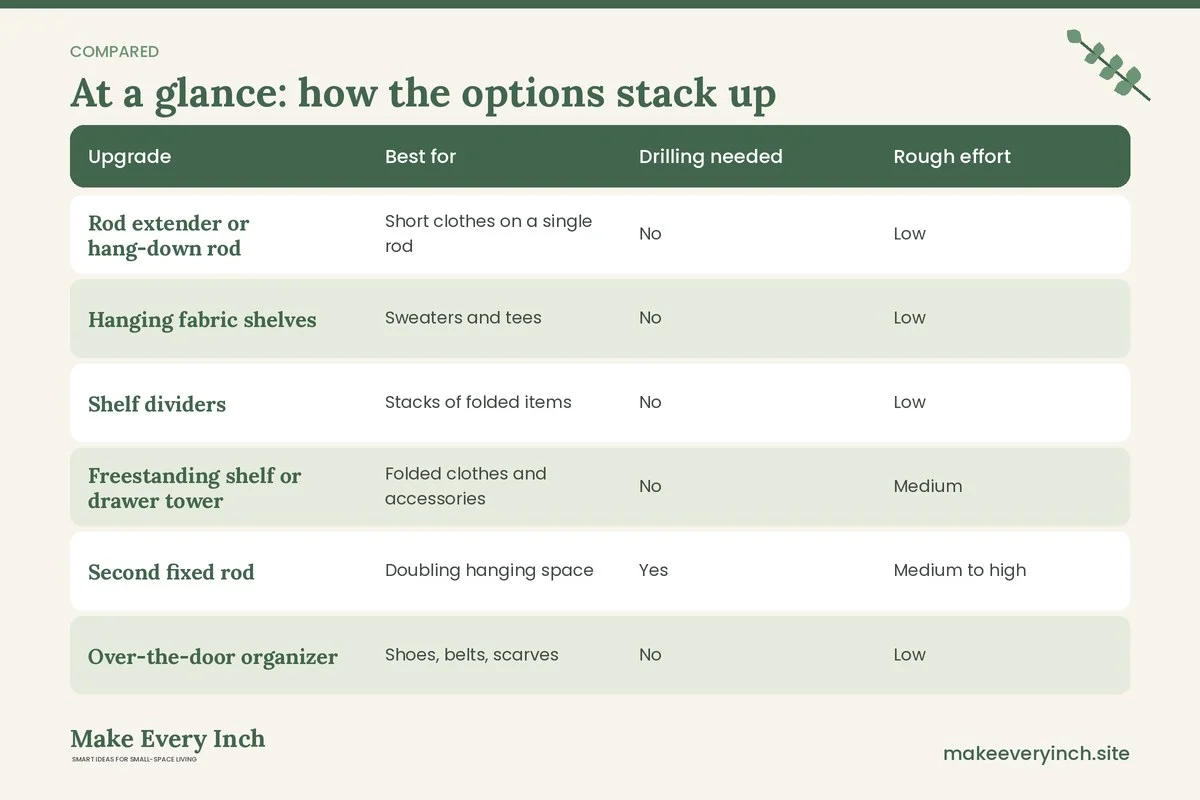
The table below compares the most common upgrades. Use it to decide where to start.
| Upgrade | Best for | Drilling needed | Rough effort | Watch out for |
|---|---|---|---|---|
| Rod extender or hang-down rod | Short clothes on a single rod | No | Low | Rod load limit |
| Hanging fabric shelves | Sweaters and tees | No | Low | Must hang straight and not sag |
| Shelf dividers | Stacks of folded items | No | Low | Shelf strength |
| Freestanding shelf or drawer tower | Folded clothes and accessories | No | Medium | Anchor tall units |
| Second fixed rod | Doubling hanging space | Yes | Medium to high | Permission and studs |
| Over-the-door organizer | Shoes, belts, scarves | No | Low | Door clearance and weight |
| Pull-out bins on wheels | Deep corners | No | Low | Floor space |
| Floor rack for shoes | Shoes and bags | No | Low | Do not block the track |
Anchoring and safety
A closet may seem like a quiet part of the home, but it holds weight and often small children want to climb in. Keep these points in mind.
- Anchor tall units. Any freestanding shelf, dresser or tall drawer tower inside or beside a closet should be anchored to the wall, because a loaded unit can tip. This matters most where children live. Use the hardware the unit supplies, and ask permission before drilling.
- Respect weight limits. Rods, shelves and doors all have limits. Do not exceed the maker’s rating, and spread heavy loads evenly.
- Do not drill in a rental without permission. Use tension, hanging and freestanding options first.
- Cords and lights. Keep any electrical cords out of reach, and use battery lights that are rated for indoor use. Do not leave a closet light on in contact with fabric, and ensure hot bulbs never touch clothes.
- Ventilation. A packed closet traps damp air. Leave a gap between clothes, and open the doors regularly. If you notice a musty smell, check for moisture on the walls.
- Chemicals and moth control. Mothballs and many insect products contain strong chemicals. Keep them away from children and pets, store them according to the label, and avoid using them in a small closed space without ventilation. Cedar blocks and lavender sachets are gentler options, though they work best for a mild refresh and not as a cure. Wash and dry woolens before storing them.
- Paint and finishes. If you repaint or seal a shelf, choose a low-VOC product, ventilate while you work and let it cure fully before returning clothes to the closet.
- Step stools. Use a stable stool on a flat floor, and never stand on shelves or bins.
Three example reach-in closets
A 4 foot closet with sliding doors in a rental bedroom
This closet is 48 inches wide and 24 inches deep, with a single rod at 70 inches. The owner hangs mostly shirts and trousers. Add a hang-down extender on the left half of the rod, which turns that side into two levels of shirts. On the right half, leave the rod single for coats and dresses. Place a stack of hanging shelves beside the coats for sweaters, and put a low shoe rack on the floor. Because the doors slide, the right half is blocked half the time, so the coats live there, since they are used less often. Total effort: an afternoon and no drilling. The renter needs no permission, because every item hangs or stands.
A 6 foot bifold closet shared by two people
A wider closet of 72 inches shared by two people calls for a clear split down the middle. Each person gets 36 inches. Use a center support under the rod so it will not sag. On each side, put shelf dividers in the top shelf and a basket for accessories. Use the deep corners for off-season bins on wheels, one for each person. Hang a slim fabric organizer on the inside of each bifold panel only if the panel can take the weight. Otherwise use stick-on hooks for belts. A freestanding drawer unit on the floor in the left corner replaces a bedroom dresser, anchored to the wall.
A 3 foot hinged-door closet for a child or a teen
A narrow closet of 36 inches suits a young person’s clothes. Set the rod lower at about 48 to 54 inches so the child can reach it, and add a second rod beneath it at about 24 to 28 inches for pants and shirts. Use an over-the-door organizer with pockets for shoes and hats. Keep the top shelf for off-season items in labeled baskets, and place a step stool nearby for an adult to reach it. Anchor any drawer unit, and keep mothballs and cords out of the closet entirely. For a growing child, adjustable hardware lets you move the rod up over the years.
A simple weekly routine
An organized reach-in stays that way only if the habits support it. Use this short routine.
- Daily: return worn items to their zone, not onto the floor or the bed. Hang tomorrow’s outfit on a door hook.
- Weekly: pull out any piles, refold what slipped and put stray hangers back on the rod.
- Monthly: rotate the daily and weekly zones, and check shelves for sagging. Remove anything you did not wear.
- Seasonally: swap the seasonal bins from the deep corners to the front and back, wash items before storage and refresh any cedar blocks.
- Yearly: empty the whole closet, clean the floor and the track, and ask whether each item earns its space. For a method, see our post on decluttering rules for small homes.
Common mistakes in a reach-in closet
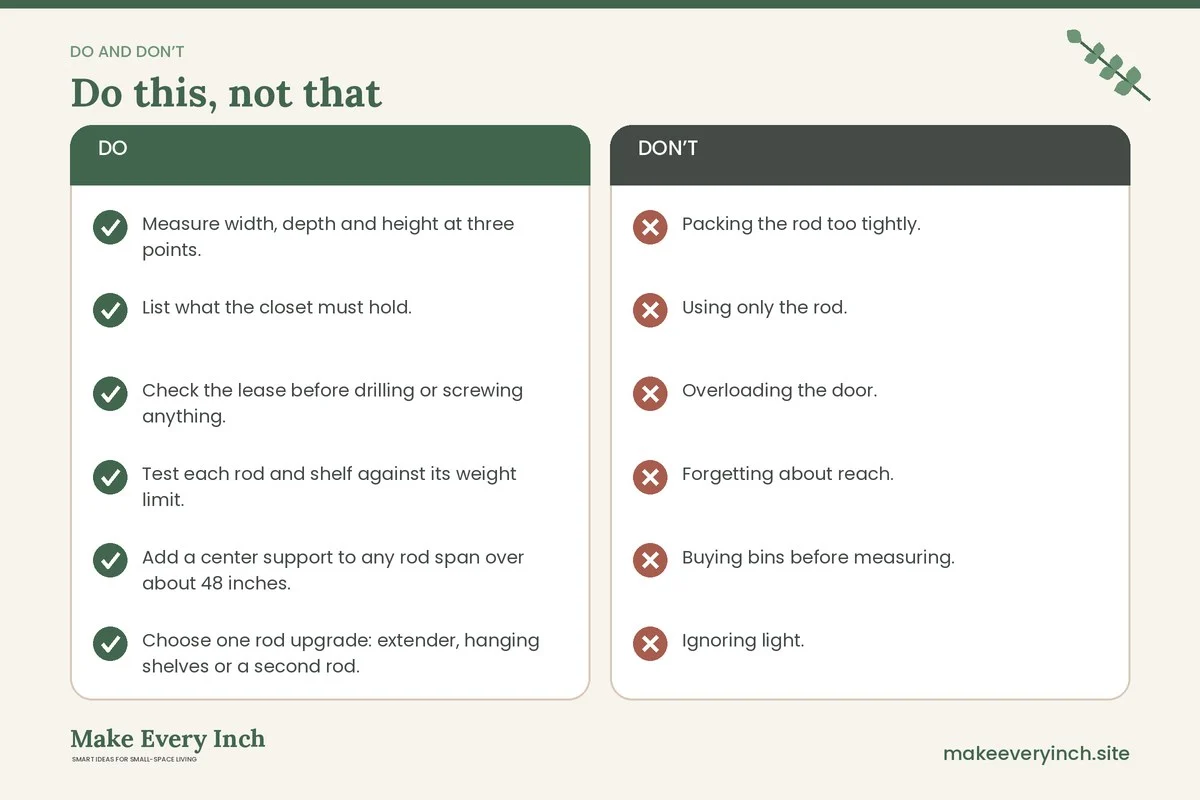
- Packing the rod too tightly. Clothes that cannot move get wrinkled and mildewed.
- Using only the rod. The shelf, floor, doors and corners hold as much as the rod if you plan them.
- Overloading the door. Racks that are too heavy sag the door or jump the track.
- Forgetting about reach. If you cannot reach it, you will not use it.
- Buying bins before measuring. A bin that does not fit the shelf wastes space and money.
- Ignoring light. A dark closet hides clothes. A small battery light changes the whole space.
- Skipping the anchor. A tall tower inside a closet is easy to forget, and it is the item most likely to tip.
Reach-in closet checklist
- Measure width, depth and height at three points.
- List what the closet must hold.
- Check the lease before drilling or screwing anything.
- Test each rod and shelf against its weight limit.
- Add a center support to any rod span over about 48 inches.
- Choose one rod upgrade: extender, hanging shelves or a second rod.
- Add shelf dividers and matching baskets.
- Set up the deep corners with labeled bins on wheels.
- Fit an over-the-door organizer only if the door can take it.
- Divide the closet into daily, weekly, seasonal, floor and door zones.
- Anchor every tall freestanding unit.
- Store chemicals and cords out of reach of children and pets.
- Set a weekly reset and a seasonal swap.
FAQ
How do I organize a small reach-in closet with only one rod?
Add a hang-down extender or a set of hanging shelves to use the empty space under short clothes, then group items by type. If you own the space or have written permission, a second rod set at mid height doubles the hanging space.
What is the best way to use the deep corners of a reach-in closet?
Store rarely used items there in labeled bins, ideally on wheels so you can pull them out. Keep daily clothes in the middle where you can reach them easily.
Can I organize a reach-in closet without drilling?
Yes. Hang-down rods, hanging shelves, over-the-door organizers, freestanding shelves and drawer units all work without drilling. For more ideas, read our post on no-drill storage ideas for renters.
How much weight can a closet rod hold?
It depends on the rod material, its length and its brackets. Check the manufacturer’s rating, add a center support on long spans and spread the load evenly. If a rod sags, take weight off it.
What should go on the shelf above the rod?
Light, lower-use items such as hats, spare linens and folded sweaters in baskets. Use dividers to keep stacks upright, and do not overload the shelf.
How do I organize sliding closet doors?
Remember that only half the closet is reachable at a time. Put daily items in the center of each reach zone and seasonal items behind the fixed side. Avoid heavy racks on the doors.
Are mothballs safe in a small closet?
They contain strong chemicals and are best avoided in a small closed space, especially around children and pets. Wash clothes before storage, use airtight bins and consider cedar for a mild option, following the label for any product.
Keep going: Keep going with our pillar on small closet ideas, the guide to small bedroom storage ideas and the roundup of small space organization ideas.
Save this guide for later
Pin the ideas you like to Pinterest so you can come back to them when you plan your space.