Renter Friendly Small Balcony Ideas
Quick answer: The best renter friendly small balcony ideas start with rules, not décor. Read your lease and building regulations, check what the railing may hold, stay within the weight limit, keep drains clear, secure everything against wind, and avoid open flames if they are prohibited. Then add foldable seating, a rug, lightweight planters, a clip-on or freestanding privacy screen and battery or solar lights.
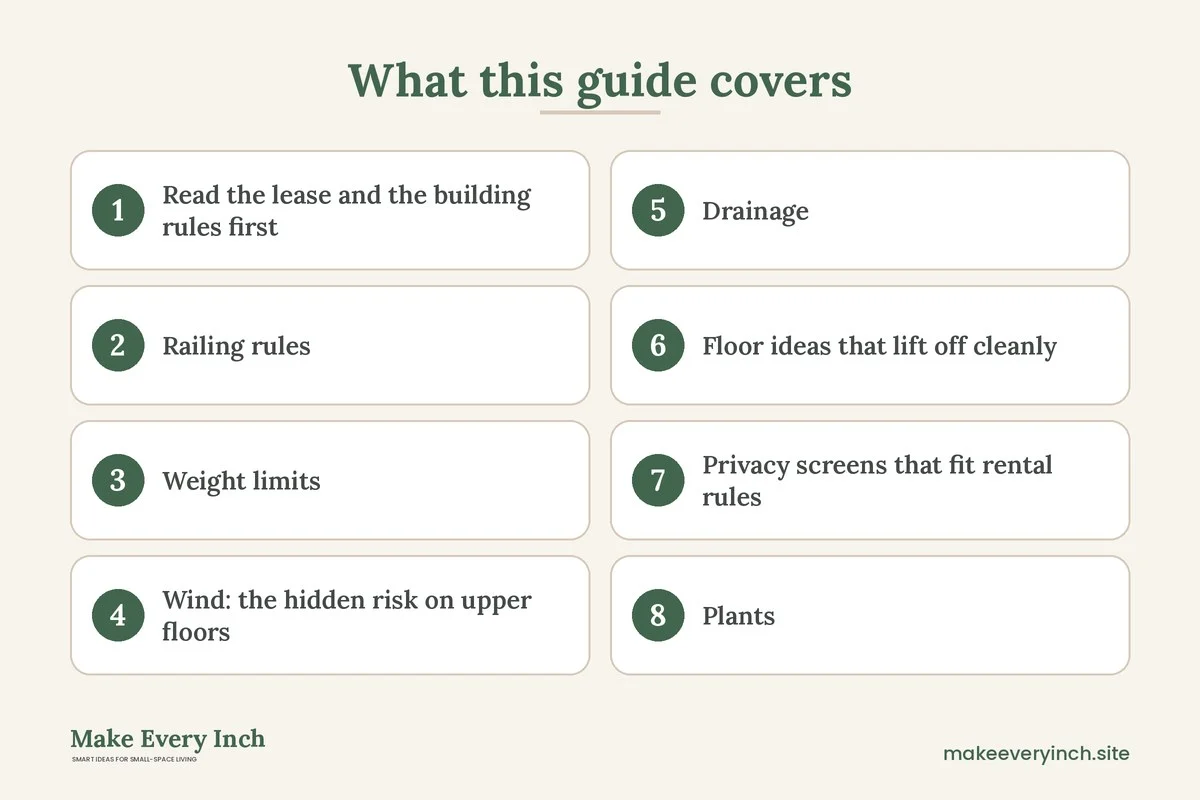
Renter friendly small balcony ideas are different from indoor décor ideas because a balcony is a shared, exposed and sometimes regulated part of the building. It faces wind, rain and sun, it sits above other people, and it often falls under rules about railings, weight, grills and what you may see from the street. A small balcony can still become a calm outdoor room. This guide begins with the checks that protect you and your deposit, then covers railing rules, weight limits, wind, drainage, privacy screens, plants, seating, lighting, a materials table, three example balconies, a seasonal routine and a checklist. For the wider topic, see our hub guide on renter-friendly apartment decorating ideas, our post on renter friendly entryway organization ideas and our guide to no-drill storage ideas for renters.
Read the lease and the building rules first
Balconies are often covered by more rules than any other part of a rental. Start with your lease, then look for a separate set of house rules, a building handbook or a notice board in the lobby. Look for anything about balconies, patios, railings, grills, plants, hanging items, satellite dishes, flags, storage and noise. If the rules are not clear, ask your landlord or property manager, and ask in writing so you keep a record.
Common rules include:
- No open flames. Many buildings ban charcoal and gas grills, candles and fire pits on balconies, and local fire codes can add restrictions. If open flames are prohibited, do not use them. Choose battery candles and electric or no-flame options instead.
- Railing limits. Some buildings do not allow anything to be hung or clamped on the railing, and others only restrict items that hang outside the line of the balcony.
- Storage limits. Buildings often forbid storing bulky items, bikes or boxes on a balcony, for appearance and fire-safety reasons.
- Appearance rules. Some require uniform screens or specific colors, or ban banners and hanging laundry.
- Water rules. Watering plants can send water onto balconies below, and many buildings limit it. Others forbid wall drilling and require that you protect the floor.
- Quiet hours. A balcony conversation travels, so respect the building’s quiet times.
Document the condition of the balcony before you begin. Photograph the floor, the railing, the walls, the door track, the drain and any stains or cracks. These photos protect your deposit, because balcony floors often show wear that was there when you arrived. If you see damage, cracking concrete, loose railings or a blocked drain, report it to your landlord in writing right away. Do not attempt repairs yourself.
Railing rules: what you can and cannot do
The railing is the part of the balcony most likely to be restricted, and also the part where mistakes can hurt someone below. Before you clip, hang or tie anything to it, check these points.
- Permission. If your lease or house rules are unclear, ask. Some buildings allow planters that sit inside the railing but not ones that hang outside it.
- Inside, not outside. Items that hang on the outer face of a railing can fall and strike a person or a neighbor’s balcony. Keep planters, hooks and clip-on shelves on the inner side, and keep them secured.
- Railing type. Metal bars, glass panels, solid walls and wooden rails behave differently. A glass or solid panel cannot take clamps designed for bars. A thin metal rail may bend under a heavy planter.
- Height and gaps. Building codes set minimum railing heights and maximum gaps between bars. Do not stack furniture near the railing in a way that makes it climbable, particularly if children or pets use the balcony.
- Climbing risk. Keep chairs, tables and planters a few feet back from the railing where you can, so a child cannot use them as a step.
- Attachment method. Use no-drill clamps, rail-mounted hooks with tension, ties and strap fixtures. Do not drill into a railing, a wall or a ceiling without written permission, and do not use hardware that damages the finish.
If your railing is off-limits, the alternative is to place everything on the floor. A standing planter, a tall freestanding screen or a rolling cart can do the same job without touching the rail.
Weight limits: more important than they look
A balcony is a platform with a finite load capacity, and the limit is rarely written in the lease. The structure, the age of the building and the local code all affect it. Ask your landlord or property manager whether there is a stated limit. If they do not know, treat the balcony conservatively.
Think about weight in three categories:
- People and furniture. A few people sitting on light chairs is within the normal range. A crowd, or a heavy table and chairs, may not be.
- Wet things. Soil, water and rain add a surprising amount of weight. A large planter filled with wet soil can weigh far more than the empty container suggests.
- Concentrated loads. A heavy object on a small footprint puts more stress on one spot than the same weight spread across a bigger area. Use a wide base, such as a plant caddy or a tray, to spread the load, and avoid putting the heaviest pieces on the edge.
Practical rules for a small balcony:
- Use lightweight containers made of fabric, resin or fiberglass instead of stone or concrete.
- Fill the bottom of a large planter with lightweight material, such as a layer of empty plastic bottles or foam, and use lightweight potting mix.
- Place heavy items against the building wall, near the structural supports, rather than at the middle of the floor or on the edge.
- Limit the number of people on a small balcony to what feels stable, and do not jump or dance on it.
- If you see cracks, rust, sagging or rotting wood, stop using the balcony and report it right away.
- Never use a balcony for a hot tub, a large water feature or a heavy storage load.
Wind: the hidden risk on upper floors
Wind speed rises with height, and a sixth-floor balcony can face gusts that a ground-floor patio never sees. Anything light enough to move will move, and anything that falls can hurt someone below. Plan for wind from the start.
- Weigh down the base. Choose furniture with a wide, low profile. Put sandbags or weights inside planter bases or on cushions’ undersides, and avoid tall, narrow objects that tip.
- Use windproof screens. A solid screen acts like a sail. A mesh screen or a slatted panel lets some air through and reduces the force. Look for products described as mesh or permeable.
- Tie things down. Secure umbrellas, lightweight chairs and cushions with ties or storage when it is windy. A table umbrella can lift off like a kite, so many renters skip them on high floors and use a shade sail or an awning only with permission.
- Bring cushions and small pieces inside. Wind and rain damage them quickly, and they can blow over the edge.
- Avoid loose decorations. Wind chimes, lightweight flags and loose banners can fall or annoy neighbors. Many buildings ban them anyway.
- Check the forecast. Take in small items before storms. A planter that sits safely in summer can become a hazard in a winter gale.
Drainage: protect the floor and your neighbors
A balcony floor is designed to shed water, and it usually does so through a slope toward a drain, an edge or a scupper. If you block it, water pools, soaks into walls or drips on the balcony below.
- Keep the drain clear. Leaves, soil and debris block it quickly. Check it each week and remove debris with gloves.
- Do not seal it with a rug. A solid rug or an interlocking deck tile layer can trap water. Choose outdoor rugs with a breathable backing, and lift them periodically to let the floor dry.
- Use saucers and trays. Each planter needs a saucer. Empty the saucers after rain, and do not let them overflow.
- Water carefully. Water plants slowly, and stop when the water first runs out of the bottom. A watering can with a narrow spout is better than a hose.
- Elevate containers slightly. Plant feet or caddies lift pots a half inch to an inch so air and water pass underneath. Use rot-resistant ones.
- Watch for staining. Rust from metal pots and dye from dark cushions can mark light concrete. Place trays under metal pieces.
- Do not wash down the floor. Hosing a balcony sends dirty water to the neighbor below. Sweep first and mop with a small amount of water.
Floor ideas that lift off cleanly
The floor is where the most visible change happens, and the place where you must be the most careful about damage and drainage.
- Interlocking deck tiles. Click-together tiles with open slats let water through and lift off at move-out. Check that they are allowed and that the drain stays accessible. Lift a few tiles every month to check beneath.
- An outdoor rug. A rug in a weather-resistant fabric gives color and softens the floor. Choose one with a breathable backing, and roll it up in heavy rain or in winter.
- Artificial grass squares. These lie flat and drain through holes, but check them for compatibility with your drain and your building’s rules. Some buildings ban them.
- Bare floor with furniture. If the floor is in good condition, leave it. Rubber feet protect it and keep the look simple.
Avoid paint, stain, adhesive tiles and sealants unless your landlord gives written permission. They can be difficult to remove and are likely to count as damage.
Privacy screens that fit rental rules
Privacy screens are the most requested balcony upgrade, and also the one most likely to run into a rule. Check what your building allows before you buy.
- Freestanding screens. A folding panel, a trellis in a planter or a tall slatted screen on a stand touches only the floor. It is the lowest risk for the railing and the structure. Add weight at the base to resist wind.
- Clip-on or tie-on screens. Fabric or mesh screens attach to a railing with ties or clips. Use them only if railing attachments are allowed. Choose a mesh pattern that lets air through.
- Bamboo or reed rolls. These roll up and tie on, and they look natural. They catch wind, so tie them at many points and take them down in storms.
- Plants as a screen. A row of tall planters with grasses, bamboo or climbing plants on a trellis gives privacy and softens the view. Choose non-invasive species and mind the weight.
- Curtains on a tension rod. If the balcony has a roof and walls, outdoor curtains on a tension rod can add privacy. They need tying back when it is windy, and they must not block exits.
- Color and height. A screen 4 to 6 feet high usually blocks sight lines when you are seated. Light colors feel more open than dark ones.
Do not block the building’s required egress, fire escape or any shared access. Do not cover the whole railing with solid material if the building prohibits it, because it can cause a wind load and a visual rule violation.
Plants: choose for light, weight and wind
Plants turn a small balcony into a garden room. They also bring the greatest weight, water and wind concerns, so choose them with care.
- Sun first. Observe how many hours of direct light the balcony gets. A north-facing balcony suits shade plants, such as ferns or hostas, while a south-facing one suits herbs and sun lovers.
- Wind tolerance. Choose compact, flexible plants such as ornamental grasses, lavender and rosemary instead of large-leaf plants that tear in the wind.
- Lightweight containers. Resin, fabric grow bags and fiberglass weigh far less than ceramic or stone.
- Self-watering pots. A reservoir reduces watering frequency and the risk of overflow, which suits renters who travel.
- Vertical growing. A freestanding trellis or a tiered shelf gives more plants per square foot. Anchor it against the wind.
- Edible plants. Herbs, salad greens and cherry tomatoes grow in containers. They need regular water, so plan for drainage.
- Safety. Some plants are toxic to pets and children. Check before you buy if either uses the space.
- Pests. Clean up fallen leaves and avoid standing water, which attracts insects.
- Winter plan. Move tender plants indoors, or choose hardy ones and insulate the pots in cold climates.
Seating, storage and lights
Seating
Choose folding or stackable pieces. A bistro set with two chairs and a small round table fits a balcony of about 4 by 8 feet, with a clear walkway of about 24 to 30 inches. Fold the chairs when you do not use them. A bench with storage inside holds cushions, and a floor cushion with a pouf takes little room. Avoid wide, heavy sofas that load the floor and block movement.
Storage
A deck box or a weatherproof bench with a lid keeps cushions dry. Keep the balcony free of bulky storage if the building forbids it, and never block a door or a path to the exit. A slim, vertical rack against the wall holds tools and watering cans.
Lights
Use battery or solar string lights, lanterns with LED candles and plug-in lights only if the outdoor outlet is yours to use and is rated for outdoor use. Do not run extension cords through a door gap that cannot close, and do not use indoor-only cords outside. Our guide to renter friendly lighting ideas lists no-wiring options for indoors, and many of them have outdoor versions.
Fire safety
If your building bans open flames, that includes charcoal and gas grills, fire pits, tiki torches and real candles. Even if it does not, a balcony close to a building is a risk, so keep any flame away from railings, plants and fabric. Use battery candles and electric heaters rated for outdoor use only if the lease and the building allow them. Never use a gas patio heater or a barbecue indoors or under a roof, because of fire and carbon monoxide risks. Keep a clear path to the door, and do not store flammable liquids or gas cylinders on the balcony.
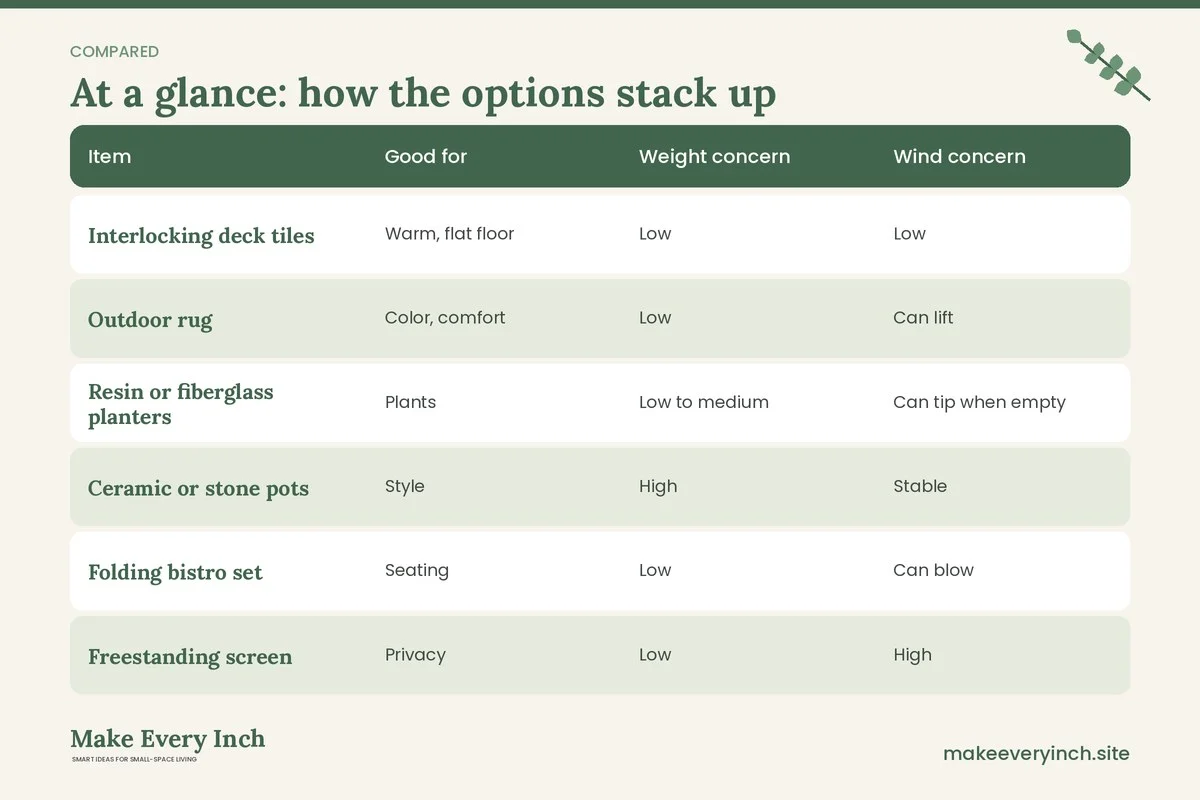
Comparison of materials and what to watch for
| Item | Good for | Weight concern | Wind concern | Watch out for |
|---|---|---|---|---|
| Interlocking deck tiles | Warm, flat floor | Low | Low | Drain access, rules, mold underneath |
| Outdoor rug | Color, comfort | Low | Can lift | Trapped water, rolling up in winter |
| Resin or fiberglass planters | Plants | Low to medium | Can tip when empty | Weight when wet |
| Ceramic or stone pots | Style | High | Stable | Load on the floor |
| Folding bistro set | Seating | Low | Can blow | Lock chairs, fold when not in use |
| Freestanding screen | Privacy | Low | High | Needs weight at the base |
| Mesh railing screen | Privacy | Low | Medium | Railing rules, ties |
| Solar string lights | Mood | None | Low | Secure the strand |
| Deck box | Storage | Medium when full | Low | Heavy contents, blocking the exit |
| Vertical planter | Greenery | Medium | Medium | Wet soil weight, anchoring |
Three example balconies
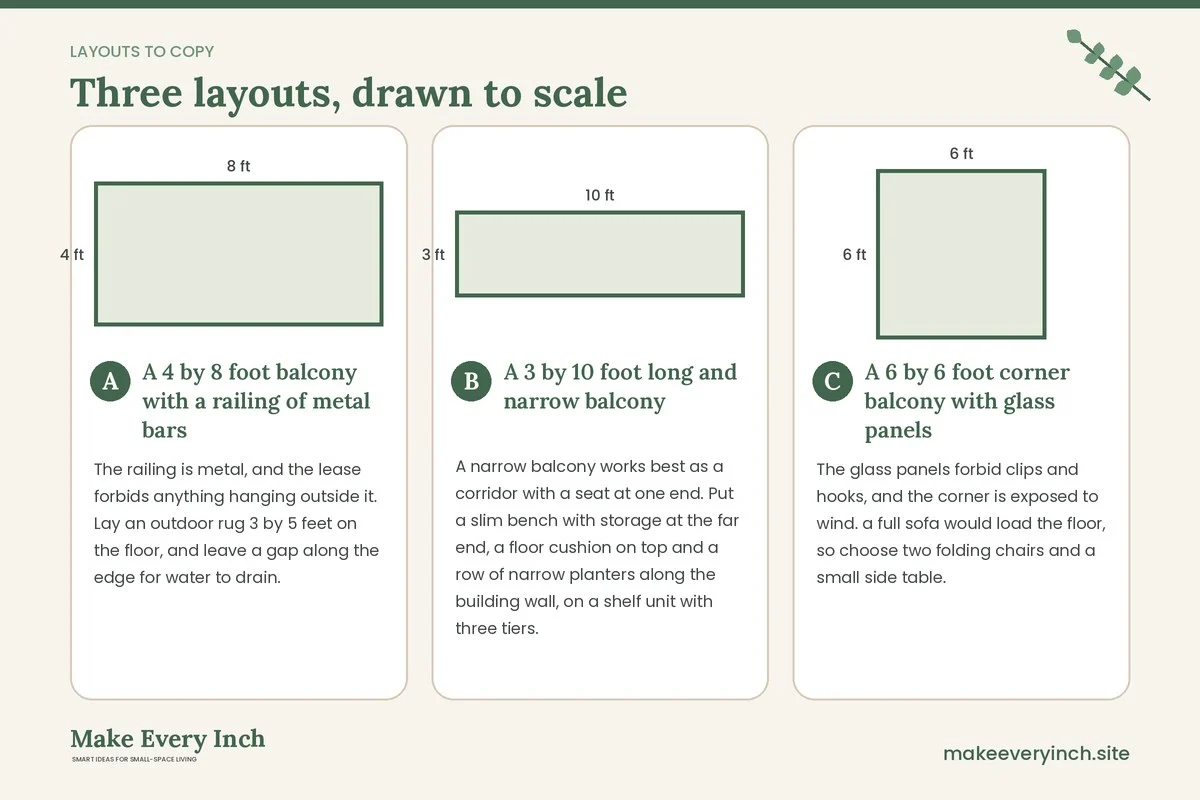
A 4 by 8 foot balcony with a railing of metal bars
The railing is metal, and the lease forbids anything hanging outside it. Lay an outdoor rug 3 by 5 feet on the floor, and leave a gap along the edge for water to drain. Place a folding bistro table and two chairs against the building wall, so the path to the railing stays clear. Add a freestanding mesh screen 5 feet high at one side for privacy, with a sandbag at the base. Set two lightweight resin planters inside the railing, on saucers, with herbs and grasses. Use solar lights tied to the screen frame. The result adds seating, greenery and privacy, while keeping weight low and the drain clear.
A 3 by 10 foot long and narrow balcony
A narrow balcony works best as a corridor with a seat at one end. Put a slim bench with storage at the far end, a floor cushion on top and a row of narrow planters along the building wall, on a shelf unit with three tiers. Keep the middle 24 inches clear. Because the balcony is narrow, use only vertical items and do not store anything on the floor in the walkway. A roll-up bamboo screen, tied at the top and the bottom, gives privacy, and you roll it up in strong wind. Check that the shelf unit is stable, and keep the heavy pots on the bottom shelf. The balcony becomes a long green nook.
A 6 by 6 foot corner balcony with glass panels
The glass panels forbid clips and hooks, and the corner is exposed to wind. a full sofa would load the floor, so choose two folding chairs and a small side table. Place a tall freestanding trellis in a planter on each side, with climbing plants for privacy. The trellis stands against the wall, with weights in the base. Use a rug to define the area. Because glass shows water spots, keep the planters on saucers and clean after rain. In strong wind, fold the chairs and bring the cushions inside.
A seasonal routine for a rental balcony
- Spring: check the floor, railing and drain for damage. Photograph anything you find and report it. Clean the surfaces and start planting.
- Summer: water in the cool of the morning or evening. Move plants if the afternoon sun scorches them. Keep the drain clear and empty saucers after storms.
- Autumn: clear leaves and debris every week. Bring in tender plants, cushions and small pieces before the first cold nights.
- Winter: protect or remove containers that can crack in a freeze, roll up the rug, and keep the doorway and drain free of snow and ice. Do not use salt or chemical melters on a surface unless the building allows it.
- Move-out: remove everything, sweep, mop lightly and photograph the floor, railing and drain.
Mistakes renters make on balconies
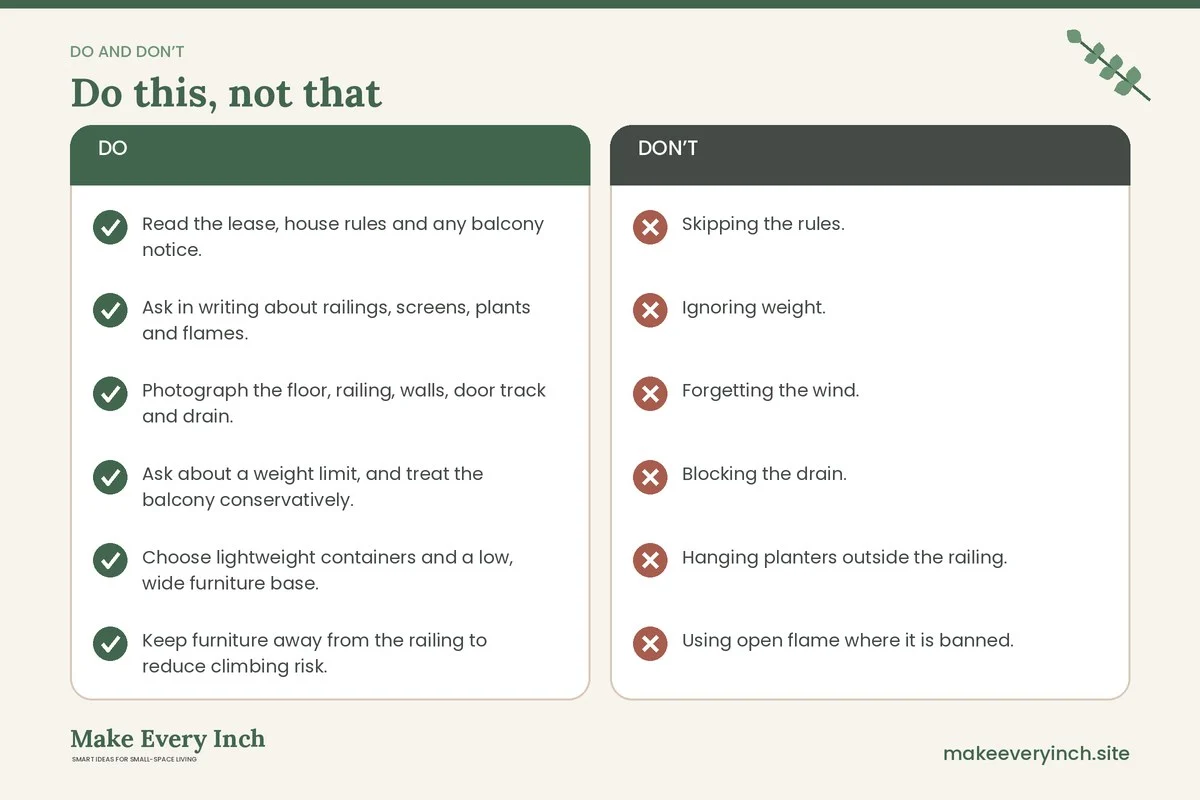
- Skipping the rules. A single fire-safety or railing violation can lead to a warning or a fine.
- Ignoring weight. Wet soil and big pots add up fast.
- Forgetting the wind. Light furniture, umbrellas and cushions can fall to the ground.
- Blocking the drain. Standing water can damage the building and annoy the neighbors below.
- Hanging planters outside the railing. They can fall, and many buildings ban them.
- Using open flame where it is banned. Candles, grills and fire pits are the most common rule breakers.
- Choosing a solid screen for a windy site. A solid panel acts like a sail.
- Not documenting the starting condition. Without photos, you may be charged for old stains or cracks.
Budget and shopping approach
Start with one or two pieces and add as you learn how the space behaves. Second-hand markets often have folding chairs, bistro tables and plant stands, and fabric grow bags and resin pots are an inexpensive way to start a garden. Look for pieces that fold, stack or move, because your next balcony may be a different size. For more ideas, see our posts on small apartment decor under 100 and thrifted apartment decor ideas, and use vertical storage ideas to get more from a narrow footprint.
Renter balcony checklist
- Read the lease, house rules and any balcony notice.
- Ask in writing about railings, screens, plants and flames.
- Photograph the floor, railing, walls, door track and drain.
- Ask about a weight limit, and treat the balcony conservatively.
- Choose lightweight containers and a low, wide furniture base.
- Keep furniture away from the railing to reduce climbing risk.
- Do not hang items outside the railing.
- Choose a mesh or slatted screen and weight the base.
- Keep the drain clear and use saucers under all planters.
- Use a rug with a breathable backing.
- Bring in cushions and small items before storms.
- Use battery or solar lights, and no open flame if prohibited.
- Keep the exit and door clear.
- Do not drill, paint or seal without permission.
- Take final photos at move-out.
FAQ
Can I put planters on my balcony railing in a rental?
Only if your lease and building rules allow it. Many buildings ban planters that hang on the outside, because they can fall. A planter on the floor inside the railing is usually safer. Ask your landlord in writing.
How much weight can a small balcony hold?
It depends on the building, its age and local codes, and the limit is not usually written in the lease. Ask your landlord or property manager, and use lightweight containers and furniture. Watch for cracks or sagging, and stop using the balcony if you see them.
What is the best privacy screen for a rental balcony?
A freestanding screen or a row of tall planters with a trellis causes the least risk to the railing. A mesh screen tied to the railing works only if the building allows it. Choose open weaves for windy sites.
Can I have a grill on my apartment balcony?
Many buildings and local fire codes ban charcoal and gas grills on balconies. Check your lease and local rules. If they are banned, use an indoor option instead of ignoring the rule.
How do I stop things from blowing away?
Use heavy bases, tie down lightweight furniture, bring in cushions before storms, and choose mesh screens over solid ones. Avoid loose decorations and umbrellas on high floors.
How do I stop water from pooling?
Keep the drain clear, use rugs with breathable backing, lift deck tiles occasionally and use saucers under planters. Do not hose the floor.
What can I do if my balcony floor is ugly?
Cover it with removable deck tiles or an outdoor rug if the lease allows, or add plants and furniture to draw attention. Do not paint or seal it without written permission. Our hub guide on renter-friendly apartment decorating ideas covers more removable approaches.
Keep going: Keep planning with our guides to cozy apartment ideas, security deposit safe apartment upgrades and budget renter upgrades.
Save this guide for later
Pin the ideas you like to Pinterest so you can come back to them when you plan your space.