15 Laundry Storage Ideas When You Have No Laundry Room
Quick answer: Laundry storage when have no laundry room works best when you split the job into three zones: a hamper for dirty clothes where you undress, a small supply kit near the washer or in a closet, and a drying and folding spot you can set up and put away. Use vertical space, closed containers for detergent, and permission-friendly fixtures. Keep supplies away from children and pets, and never block vents.
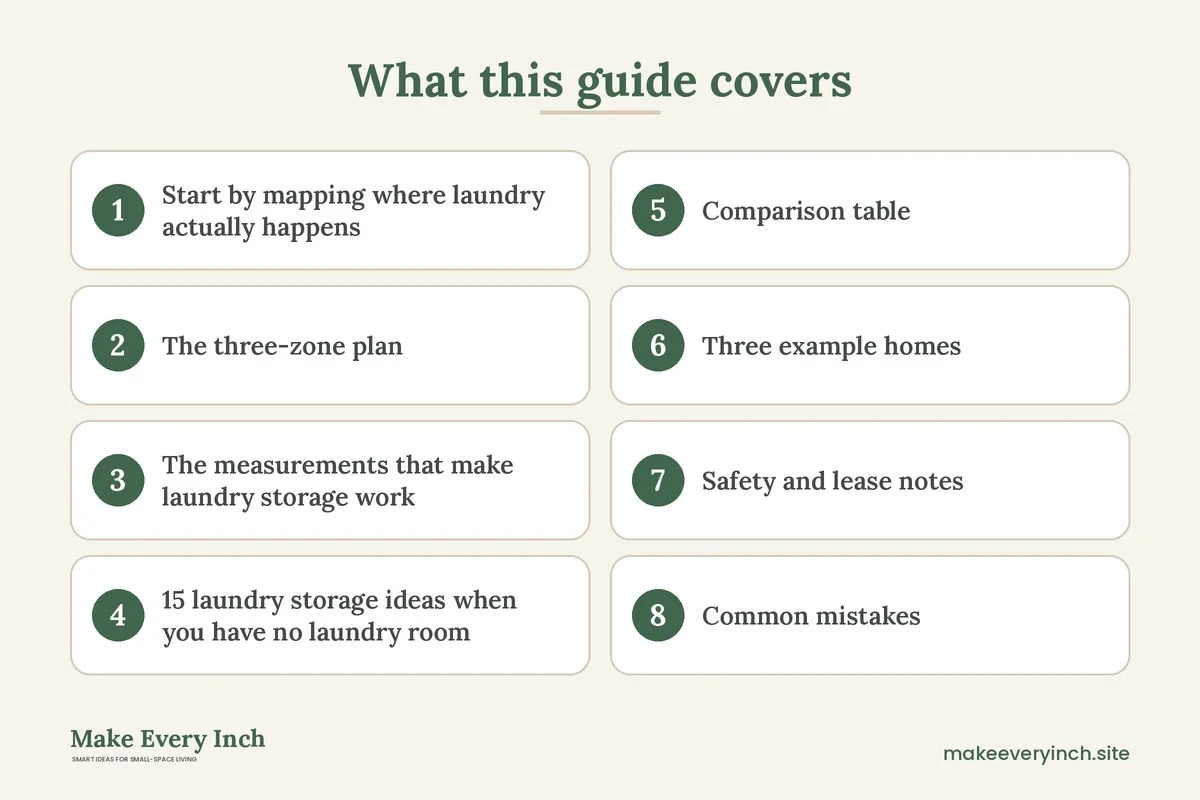
Laundry storage when have no laundry room is a common problem in studios, older apartments and tiny homes, where the machines may be in a basement, a shared building room or a corner of the kitchen, or where you carry everything to a laundromat. Without a dedicated room there is no shelf above the machines and no counter, so hampers, detergent, dryer sheets, stain remover and clean stacks all end up in the bedroom, the bathroom or on the floor. This guide shows how to organize laundry when the room does not exist. It covers a three-zone plan, the measurements that matter, 15 storage ideas, a table, three example homes, safety checks, mistakes and a checklist. For the main topic, read our pillar guide on small laundry room ideas, and for the folding step in particular see our post on a small laundry room folding station.
Start by mapping where laundry actually happens
A home with no laundry room still has a laundry route. Trace it for one week. Where do the dirty clothes pile up? How do they reach the machine, whether that is in the building basement, a closet, a shared room or the laundromat? Where does a clean load sit before it is folded? Where do clothes get put away?
Most households discover three weak points. The first is the dirty hamper, which is either in the way or too far from where clothes come off. The second is the carry, which is awkward when the basket is large and the stairs are narrow. The third is the clean pile, which sits on a chair or a bed for days. Each weak point suggests a different fix, so plan the three separately.
If you use a shared or off-site laundry, add a fourth item: the kit you carry. A tote with detergent, a stain stick, quarters or a payment card, and a small bag for lint should live in one spot near the door so it is always ready.
The three-zone plan
Zone 1: Collect
This is where dirty clothes go. Put the hamper where clothes come off, which is usually the bedroom or the bathroom. Two bins are better than one if you want to separate lights from darks. For a household of two, a pair of 20 to 30 inch tall hampers or a divided one is a good starting size. A hamper that holds one load is easier to carry than one that holds three.
Zone 2: Supplies
Detergent, stain remover, dryer balls and a mesh bag for delicates belong in a single container, a tote or a small cabinet. The container should sit near where you start the wash, or by the door if you leave the home for laundry. Keep it within reach of an adult but out of reach of small children and pets.
Zone 3: Dry, fold and put away
Plan a drying rack that folds, a folding surface that comes out when needed, and a short route to the closet or dresser. This zone is where no-laundry-room homes usually fail, because the drying rack stays up and the clean pile stays on a chair. A routine and a place for each step fixes it.
The measurements that make laundry storage work
- Hamper size: about 15 to 20 inches wide and 24 to 30 inches tall is a typical one-load size. A slim version for a tight bathroom can be 10 to 12 inches wide.
- Laundry bag or tote: sized so it can be carried with one arm, usually 20 to 24 inches long.
- Supply shelf depth: 8 to 12 inches holds bottles and boxes. 16 inches holds a basket.
- Over-the-door storage: most doors can hold a rack that is 4 to 6 inches deep without hitting the frame, but measure the clearance and check the door still closes.
- Folding drying rack: about 24 by 60 inches when open and 4 to 6 inches thick when closed, so it needs a slot of that size behind a door or beside a closet.
- Clear floor space: 30 to 36 inches in front of the rack so you can load and unload without bending awkwardly.
- Shelf height for detergent: keep heavy liquid bottles between knee and chest height to avoid lifting overhead.
15 laundry storage ideas when you have no laundry room
Dirty clothes and the hamper
1. A hamper in the closet
A tall, narrow hamper on the floor of a closet hides the pile. Choose one with a lid or a fabric top that closes. If your closet door has space, a hanging bag on the inside of the door works too. See our guide to small closet ideas for ways to find the space.
2. A divided hamper in the bedroom
Two compartments in one frame separate lights and darks. Pick one with a base that keeps the fabric off the floor, so it does not trap moisture.
3. A bag on a hook behind a door
A canvas bag hung from a hook behind the bedroom or bathroom door takes no floor space. Use a rated adhesive hook if you cannot drill, and do not overload it. For more ideas, see behind-the-door storage ideas for entryways, which use the same principle.
4. A rolling hamper that doubles as a carry cart
A hamper on wheels makes the trip to a shared laundry room easier, and tucks under a desk or console when not in use. Choose one with locking wheels, and make sure it fits through the door of your elevator or stairwell.
Supplies and tools
5. A caddy that carries everything
A tote with a handle holds detergent, a stain stick, dryer balls and a mesh bag. Keep it in the hallway closet or by the door. It also works for apartment buildings with a shared laundry room, since you can grab it and go.
6. A narrow rolling cart in a gap
A cart 6 to 8 inches wide can slide into a gap beside the fridge, the washer or a closet. Three tiers hold detergent, stain remover and a basket for dryer sheets. See our guide to best rolling kitchen carts for features to look for in a slim cart.
7. A bathroom shelf for supplies
Use the space above the toilet for stain remover and a small basket. See our guide to the best over the toilet storage for options. Keep cleaners in a closed container because bathrooms are damp and children can reach them.
8. A kitchen cabinet shelf
If you have an unused kitchen cabinet, a half shelf can hold laundry supplies. Keep them on a different shelf from food, in a closed bin, and read our post on how to organize laundry supplies in a small home.
9. A utility closet or a hall closet
Even a coat closet can host a laundry shelf. A shelf 10 inches deep at the top holds the tote, and a hook on the door holds a lint brush. For more, read our post on small utility closet organization ideas.
Drying and hanging
10. A folding drying rack that stores flat
A rack that folds to 4 to 6 inches thick stores between the wall and a wardrobe, or behind a door. Set it up in the bathroom or the living room on laundry day. Place it away from heaters and cords, and make sure the room is ventilated to avoid damp. See our guide to small laundry room drying rack ideas for rack styles.
11. A tension rod over the tub
A tension rod across the bathtub holds hanging items to dry. Check the weight, and do not hang heavy wet items on a rod rated for a shower curtain. Open a window or run the fan to prevent mold and mildew.
12. A ceiling-mounted pulley rack
In some homes, a ceiling rack lifts clothes out of the way. This usually needs drilling into a ceiling joist, so it is a choice for owners or for renters with written permission.
Clean clothes and folding
13. A fold-and-carry basket per person
One basket per person holds the stack from the dryer or the laundromat. It goes straight to the bedroom, and the owner puts it away. This avoids a communal pile on a chair.
14. A fold-down table or a slim console
A folding surface that stores flat solves the lack of a counter. See our post on a small laundry room folding station for heights and depths. A table about 24 by 36 inches works for most households.
15. A shelf in the closet for laundered stacks
Dedicated space for folded towels and sheets keeps the clean pile from spreading. See our guide to linen storage ideas without a linen closet for stackable solutions.
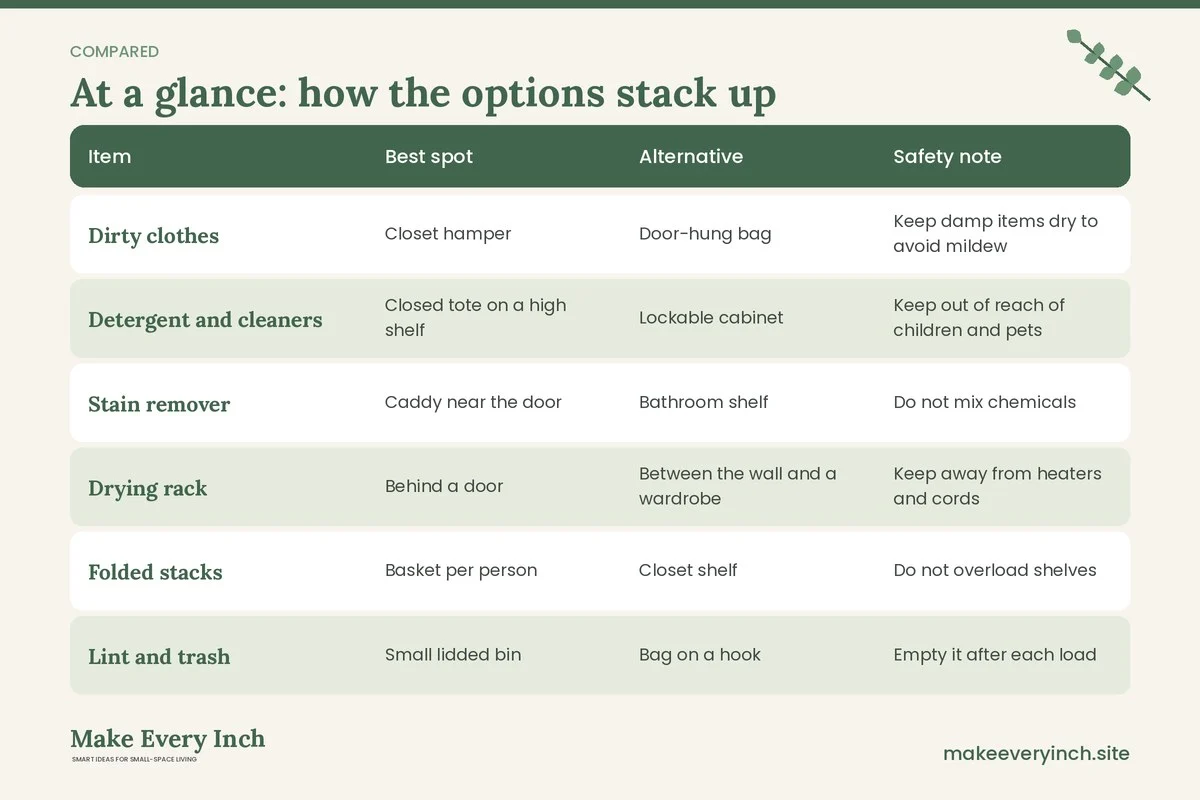
Comparison table: where each laundry item can live
| Item | Best spot | Alternative | Safety note |
|---|---|---|---|
| Dirty clothes | Closet hamper | Door-hung bag | Keep damp items dry to avoid mildew |
| Detergent and cleaners | Closed tote on a high shelf | Lockable cabinet | Keep out of reach of children and pets |
| Stain remover | Caddy near the door | Bathroom shelf | Do not mix chemicals |
| Drying rack | Behind a door | Between the wall and a wardrobe | Keep away from heaters and cords |
| Folded stacks | Basket per person | Closet shelf | Do not overload shelves |
| Lint and trash | Small lidded bin | Bag on a hook | Empty it after each load |
| Quarters or payment card | Pouch in the tote | Hook by the door | Keep out of sight if you share a hallway |
Three example homes
Example 1: A 400 square foot studio with a building laundry room
The machines are in the basement and the studio has a single closet. The plan is a tall, narrow hamper in the closet, a tote that holds detergent and a stain stick on a shelf by the door, and a rolling hamper for the trip. A folding drying rack lives behind the bathroom door. Folded stacks go into a basket per person and then into the dresser. The tote stays on a high shelf away from the cat. The household measures the elevator door before buying a cart.
Example 2: A one-bedroom with a washer in the kitchen
A compact washer sits under the counter, but there is no dryer and no laundry room. The supplies go in a narrow cabinet beside the washer. A tension rod in the bathroom holds drying items, and a folding rack opens in the living room for sheets. The household keeps a window cracked and runs the bathroom fan during drying. They read our guide to laundry room ideas in a kitchen for the safe clearances around the washer, and they keep outlets near the sink on a GFCI.
Example 3: A tiny house with a laundromat
A couple lives in a tiny house with no machines. The system is two collapsible hampers in the loft closet, one tote of supplies by the front door, and a rolling bag for the trip. They fold at the laundromat and bring the clothes home in labeled baskets. The tote has a stain stick and a small bag for lint, and the baskets live on a shelf in the closet. Heavy items are kept low. Anything tall, such as a hanging rack or a shelf, is anchored into studs, and the couple asked the owner before drilling.
Safety and lease notes
- Chemicals: store detergent pods, bleach and stain removers in a closed container on a high shelf or in a latched cabinet. Never mix cleaning products.
- Ventilation: if you dry clothes indoors, open a window or run a fan to prevent mildew. Keep the rack away from heaters and stoves.
- Electrical: keep cords and outlets clear of damp items. Outlets near water should be on a GFCI, and extension cords should not run across wet floors.
- Weight limits: over-the-door racks, tension rods and hooks have limits. Wet laundry is heavy, so stay under the rating.
- Anchoring: anchor tall shelves and wardrobes to the wall with the correct hardware, especially in homes with children.
- Lease: never drill without permission. Use freestanding pieces, adhesive hooks rated for the load, or tension rods if the lease bans holes.
- Floors and doors: keep walkways at 30 to 36 inches, and do not block exits or smoke detectors.
- Pets and children: close laundry bins and keep lint and small items such as socks out of reach, since they can be a choking or swallowing risk.
Common mistakes
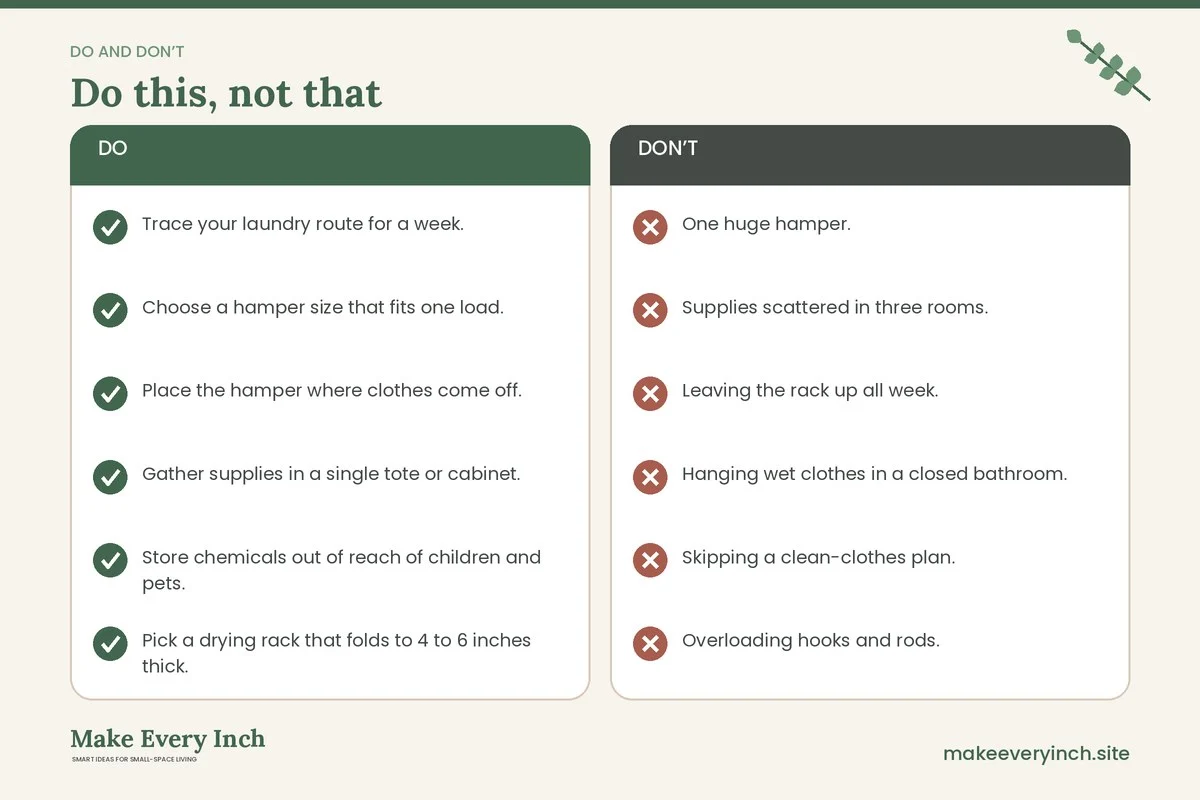
- One huge hamper. It is heavy and gets stuffed. Choose a size for one load.
- Supplies scattered in three rooms. A single tote is easier to find and carry.
- Leaving the rack up all week. Set a day to fold it away so it does not take over the room.
- Hanging wet clothes in a closed bathroom. Add ventilation to avoid mildew.
- Skipping a clean-clothes plan. Without a basket per person, the clean pile ends up on a chair.
- Overloading hooks and rods. Check the ratings.
Checklist
- Trace your laundry route for a week.
- Choose a hamper size that fits one load.
- Place the hamper where clothes come off.
- Gather supplies in a single tote or cabinet.
- Store chemicals out of reach of children and pets.
- Pick a drying rack that folds to 4 to 6 inches thick.
- Plan a fold surface that stores flat.
- Give each person a basket for clean stacks.
- Check weight ratings on hooks, rods and shelves.
- Get permission before drilling, and anchor tall pieces.
- Ventilate any room where clothes dry.
- Set a routine day for the full cycle.
FAQ
Where do I keep a laundry hamper if I have no laundry room?
A closet floor, the inside of a door or a corner of the bedroom works. Put it where clothes come off, and choose a size for one load so it is easy to carry.
How do I store detergent in a small apartment?
Keep it in a closed tote on a high shelf or in a latched cabinet. A single container makes it easy to carry to a shared laundry room, and keeps it away from children and pets.
How can I dry clothes without a laundry room?
Use a folding rack, a tension rod over the tub or a hanging bar, with a window open or a fan running. Keep racks away from heaters and cords. Our guide to small laundry area ideas for apartments has more drying layouts.
What is the best way to carry laundry to a shared room?
A rolling hamper or a bag with shoulder straps helps. Keep a tote with supplies so you only make one trip.
Where do I fold clothes without a counter?
Use a folding table, a board or a bed with a clean sheet. For measurements, read our post on a small laundry room folding station.
Can I keep laundry supplies in the bathroom?
Yes, if they are in closed containers away from water and out of reach of children. Bathrooms are damp, so avoid cardboard boxes and open bags.
Keep going: Keep planning with our small laundry area ideas for apartments, small laundry room storage ideas and laundry closet organization ideas.
Save this guide for later
Pin the ideas you like to Pinterest so you can come back to them when you plan your space.