Small Balcony Privacy Ideas: 14 Safe Ways to Block Views
Quick answer: Small balcony privacy works best when you map who can see you and from where, then block only those sight lines. Use freestanding screens, tall planters, outdoor curtains or tension-mounted panels that the building allows, keep everything inside the railing and away from the edge, anchor against wind, and never attach anything to railings or walls without written permission.
Small balcony privacy is a puzzle of angles, not of walls. You rarely need to enclose the whole space. You need to stop the few lines of sight that make you feel watched, such as the window across the way, the balcony directly above or the sidewalk below, and leave the rest open for light, air and views. This guide shows how to find those lines, how to choose screens by wind, weight and permission, and how to avoid the mistakes that turn a privacy fix into a hazard. It covers a sight-line map you can draw in ten minutes, a comparison table of 14 options, three example balconies, layout tips for seating, a long safety section, a rules checklist and answers to common questions. For the wider topic, see our pillar on small balcony ideas, and for the plant side of the same project read small balcony garden ideas for beginners.
Map your sight lines first
Most people buy screening before they know what they are blocking. Do it the other way around. Sit in the spot where you want to relax, in the chair you will actually use, and note who could see you.
- Across: windows and balconies in the building opposite. Note the height. A window level with yours needs a different screen from one higher up.
- Above: the balcony or windows over yours. Looking down, people see your seat from steep angles that a low screen will not stop.
- Below: the street, the yard or the balcony beneath. Looking up, people see mostly your legs, railing and ceiling.
- Sides: the neighbouring balconies, which may be only a few feet away and often separated by a thin divider.
Draw the balcony as a rectangle. Mark your seat with an X. Then draw a line from your eye level, about 40 to 48 inches off the floor when sitting and about 60 to 66 inches standing, to each viewing point. Where the line crosses the railing or edge is where the screen must be tall enough. This tells you the height you need. A screen that is 36 inches tall might be enough for someone seated and viewed from the street, but a screen against a window across the way may need to reach 60 inches or more.
Ask a friend to stand at each viewing point, if possible, while you sit in your chair. Alternatively, use a phone photo from your seat toward each point to see what is visible. You will usually find only two or three problem angles.
Know the rules before you shop
Privacy products often involve attaching something, covering the railing or blocking the view. Buildings have rules, and these vary widely. Check the lease, condo bylaws or HOA guidelines for the following, and get any approval in writing.
- Whether you may attach anything to the railing, wall or ceiling.
- Whether railing covers, screens or fabric are allowed, and in what color or height.
- Whether anything may extend above or beyond the railing line.
- Whether hanging items are allowed over the edge.
- Whether the balcony must remain clear for fire access or egress.
- Whether plants, planters and furniture have limits.
Some buildings require a uniform look from the street and ban changes to the facade. Others forbid anything that blocks the view between units or reduces access for emergency crews. If the rules are strict, freestanding options placed fully inside the balcony are usually the safest choice.
How privacy options compare
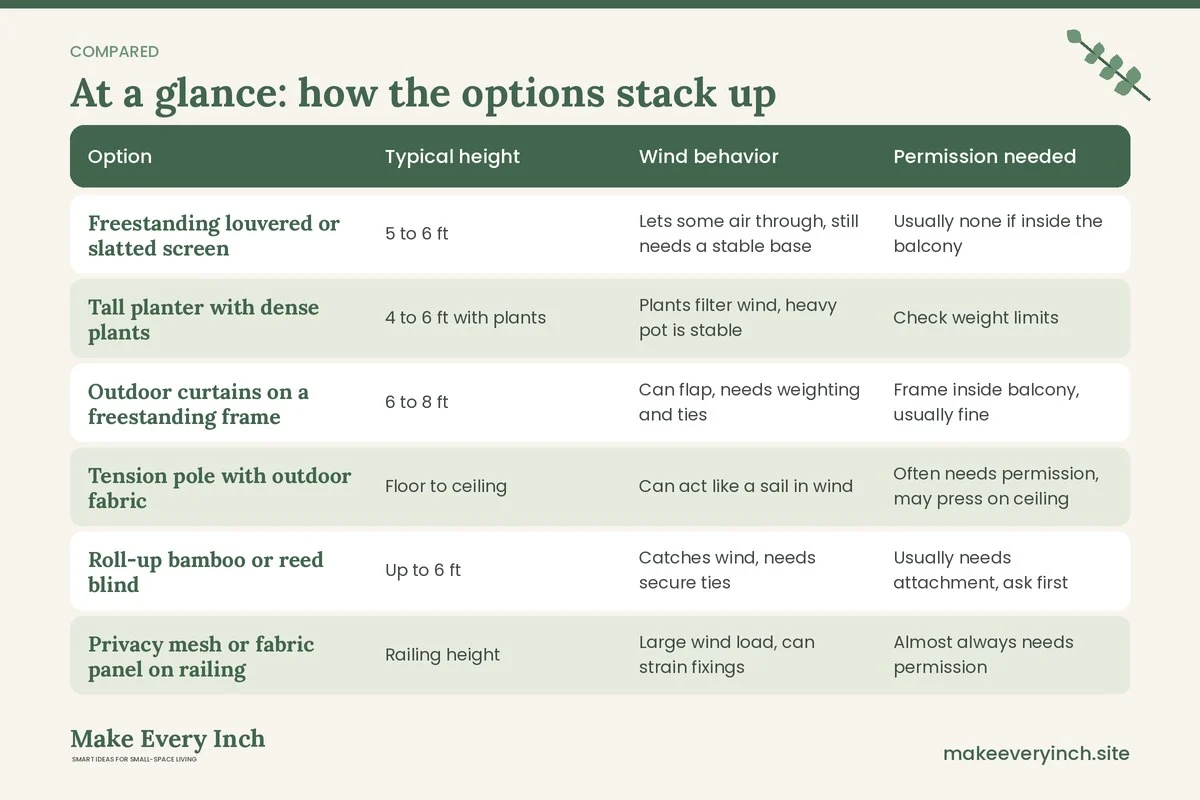
This table groups the main options by what they need from the building and how they behave in wind. The wind and weight notes are general guides, not engineering advice. Always check what your own balcony and building can safely support.
| Option | Typical height | Wind behavior | Permission needed | Best for |
|---|---|---|---|---|
| Freestanding louvered or slatted screen | 5 to 6 ft | Lets some air through, still needs a stable base | Usually none if inside the balcony | Side views and a seated area |
| Tall planter with dense plants | 4 to 6 ft with plants | Plants filter wind, heavy pot is stable | Check weight limits | Soft screening and greenery |
| Outdoor curtains on a freestanding frame | 6 to 8 ft | Can flap, needs weighting and ties | Frame inside balcony, usually fine | Flexible, adjustable cover |
| Tension pole with outdoor fabric | Floor to ceiling | Can act like a sail in wind | Often needs permission, may press on ceiling | Narrow alcoves |
| Roll-up bamboo or reed blind | Up to 6 ft | Catches wind, needs secure ties | Usually needs attachment, ask first | Rail or wall covering where allowed |
| Privacy mesh or fabric panel on railing | Railing height | Large wind load, can strain fixings | Almost always needs permission | Only if rules allow and rated for wind |
| Lattice or trellis on a stand | 4 to 6 ft | Open pattern reduces wind load | Usually none if freestanding | Climbers and partial views |
| Folding room divider rated for outdoors | 5 to 6 ft | Light, can tip, needs weight | None if kept inside | Temporary or flexible use |
| Outdoor roller shade | Variable | Needs a firm mount | Requires attachment, ask first | Overhead sun and views from above |
| Sheer outdoor panels on a ceiling track | Ceiling to floor | Light flutter | Requires attachment, ask first | Soft side screening |
| Tall grasses in large pots | 3 to 6 ft | Flexible, filter wind | Weight check | Natural blur for casual spaces |
| Frosted or adhesive film on glass rails | Railing height | None added | Often needs permission | Glass railings facing the street |
| Bench with a tall back or built-in screen | 4 to 5 ft | Stable | None if freestanding | Seating plus partial cover |
| Large floor mirror or reflective panel | Varies | Heavy, can tip | Ask, wind risk | Rarely advised outdoors |
14 small balcony privacy ideas
Freestanding screens
1. A slatted screen beside your seat
A slatted or louvered panel stands on its own feet and blocks the diagonal view from the neighbouring balcony. Slats let wind pass through, which reduces tip risk compared with a solid panel. Set it inside the balcony, not touching the railing, and weight the base according to the maker’s instructions.
2. A folding outdoor divider
A three-panel divider rated for outdoor use can be placed where needed, folded flat for storage and moved when you want a view. Choose one with a wide, stable foot. Because folding panels are light, secure them in windy weather or fold them away.
3. A trellis on a heavy stand
A trellis offers partial cover and a frame for climbing plants. Choose a freestanding version with a broad base, and keep the plants on it light. Open lattice patterns let wind through. Avoid fastening it to the railing unless the building clearly allows it.
4. A tall bench with a back
A bench with a high back or integrated screen gives seating and cover in one piece. It uses less floor space than a bench plus a separate screen. Keep it away from the railing so no one can climb on it to reach the edge.
Plants as screens
5. A row of tall planters
Dense, upright plants in a row of large pots create a natural green wall. Choose plants that stay within the pot size and are suitable for your light. Check the weight limit first, since large pots with wet soil are heavy, and use lightweight pot materials and mix where possible.
6. Grasses in deep containers
Ornamental grasses sway and filter views while handling wind better than many broadleaf plants. Plant them in deep pots with drainage holes, and place them on the side that needs cover. Dry grass is flammable, so keep it away from any heat source and cut it back when it dies off.
7. A trellis planter with climbers
A planter with an attached trellis lets annual climbers cover a panel by midsummer. It is a seasonal option, so plan for bare months. Check every plant is safe for children and pets, since some popular climbers are toxic.
8. A mix of heights, not a wall
A tall plant at the back, a mid-height plant in front and trailing plants low down block more sight lines than a single row, and they look softer. Keep pots on the floor and on sturdy stands, never on the railing.
Fabric, shades and blinds
9. Outdoor curtains on a freestanding frame
Weather-resistant curtains on a frame give adjustable privacy: closed for dinner, open for the view. Weight the base and use ties so the fabric does not whip around in wind. Keep fabric well away from candles, heaters and grills.
10. A tension pole screen where permitted
A floor-to-ceiling pole with outdoor fabric suits narrow alcoves. Because the pole presses on the ceiling, it may count as attaching something, and fabric can catch wind like a sail. Ask permission, and take it down in strong wind.
11. A roll-up shade for views from above
Where overhead views are the problem, a shade can drop from the ceiling or an awning frame. This almost always requires mounting, so ask first. Do not drill or attach anything unless it is explicitly allowed.
12. Sheer panels for soft cover
Light outdoor sheers filter views without making the balcony feel boxed in. They let light through, but they provide less privacy at night with lights on, so test the view from outside after dark.
Surfaces and extras
13. Frosted film on glass panels
If the railing is glass and film is allowed, a frosted film blocks views from below without adding bulk. Many buildings regulate railing changes, so check the rules before applying anything, and consider how it affects safety glazing and your insurance.
14. Layered lighting at low level
Privacy is also about being less visible at night. Low, warm lights near the floor draw attention away from your seat, and they reduce the glare that makes you a silhouette. Use outdoor-rated fixtures, avoid candles near fabric and plants, and see the electrical notes in the safety section.
Three example balconies
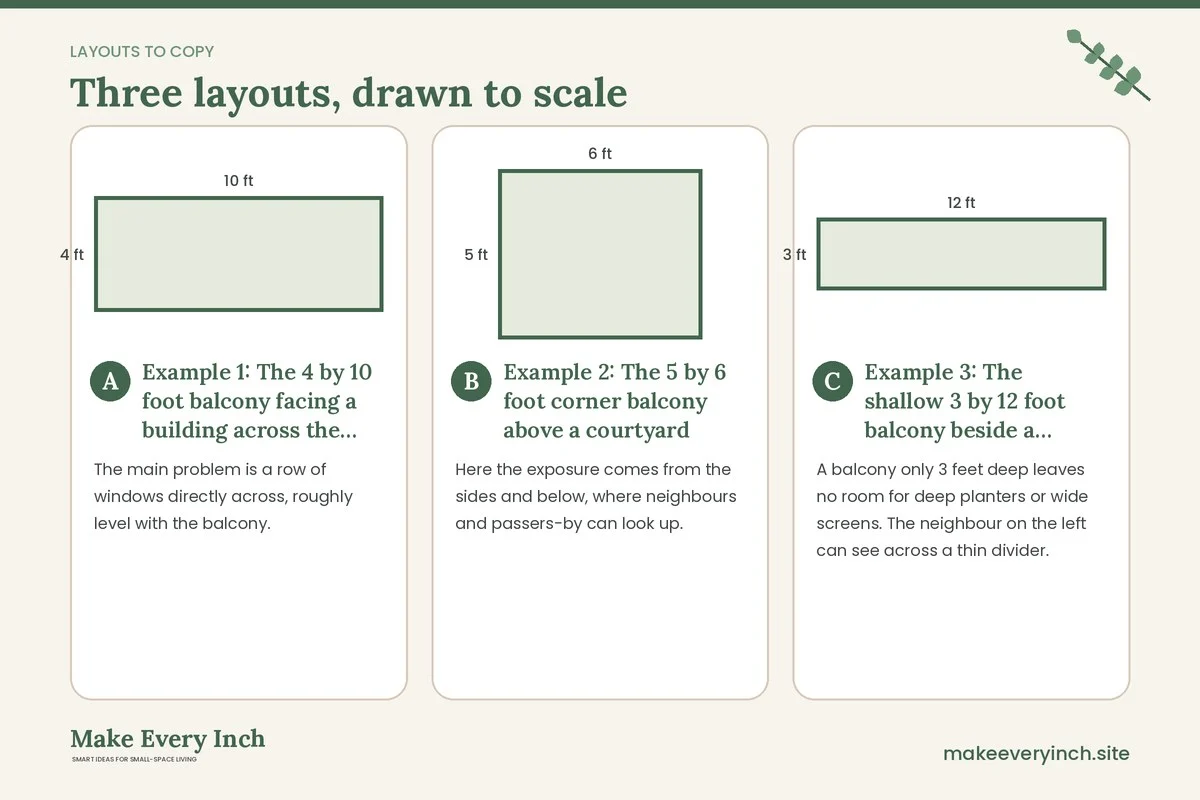
Example 1: The 4 by 10 foot balcony facing a building across the street
The main problem is a row of windows directly across, roughly level with the balcony. The solution is a slatted freestanding screen, 6 feet tall, at the end where the chair sits, plus a short line of tall grasses in lightweight pots along the opposite wall. The screen stands inside the balcony, about 6 inches from the railing so nothing touches it. The seat is angled so the person faces the open end rather than the windows. The aisle stays about 26 inches wide for walking. Nothing is attached to the railing, and the wind check comes first: the screen’s base is weighted to the maker’s guidance, and the grower removes the grasses’ dried tops each winter.
Example 2: The 5 by 6 foot corner balcony above a courtyard
Here the exposure comes from the sides and below, where neighbours and passers-by can look up. The solution is outdoor curtains on a freestanding frame on the courtyard side, kept low enough that the person seated is covered from the shoulders down, and a tall planter at the corner. The curtains are open by day and closed at night. The balcony is windy, so the fabric is weighted at the hem and tied back when the forecast is gusty. Since the curtains are fabric, there are no candles or heaters nearby, and string lights are outdoor-rated and plugged into a protected outlet.
Example 3: The shallow 3 by 12 foot balcony beside a neighbour
A balcony only 3 feet deep leaves no room for deep planters or wide screens. The neighbour on the left can see across a thin divider. The solution is a narrow, tall trellis on a stand at the divider end, with light climbers, and a slim bench with a high back. A folding divider is stored flat against the wall when not needed. There is no space for chairs near the railing, which suits safety as well as privacy. The grower asks the building manager first, because the divider is shared, and does not alter it.
Seating, light and sound
Privacy is also about how the space feels, so plan seating with the screens rather than adding them afterward. Place your chair so you face away from the main sight line, or so a plant or panel sits in front of it at eye level. Keep seating 12 inches or more back from the railing, and well away from it if children or pets use the balcony.
Light changes privacy at night. A bright light behind you makes you a silhouette on a lit screen. A soft light at your side or below eye level reduces this. Check the view from outside after dark, since a screen that works by day may become see-through with a lamp on.
Sound is part of privacy too. Dense plants, outdoor fabric and solid panels soften noise a little, though they do not soundproof the space. Keep expectations modest, and be considerate about noise yourself.
Balcony privacy safety and rules
A privacy screen changes how wind, weight, fire and people interact with a balcony. Use this section as a final check before you buy or install anything, and treat your building’s rules as the deciding authority.
Weight limits
Check the building rules for the balcony load limit before adding planters, heavy screens or benches, and do not overload the space. Wet soil, large pots, stone and heavy furniture all add weight, and people add more. Spread the load, keep heavy items near the wall, and choose lighter materials where you can.
Railing height and climbing risk
Railings protect against falls, and anything near them can undermine that. Children and pets can climb screens, planters, benches and stacked items. Keep furniture, planters and screens away from the railing so there is no step or ladder to the edge, and do not use a screen as a substitute for a safe railing. Never remove, cover in a way that blocks a view of a child, or alter railings, and supervise children and pets on the balcony.
Wind and tip-over
A solid panel or fabric screen catches wind and acts like a sail. On an upper floor, gusts can topple a screen or pull its fixings out. Prefer open slats, lattice or mesh that let wind through, use wide, weighted bases, and secure screens with approved methods. Take light screens down or lay them flat when strong wind is forecast. Never leave a freestanding screen leaning against the railing.
Falling objects
Anything that falls from a balcony can injure someone below. Secure planters, screens, shelves and decor so that they cannot tip or blow over the edge. Heavy items go low. Do not put pots on the railing top or hang items over the edge unless the building explicitly allows a secure fitting. Bring in loose items in storms.
Fire, grills and flame
Many leases and codes prohibit grills and open flame on balconies, and screens, fabric and dry plants add fuel. Do not use a grill, fire pit, patio heater or candles near screens, curtains, bamboo, reed or plants. Keep cigarettes well away from dry materials. Do not block exits or fire access routes with screens, and do not enclose the balcony in a way that traps smoke or stops emergency access. Check any outdoor fabric for fire-retardant labeling where building rules require it.
Electrical and string-light safety
Use lights, extension cords and plug-in items that are rated for outdoor use. Plug them into a protected outlet, ideally with GFCI protection, and do not overload sockets or chain several cords together. Keep connections off wet floors, away from watering zones and clear of fabric that could trap heat. Turn off lights when you are away and in storms. Battery-powered or solar options avoid cords altogether, though they too should be rated for outdoor use.
Drainage and water damage
Planters and screens can block drains or send water where it should not go. Use trays under pots, empty them after watering and never block the floor drain. Watch for water running down to the balcony below, which can cause damage and conflict with neighbours. If you notice pooling, tell the building manager.
Toxic plants for pets and children
If you use plants as a screen, check each one for toxicity to children, cats and dogs before you buy it. Choose plants listed as safe by a reliable poison-control or veterinary source, and keep fertilizers and pesticides out of reach. If a plant is swallowed, get urgent advice from a doctor, vet or poison-control service.
Heat on surfaces
Sun-baked metal rails, dark screens and tile floors can get hot enough to burn skin. Dark panels behind plants may also overheat the leaves. Choose lighter colors, leave a gap for airflow, and do not leave pets or children on a hot balcony.
Permission and no drilling
Do not drill into railings, walls, ceilings or floors, and do not clamp, bolt or tie anything to railings without clear written permission from the landlord, HOA or building management. Drilling can damage waterproofing and structural elements and may break the lease. Choose freestanding options, and keep a record of any approvals.
Mistakes that backfire
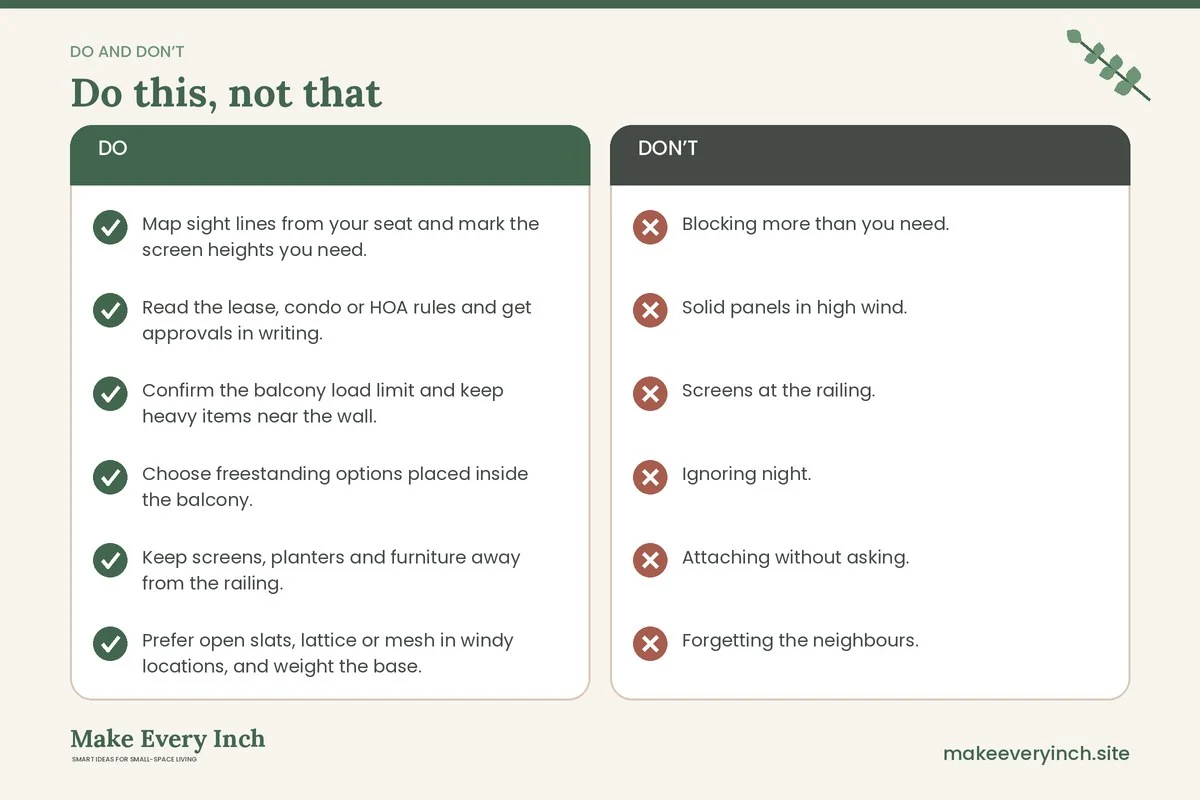
- Blocking more than you need. A full wall kills light and airflow. Block only the real sight lines.
- Solid panels in high wind. Choose open slats or mesh, and weight the base.
- Screens at the railing. They give a climbing step and add wind load on the railing.
- Ignoring night. A lit balcony can become a stage.
- Attaching without asking. This is the fastest way to lose a deposit or get a violation notice.
- Forgetting the neighbours. A screen that blocks the neighbour’s light or view can cause conflict.
- Skipping weight checks. Large planters add up quickly.
- Using flammable decor near flame. Reed, bamboo and fabric burn.
Questions people ask
What is the cheapest way to get small balcony privacy?
Without quoting prices, the lowest-cost routes usually involve freestanding items you already own or can borrow, such as a folding divider, tall plants in existing pots or a simple curtain on a freestanding frame. Cheap does not mean unsafe, so still check weight, wind and the rules.
Can I attach a privacy screen to my railing?
Only if your lease, HOA or building rules clearly allow it, and ideally with written approval. Even then, large panels create a wind load on the railing and fixings. If you are unsure, use a freestanding screen inside the balcony.
Which screen is best for wind?
Open designs such as slatted screens, lattice and mesh generally cope better than solid panels or fabric, because wind passes through. Whatever you choose, use a heavy base, secure it as the maker directs and take it down in storms.
How do I get privacy without losing light?
Block only the problem angles, choose slatted or sheer materials, and keep screens at the side rather than directly in front of the main light. Light-colored surfaces bounce light back in.
Are plants enough for privacy?
Tall, dense plants can provide good partial privacy in the growing season, but they are seasonal and need care and weight allowance. Many people combine plants with a freestanding screen for year-round cover.
Is a privacy screen safe around kids and pets?
It can be, if it is stable, kept away from the railing and free of climbable features. Supervise children and pets, and avoid anything with gaps they could get stuck in.
A rules and safety checklist
- Map sight lines from your seat and mark the screen heights you need.
- Read the lease, condo or HOA rules and get approvals in writing.
- Confirm the balcony load limit and keep heavy items near the wall.
- Choose freestanding options placed inside the balcony.
- Keep screens, planters and furniture away from the railing.
- Prefer open slats, lattice or mesh in windy locations, and weight the base.
- Secure everything that could tip or fall, and bring loose items in for storms.
- Skip grills, open flame and candles near fabric, reed or plants.
- Use outdoor-rated lights with GFCI protection and no overloaded sockets.
- Keep drains clear and use trays under pots.
- Check every plant for toxicity to pets and children.
- Do not drill or attach anything without permission.
- Check the view from outside at night.
The takeaway
Small balcony privacy is about precision, not enclosure. Find the two or three lines of sight that bother you, block them with freestanding, wind-friendly screens or plants kept well inside the railing, and leave the rest open for light and air. Keep the weight modest, keep climbable items away from the edge, keep flame away from fabric and follow the building’s rules on every attachment. Once the balcony feels like yours, carry the same calm into the rooms behind it with our guides to small living room ideas, small dining room ideas and small room decor ideas. Renters will also want renter friendly apartment decorating ideas, budget small space ideas and renter friendly small balcony ideas for ways to work within lease limits, and best furniture for small apartments and studio apartment ideas help if the balcony belongs to a compact home.
Keep going: Start with the full small balcony ideas pillar, grow your own screen with small balcony garden ideas for beginners, and keep supplies tidy with small space organization ideas.
Save this guide for later
Pin the ideas you like to Pinterest so you can come back to them when you plan your space.