Small Dining Room Storage Ideas
Quick answer: The best small dining room storage ideas use a shallow sideboard or slim cabinet along one wall, wall shelves above it, a bar cart that rolls away, and zoned drawers for linens and serveware. Keep depth between about 12 and 18 inches where you can, leave room to pull out chairs, and anchor every tall piece to the wall.
Small dining room storage ideas have to solve a particular puzzle. A dining room holds some of the least frequently used items in the home, such as the good plates, the large platter, the tablecloths and the glassware for guests, yet it is often the smallest room and has the least spare wall. The table and chairs already take most of the floor. So the storage has to be shallow, vertical, and organized so that you can find a serving bowl without moving three other things. This guide walks through measuring first, choosing between sideboards, slim cabinets, wall shelves and bar carts, and deciding what to keep in the dining room versus elsewhere. It also covers linen and serveware zones, a comparison table, three example rooms, safety and anchoring notes, a checklist and an FAQ. For the full layout picture, start with our pillar guide to small dining room ideas.
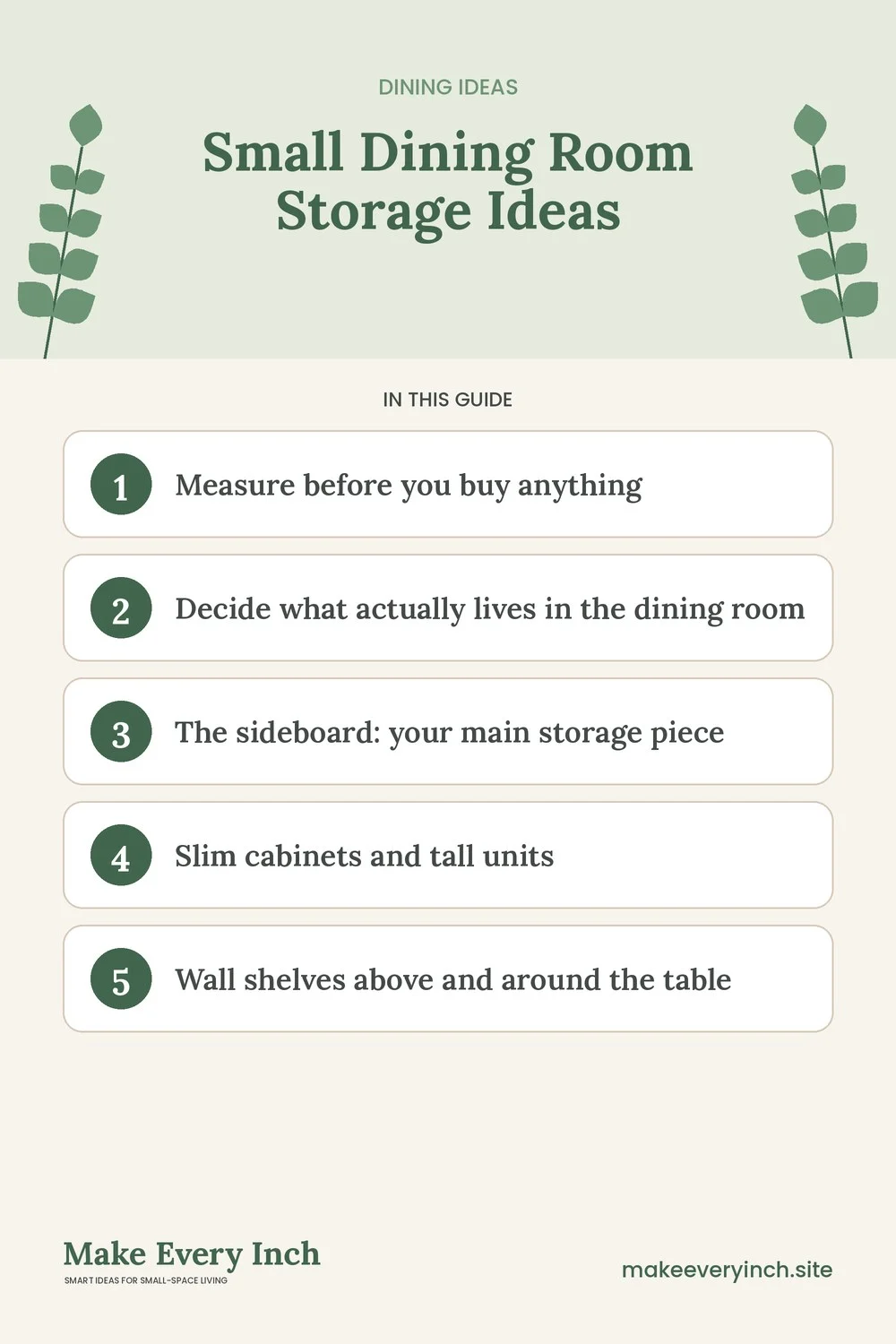
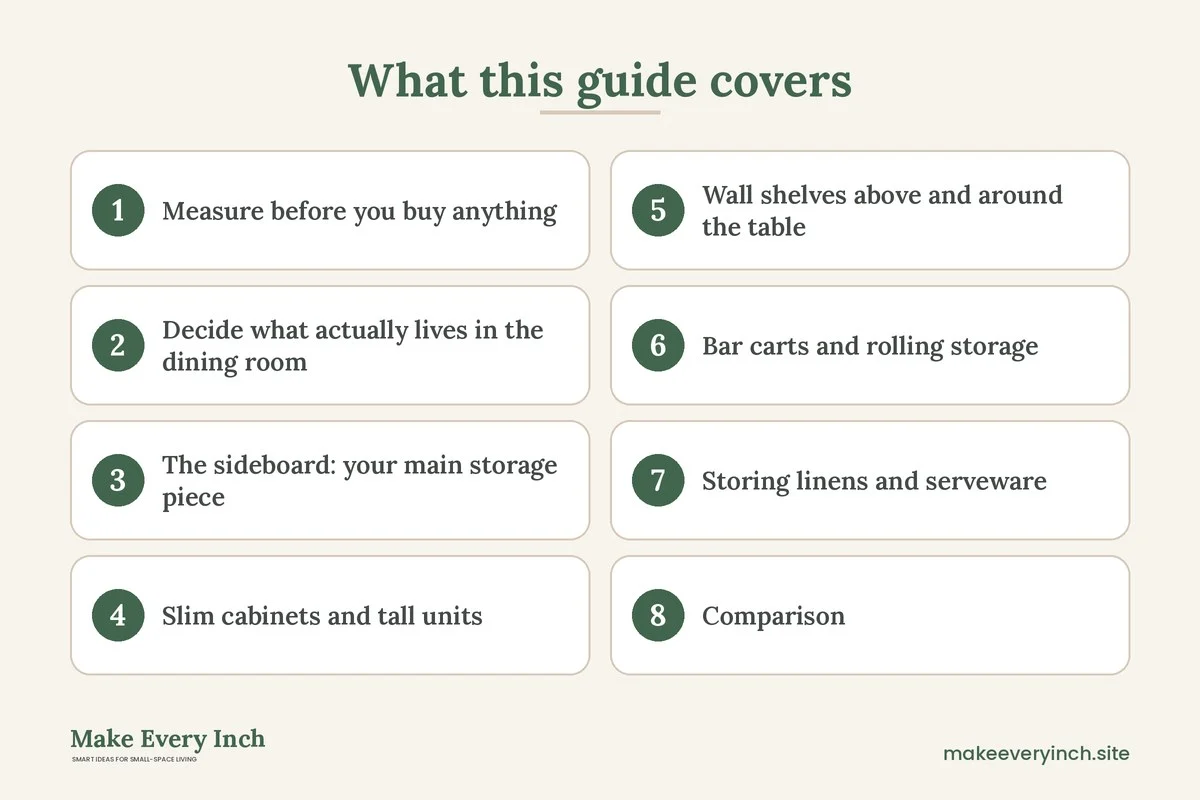
Measure before you buy anything
Dining storage fails most often because of one number: the distance between the back of a pushed-in chair and the wall. Chairs need room to slide back when someone stands up, and a cabinet that is too deep or too close turns every meal into a squeeze. Measurements vary with the chair and the people using it, so treat the numbers here as starting points and test them with your own furniture.
Start with a sketch of the room on paper. Mark the table, the chairs, the doors and their swing, the windows and any radiator or vent. Then measure these things:
- The length of each wall that has no door or window.
- The distance from the table edge to the wall on each side.
- The depth of your chairs when pulled out for sitting, which is usually the chair seat depth plus the push-back space.
- The height of the lowest point of any window sill or light fixture.
- The ceiling height, for tall pieces.
As a rough guide, many people find that about 36 inches from the table edge to the wall allows a seated person to push back, and that 42 to 48 inches allows someone to walk behind a seated person. Those figures are hedged because a sturdy armchair and a light stool behave very differently. Pull the chairs out, sit down, stand up, and see what feels comfortable. If the table sits close to a wall, you can treat that side as a bench side, and leave storage for another wall.
A useful trick is to tape the footprint of a piece on the floor with painter’s tape. Leave the tape for a few days, pull out the chairs, carry a tray past it, and open an imaginary door. If you keep bumping the tape, the piece is too deep or in the wrong place.
Decide what actually lives in the dining room
Before you pick furniture, sort what you own into three groups. This step saves more space than any cabinet does.
- Everyday: plates, bowls, glasses and cutlery that you use daily. These belong in the kitchen, not the dining room, unless the kitchen has no room.
- Often: placemats, napkins, candles, a pitcher, a serving spoon set and the tablecloth you use every week. These can live in the dining room in drawers.
- Occasional: the large platter, the gravy boat, the extra glasses, holiday linens and the good dishes. These can live on a high shelf, in the sideboard, or in another closet.
Many small homes do best with a split plan. The dining room holds the “often” group, and the “occasional” group goes into a bin on a closet shelf or the top of a cabinet. For ideas on storage in other rooms, our guide to small home storage ideas for every room can help you decide what goes where. If you rent and want to avoid drilling, see our no-drill storage ideas for renters.
The sideboard: your main storage piece
A sideboard, also called a buffet or credenza, is the most useful dining room storage piece because it gives you a flat top, closed storage and drawers in a single footprint. In a small room, depth matters more than length.
Choosing the right depth
Standard sideboards are often 16 to 20 inches deep, and some are deeper. A shallow model of about 12 to 15 inches saves a lot of floor. Shallow depth is enough for dinner plates, platters set on their edge, folded linens and glassware in a single row. It will not hold a stack of large serving bowls, but you can store those up high on a shelf or in a different room.
If the sideboard sits behind the chairs, remember that a person seated on that side needs space to push back. If you can only fit a cabinet on that side, choose a shallow one and consider a design with legs. Open space under the legs makes the room look lighter and gives you a spot to slide a basket or a stool.
Height and what goes on top
Many sideboards are 30 to 36 inches tall, close to counter height. This makes the top a handy landing zone for serving dishes at dinner. Keep the top mostly clear. A tray with a few items, a lamp and one piece of art look composed, while a crowded top makes the room feel small. If you need the surface for serving, keep it empty on weeknights and use a tray to group everything else.
Inside the sideboard
Sort the inside by use:
- Top drawer: cutlery, serving spoons, napkin rings, candles and a lighter.
- Second drawer: folded tablecloths, runners and placemats, stored flat or rolled.
- Cabinet shelf: plates, platters and glasses you use for guests.
- Bottom: a bin with seasonal or occasional items.
Drawer dividers keep things from sliding. A felt liner protects glassware and reduces rattling. For tablecloths, rolling them around a cardboard tube reduces creases and takes up less depth than folding.
Alternatives to a full sideboard
If a sideboard is too bulky, look at a console table with a shelf, a low bookcase with doors, or a short dresser with a wide top. A bench with a lift-up seat and baskets can serve a table that sits against a wall. Our guide to small apartment living room ideas with storage covers similar logic of using one furniture piece for two jobs.
Slim cabinets and tall units
When floor space is limited but wall height is available, a tall slim cabinet can hold as much as a wide low sideboard. A unit about 12 to 16 inches deep and 24 to 30 inches wide takes a small footprint and stores a lot vertically.
Where to put a tall cabinet
Tall slim units work best in these places:
- In a corner beside a door, where the cabinet is not behind a chair.
- At the end of a wall, flush with the edge of a window.
- Beside the table end, on the side with no chair.
- In an alcove, where it can fill the space without sticking out.
Avoid placing a tall cabinet directly behind a chair, because the back corners get bumped and the cabinet can be knocked if someone leans back.
Open versus closed
Closed doors hide clutter and suit a dining room that is also used as a work area. Open shelves look lighter and are good for display, but they need more care. If you use open shelving, keep items in a limited palette, repeat shapes, and leave some breathing space. Glass doors are a middle path, and they let you show a few items while keeping dust off.
Safety: anchor every tall piece
Tall and narrow furniture can tip. Anchor any cabinet, bookcase or tall unit to a wall stud using the hardware the maker supplies, especially if children or pets live in the home. If you rent and cannot drill, ask your landlord for permission first, and consider a lower piece that is stable without anchors. Never overload the top shelves, and keep heavy items low. Check the hardware again from time to time, since anchors can loosen.
Wall shelves above and around the table
Walls are the least used space in most dining rooms. Shelves turn that blank surface into storage while keeping the floor clear.
Shelf options
- A single long shelf above the sideboard, about 8 to 10 inches deep, for glasses, bowls and a few displayed items.
- A picture ledge with a shallow depth for frames, cookbooks and small items, which is the least heavy option.
- A row of small floating shelves to hold wine glasses or a coffee station.
- A ladder-style shelf that leans against the wall, which can reduce the need for drilling, though it still needs anchoring if tall.
- A rail with hooks for mugs, baskets and towels, which works when you want a more casual look.
Height and spacing
A shelf above a sideboard looks balanced if it is about 8 to 12 inches above the top of the sideboard, though you may want more room if you display tall items. Keep the lowest shelf above head height of a seated person if it sits above a bench or banquette. Space shelves so that the tallest item fits with a hand’s width to spare.
Weight and mounting
Check the weight limit for the shelf and the hardware, and use anchors suited to your wall type. Drywall alone holds little, so use studs or anchors rated for the load. If you rent, never drill without permission. Adhesive options exist for light items only, and they will fail with heavy dishes. For renters, our guide to DIY wall storage ideas for small spaces covers lighter-weight approaches.
Bar carts and rolling storage
A bar cart is the most flexible piece in a small dining room because it moves. It can serve as a bar, a coffee station, a serving trolley or an extra surface for a buffet. When it is not in use, it can sit in a corner or tuck against a wall.
What a cart does well
- Holds glasses, a pitcher, a tray and bottles in one spot.
- Rolls to the table for serving, then returns to the wall.
- Provides a temporary buffet surface for a party.
- Stores a few linens or napkins on the lower shelf.
Choosing and using one
Choose a cart with a lip or a rail on each shelf so glasses do not slide when it rolls. Wheels with locks keep it steady. A narrow model about 14 to 16 inches wide and 24 to 30 inches long fits most corners. Keep heavy items on the bottom shelf, since a top-heavy cart can tip, and avoid placing it where a child could pull on it.
If you have an existing kitchen cart, it can double as dining storage. Our post on the best rolling kitchen carts and our small kitchen cart ideas explain the features to look for.
Storing linens and serveware
Linens and serveware are the two items that most often clutter a dining room. They are bulky, used occasionally, and easy to forget. Give each a defined home.
Linens
- Tablecloths and runners: roll them on tubes or fold them flat in a shallow drawer. Hang them from clips on a hanger in a closet if you have space.
- Napkins: stack in a small basket or a drawer divider by set, so you know which sets match.
- Placemats: store flat in a drawer, or stand them upright in a file-style holder.
- Seasonal sets: keep in a labeled bin and swap twice a year.
Wash and dry linens fully before storing them, since damp fabric can develop odors or mildew. A cotton bag or a breathable box works better than a sealed plastic bin for long-term storage. See our guide to linen storage ideas without a linen closet for ways to store bulky fabrics elsewhere.
Serveware
- Platters and trays: store them on their edge in a slot or a vertical rack, which saves shelf depth.
- Bowls: nest them and put a paper towel or a felt pad between each one.
- Pitchers and gravy boats: keep them on a high shelf or in a labeled bin.
- Serving utensils: group in a drawer by size, or keep a crock on the sideboard if you use them often.
- Glassware: store stemware upright on a shelf or hang it from a rack, and do not stack it.
Put a label on bins and shelf edges. A label turns a pile of items into a system, and it also helps guests find what they need when you host.
Hidden and overflow storage
If the dining room still runs out of space, look at:
- The top of a cabinet, for light bins you can reach with a step stool.
- The space under a bench seat.
- The back of a nearby closet, for a bin of holiday items.
- A shelf in the kitchen, for the heaviest items.
Our post on hidden storage ideas offers more options.
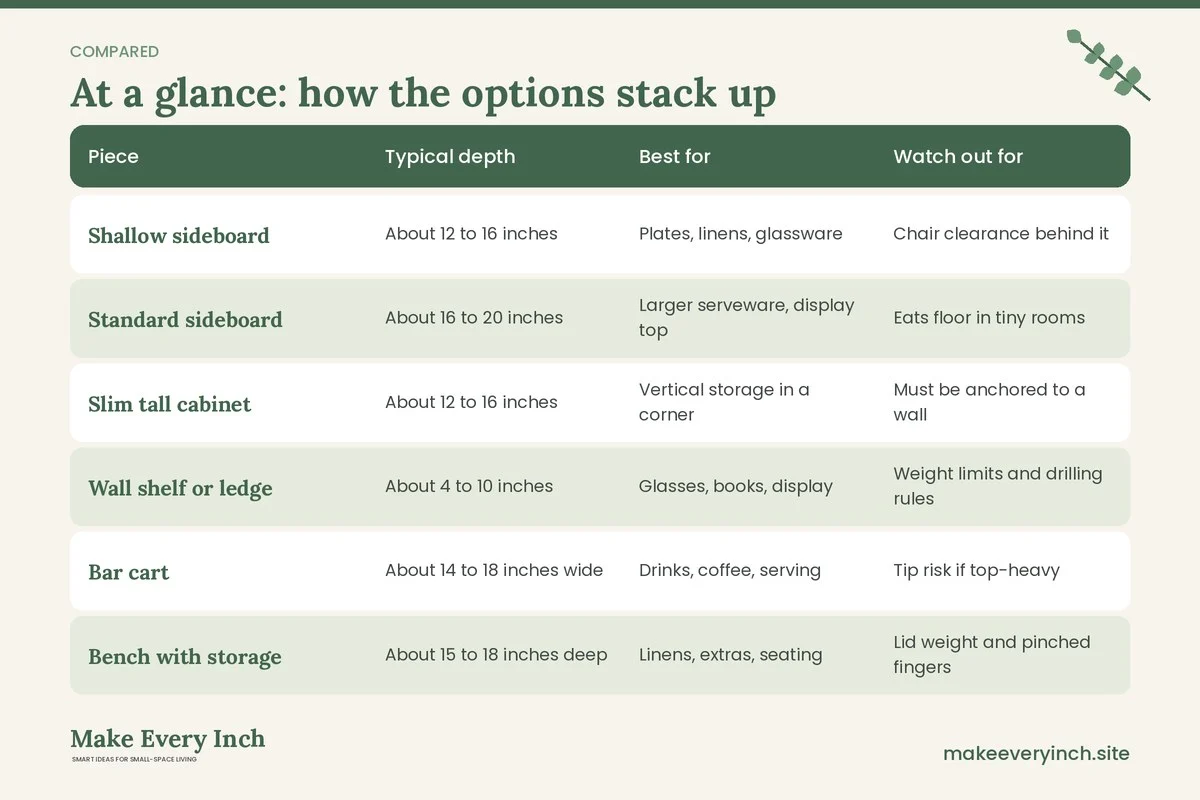
Comparison: which dining storage piece fits your room?
| Piece | Typical depth | Best for | Watch out for |
|---|---|---|---|
| Shallow sideboard | About 12 to 16 inches | Plates, linens, glassware | Chair clearance behind it |
| Standard sideboard | About 16 to 20 inches | Larger serveware, display top | Eats floor in tiny rooms |
| Slim tall cabinet | About 12 to 16 inches | Vertical storage in a corner | Must be anchored to a wall |
| Wall shelf or ledge | About 4 to 10 inches | Glasses, books, display | Weight limits and drilling rules |
| Bar cart | About 14 to 18 inches wide | Drinks, coffee, serving | Tip risk if top-heavy |
| Bench with storage | About 15 to 18 inches deep | Linens, extras, seating | Lid weight and pinched fingers |
Three example rooms
Room 1: The narrow dining room
A dining room is about 8 feet wide and 11 feet long, with the table centered. There is no room for a side cabinet, since the chairs sit about 30 inches from the wall. The solution is to push the table to one long wall and use a bench on that side, leaving the opposite side open. A shallow sideboard of about 12 inches deep goes at the short end, and a long shelf sits above it. Linens go in the sideboard drawers, and serveware goes in a high cabinet in the kitchen. The room gains a clear walkway of about 36 inches and still holds guest dishes.
Room 2: The studio corner
In a studio, the dining table sits in a corner next to the kitchen and has no wall to spare. The owner uses a tall slim cabinet beside the window, anchored to the wall, with the lower shelves closed and the upper shelves open. A rolling cart tucks beside the table and holds a coffee setup and napkins. A tablecloth and a few serving dishes live in a bin under the bed. For more on this type of layout, see our guide to studio apartment dining area ideas.
Room 3: The open dining area
An open dining area sits at the end of a living room, with no walls of its own. A low sideboard with legs acts as a divider behind the sofa, and it holds linens, plates and glassware. A picture ledge above it carries art and a few frames. The sideboard top holds a lamp and a tray, which helps define the dining zone. A matching bar cart sits at the end for drinks. Because the sideboard faces the room, it needs finished sides and a stable base. If you are thinking about the wider room plan, our small living room layout ideas can help.
Style and finish choices that keep things calm
Storage can make a small dining room feel crowded unless it blends with the walls. A few simple choices keep it quiet.
- Paint the cabinet close to the wall color so it recedes.
- Choose legs and raised bases, which show the floor underneath.
- Repeat one or two materials, such as wood and black metal.
- Limit display items to groups of three or fewer.
- Use baskets with lids for visual calm.
- Keep the top of the sideboard at least half empty.
If you paint, choose low-VOC paint, ventilate the room, and check the lease before changing wall colors.
Lighting and electrical notes
A lamp on a sideboard adds warmth and keeps the overhead light off. Keep cords tidy and out of the walkway, and do not run them under rugs where they can overheat or trip someone. If you add LED strips to a shelf, use products suited to the purpose and follow the maker’s instructions. Keep a candle or a hot dish away from shelves, curtains and overhead cabinets. If you are unsure about wiring, ask a qualified electrician, and never change fixed wiring in a rental without permission.
A step-by-step plan
1. Measure the room and sketch the table, chairs and doors.
2. Sort your dining items into everyday, often and occasional.
3. Choose one main piece: a sideboard, a tall cabinet or a bench.
4. Tape the footprint on the floor and test it for a few days.
5. Add wall storage above it, if the lease and wall allow.
6. Anchor any tall furniture to the wall.
7. Assign drawers: cutlery, linens, serveware.
8. Label bins and shelf edges.
9. Add a cart or a basket for flexible needs.
10. Review after a month and remove what you do not use.
Common mistakes to avoid
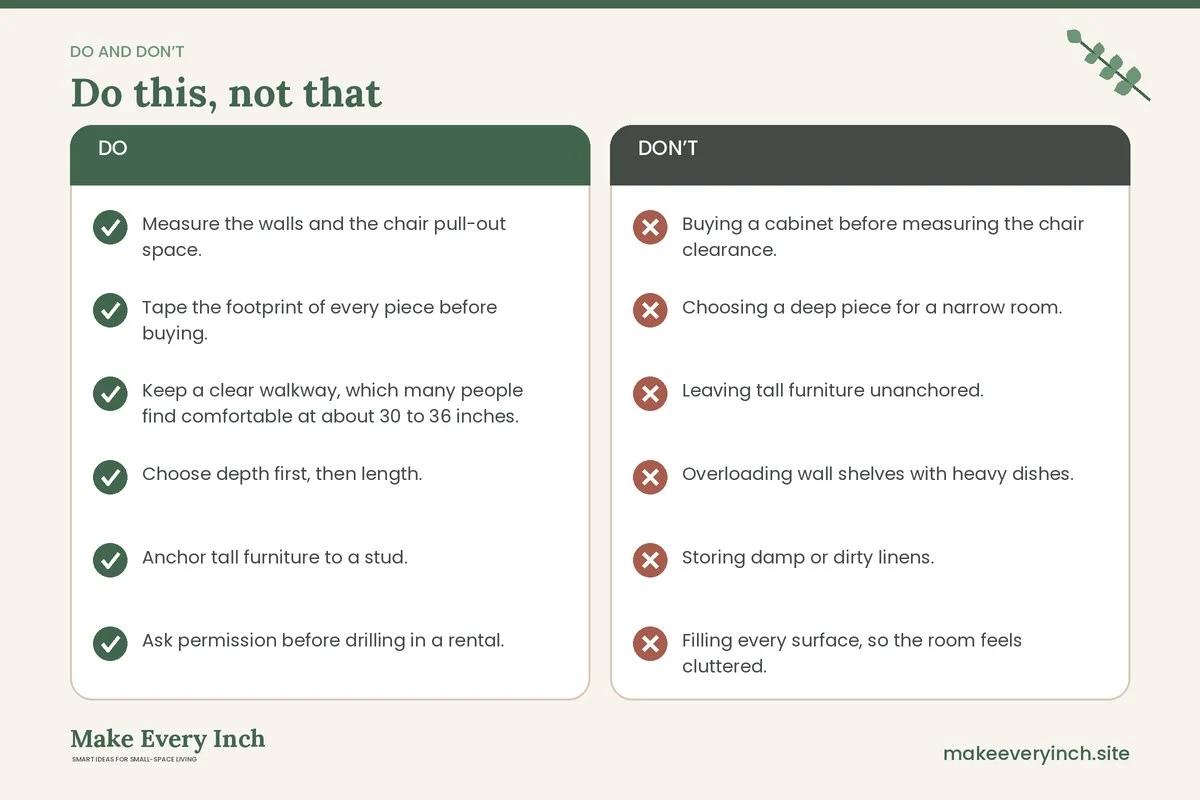
- Buying a cabinet before measuring the chair clearance.
- Choosing a deep piece for a narrow room.
- Leaving tall furniture unanchored.
- Overloading wall shelves with heavy dishes.
- Storing damp or dirty linens.
- Filling every surface, so the room feels cluttered.
- Keeping things in the dining room that belong in the kitchen.
- Placing a cart where it blocks a door or a vent.
Checklist
- Measure the walls and the chair pull-out space.
- Tape the footprint of every piece before buying.
- Keep a clear walkway, which many people find comfortable at about 30 to 36 inches.
- Choose depth first, then length.
- Anchor tall furniture to a stud.
- Ask permission before drilling in a rental.
- Keep heavy items low and light items high.
- Store linens clean and dry.
- Give serveware a labeled home.
- Keep a lamp or light on the storage piece.
- Keep the top surface half clear.
- Review the setup every season.
FAQ
How deep should a sideboard be in a small dining room?
Many small rooms do well with a depth of about 12 to 16 inches, though the right number depends on your chairs and the walkway. Tape the footprint and test it before you buy.
What can I store in a small dining room?
Store items you use at the table, such as linens, placemats, candles, serving utensils, guest glasses and a few platters. Keep daily dishes in the kitchen if you can.
How do I store tablecloths without wrinkles?
Roll them around a cardboard tube or hang them over a padded hanger. If you fold them, change the fold lines now and then so creases do not set.
Do I need to anchor a sideboard?
Low sideboards are usually stable, but tall cabinets and bookcases should be anchored to a wall stud. Follow the maker’s instructions, and anchor anything that children or pets might climb.
Can I add wall storage in a rental?
Check your lease and ask your landlord before drilling. If drilling is not allowed, use freestanding pieces, leaning shelves or light picture ledges with removable adhesive rated for the weight.
Is a bar cart practical in a small dining room?
Yes, if it is narrow and has a lip on each shelf. It adds flexible serving and storage, and it can roll out of the way. Keep heavy items on the lower shelf.
Where do I put a big platter I use twice a year?
Store it on a high shelf, in a flat bin under a bed or in a closet. Keep it out of the dining room if you are short on space.
How do I stop a small dining room from looking cluttered?
Choose closed storage for most items, keep the sideboard top half empty, and limit display to a few groups. A cabinet painted close to the wall color also reduces visual weight.
Keep going: Keep going with our small dining room ideas, the companion guide to breakfast nook ideas for small kitchens and our small space organization ideas.
Save this guide for later
Pin the ideas you like to Pinterest so you can come back to them when you plan your space.