15 Small Space Decor Pieces You Can Make Yourself
Quick answer: The best small space decor can yourself make is low, light and easy to move: a fabric-covered board, a set of paper or cord wall pieces, a handmade lampshade cover, a tray-and-candle-free vignette, a hanging plant holder, a pillow cover or a framed fabric scrap. Keep each piece in scale with the wall or surface, repeat one color across three pieces, use removable fixings only with permission and avoid anything that blocks a path or crowds a shelf.
Small space decor can yourself make has a different job from the decor in a large house. In a big room, a handmade piece can be large, bold and bring its own corner. In a small room, every piece competes for the same few surfaces, so handmade decor has to be scaled, layered and chosen with care. This guide is about the decor itself rather than the tools or the schedule: how to choose a size, where each piece goes, what to make it from, and how to avoid the cluttered look that handmade items sometimes have. It covers the three rules of small-scale decor, 15 handmade pieces, a scale table, three example rooms, finishing details, safety notes and a checklist. For wider budget ideas, see our hub on budget small space ideas.
Three rules for handmade decor in a small room
Handmade decor sits between art and furniture. It can make a room feel personal, or it can make it feel full. Three rules separate the two.
Rule 1: scale to the surface
Decor should relate to the wall or surface under it. A shelf 30 inches wide can hold three or four objects with gaps between them. A 12-inch wall niche can hold one. A piece that takes more than about two thirds of the width of a surface looks heavy, and a piece smaller than a quarter of the width looks lost unless it is part of a group. Measure the surface, cut a paper template at the size you plan to make and tape it up for a day before you begin.
Rule 2: repeat one thing
Pick one color, one texture or one shape and repeat it in three places. For example, a rust-colored cord, the same rust on a pillow cover and a small piece of rust fabric framed on the wall. Repetition makes handmade pieces look intended, and it keeps a small room calm. Use our guide on colors that make small rooms look bigger to choose a palette.
Rule 3: leave empty space
Every wall, shelf and table needs an empty area to rest the eye. In a small room, aim for about a third of any surface to be clear. If you make something new, remove something old. This rule keeps the room from becoming a craft shop. If a piece does not fit, it can wait in a labeled box for a seasonal swap, a method we describe in small home ideas for seasonal changes.
Choose your materials
The cheapest and most flexible materials are ones you already have or can find secondhand: old sheets, fabric remnants, jars, boxes, wood offcuts, cardboard, rope, twine, clay that air-dries and paper. Secondhand sources also give you texture that new materials lack. For sourcing tips, read our guide on thrifted apartment decor ideas.
Before you start, check four things for each material.
- Weight. Anything that hangs must be light enough for the removable fixing. A 10-by-12-inch fabric panel is light, and a glass-and-wood shadow box is not.
- Fire safety. Keep fabric, paper and dried plants away from candles, heaters, stove tops and bulbs that run hot. Use LED candles if you want a flame effect.
- Fumes. Paint, sealant, spray adhesive and varnish need ventilation. Choose water-based, low-VOC products, work near an open window and let pieces dry before bringing them into a bedroom.
- Safety for children and pets. Avoid small beads, long cords at neck height, loose buttons and anything a child or pet could chew or swallow.
15 handmade pieces for small spaces
For the walls
1. A fabric-covered board in place of a painting
Stretch a piece of fabric over a thin board or a canvas frame and staple it on the back. A 16-by-20-inch piece covers a bare spot above a bed or a sofa and weighs very little. Lean it on a shelf, a dresser or a mantel, or hang it with a strip rated for the weight. Choose a pattern with a large repeat for a calm room and a small one for a hallway.
2. A set of three paper wall pieces
Cut or fold paper into simple shapes, such as scallops, arches or leaves, and frame them in matching frames, or use clear box frames for depth. Three pieces at the same size and 2 to 3 inches apart look intentional. Use acid-free paper if you want the pieces to last, and keep them out of direct sun and damp areas.
3. A woven cord wall hanging
Wrap or knot cotton cord around a dowel to make a hanging 12 to 20 inches wide. It takes about two to four hours and adds texture to a plain wall. Hang from a single removable hook, and keep the fringe away from a heater and out of reach of pets.
4. A framed fabric scrap or scarf
A small fabric remnant in a mat and frame becomes art. It is a good way to use a scrap that has meaning, such as a piece of an old shirt or a souvenir cloth. Keep the glass clean and the frame size within 30 percent of the width of the furniture below.
5. A pegboard-style rail made from a board
A board with a row of pegs holds a bag, a scarf and a small basket. Sand and seal it, and hang it where you have permission, or lean it behind a bench. Keep it at a height children can reach if they will use it and do not hang heavy bags from it.
For shelves and surfaces
6. Hand-painted vases from jars
Wash jars, remove the labels and paint the outsides with water-based paint. A trio of different heights, 4 to 9 inches, makes a small group. Use them for dried stems, pens or a single bloom. Keep them away from the edge of a shelf and use a non-slip pad on glass shelves.
7. Air-dry clay trinket dishes
Roll out clay about a quarter of an inch thick, shape a small dish and let it dry as directed. Seal it before it holds anything. These dishes hold keys, rings and coins on a dresser or entry table and take only a corner of the surface. They are decorative only unless the product says it is food safe, so avoid using them for food.
8. A tray with a handmade liner
A flat tray gathers loose items into one group, which makes clutter look styled. Line it with a piece of fabric or paper you cut to fit. The tray itself can be an old board, a cutting board or a thrifted piece. Keep it to 12 by 16 inches or smaller on a small side table.
9. Book-wrapped stacks and spines
Wrap a few books in matching paper or fabric and stack them to hold a plant or a lamp. Use only books you do not need. A stack of two or three at a 3 to 5 inch total height is enough to give a shelf a rhythm.
10. A handmade lampshade cover or lamp base wrap
For an existing lamp, add a fabric cover over the shade with a loose fit and a safe distance from the bulb. Only use fabric that is rated for it or use an LED bulb that stays cool. Do not alter the wiring, and unplug the lamp before you work on it. Our guide on renter-friendly lighting ideas covers more safe options.
For soft decor
11. A pillow cover from a fabric remnant
A pillow cover is one of the easiest sewn projects. Cut two rectangles 1 inch larger than the pillow, sew three sides, add an envelope back and turn. Choose a cover 1 to 2 inches smaller than the insert for a full look. Two pillows are enough for a small sofa.
12. A rug-edge border or runner trim
Add a border of contrasting fabric to a plain rug or sew trim to a runner to make it look custom. Use non-slip backing under any rug on a hard floor, and keep the edges flat so nobody trips.
13. A curtain tieback from cord or leftover fabric
Make a tieback from a strip of fabric or a knotted cord. It keeps a curtain neat and lets in light. Keep cords away from children and pets at a height of 60 inches or more. Our guide to renter-friendly window treatment ideas has more.
For plants and greenery
14. A hanging plant holder from cord
Knot cord around a pot to make a hanging holder. Use a sturdy tension rod or a ceiling hook with permission, check the weight when the soil is wet and keep the plant out of the reach of pets if it is toxic. Choose a drip tray and hang it away from electrical outlets.
15. A mini herb shelf from a board and jars
Mount a board across a window frame with a pair of brackets if the lease allows, or rest it on the sill. Add small pots on a tray with a liner. This piece brings greenery near a source of light without taking floor space. Check that plants are safe for the pets and children in the home.
Compare the 15 pieces by scale and effort
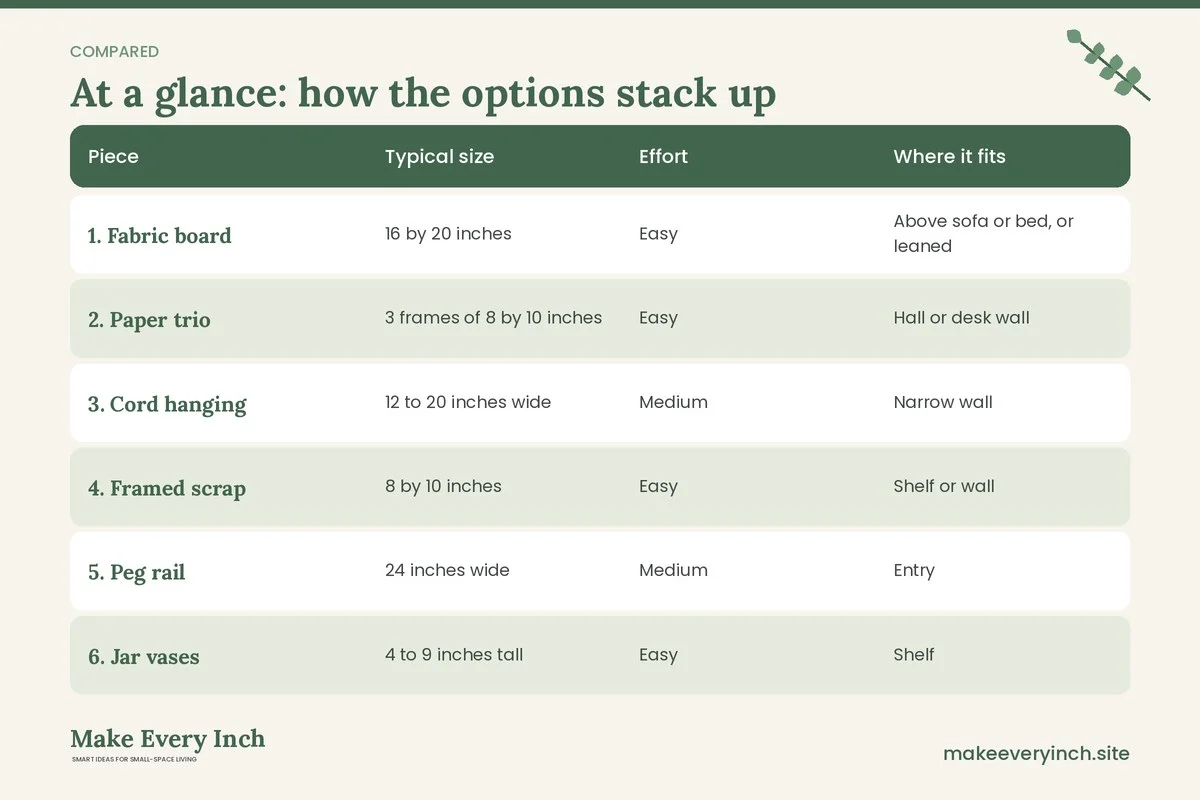
Use the table to balance the room. Aim for one large piece, two or three medium pieces and some small ones.
| Piece | Typical size | Effort | Where it fits | Needs fixing? | |
|---|---|---|---|---|---|
| 1. Fabric board | 16 by 20 inches | Easy | Above sofa or bed, or leaned | Optional | |
| 2. Paper trio | 3 frames of 8 by 10 inches | Easy | Hall or desk wall | Optional | |
| 3. Cord hanging | 12 to 20 inches wide | Medium | Narrow wall | One hook | |
| 4. Framed scrap | 8 by 10 inches | Easy | Shelf or wall | Optional | |
| 5. Peg rail | 24 inches wide | Medium | Entry | Yes unless leaned | |
| 6. Jar vases | 4 to 9 inches tall | Easy | Shelf | No | |
| 7. Clay dishes | 3 to 4 inches across | Medium | Dresser or entry | No | |
| 8. Lined tray | 12 by 16 inches | Easy | Side table | No | |
| 9. Wrapped books | 3 to 5 inches stack | Easy | Shelf | No | |
| 10. Lamp cover | Fits existing | Medium | Lamp | No | |
| 11. Pillow cover | 16 to 20 inches square | Medium | Sofa | No | |
| 12. Rug trim | Fits rug | Medium | Floor | No | |
| 13. Tieback | 20 to 30 inches long | Easy | Window | One hook | |
| 14. Plant holder | 8 to 12 inches wide | Easy | Window or ceiling | Yes if hung | |
| 15. Herb shelf | 24 to 30 inches wide | Medium | Sill | Optional |
Three example rooms
A studio with one wall of windows
The room is bright but has little wall space. Make the fabric board and lean it on the dresser, add the jar vases in three heights on the windowsill and finish with the curtain tiebacks in the same color. Stop there. The light is the decoration, and the handmade pieces repeat one color from the bedding. The result is calm and personal, and nothing is attached to the wall. See more ideas in our guide on studio apartment decorating ideas.
A narrow hallway
A hall 36 inches wide has no room for objects that stick out more than 4 inches. Use a flat paper trio on one wall, a thin peg rail with permission at the entry end and a small tray on a narrow shelf for keys. Leave the other wall bare to keep the path open. For more ideas, read about small hallway decorating ideas.
A bedroom with a small window
The bedroom needs softness. Make two pillow covers in a calm color, hang a cord wall piece above the headboard on one removable hook and add a framed fabric scrap on the bedside table. Keep the floor clear and skip the hanging plant over the bed. Make sure that nothing hangs above the pillow where it could fall, and keep cords away from the bed. For more, see our post on small bedroom decor that does not feel cluttered.
Finishing details that make handmade look intentional
Handmade pieces look best when they look finished. Hem or fold the edges of fabric, trim loose threads and press creases. Sand wooden edges and seal them. Paint the back of a frame. Use matching hardware, and choose either all warm metal or all black. Add a label or a date on the back if you want to remember who made it. Keep the display uncluttered, and group pieces in odd numbers. Rotate pieces seasonally so the room stays fresh without adding more. If the room starts to feel full, use the guide on small room decor ideas that avoid clutter.
Safety notes
- Lease and permission. Never drill, nail or use strong adhesive on a wall, ceiling or fixture without written permission. Choose lean-and-rest options or removable hooks tested on a hidden spot.
- Anchor tall furniture. If you display decor on a tall shelf or bookcase, anchor it to the wall with the right hardware, especially in homes with children or pets.
- Electrical. Do not change cords, plugs or fixtures. Keep decor away from outlets and power strips, and leave space around lamps for heat to escape. Use LED bulbs for fabric lampshades and unplug before any work.
- Ventilation and low-VOC paint. Use water-based, low-VOC paint and glue, ventilate the room while you work and let pieces cure before moving them into a bedroom.
- Wet areas and GFCI. In a bathroom or kitchen, keep paper and fabric away from splashes, and keep electrical items away from water on outlets with ground-fault protection.
- Weight limits. Check the limit for every hook and strip, and use two where the instructions say so. Hang light items only.
- Fire safety. Keep paper, fabric and dried plants away from open flames and heaters.
- Children and pets. Avoid small parts, loose cords and toxic plants within reach, and mount items so they cannot be pulled down.
Common mistakes
Too many small objects make a room look cluttered. Too many colors make handmade pieces look random. Pieces that are too large for the surface look heavy. Hanging items too high is another mistake, since the center of the art should be about 57 inches from the floor. Skipping the template, forgetting the safety check and finishing the edges poorly are others. Review the list in small space decorating mistakes to avoid before you begin.
Checklist
- Measure the wall or surface and cut a paper template at the planned size.
- Pick one color or texture to repeat across three pieces.
- Keep about a third of each surface empty.
- Check the lease and test removable fixings on a hidden spot.
- Choose water-based, low-VOC products and ventilate.
- Keep fabric, paper and dried plants away from heat and flame.
- Use LED bulbs near fabric, and unplug before working on lamps.
- Check weight limits for hooks, strips and rods.
- Anchor tall furniture before displaying anything on it.
- Keep cords, beads and toxic plants away from children and pets.
- Finish edges, seal wood and label the back.
- Remove one old item for each new piece.
FAQ
What is the easiest handmade decor to start with?
A pillow cover, a lined tray or a set of jar vases. All three need few tools, take under three hours and can be changed without damage to the room.
How do I make handmade decor look polished?
Keep a limited palette, finish all edges, match the scale to the surface and group pieces in threes. A single color repeated across three pieces does more than expensive materials.
Can I make decor without any tools?
Yes. Fabric boards, paper pieces, wrapped books and lined trays need only scissors, glue and tape. For anything that needs a saw or a drill, borrow tools and follow the safety notes above.
How do I hang handmade decor in a rental?
Lean pieces on furniture, use a tension rod or use removable strips rated for the weight after testing a hidden spot. Confirm what the lease allows before using anything on the wall.
How much handmade decor is too much?
If a shelf or wall has no empty space or you cannot name what each piece is for, it is too much. Remove pieces until about a third of the surface is clear.
Is handmade decor safe around children and pets?
It can be if you avoid small parts, loose cords at neck height, toxic plants and anything that can be pulled down. Mount or place pieces so they cannot fall, and keep fabric away from heat.
Keep going: Plan the schedule with weekend DIY projects for small homes, find more savings in budget small space ideas, or shop your own shelves with thrifted apartment decor ideas.
Save this guide for later
Pin the ideas you like to Pinterest so you can come back to them when you plan your space.