Jewelry Organization for Small Spaces
Quick answer: Good jewelry organization for small spaces starts with sorting by type, then giving each type a shallow home: dividers or trays in a drawer for rings and earrings, hooks or a wall rail for necklaces, and a lidded box for fine pieces. Keep pieces dry and separated to slow tarnish, hang necklaces so chains cannot touch, and store small items out of reach of children and pets.
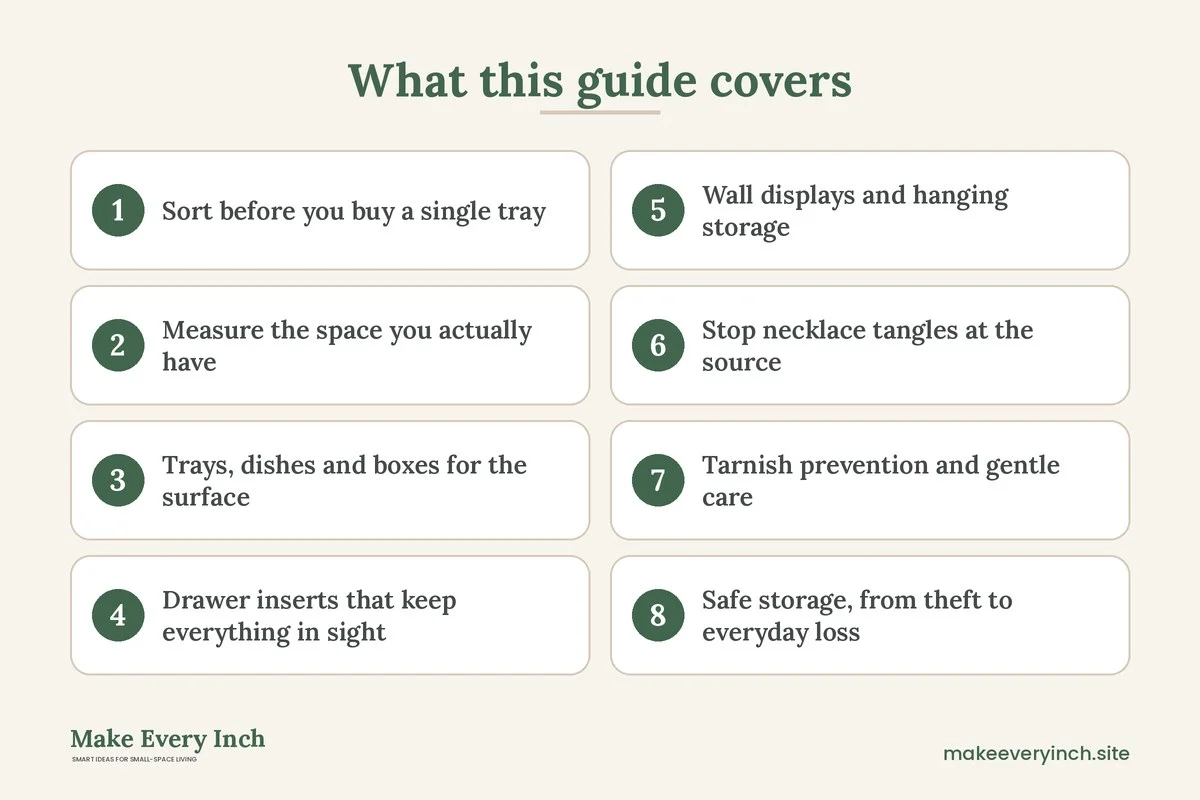
Jewelry organization for small spaces is a puzzle of tiny objects and tiny rooms. A single ring is smaller than a coin, yet a collection of rings, earrings, bracelets and chains can spread across a dresser, a bathroom shelf and the bottom of a handbag in a matter of months. In a small bedroom there is rarely a spare dresser top for a full jewelry box, so the solution is to use shallow drawers, the inside of a closet door, a sliver of wall and the lids of boxes you already own. This guide walks through a sorting method, the measurements that make a tray or insert fit, tray and drawer ideas, wall displays, ways to stop necklaces from tangling, tarnish prevention, safe storage and child and pet safety, a comparison table, three example rooms, a checklist and an FAQ. It is part of our wider series on closets and clothing storage, so for the big picture read our small closet ideas pillar, and for companion advice see seasonal clothing storage in small homes and the guide to small closet organization ideas.
Sort before you buy a single tray
Every good jewelry system begins with a pile on a bed. Gather everything: the pieces in the dish by the sink, the drawer of tangled chains, the box from a relative, the earring that lives in a coat pocket. Spread them over a light towel so nothing rolls away, and work with good light. Put something under the towel’s edge if the bed is soft, so small items are easy to pick up.
Sort into five groups. Daily pieces are the few things you wear most weeks. Occasional pieces are for events, work or holidays. Fine or fragile pieces are made of precious metals, pearls, soft stones or old family items. Costume or fashion pieces are inexpensive items you wear a few times a year. The last group is a decision pile for broken, single, outdated or unloved items.
Be honest with the decision pile. A broken clasp can be repaired by a jeweler if the piece matters. A single earring can be kept for a short time in a labeled bag in case the pair turns up, and then released. Pieces you have not worn in two years and do not love can be sold, given away or donated, and the guidance in our posts on small apartment decluttering ideas and decluttering rules for small homes applies just as well to a jewelry box as to a closet. Fewer pieces means a smaller container, and a smaller container is the whole point in a small space.
Count what is left by category. A rough count of rings, earrings (pairs), necklaces, bracelets and watches tells you how many slots, hooks and compartments you need. Add about a quarter more for growth, and you have a plan.
Measure the space you actually have
Jewelry is small, but containers are not. Before you shop or build, measure the places that could hold it.
- Drawer depth: most dresser and nightstand drawers are 3 to 6 inches deep inside. A tray 1 to 2 inches high leaves room for the rest of the drawer’s contents. Measure the inside width and depth, not the outside, and subtract a quarter inch so a tray slides in without jamming.
- Closet door: the back of a hollow closet door is often 1 to 2 inches thick, so an over-door hanger needs a gap at the top of the door of at least a quarter inch. Check before buying.
- Wall strip: a clear strip 10 to 14 inches wide beside a mirror is enough for a rail with 10 to 14 hooks. A necklace hangs 16 to 30 inches, so allow that much vertical drop and keep the lowest necklace well above furniture.
- Shelf depth: a bookshelf shelf is usually 8 to 12 inches deep, which suits a small lidded box or a stacked tray set.
- Wardrobe or closet rod: a hanging organizer with pockets takes 12 to 15 inches of rod space. Keep it away from heavy clothes that could drag it down.
Write the measurements on your phone before shopping. A tray that is a half inch too wide is a reason to return it, and returning things is a wasteful habit in a small home.
Trays, dishes and boxes for the surface
If you do keep a surface for jewelry, make it tiny and deliberate. A tray the size of a paperback holds the pieces you wear every day and stops them from migrating around the room.
Choose a tray that suits what you own
A shallow tray with a raised lip stops rings and earrings from sliding. A fabric or felt lining quiets metal on metal and protects soft pieces from scratches. For a bathroom or kitchen sink, a small ceramic or silicone dish keeps rings dry and in one place, but see the tarnish section below, since steam and water are not good for many pieces.
Stack to save footprint
A stack of two or three shallow trays takes the footprint of one. Put the daily pieces on top and the occasional pieces in the lower trays. A set with a lid keeps dust off and lowers the chance of a child or pet reaching in.
Use what you already own
A saucer, a small bowl, a muffin tin or a repurposed card box can be a ring dish. A clean egg carton, a divided candy tray or an ice cube tray can become a drawer insert in an afternoon. Line the compartments with felt if you want a softer look. Our guide to small home organization without buying bins has more ways to reuse household containers.
Drawer inserts that keep everything in sight
A drawer is the best place for jewelry in a small room because it is out of sight, out of sun and out of the way of curious hands. The danger is the jumble that forms when everything lies in one layer.
Use shallow dividers
Dividers with compartments 1.5 to 2.5 inches square suit rings, studs and small pendants. Larger compartments about 3 by 5 inches suit watches, bangles and bracelets. A drawer organizer that is adjustable is ideal if your collection will change. Foam or felt liners stop pieces from sliding when you open the drawer.
Layer with two levels
A two-level insert places daily pieces on top and extras below. Keep the top level shallow, about 1 inch, so pieces are visible without lifting anything. If the drawer is only 3 inches deep, a single-level insert is enough.
Give necklaces a flat home
Chains lie flat in a long, shallow drawer more easily than they hang. Use long narrow compartments, one per chain, or lay each chain on a strip of felt. Do not stack chains on top of each other, because that is how knots begin.
Use the dresser you already have
If you have a small chest, one top drawer can hold the whole collection. If you are shopping for a chest, our list of the best small dressers shows narrow options, and a guide to small bedroom storage ideas covers the rest of the bedroom. A wide, shallow drawer is better for jewelry than a deep one, because everything stays in one layer.
Wall displays and hanging storage
When there is no spare drawer, go vertical. The principles of vertical storage ideas work well here, since jewelry is light and compact.
A rail with hooks
A slim rail with a row of small hooks holds necklaces, bracelets and hanging earrings. Mount it near a mirror so you can choose and try pieces in one spot. Keep the hooks about 2 inches apart so chains do not touch, and keep the rail above the height of a young child.
A framed board
A small wooden frame with fabric or mesh stretched across it holds earrings, since the posts or hooks pass through the fabric. It looks like a piece of art and uses a flat patch of wall about the size of a picture frame. Lean it on a shelf if you cannot hang it.
Over-door and inside-door options
A hanging organizer with clear pockets or hooks on the back of a closet or bedroom door uses space no one sees. It suits renters because it needs no hardware. Make sure the door still closes properly and that the organizer does not rub the door frame.
Hanging without drilling
If your lease bans nails, look at our guide to no-drill storage ideas for renters. Adhesive hooks and removable strips can hold light items, but jewelry rails should stay light, and you should follow the weight rating on the package. Never drill or nail into a wall without permission from the owner or landlord, and check for wiring and pipes before any drilling in a home you own. If you hang something heavier than a light frame, anchor it to a stud.
Stop necklace tangles at the source
Tangles are caused by chains lying against each other and by motion. Three habits fix most of them.
- Fasten every clasp. Close the clasp before putting a necklace away so the two ends do not wander and loop.
- Hang one chain per hook. Chains that hang straight down do not knot. If two chains share a hook, give them different lengths so the lower one hangs clear.
- Lay chains flat with a divider. In a drawer, a strip of felt or a narrow compartment per chain prevents contact.
Other tricks help for travel and for fine chains. Thread a delicate chain through a drinking straw, with the clasp fastened around the outside, to keep it straight in a bag. Wrap each necklace around a small card or a strip of foam. Store pendants facing the same direction so their bails do not catch each other’s chains.
If a knot has formed, work gently. Lay the chain on a flat, light surface, add a tiny amount of baby powder or a drop of oil on a very fine chain, and tease the knot with two pins, moving the loops outward rather than pulling the ends. Take valuable chains to a jeweler if the knot will not loosen. Do not tug.
Tarnish prevention and gentle care
Tarnish is a surface reaction. Silver and some other metals darken when they meet sulfur compounds and moisture in the air, and some costume pieces with a thin coating wear through when they get wet. A few storage choices slow the process.
- Keep pieces dry. Wipe pieces with a soft, dry cloth after wearing, and let them air for a few minutes before storing. Put them on last when you dress and take them off first, so they avoid hairspray and perfume.
- Avoid steam and humidity. A bathroom is a poor home for most jewelry because of steam. If the bathroom is the only mirror, store the jewelry elsewhere and carry it in.
- Separate pieces. Metals scratch each other, and a soft pearl is easily marred by a hard stone. Use separate compartments or small pouches.
- Use airtight or low-air storage for silver. Small zip bags with the air pressed out slow tarnish. Anti-tarnish strips or cloths sold for this purpose can help, and some people add a small desiccant packet for humidity. Keep all packets away from children and pets, and follow the instructions on the packet.
- Avoid rubber bands and some papers. Some rubbers and papers contain compounds that can speed up tarnish on silver. Choose soft cloth or plastic bags instead.
- Keep away from sun and heat. Light and heat can fade stones and dry out pearls. A drawer is better than a windowsill.
Clean pieces gently according to the material. A soft cloth is the safest first step. Pearls, opals, porous stones and plated pieces can be damaged by strong cleaners, so check with a jeweler before using anything beyond a cloth and mild soapy water. Never mix household chemicals, and ventilate the room when using any cleaning product.
Safe storage, from theft to everyday loss
A small home has less hiding space, so think about both security and everyday loss.
- Do not rely on a single obvious spot. The top of a dresser and the first drawer are the first places anyone looks. Put fine pieces in a lower drawer or a less obvious container.
- Use a lockable box or a small safe for valuables. A small fireproof box or a bolt-down safe can sit on a closet floor. Do not drill into a floor or wall without permission, and check the weight limit of any shelf you place it on.
- Photograph valuable pieces. Keep dated photos and any receipts or appraisals in a safe place. This helps with insurance and repair.
- Keep a small “landing” spot. Most lost jewelry disappears between the door and the bedroom. A tiny dish by the entrance, away from the sink, catches pieces you remove on arrival.
- Check the cord and charger drawer. Small pieces can hide in a drawer with chargers. Use an insert so they do not slide into the back.
Child and pet safety
Jewelry is small, shiny and often swallowable, which makes it a hazard in a home with children or pets. Think carefully about storage heights and materials.
- Keep small pieces high or locked. Earrings, small rings, beads, charms, button batteries in light-up jewelry and magnetic clasps are choking or ingestion hazards for young children. Store them out of reach, in a closed drawer with a child lock, a high shelf or a lockable box.
- Take extra care with magnets and button batteries. Magnets that join inside the body can cause serious injury, and button batteries can burn tissue. Keep these items out of reach, and if you suspect swallowing, contact emergency services or a poison control line right away.
- Do not let toddlers play with real jewelry. Dress-up sets for children should be made for children and checked for small parts.
- Keep hanging cords short. Long necklaces on a low hook are a strangulation risk for a small child. Mount rails above the reach of children, and tuck chains away.
- Protect pets. Cats are drawn to dangling and shiny items, and dogs will chew a fallen earring. Close drawers and doors fully, use a lidded box, and sweep the floor under your dressing area. A pet that swallows a piece of jewelry needs a vet right away.
- Watch what is in a purse or bag. A bag on the floor is within reach of a crawling child or a curious pet. Hang it on a high hook.
- Consider materials. Some inexpensive jewelry contains metals that may irritate skin, and some older pieces may contain materials that are not safe to chew. Keep these away from young children.
If you have a toddler in the home, a rule of thumb is that anything you could not bear to find in a mouth must go up high or under a lock. Our companion post on seasonal clothing storage in small homes has a similar safety focus for sachets and moth deterrents, which can also be hazardous to children and pets.
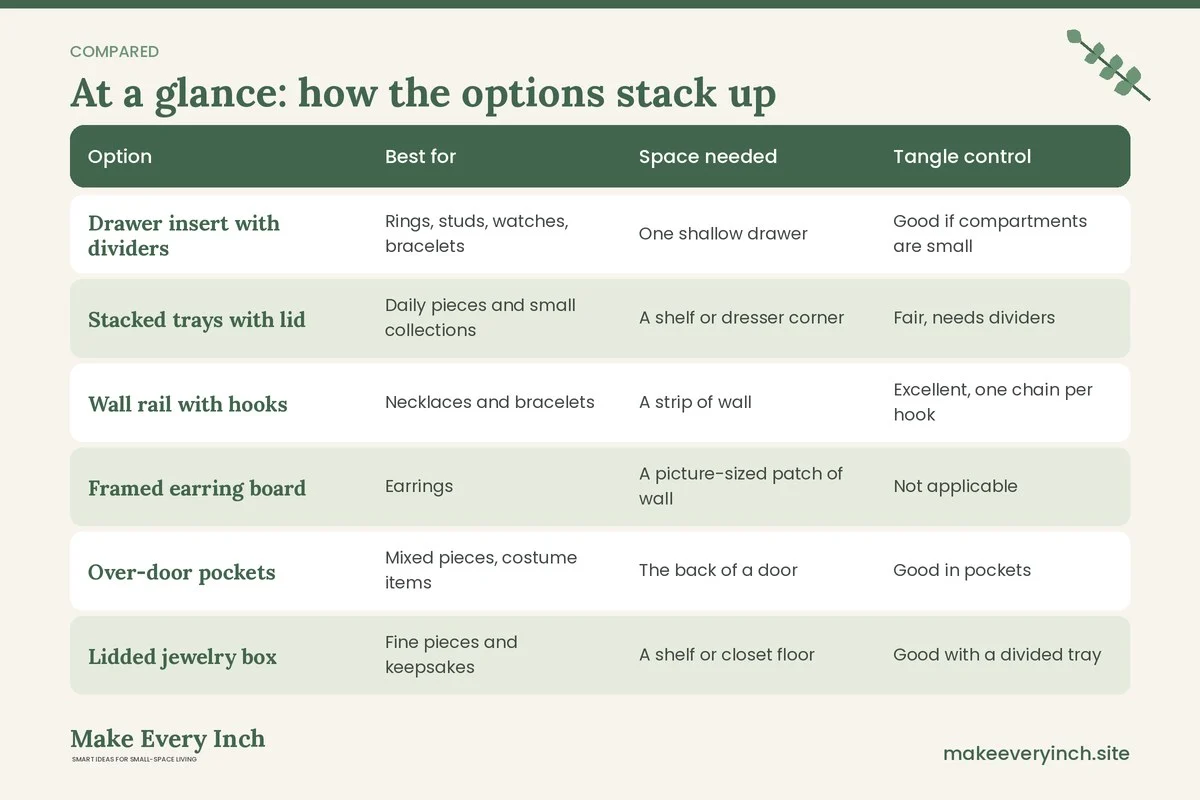
Compare the main options
| Option | Best for | Space needed | Tangle control | Tarnish control | Child and pet safety | |
|---|---|---|---|---|---|---|
| Drawer insert with dividers | Rings, studs, watches, bracelets | One shallow drawer | Good if compartments are small | Good, since it is dark and covered | Good with a child lock | |
| Stacked trays with lid | Daily pieces and small collections | A shelf or dresser corner | Fair, needs dividers | Fair, better with a lid | Good, if the lid is closed and the stack is high | |
| Wall rail with hooks | Necklaces and bracelets | A strip of wall | Excellent, one chain per hook | Fair, exposed to air | Poor for low walls, fine if mounted high | |
| Framed earring board | Earrings | A picture-sized patch of wall | Not applicable | Fair | Fair, keep out of reach of children | |
| Over-door pockets | Mixed pieces, costume items | The back of a door | Good in pockets | Fair to good if pockets are closed | Fair, door must be out of reach | |
| Lidded jewelry box | Fine pieces and keepsakes | A shelf or closet floor | Good with a divided tray | Good with anti-tarnish strips | Good if it locks | |
| Small pouches in a drawer | Single pieces and travel | A corner of a drawer | Excellent, one piece per pouch | Good, especially for silver | Good if the drawer is secured |
Three example rooms
Room 1: a studio with a single dresser
A studio has one dresser and no spare surface. The owner clears a top drawer, fits an adjustable insert and sorts jewelry by type. Daily pieces go in a small dish on the nightstand, and a slim rail beside the mirror holds five necklaces. A pouch with an anti-tarnish strip holds the silver. A child is not in the home, but a visiting niece is, so the owner keeps small earrings in a lidded tray in the drawer. The whole system takes a drawer and a wall strip about 12 inches wide.
Room 2: a rented bedroom with strict rules
The lease bans nails. The renter uses an over-door organizer with clear pockets on the back of the closet door for costume jewelry, and a framed fabric board that leans on the dresser for earrings. Fine pieces live in a small lidded box on the closet shelf. Every purchase is measured against the door clearance, and the renter reads our post on renter-friendly bedroom storage ideas for more no-drill options. Nothing is attached to the wall, so move-out is easy.
Room 3: a family bedroom with a toddler and a cat
A shared room with a toddler and a cat needs high and closed storage. The parents keep all small pieces in a locking box on the top shelf of the closet, out of reach of both. A rail for a few long necklaces is mounted high on the inside of the closet door, and the closet door stays latched. A small tray with a lid holds daily pieces in a high drawer with a child lock. After dressing, they check the floor for dropped earrings. The setup costs little and avoids the common danger of a small item on a low surface.
A weekly and seasonal routine
A system works only if it is easy to maintain. Spend two minutes each week returning pieces to their homes, wiping them if needed and checking that the dish by the sink or door is empty. Once a season, take out the jewelry, wipe each compartment, look for tarnish and loose stones, and move anything you did not wear to the occasional tray. Once a year, review the decision pile, repair, sell or donate. If you also rotate clothing by season, do the jewelry check at the same time, since pieces that suit a winter wardrobe differ from summer pieces.
Mistakes to avoid
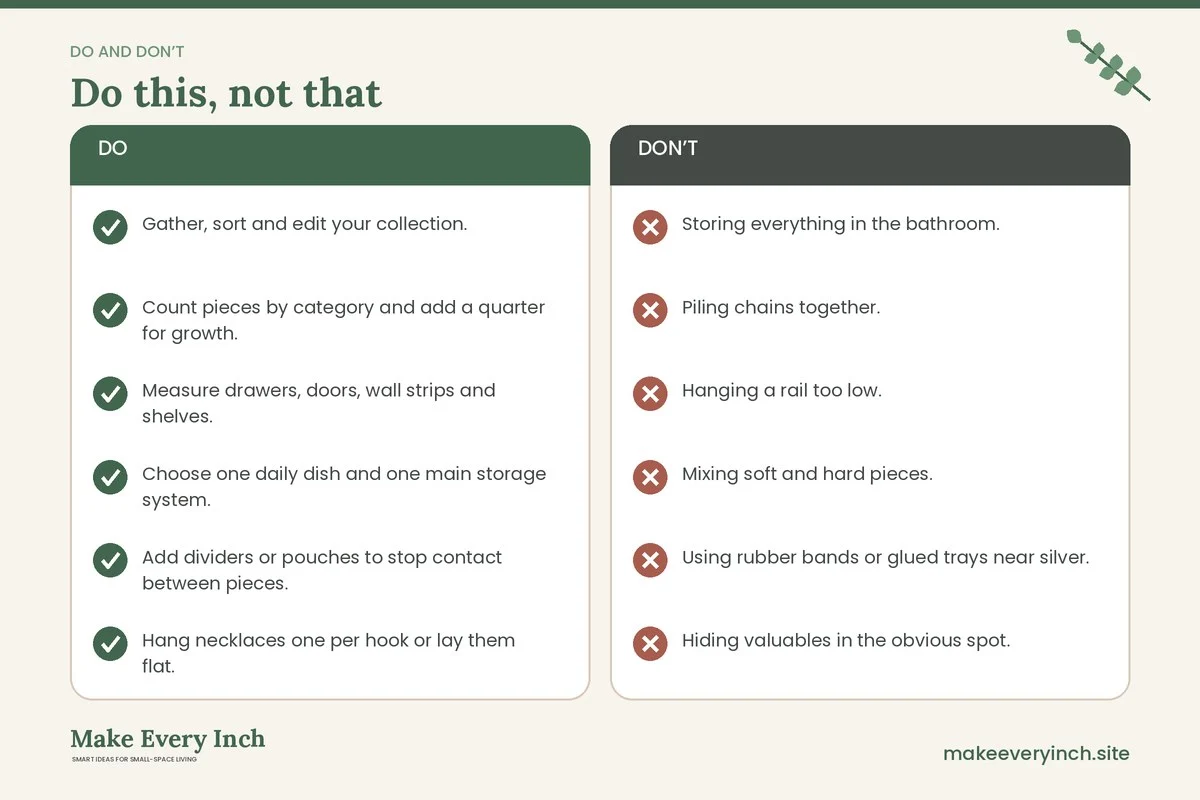
- Storing everything in the bathroom. Steam and cleaning products are hard on most metals.
- Piling chains together. One tangled mass is the most common reason people stop wearing necklaces.
- Hanging a rail too low. Children and pets reach it easily, and long chains can be a hazard.
- Mixing soft and hard pieces. Pearls and soft stones scratch easily.
- Using rubber bands or glued trays near silver. Some compounds speed up tarnish.
- Hiding valuables in the obvious spot. The top drawer is the first place anyone checks.
- Drilling without permission. Always check the lease or ask the owner first.
- Buying containers before sorting. You may need less than you think.
A checklist for your jewelry organization
- Gather, sort and edit your collection.
- Count pieces by category and add a quarter for growth.
- Measure drawers, doors, wall strips and shelves.
- Choose one daily dish and one main storage system.
- Add dividers or pouches to stop contact between pieces.
- Hang necklaces one per hook or lay them flat.
- Dry pieces before storing them.
- Use anti-tarnish strips or small bags for silver, and keep packets out of reach of children and pets.
- Store fine pieces in a lidded or lockable box.
- Mount rails and boards above the reach of children and pets.
- Keep small, magnetic and battery-powered items locked up if you have young children.
- Photograph valuable pieces and keep receipts.
- Set a two-minute weekly reset.
FAQ
What is the best way to organize jewelry in a very small space?
A shallow drawer insert plus a short wall rail covers most collections. Sort by type, give rings and earrings small compartments and hang necklaces one per hook. If you have no drawer to spare, a stack of lidded trays or an over-door organizer fills the gap.
How do I keep necklaces from tangling?
Fasten the clasp, hang one chain per hook or lay each chain flat in its own compartment. Keep chains at different lengths so they do not touch, and avoid piling them into one dish.
How do I prevent tarnish?
Keep pieces dry, wipe them after wearing, store silver in low-air bags or with anti-tarnish strips, and avoid the bathroom. Keep desiccant and tarnish packets away from children and pets and follow the label.
Is it safe to store jewelry where children can reach it?
Small pieces, magnets and button batteries are hazards for young children. Store them high or locked, and mount necklace rails out of reach. If a child swallows something, seek emergency help right away.
How do I protect jewelry from pets?
Close drawers, use lidded boxes and sweep the area for dropped earrings. Dogs chew and cats bat at shiny items, and a swallowed piece needs a vet.
Can I hang a jewelry rail without drilling?
Light rails may hold with removable adhesive, following the weight rating on the package. Heavier displays should be anchored to a stud, and any drilling needs the owner’s permission. See our post on no-drill storage ideas for renters for alternatives.
Should I keep jewelry in the bathroom?
Usually not. Steam and humidity can speed tarnish and damage some stones and plated pieces. Keep a dry dish at the sink for rings only while washing, and move them back afterward.
Where do I put jewelry that I rarely wear?
Place it in a lidded box or pouches on a closet shelf or in a lower drawer, with anti-tarnish protection for silver. Check it once a season.
Keep going: Keep going with our small closet ideas guide, the post on seasonal clothing storage in small homes and our list of small space organization ideas.
Save this guide for later
Pin the ideas you like to Pinterest so you can come back to them when you plan your space.