14 Small Balcony Mistakes to Avoid That Waste Space
Quick answer: The small balcony mistakes avoid list comes down to a few themes: furniture that is too big, items too close to the railing, too much weight, no lease check, blocked drainage, unsecured planters, open flame and overloaded electrical cords. Fix them by measuring first, keeping the layout low and open, securing everything against wind and following your building rules.
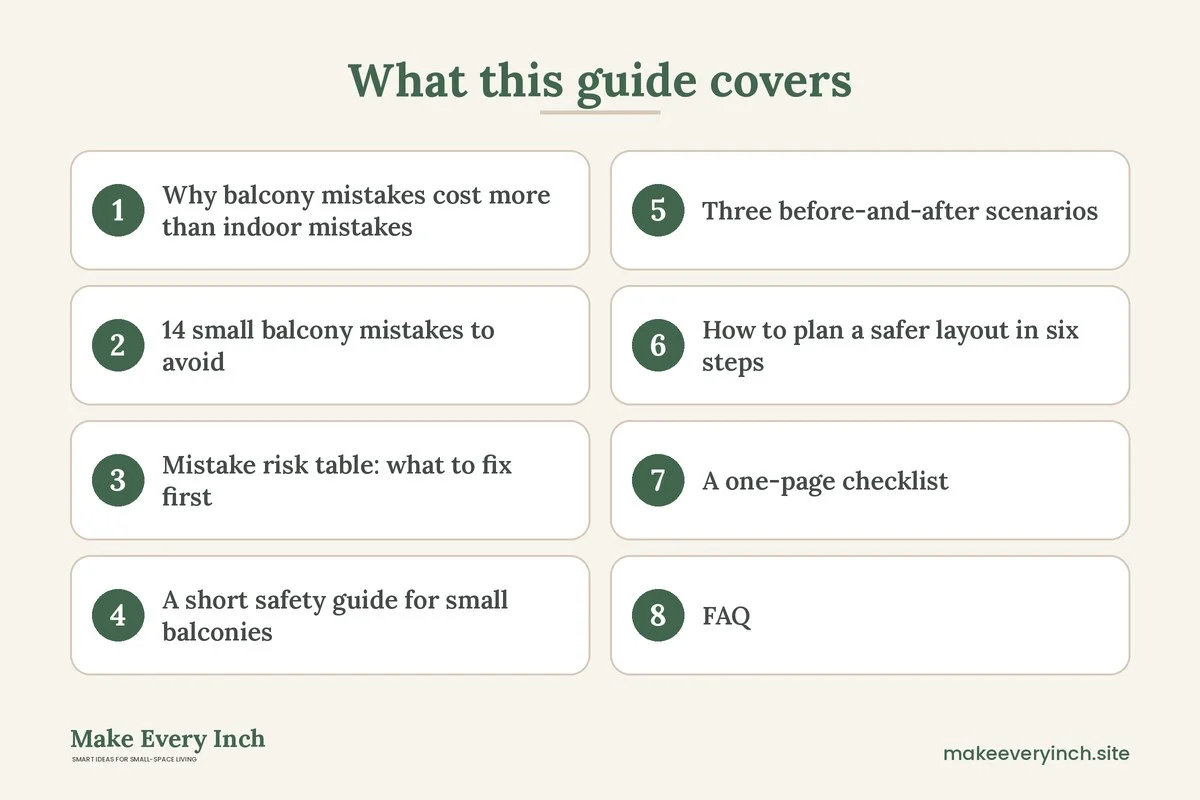
A small balcony mistakes avoid guide starts with a simple idea: tiny outdoor spaces are unforgiving. A bad sofa choice indoors is annoying. A bad choice on a balcony can be unsafe, can annoy the neighbour below and can break your lease. At the same time, most balcony mistakes are easy to fix once you can name them. This guide walks through 14 common errors, why each one backfires, and what to do instead. It also covers a risk table, a safety section, three before-and-after scenarios, a one-page checklist and a FAQ. For the full set of styling ideas once your layout is safe, see our pillar guide to small balcony ideas, and for storage specifically read small outdoor storage ideas for apartments.
Why balcony mistakes cost more than indoor mistakes
Indoors, a mistake costs you a return trip or a rearranged room. Outdoors, the same mistake can cause a fall, a leak or a fine. Balconies are exposed to wind, rain, sun and temperature swings. They have a structural load limit. They sit above other people and often next to other homes. And they are governed by a lease, building rules or an HOA that may restrict what you can place, hang or burn.
This does not mean you should avoid decorating. It means you plan in a different order. First comes the rule check, then the safety layout, and only then the style. If you follow that order, you will avoid most of the mistakes below.
14 small balcony mistakes to avoid
Mistakes about the layout
1. Buying furniture before measuring
The classic error is falling for a set that looks perfect online and then finding it fills the floor. Measure the depth and width of the balcony, the swing of the door and the height of the railing. Mark each piece’s footprint on the floor with painter’s tape. Keep a clear path of about 24 to 30 inches from the door to where you sit. If your balcony is 3 to 4 feet deep, two chairs and a table will not fit. A slim bench or a single chair with a small side table might.
Fix: measure, tape the footprints, sit in the taped zone for a few minutes and only then buy.
2. Choosing furniture that is too big or too many pieces
A full outdoor sofa, a large dining table or a chunky sectional dominates a small balcony and leaves no room to move. Many pieces fight for space and make the balcony feel like storage. Pick one main seating idea, such as a bench, a pair of folding chairs or a compact bistro set, and one surface. Leave open floor so the space reads as larger.
Fix: use the one main piece rule. Add secondary items only if you can still walk comfortably.
3. Ignoring the door swing and the path
A door that opens onto furniture is a daily irritation and, in an emergency, a hazard. Do not block the door or the path to it. Think about the way you carry things out, such as a tray with drinks. Keep the main path free of cords, pots and boxes.
Fix: keep the swing arc clear and make sure the exit is never blocked.
4. Using the whole floor and leaving no negative space
When every square foot holds something, the balcony feels cramped. Open floor makes a small space look larger and gives plants and light room to breathe. Aim to leave a third of the floor clear if you can.
Fix: use vertical zones. Keep heavy items low and near the wall, and leave the middle open.
5. Skipping scale and proportion in decor
Large rugs hanging past the edge, oversized planters and big lanterns overwhelm a tight space. Choose a rug that fits within the floor, with no overhang past the railing line. Choose plants that suit pot sizes you can safely hold. For tips on choosing, see our guide to small space plants and planters ideas.
Fix: pick fewer, smaller and lighter pieces, and repeat one color so the space looks calm.
Mistakes about safety
6. Placing furniture next to the railing
This is the most important mistake. A chair, bench, planter box or table pushed against the railing creates a step. Children and some pets can climb it and reach the top of the railing. Railings are also not designed to hold the weight of a person leaning on loaded furniture. Keep furniture at least 12 to 18 inches from the railing, and farther if children or climbing pets live with you or visit.
Fix: push seating and storage back against the wall. Keep the zone near the railing clear. Never leave children or pets unsupervised outside.
7. Hanging or perching things on the railing
Railing planters, hanging baskets, drying racks, bags and decor are tempting, but they can fall. Even a small pot dropped from several floors can hurt a person or damage property. Wind, a bump or a failing clip is enough. Many buildings prohibit anything attached to a railing. Do not attach anything unless your landlord has approved a specific method in writing. Never drill into a railing without permission.
Fix: use freestanding planters on the floor or sturdy low shelves against the wall. Keep everything inside the line of the railing.
8. Overloading the floor
Water-filled planters, wet soil, a stack of boxes, a full bench and several people can add up to more weight than a balcony is designed to carry. You usually cannot see the limit. Ask your building manager or check building documents. Spread weight out, keep heavy items near the wall, and do not gather a crowd on a small balcony. Look for warning signs such as cracks, sagging, rust, loose railings or flaking concrete, and report them.
Fix: keep loads light, use lightweight pots, and do not host large gatherings on a small balcony.
9. Ignoring wind and tip-over
Light chairs, empty pots, umbrellas and tall slim furniture can topple in wind, especially in a building with gusts at height. Anything that falls could hit someone. Keep the center of gravity low, put heavy items at the base of tall units, avoid large umbrellas and bring light pieces inside before storms.
Fix: choose low, heavy and stable pieces. Anchor tall items only where your building allows it.
10. Using open flame, grills or fire pits where banned
Many leases, building rules and local fire codes prohibit grills, fire pits, patio heaters and even candles on balconies. Charcoal, lighter fluid and gas canisters add to the hazard. Heat and a stray spark can ignite cushions, dry plants and railings. Check your rules before you buy any fire-producing item, and do not store fuel on a balcony.
Fix: use battery or solar lanterns for ambience. If you want to cook outdoors, ask your landlord and local fire authority about permitted options, or use a park or community space.
11. Careless electrical setups
String lights are the classic balcony upgrade, but indoor extension cords, overloaded sockets and daisy-chained strips cause shocks and fires. Outdoor spaces bring moisture. Use only outdoor-rated lights, cords and plugs. Connect to a socket protected by a ground-fault circuit interrupter (GFCI) where available. Do not run cords through a door gap that crushes them, and do not let plugs sit in standing water. Use solar or battery lights if you do not have a safe outdoor outlet.
Fix: pick outdoor-rated, low-power or solar lights, avoid overloaded sockets and ask an electrician if you are unsure.
Mistakes about rules, water and plants
12. Not checking the lease or building rules
Many decorators discover rules after they buy: no items above the railing, no visible storage, no hanging items, no privacy screens that cover the railing, no flooring changes, no drilling. A quick message to the landlord prevents refunds, fines and awkward conversations. Ask in writing about furniture, planters, screens, lights, grills and anything attached to the balcony. If you rent, our guide to renter-friendly small balcony ideas covers lease-friendly options, and our guide to renter-friendly apartment decorating ideas shows how to stay safe with a landlord.
Fix: ask first, keep the answer, photograph the balcony before you start and choose freestanding, removable pieces.
13. Letting water run where it should not
Balconies slope to drain. Mats, boxes and planters that block drains cause pooling and leaks. Overwatering plants sends dirty water to the neighbour below. Hosing the floor can send water over the edge. Water damage on a ceiling below is a quick way to upset a neighbour and invite a repair bill.
Fix: keep drains clear, lift furniture and planters on feet, use saucers that you empty, water slowly and shake out wet items before storing them.
14. Choosing plants without checking toxicity or heat
Some common ornamental plants are toxic to pets and children if chewed or swallowed. Sun also heats metal, dark plastic and stone, and hot surfaces can burn bare paws and skin. Soil, fertilizer and plant food should stay in sealed containers out of reach. Heavy pots add weight and fall if they tip.
Fix: check each plant against a veterinary or poison-control source, choose pet-safe options if animals visit, use light-colored and lightweight pots and keep hot surfaces out of reach.
Mistake risk table: what to fix first
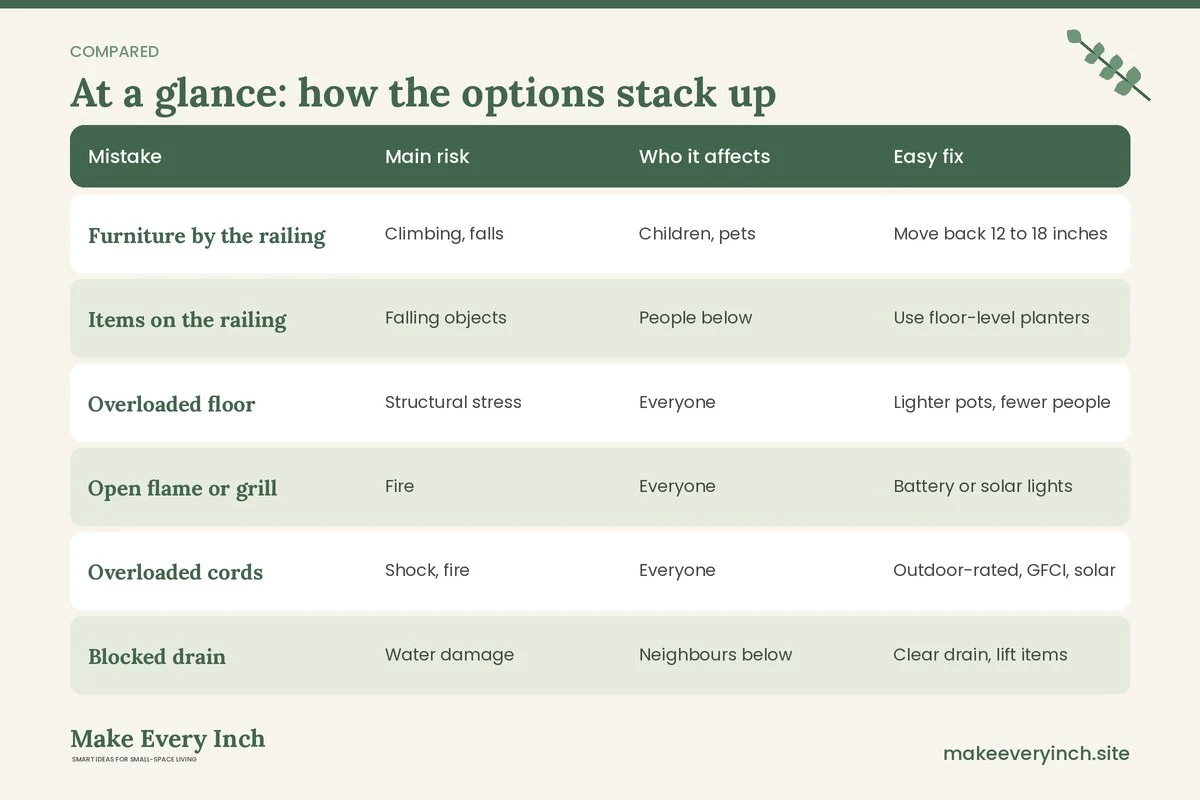
Use this table to decide what to tackle first. The ratings are general guidance and depend on your building and household.
| Mistake | Main risk | Who it affects | Easy fix |
|---|---|---|---|
| Furniture by the railing | Climbing, falls | Children, pets | Move back 12 to 18 inches |
| Items on the railing | Falling objects | People below | Use floor-level planters |
| Overloaded floor | Structural stress | Everyone | Lighter pots, fewer people |
| Open flame or grill | Fire | Everyone | Battery or solar lights |
| Overloaded cords | Shock, fire | Everyone | Outdoor-rated, GFCI, solar |
| Blocked drain | Water damage | Neighbours below | Clear drain, lift items |
| Wind tip-over | Falling items, injury | People nearby | Low, heavy pieces |
| Toxic plants | Poisoning | Children, pets | Check plants |
| No lease check | Fines, deposit loss | You | Ask in writing |
| Oversized furniture | Cramped space | You | Measure, tape footprints |
A short safety guide for small balconies
Because safety threads through the whole list, here is a short summary you can keep on your phone.
Structure and weight
Check building rules about load. Do not overload. Spread weight out. Report cracks, rust or loose railings.
Railings, children and pets
Keep furniture 12 to 18 inches away. Do not hang things from railings. Check bar gaps. Supervise children and pets.
Wind and falling objects
Keep everything low, heavy and secured. Bring light items inside. Nothing should hang past the line of the railing.
Fire, candles and electrical
Check rules before bringing in grills or open flame. Use battery or solar candles. Use outdoor-rated, GFCI-protected lights and cords, and do not overload sockets.
Drainage, plants and heat
Keep drains clear. Water gently. Avoid toxic plants if pets or kids visit. Beware hot surfaces in direct sun.
Permission and no-drill rules
Ask before you attach, drill or anchor anything to a railing, wall, ceiling or floor. Use freestanding pieces first.
Three before-and-after scenarios
Scenario 1: The cluttered 4 by 7 foot balcony
Before: a folding table pressed against the railing, two chairs, a floor-length rug that overhangs the edge, three railing planters, a row of string lights plugged into an indoor extension cord and a box of tools in the corner. Every surface is covered and the door barely opens.
After: one bistro table moved back 14 inches from the railing, two folding chairs that fold when not in use, a smaller rug within the floor line, planters moved to the floor and the wall, string lights replaced with a solar set and tools placed in a lidded bench. The door swing is clear, the railing zone is open and the space feels about twice as big.
Scenario 2: The family balcony with a toddler
Before: a bench along the railing, a stack of crates beside it and a hanging basket on the railing. A toddler can climb the crates onto the bench and reach the railing.
After: the bench moved against the wall with the back to the building, crates moved inside, the basket removed, a floor-level planter in a corner and a clear zone of 18 inches or more near the railing. A door latch or gate is discussed with the landlord. The adult remains present whenever the toddler is outside.
Scenario 3: The plant lover with a small sunny balcony
Before: a metal shelf with ten heavy ceramic pots, a few of which hang over the edge, plus a water-filled tray that overflows onto the floor and drips to the neighbour below.
After: fewer, lighter pots in a low unit against the wall, saucers emptied after watering, drains clear, pet-safe plants chosen and a light-colored mat to reduce heat. Weight is cut by more than half. For more ideas, see small space plants and planters ideas.
How to plan a safer layout in six steps
- Step 1, ask: check the lease and building rules, and ask in writing.
- Step 2, measure: floor, door swing, railing height, bar gaps and slope.
- Step 3, tape: mark footprints on the floor and sit there.
- Step 4, zone: keep heavy items low and near the wall, and the railing zone clear.
- Step 5, secure: anchor only where allowed, choose weight and latches, and plan for wind.
- Step 6, light and plant: use outdoor-rated lights, safe plants and gentle watering.
When you have a safe layout, the styling is the fun part. Use one color family, mix a few textures, add a plant or two and keep the floor open. For inspiration beyond the balcony, our guides to small living room ideas, small dining room ideas and studio apartment ideas show how to carry a calm look from inside to out. If you are working with limited funds, our guide to budget small space ideas helps you spend where it matters. For furniture that fits tight rooms, see best furniture for small apartments and small room decor ideas.
A one-page checklist
- Read the lease, house rules and HOA guidelines.
- Ask in writing about furniture, planters, lights, screens and grills.
- Photograph the balcony before you begin.
- Measure floor, door swing, railing height and bar gaps.
- Tape footprints and sit in them.
- Keep a clear path of about 24 to 30 inches.
- Keep furniture 12 to 18 inches from the railing.
- Hang nothing from the railing.
- Keep weight low, light and near the wall.
- Secure items against wind and bring light pieces inside in storms.
- Skip grills, fire pits and open flame unless permitted.
- Use outdoor-rated, GFCI-protected lights and no overloaded sockets.
- Keep drains clear and empty saucers.
- Check plants for toxicity and use sealed containers for soil and food.
- Never drill or attach anything without permission.
- Review the balcony every season and remove what you do not use.
FAQ
What is the biggest small balcony mistake?
Placing furniture or storage right against the railing is usually the most serious one, because it creates a step for children and pets. Close behind are overloading the floor and hanging items from the railing.
Can I put a grill or fire pit on my balcony?
Many leases and local codes prohibit them. Check with your landlord and local fire authority before you buy anything of this kind. Battery and solar lights are a safer way to create atmosphere.
How do I know if my balcony can hold a lot of weight?
You usually cannot tell by looking. Ask the building manager or check building documents. Keep loads light and avoid crowds, and report cracks, sagging or rust.
Are string lights safe on a balcony?
They can be, if they are outdoor-rated, plugged into a GFCI-protected socket where available and not overloading the circuit. Solar or battery lights avoid many problems.
Is it okay to hang planters from the railing?
Only if your building allows it, and even then it is risky because planters can fall. Floor-level planters are safer. Never drill into a railing without permission.
How can I make a tiny balcony feel bigger?
Keep the floor open, choose slim and low pieces, use one color family and avoid clutter. Remove what you do not use.
What if I rent and cannot change anything?
Choose freestanding, removable items such as folding chairs, a bench and floor planters. Ask the landlord what is acceptable and keep the answer.
Keep going: Keep planning with our pillar guide to small balcony ideas, our guide to small outdoor storage ideas for apartments and our renter-friendly small balcony ideas.
Save this guide for later
Pin the ideas you like to Pinterest so you can come back to them when you plan your space.