Renter-Friendly Ways to Add Privacy: A Sightline Audit
Quick answer: The most reliable renter friendly ways add privacy start with a sightline audit: stand where strangers can see in, note which windows, doors and gaps are exposed, then block only those lines. Use removable window film, layered curtains on tension rods, freestanding screens, bookcases and rugs, and keep escape routes and ventilation clear. Check the lease, never drill without permission, and keep fire exits unblocked.
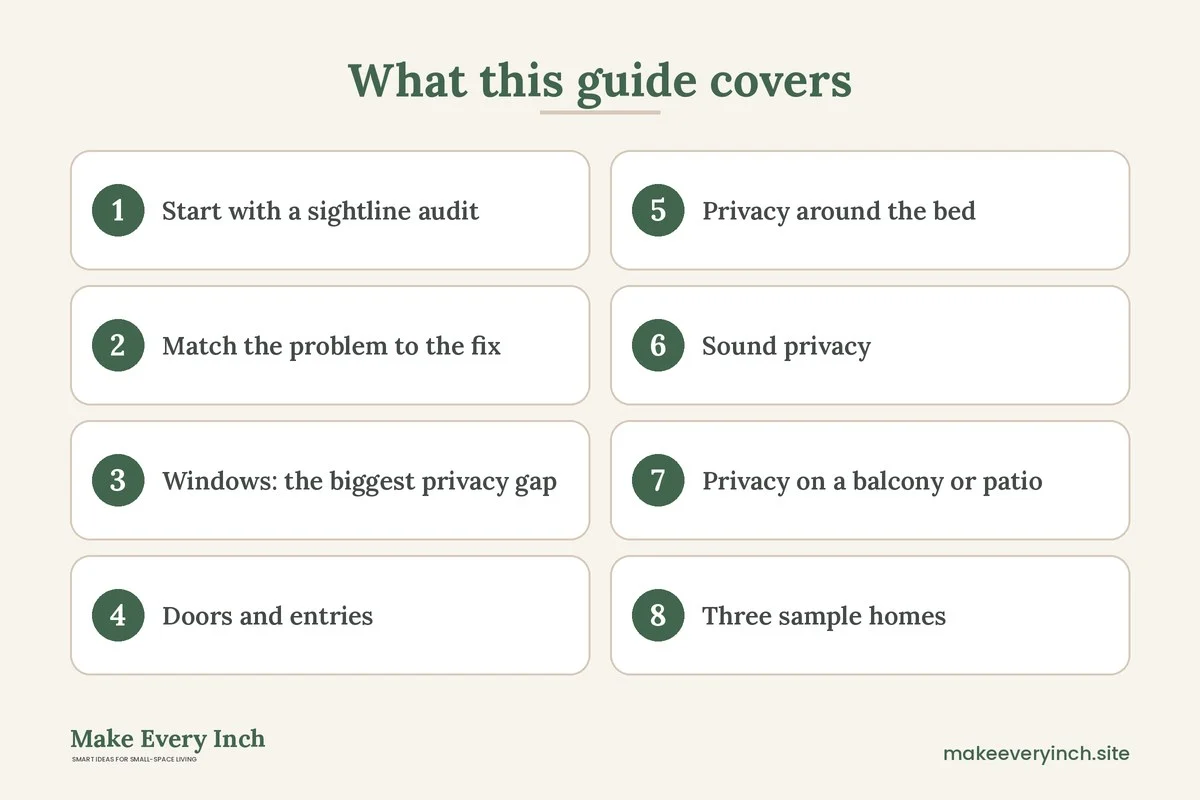
Renter Friendly ways add privacy are easiest to choose once you know exactly what you want to hide. A rental can feel exposed for very different reasons. A ground-floor window faces the pavement. A neighbor’s balcony looks into your bedroom. Thin walls carry every phone call. A shared flat has doors that never quite close. Each problem has a different fix, and buying a heavy curtain for a noise problem wastes money. This guide treats privacy as a measurement problem. You will map sightlines, rate each exposure, match it to a removable fix and check that the fix does not break a safety rule. You will find a threat table, a window-by-window breakdown, bed and door solutions, noise basics, three sample homes, a weekend plan and a checklist. For the wider topic, read our pillar on renter-friendly apartment decorating ideas, then pair this with how to create privacy in a small home and renter-friendly window treatment ideas.
Start with a sightline audit
Privacy is about lines of sight and lines of sound. Before you buy anything, spend 20 minutes walking through the home at two times of day, once in daylight and once after dark with the lights on. You are looking for three things.
1. Who can see in? Stand outside, if you can, or ask a friend to stand where passersby, neighbors and delivery people stand. Note which windows and doors show your living space.
2. What can they see? A bed and a desk are different from a wardrobe. Rank the exposed zones by how much it bothers you.
3. When can they see? Daytime sun often makes it hard to see in, but evening lights flip the effect. At night your lit room becomes a stage.
Draw a rough floor plan on paper. Mark each window, door and gap. Then draw arrows for lines of sight and write a number from 1 to 3 beside each one, where 1 means mildly bothered and 3 means you change clothes with the blind down. Fix the 3s first. A couple of well-placed solutions beat a dozen scattered ones.
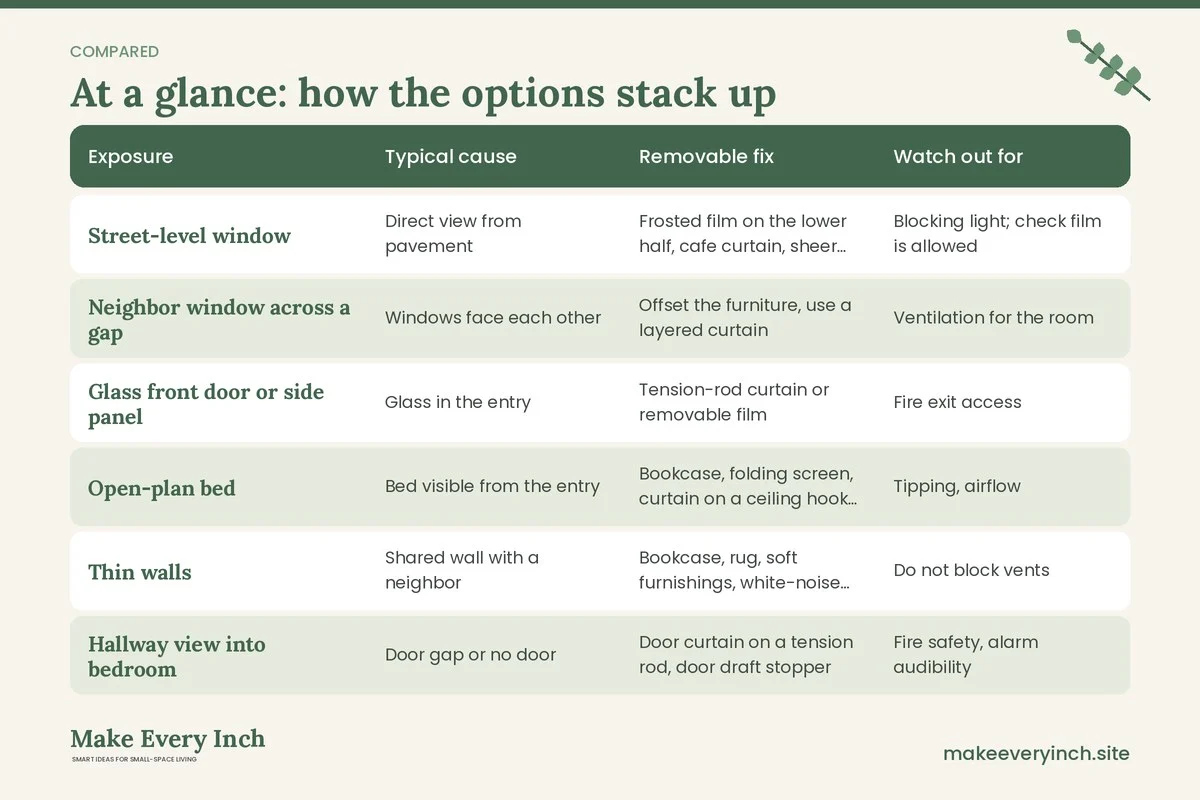
Match the problem to the fix
| Exposure | Typical cause | Removable fix | Watch out for | |
|---|---|---|---|---|
| Street-level window | Direct view from pavement | Frosted film on the lower half, cafe curtain, sheer plus blind | Blocking light; check film is allowed | |
| Neighbor window across a gap | Windows face each other | Offset the furniture, use a layered curtain | Ventilation for the room | |
| Glass front door or side panel | Glass in the entry | Tension-rod curtain or removable film | Fire exit access | |
| Open-plan bed | Bed visible from the entry | Bookcase, folding screen, curtain on a ceiling hook if permitted | Tipping, airflow | |
| Thin walls | Shared wall with a neighbor | Bookcase, rug, soft furnishings, white-noise sound | Do not block vents | |
| Hallway view into bedroom | Door gap or no door | Door curtain on a tension rod, door draft stopper | Fire safety, alarm audibility | |
| Shared flat lock | Doors do not lock | Ask the landlord, use a portable alarm, agree house rules | Do not add unapproved locks |
Use this table as a short-list. Anything in the last column is a risk to read before buying.
Windows: the biggest privacy gap
Windows are the usual starting point because they are the biggest hole in the wall. Approach them by height. Strangers rarely see in above eye level, so the lower half of the pane is often all that needs covering.
Frosted or textured film
Removable window film adds a frosted look without blocking all light. Measure the glass, clean it thoroughly, and apply it with a spray of water so you can reposition it. Check your lease first, because some landlords object to anything stuck to the glass. Test a corner first and peel it slowly. Some films can be hard to remove from old or double-glazed glass, and extreme heat can crack glass when film traps heat on a dark pane, so use a light-colored film on sunny windows and read the packaging. Cutting a band across the lower half keeps the upper glass clear for daylight.
Cafe curtains
A cafe curtain covers just the lower half of the window and hangs on a small tension rod placed at the midpoint of the frame. It lets daylight fall from above while hiding the eye-level view. Choose a fabric that is opaque enough to block shapes but light enough not to darken the room. Make sure the rod is rated for the weight of the curtain and fits the frame snugly.
Layered sheers and blinds
A sheer curtain blocks the daytime view and a heavier layer or blind closes the evening view. Hang the sheer on a rod closest to the glass and a heavier curtain on a second rod. This gives you three modes: open, sheer only and fully closed. Keep cords of blinds out of reach of children and pets, using cord cleats or cordless designs. Dangling cords are a strangulation hazard.
Cellular and roller blinds
Blinds with a snug fit hide the view and add insulation. In a rental, look for versions that clip into the frame without screws, and measure carefully because the frame depth matters. Use only what the lease permits and keep the originals stored for move-out.
Window plants and shelves
A shelf of plants in the window creates a living screen. Place a narrow freestanding unit in front of the glass, but leave the window latch and any emergency exit route clear. Make sure plants are safe for children and pets, and do not put heavy pots on a high, narrow shelf that could tip.
Doors and entries
Doors cause two different problems: sightlines through gaps, and sound that leaks around them.
- Glass panel doors: Add a tension-rod curtain across the glass or apply temporary film. A curtain can also reduce draughts. Keep any curtain clear of the door handle and latch, and never block the route a person would take in an emergency.
- Door gaps and keyholes: A draft stopper or a door sweep reduces sight and sound at the bottom. Choose a type that sticks on without screws if permitted, and check that it does not stop the door from opening freely.
- Open entries: A narrow console, a coat rack or a folding screen near the entry blocks the first line of sight from the door. Leave at least 30 inches of clear walkway for people to pass.
- Peepholes: If you cannot see who is at the door, ask the landlord to install a peephole or a viewer. Avoid adding a hole yourself.
Do not add locks, bolts or chains that the landlord has not approved. Landlords often have rules about changes to locks, and an unapproved lock can delay a firefighter or an emergency responder. If you feel unsafe, speak to your landlord about changing the lock or installing a better one.
Privacy around the bed
In a studio or a shared room, the bed is the most exposed spot. You do not need a wall to make it feel private.
Freestanding screens
A folding screen at the foot or side of the bed blocks the line from the entry. A three-panel screen about 60 to 72 inches tall is enough to block eye level. Choose a stable base, test that it does not tip when bumped, and keep it 18 to 24 inches from the bed so you can pass.
Bookcases as dividers
A low bookcase works as a partial wall. Place it at right angles to the bed. Anchor tall units to the wall where allowed, and avoid placing heavy items on top shelves. If you cannot anchor, keep the unit under about 36 inches or choose a lighter material. See renter-friendly ways to divide a studio apartment for more layouts.
Curtain dividers
A curtain on a tension rod or a ceiling track (if allowed) creates a soft wall. Keep the curtain at least 12 inches clear of heaters and radiators to avoid a fire risk. Do not hang curtains across a smoke alarm or a sprinkler head, and never block a window used as a fire exit.
Canopy or headboard alcoves
A freestanding canopy frame creates a cozy enclosure. Make sure fabrics are kept away from heat and from lamps and string lights. Use cool-touch lights only, and never leave a lit candle near fabric.
Sound privacy
Sight and sound are different problems. Soft, thick materials absorb sound, while solid objects block it. A few simple changes help:
- Add mass to the shared wall. A full bookcase against the wall that you share with a neighbor reduces the voices you hear. Anchor it where allowed.
- Cover hard floors. A thick rug with an underlay reduces sound going down. Check the lease, because some buildings require a minimum amount of floor covering.
- Use soft furnishings. Upholstered headboards, thick curtains and cushions absorb echo.
- Seal gaps. A door sweep or a removable weather strip stops sound traveling under or around the door. Leave ventilation intact where fuel-burning appliances are present.
- Add white noise. A fan or a white-noise device masks speech. Place it away from bedding and keep cords tidy. See renter-friendly ways to hide cords for neat options.
Sound control has limits. A rental with very thin walls may need a conversation with the landlord or neighbors.
Privacy on a balcony or patio
Outdoor spaces are often the most exposed part of a rental. Bamboo or reed screening, planters of tall grasses and a freestanding trellis all work without drilling. Keep within weight limits for balconies, avoid blocking drains and keep an escape route clear. For the full set of ideas, read our guide on small balcony privacy ideas.
Three sample homes
A ground-floor one bedroom facing a footpath
The tenant rated the bedroom window a 3 and the living room window a 2. She applied a frosted film band to the lower half of both windows, which the landlord approved, and added a sheer curtain on a tension rod. After dark she closed a heavier curtain. Daylight stayed bright, and the evening view disappeared.
An open-plan studio where the bed is visible from the door
The tenant used a low bookcase and a folding screen to block the line from the door to the bed. He left a 30 inch walkway beside the screen. A rug under the bed zone marked it as a separate area. The bookcase was kept below shoulder height and the screen was weighted at the base so it could not tip. He also followed our ideas in studio apartment ideas for renters.
A shared flat with thin walls and doors that do not lock
Three tenants agreed on quiet hours, asked the landlord about better locks, and added door sweeps and rugs. Each person placed a bookcase against the shared wall in their room. They also set a rule that doors stay closed when anyone is changing. A note in the kitchen confirmed the rules for guests.
A weekend plan
You can do the whole job in two days.
- Saturday morning: Complete the sightline audit and floor plan. Photograph each window and door.
- Saturday afternoon: Read the lease. Message the landlord for permission on film, door sweeps or locks.
- Sunday morning: Measure windows, doors and gaps. List the solutions and check the weight and fit of each.
- Sunday afternoon: Install what you can. Test every screen for stability. Check that exits and vents are clear.
- One week later: Walk the sightline audit again, in the evening. Fix anything still scored a 3.
Safety and lease rules for privacy fixes
Privacy products can create new problems. Take these precautions.
- Never drill without permission. Use tension rods, adhesive hooks within their limits, freestanding screens and weighted bases.
- Keep exits clear. Do not cover or block any door or window used as a fire exit. Do not obstruct smoke alarms.
- Fabric and heat. Keep curtains, screens and canopies clear of radiators, heaters, candles and lamps.
- Tall furniture. Anchor bookcases and wardrobes used as dividers where you can. If not, keep them low.
- Cords on blinds. Use cordless blinds or secure cords out of reach of children and pets.
- Ventilation. Do not seal every gap in a room with a gas appliance or no extractor fan. Keep some air movement, especially in a bathroom or kitchen.
- Film and glass. Follow the instructions for window film, avoid dark film on large sunny panes and check the lease.
- Low-VOC and fumes. If you use any adhesive or paint, choose low-VOC options and open a window while it cures.
- Wet areas. Do not put privacy screens with electrical lights near a tub or shower. Use only fixtures rated for wet areas and a GFCI-protected outlet.
- Locks. Do not install a lock without landlord approval.
Common privacy mistakes in rentals
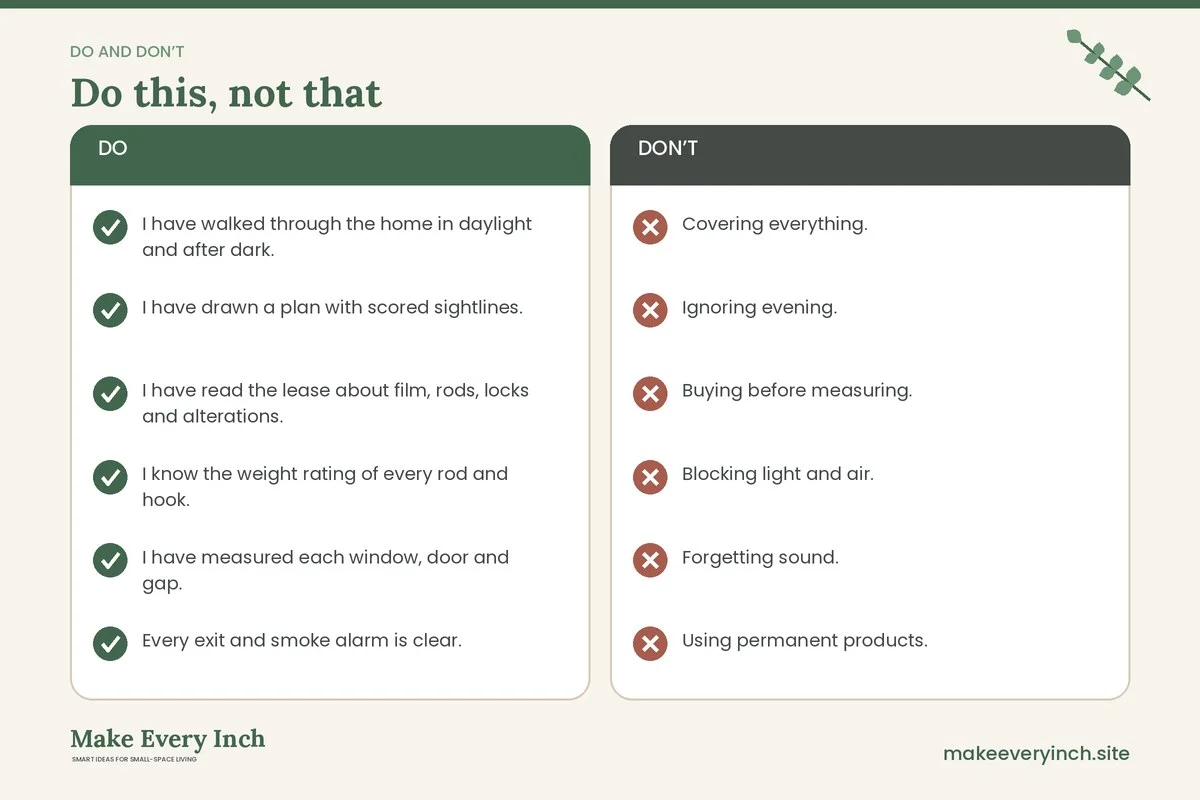
- Covering everything. A fully shuttered home feels dark and stuffy. Cover only the lines you scored 2 or 3.
- Ignoring evening. Daytime frost is useless once the lights come on. Plan for the evening view too.
- Buying before measuring. A rod or a screen of the wrong size looks awkward and fails to block the view.
- Blocking light and air. Choose sheers, lower-half covers and slatted options to protect daylight.
- Forgetting sound. A beautiful curtain does nothing for a thin shared wall.
- Using permanent products. Strong glue and screws risk your deposit.
A privacy checklist
- I have walked through the home in daylight and after dark.
- I have drawn a plan with scored sightlines.
- I have read the lease about film, rods, locks and alterations.
- I know the weight rating of every rod and hook.
- I have measured each window, door and gap.
- Every exit and smoke alarm is clear.
- Blind cords are out of reach of children and pets.
- Tall dividers are anchored or low.
- Fabric is away from heat sources.
- I have rechecked the scores after one week.
Frequently asked questions
What is the cheapest way to add privacy to a rental window?
A tension-rod cafe curtain or a sheer panel is usually the lowest-cost route, and both are removable. Frosted film is also popular. Always check the lease first.
Can I use window film in a rental?
Often yes, but check the lease and ask your landlord. Test a small area first, and use light-colored film on sun-exposed glass so heat does not build up.
How do I stop neighbors seeing in at night?
Use layered coverings, with a sheer for daytime and a heavier curtain or blind for the evening. Place lamps so the light does not backlight you against the glass.
How can I get privacy in a studio?
Use a bookcase, a folding screen or a curtain on a tension rod to block the line from the door to the bed. Our post on renter-friendly ways to divide a studio apartment lists more.
How do I reduce noise from neighbors?
Add mass and softness: a bookcase on the shared wall, a thick rug, soft furnishings and a door sweep. A white-noise device can mask voices. Serious noise problems may need a conversation with the landlord.
Can I add a lock to my rental?
Only with your landlord’s approval. Unapproved locks can create safety and legal issues. Ask the landlord to fix a weak lock.
Will privacy screens block the fire exit?
They must not. Keep at least 30 inches of clear path to every door and leave windows used as exits free to open.
Keep going: Keep going with renter-friendly apartment decorating ideas, learn how to hang art safely in renter-friendly wall decor ideas, and add comfort with renter-friendly lighting ideas.
Save this guide for later
Pin the ideas you like to Pinterest so you can come back to them when you plan your space.