14 Renter-Friendly Improvements to Avoid Before Moving In
Quick answer: Truly renter friendly improvements avoid permanent change, safety risks and lease breaches. The upgrades most likely to backfire are peel-and-stick items on damaged paint, DIY wiring, heavy items on adhesive, unapproved paint, drilled anchors, blocked vents and valves, and anything that traps moisture. Ask in writing, photograph first, test small, and choose freestanding swaps when in doubt.
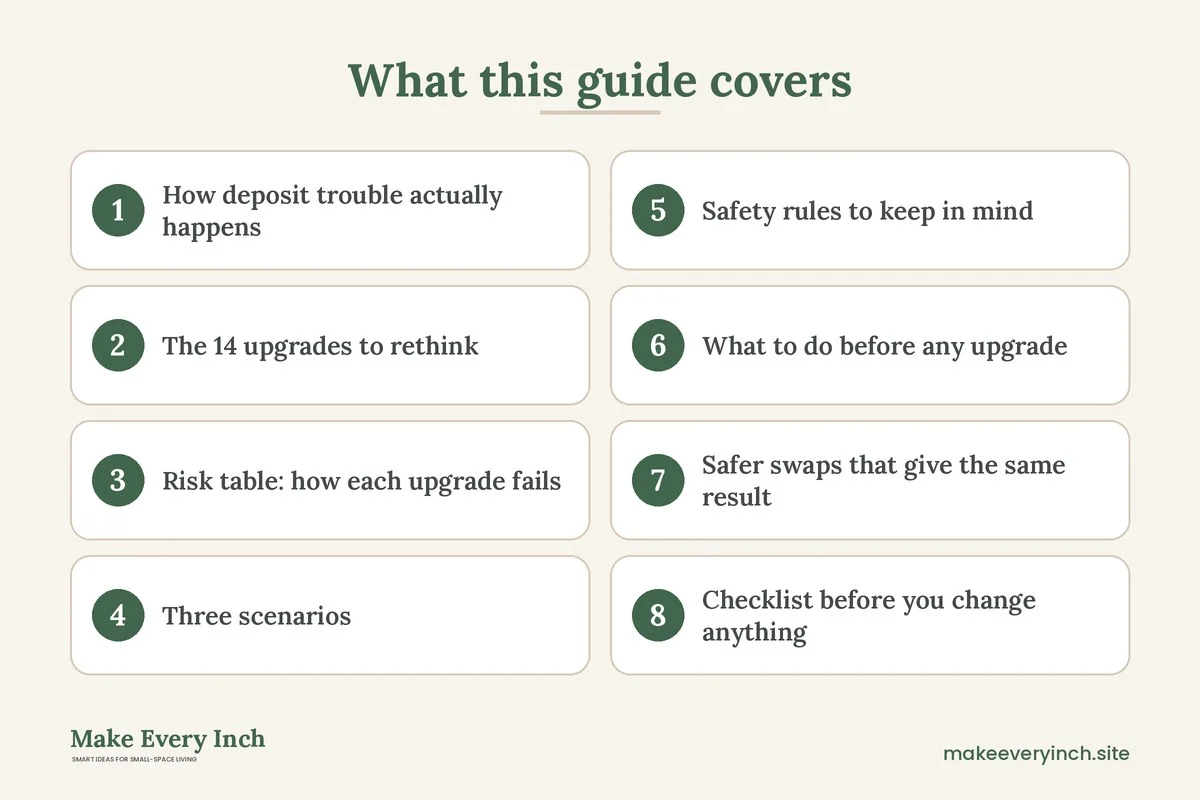
Renter Friendly improvements avoid trouble only when they are chosen with the wall, the lease and the building in mind. Plenty of upgrades are sold as removable and still leave a mark, a hazard or a bill. A strip that tears off paint, a plug-in fixture wired through a shared circuit, a heavy shelf on a sticky hook and a bold paint color applied without asking all look harmless on the day and expensive at move-out. This guide is a field manual for the ones to skip or rethink. It explains how deposit disputes actually happen, lists 14 popular upgrades with the specific way each goes wrong, gives a risk table, offers safer swaps, walks through three real-world scenarios, covers safety and ends with a pre-check list and FAQ. For the wider approach to making a rental feel like home, start with our hub guide on renter-friendly apartment decorating ideas. If you want the positive version of this post, see our lists of security deposit safe apartment upgrades and budget renter upgrades. This one is the other side of the ledger: what to skip, and why.
How deposit trouble actually happens
Most deposit disputes are not about dramatic damage. They are about three ordinary categories. The first is surface damage, such as torn paint, sticky residue, holes, stains or scratches. The second is unapproved change, such as a repainted wall, a swapped fixture or a new lock, which a lease may ban even if it looks nicer. The third is safety or maintenance neglect, such as blocked vents, moisture on walls, a blocked shutoff or a fire hazard. A landlord can usually bill for repair and cleaning that goes beyond normal wear and tear, and the rules differ by place, so read your lease and your local tenant guidance.
Two habits prevent most of the problems. First, ask in writing before any change that touches a surface, a fixture or a system, and keep the reply. Second, photograph the space with dates before you start, at the end, and again at move-out. With those two records, many disputes end quickly. The rest of this post lists where people skip those habits.
The 14 upgrades to rethink
Surfaces and walls
1. Adhesive strips on old or flat paint
Adhesive strips are a staple, and they are fine on sound, cured, semi-gloss paint. On older, flat or cheap paint, or a freshly painted wall that has not cured for several weeks, they can lift the paint with them when pulled. Even a careful pull can leave a patch. Test a hidden spot for a few days and pull slowly, parallel to the wall. If paint lifts, switch to leaning art or a tension-based display. See our guide to renter-friendly wall decor ideas for options.
2. Heavy items on adhesive hooks
Weight ratings assume a perfect surface and a straight pull. A mirror, a loaded shelf or a heavy coat rack on a hook is a fall risk that can break the item, damage the floor or hurt someone. Keep adhesive to light frames and small hooks, and use freestanding furniture for anything heavy. Never hang a mirror over a bed or a crib on adhesive.
3. Peel-and-stick wallpaper on big areas
Peel-and-stick covers can look excellent, and they can also pull off paint, show seams, trap moisture in a bathroom and be hard to remove on textured walls. They may also breach a lease clause on wall coverings. Ask first. If you get permission, test a small piece, work in a small area such as the back of a bookcase, and avoid wet zones.
4. Repainting without permission
Paint is the classic trap. Even a pleasant color can lead to a charge for repainting at move-out, and a poor cover job is worse. If your landlord allows painting, ask whether you must restore the original color. Choose a low-VOC product, ventilate well, and keep a record of the paint name and color. If painting is banned, use fabric, art and textiles for color.
5. Drilled anchors and heavy mounts
A drilled hole is a repair for the landlord. Never drill without permission, and never drill without checking for wiring and pipes behind the wall. Some landlords allow small nail holes that are easy to patch. A TV or a tall bookcase is a different case. For a tall piece, anchoring it to the wall prevents tipping, so ask for permission and explain the safety reason. Where it is not allowed, pick a lower, stable piece with a wide base.
Fixtures, power and systems
6. Swapping light fixtures or switches yourself
Replacing a ceiling fixture, a switch or an outlet looks easy, and it is the most dangerous item on this list. Wiring work in a rental may breach the lease, may need a licensed electrician and may void insurance. Use plug-in lamps, battery lights and smart bulbs instead. Our post on renter-friendly lighting ideas shows how to light a room without touching a single wire.
7. Overloading outlets and extension cords
A power strip packed with a heater, a kettle and a charger can overheat. Do not daisy-chain strips, do not run cords under rugs and do not use a cord that is warm to the touch. If an outlet is loose, hot or scorched, tell the landlord. For tidy cords that stay safe, see renter-friendly ways to hide cords.
8. Replacing a faucet, showerhead or toilet seat without checking
A showerhead or aerator swap is usually reversible, and many landlords accept it if you keep the originals and put them back. A faucet or toilet swap is more risky because a bad seal leaks inside a wall or floor. Keep the original parts in a labeled bag, use plumber’s tape properly and stop if anything looks corroded. For more bathroom ideas, read our post on renter-friendly bathroom upgrades.
9. Changing the locks or adding a deadbolt
Locks are a safety and access matter. A landlord and sometimes a fire department need access, and a change may breach the lease. Ask first, and ask for a rekey rather than an install. Door barricades and tension bars that wedge under the handle can be an alternative while you wait.
Floors, windows and fixtures
10. Sticky floor tiles and vinyl over old flooring
Peel-and-stick tile can bond to the floor and rip up the layer below when it comes off. It can also hide moisture or subfloor problems, and it traps water in a kitchen or bathroom. Use area rugs instead, with a non-slip pad that is safe for your floor type. Check that the pad will not discolor vinyl or stain wood.
11. Window film and blackout sheets glued to glass
Film can crack glass through heat stress, leave residue and affect the seal on a double-glazed window. A tension rod curtain, a cellular shade that sits in the frame with clips or a removable cover works with less risk. Our renter-friendly window treatment ideas post has details.
12. Cabinet hardware swaps that cannot be reversed
Swapping a knob for a different size can leave extra holes. If you try it, keep the originals, choose hardware that matches the existing hole spacing and store the old pieces safely. A paint touch-up is not a fix for a hole.
Storage and appliances
13. Blocking vents, valves, radiators and panels
A tall shelf in front of a radiator, a curtain over a baseboard heater or boxes around an electrical panel are fire and flood hazards. Keep at least 3 feet clear in front of a panel, never cover a vent, and keep water shutoffs reachable. If a heater is in the way, move the furniture, not the heater.
14. Adding or moving appliances without checking the hookups
A portable dishwasher, a heater, a small washer or a window air conditioner can strain wiring, plumbing or the window frame. Read the lease, check the manual for clearance and use a dedicated outlet where required. A window unit needs secure support so it cannot fall out, and a built-in item should be left for the landlord. Our post on small laundry area ideas for apartments covers hookup limits, and so does the sibling guide on renter friendly small laundry area planning.
Risk table: how each upgrade fails
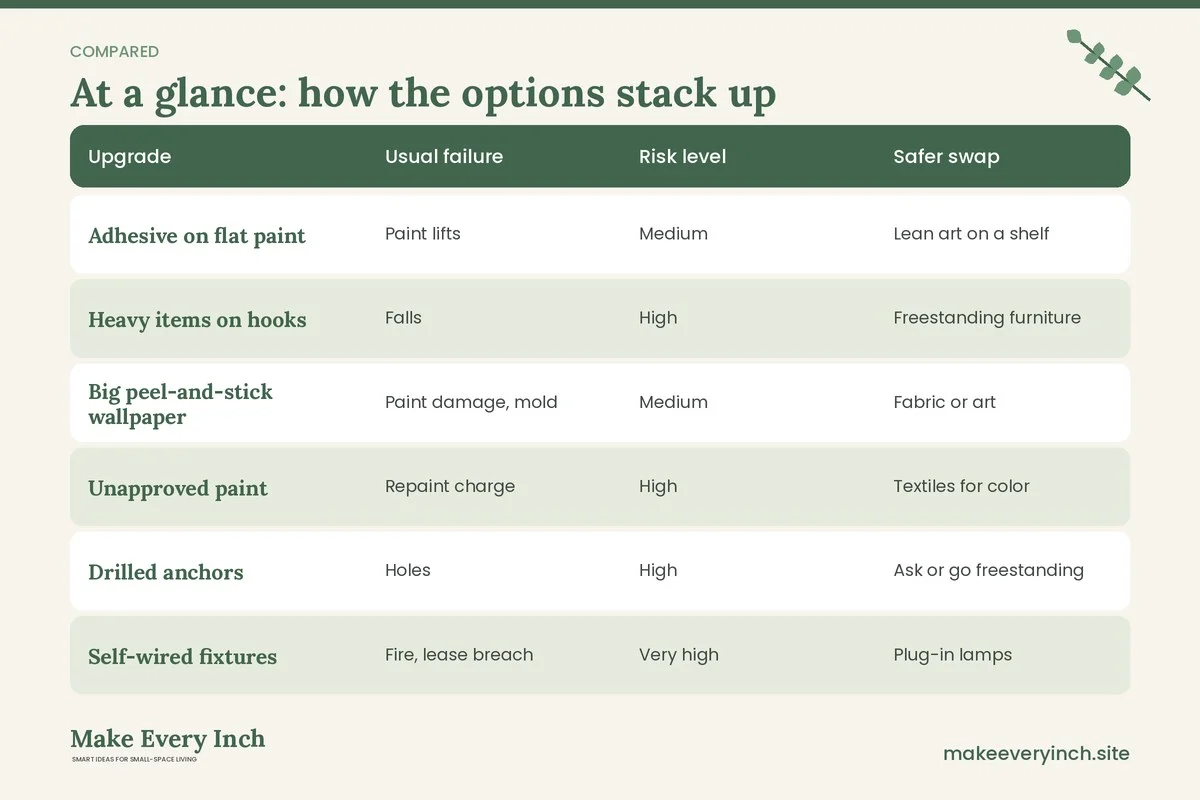
The table lists each upgrade, how it usually goes wrong and a safer swap.
| Upgrade | Usual failure | Risk level | Safer swap |
|---|---|---|---|
| Adhesive on flat paint | Paint lifts | Medium | Lean art on a shelf |
| Heavy items on hooks | Falls | High | Freestanding furniture |
| Big peel-and-stick wallpaper | Paint damage, mold | Medium | Fabric or art |
| Unapproved paint | Repaint charge | High | Textiles for color |
| Drilled anchors | Holes | High | Ask or go freestanding |
| Self-wired fixtures | Fire, lease breach | Very high | Plug-in lamps |
| Overloaded strips | Overheating | High | One strip per load |
| Plumbing swaps | Leaks | Medium to high | Keep originals, ask |
| New locks | Access, lease | High | Request a rekey |
| Peel-and-stick floor | Residue, trapped damp | Medium | Rugs |
| Window film | Cracks, residue | Medium | Curtains on a rod |
| Hardware swaps | Extra holes | Low to medium | Match hole spacing |
| Blocked vents or panels | Fire, flood | Very high | Keep clear |
| Unchecked appliances | Overload | Medium to high | Read the manual and lease |
Three scenarios: what went wrong and what to do instead
The gallery wall that took the paint
A tenant hangs 12 frames with adhesive strips on a flat, older wall. Months later, five strips come off with flakes of paint. The repair needs patching and repainting a whole wall because the color will not match. The fix is simple in hindsight: test a hidden spot, use the weight chart with a safety margin and pull the tabs slowly. If the wall fails the test, lean the frames on a long shelf or a picture ledge that stands on a console. The tenant who photographs the wall at the start and asks in writing is the one who gets the full deposit back.
The fixture swap that tripped a breaker
A tenant replaces a dated ceiling light with a hanging fixture. The wiring was old, the new fixture draws more power than expected and a breaker keeps tripping. The landlord says the work was unauthorized and charges for an electrician. The safer path was a plug-in pendant on a hook, with the cord tucked along the ceiling edge on removable clips, or a floor lamp. If you want a fixture change, ask the landlord to do it or approve a licensed electrician.
The bathroom wallpaper that trapped moisture
A tenant applies peel-and-stick wallpaper in a bathroom with poor ventilation. Steam gets behind the paper, the edges lift and mold appears on the wall. The landlord charges for treatment and repainting. The safer approach: keep wet rooms for waterproof, easy-to-wipe items such as a shower curtain, a bath mat, a freestanding shelf and towels in a color you love. Run the fan, wipe down the walls and leave the door open after showers. Our renter-friendly bathroom ideas post covers more.
Safety rules to keep in mind
- Electrical: do not change wiring, switches or fixtures. Use plug-in items rated for the circuit. Do not overload a strip, and keep cords visible and off rugs.
- Wet areas: use GFCI-protected outlets near sinks and tubs. Keep appliances and cords away from water.
- Ventilation: keep vents, windows and fans working. A damp room breeds mold, and paint fumes need airflow. If you have permission to paint, use low-VOC paint and keep windows open.
- Anchoring tall furniture: where allowed, anchor tall pieces to prevent tipping. Where not, use stable, low furniture and keep heavy items on lower shelves.
- Weight limits: read the rating on every hook, shelf and rod, and stay well under it. A shelf is only as strong as the weakest point.
- Children and pets: keep chemicals, cords, small parts and blind cords out of reach. Pets chew cables and can topple light stands.
- Fire safety: keep exits, smoke alarms and radiators clear, and never cover an alarm.
- No drilling: do not drill into walls, floors, ceilings or tile without written permission. Pipes and wires hide behind surfaces.
What to do before any upgrade
Create a quick routine that takes five minutes. First, read the lease clause on alterations and decorations. Second, write an email describing the change, the product type and how you will remove it, and ask for a yes or no. Third, photograph the area from several angles with the date on. Fourth, test a small hidden spot for a week. Fifth, keep receipts, product names and the original parts. At move-out, remove everything, clean the area and photograph again. For more on choosing safe projects, our small space upgrades that make a difference post shows lower-risk ideas.
Safer swaps that give the same result
- Instead of paint: use large art, a fabric panel on a rod, or a rug in a strong color.
- Instead of wiring: use plug-in sconces, floor lamps and smart bulbs.
- Instead of shelves drilled in: use a freestanding bookcase, a leaning ladder shelf or a tension pole, as in our renter-friendly shelving ideas without drilling guide.
- Instead of wallpaper: use a framed print, a fabric hanging or a mirror leaned on the floor.
- Instead of new flooring: use layered rugs with a non-slip pad.
- Instead of new cabinet doors: use removable liners, drawer organizers and baskets.
- Instead of a new faucet: use a cleaner, a descaler and a new aerator if allowed.
If storage is the real problem, our guides to no-drill storage ideas for renters and organization ideas for renters have plenty of options that do not touch the building. For a related list of errors in other parts of the home, see small home organization mistakes to avoid.
Checklist before you change anything
- Read the lease section on alterations.
- Ask in writing and keep the reply.
- Photograph each area with dates.
- Test adhesive and finishes on a hidden spot.
- Check weight ratings and stay well below them.
- Never drill, wire, plumb or paint without permission.
- Keep vents, valves, panels and radiators clear.
- Keep original parts in a labeled bag.
- Choose freestanding or tension-based items first.
- Plan the removal before you install.
- Photograph again at move-out.
FAQ
What counts as normal wear and tear?
Usually it means gradual, expected aging such as faded paint or light scuffs. Holes, stains, torn surfaces and unapproved changes are generally treated as damage, though rules vary by place.
Are adhesive hooks always safe for a rental?
No. They are safer than nails, but they can lift paint, fail under humidity and carry only light loads. Test first and keep loads small.
Can I paint if I repaint before I leave?
Only if the lease or your landlord agrees in writing. Ask what color to restore and whether touch-ups are acceptable.
Is it ever okay to hang a TV?
Often a stand or a low unit is a safer rental choice. If you want a wall mount, you need permission and a stud-safe installation by someone qualified, and the landlord may refuse.
What should I do if something already went wrong?
Stop, photograph it and tell the landlord before they find it. Offer to repair it properly. Early honesty usually costs less than a dispute.
How do I know which improvements are really safe?
If it stands on the floor, hangs from tension or sits on a surface, and you can remove it in minutes without a trace, it is probably safe. If it changes a surface, a system or the structure, ask first.
Keep going: Keep going with our security deposit safe apartment upgrades, renter-friendly small space upgrades that make a difference and the sibling guide on renter friendly small laundry area ideas.
Save this guide for later
Pin the ideas you like to Pinterest so you can come back to them when you plan your space.