15 Small Living Room Furniture Ideas Japandi Style Makes Easy
Quick answer: The best small living room furniture ideas japandi style uses are low, light-toned and made of natural materials: a low sofa with a seat height of about 15 to 17 inches, a round or oval wood table, one lounge chair with a visible frame, a closed low cabinet and a paper or linen lamp. Keep 30 to 36 inches of walkway, repeat one wood tone and add a single handmade object for warmth.
Small living room furniture ideas japandi designers favor share one thing: they lower the room. Japanese interiors have long kept furniture near the floor, and Scandinavian rooms add warmth, softness and pale wood. Together they make a style that suits small rooms well, because low pieces leave the walls and the air above them open. This guide focuses on the furniture itself rather than on the whole room. It covers the Japandi furniture rules, the seat and table heights that make low pieces comfortable, 15 ideas, a materials table, three example rooms, a care routine and a checklist. For the full overview of the topic, read our parent guide on small living room furniture ideas and the broader small living room ideas pillar. If you want the same style applied to whole-room plans, our posts on Japandi small living room layouts and Japandi storage pair well with this one.
What makes furniture Japandi
Japandi is a blend, so it helps to name what each side contributes. From Japan comes low seating, simple joinery, a respect for empty space and an appreciation of imperfect, handmade objects. From Scandinavia comes pale wood, soft textiles, rounded forms and a focus on comfort at home. In furniture, that adds up to a few clear traits.
- Low profile: seats, tables and cabinets sit lower than in a typical western living room.
- Visible structure: you can see legs, joints and frames. Nothing is hidden under a skirt or a heavy cover.
- Natural materials: solid wood, linen, wool, cotton, paper, rattan, ceramic and stone.
- Soft, quiet color: warm white, oat, sand, clay, charcoal and muted green.
- Few pieces, each well made: the room is edited so that every item has room to be seen.
- Gentle curves: round tables, soft sofa corners and arched details balance the straight lines.
Not every piece has to tick every box. A single dark-stained table beside a pale oak cabinet and a boucle chair still reads as Japandi if the shapes are calm and the palette is restrained.
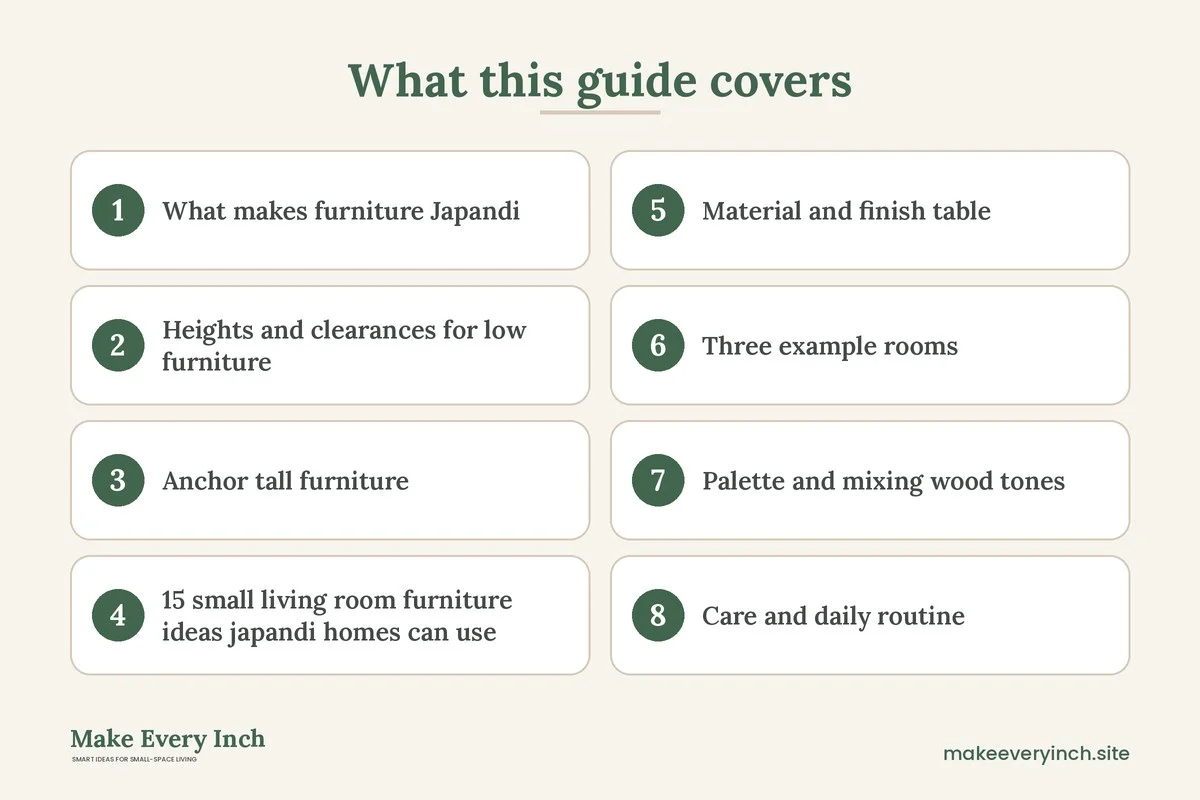
Heights and clearances for low furniture
Low furniture changes the numbers. A seat that is too low is hard to stand up from, and a table that is too high looks clumsy next to a low sofa. These are common ranges rather than strict rules, and you should always sit on a piece before you commit if you can.
- Seat height: 15 to 17 inches for a low Japandi sofa, compared with 17 to 19 inches for a standard one. If anyone in the household has knee or back trouble, stay near the higher end.
- Sofa depth: 30 to 34 inches, with a firm cushion that is easy to rise from.
- Coffee table height: 12 to 16 inches, about 2 to 4 inches below the seat cushion.
- Table size: 28 to 34 inches round, or 36 by 20 inches for an oval, in most small rooms.
- Gap between sofa and table: 14 to 18 inches.
- Main walkway: 30 to 36 inches wide, with 24 inches acceptable on a side route.
- Floor cushion: 24 to 28 inches square, with a thickness of 3 to 5 inches.
- Cabinet height: 20 to 30 inches for a low media or storage unit, so the wall above stays open.
- Lamp height: a floor lamp of 48 to 60 inches, or a table lamp whose shade sits at eye level when seated.
The low sofa also changes the sight line. When everything sits lower, the window, the wall art and the ceiling all feel higher, which helps a small room feel more open.
Anchor tall furniture
Japandi rooms rely on low pieces, but you may still add a tall shelf or a slim cabinet for storage. Tall, top-heavy furniture can tip, so anchor it to the wall with the straps or brackets supplied or made for it, and fix into a stud where you can. If you rent, read the lease and ask the landlord about small fixings. If you cannot drill, choose wider, lower pieces and keep heavy items on the bottom shelves. Keep tall units away from where children or pets play.
15 small living room furniture ideas japandi homes can use
Seating
1. A low sofa with a straight back
Look for a clean line, a low seat of 15 to 17 inches and wood legs that show. A fabric in oat, sand or warm gray keeps the look soft. Linen blends and cotton weaves suit the style, and a washable cover helps in daily life. For other features to check, see our guide to the best sofas for small apartments.
2. A sofa with a wooden frame
An exposed frame, with the wood continuing from the legs along the base, adds a Japanese note and reduces the visual weight of the cushions. It also lets light pass beneath the seat.
3. One lounge chair with open sides
A chair with a slim wooden frame and a woven or fabric seat takes less visual space than a padded armchair. A seat width of 20 to 24 inches suits a small room. Place it at an angle to the sofa, near the window.
4. Floor cushions as flexible seating
Two large cushions, around 24 to 28 inches square, stack in a corner or in a basket and come out when you have guests. They bring a Japanese floor-seating note and cost little floor space. Choose firm fillings that keep their shape.
5. A low stool or bench
A wooden stool of about 16 inches high works as an extra seat, a side table or a plant stand. A small bench at the end of the room can hold a throw and a book.
Tables
6. A round wood coffee table
A round table of 28 to 32 inches with a plain top suits a small room. The curve softens the walkway, and a solid wood top ages well. Choose a slim edge for a lighter look.
7. An oval table for narrow rooms
If the room is long and narrow, an oval of about 36 by 20 inches follows the sofa and leaves the passage clear. Check the 14 to 18 inch gap to the sofa. Our post on narrow living room ideas shows more ways to use awkward shapes.
8. A nesting pair in two tones
Two nesting tables, one in pale oak and one in dark walnut or black, give the room contrast without clutter. Stack them when you want more floor, or spread them when you have guests.
9. A tray on the floor
A large wooden tray set on a rug acts as a low table for tea. Lean it against the wall when you are done. This is the simplest Japandi table idea, and it suits tiny rooms where even a small table is too much.
Storage and display
10. A low cabinet with sliding doors
A cabinet of 20 to 30 inches high with sliding doors takes no swing space and hides the day-to-day mess. Natural wood with a simple pull looks calm. Leave the top mostly empty, with one lamp and one ceramic piece. For more hidden options, see our guide to hidden storage ideas.
11. An open shelf with a single focus
Choose one shelf, 8 to 10 inches deep, and fill it with a few books, a bowl and a plant. Leave space between items, since in Japandi rooms the empty space is part of the design. In a rental, use a freestanding unit or a removable mount, and check our list of renter-friendly shelving ideas.
12. A storage bench or ottoman
A wooden bench with a lid or an upholstered ottoman with storage holds blankets and cushions. It can act as a table with a tray. See the best storage ottomans for options.
Light and finishing pieces
13. A paper or linen lamp
A rice-paper floor lamp or a linen shade gives a soft, diffuse glow that suits the style. Warm bulbs, around 2700 kelvin, keep the evening gentle. Our guide to the best floor lamps for small rooms lists features worth checking.
14. A jute or wool rug in a plain tone
A rug of 5 by 8 feet in oat, sand or a muted gray anchors the low furniture. Pick a flat weave or a short pile so the table sits firmly. The rug also softens floor seating.
15. One handmade object
A ceramic vase with an uneven glaze, a wooden bowl or a woven basket brings a human note. Japandi rooms value imperfection, so choose a piece with a visible hand. One is enough.
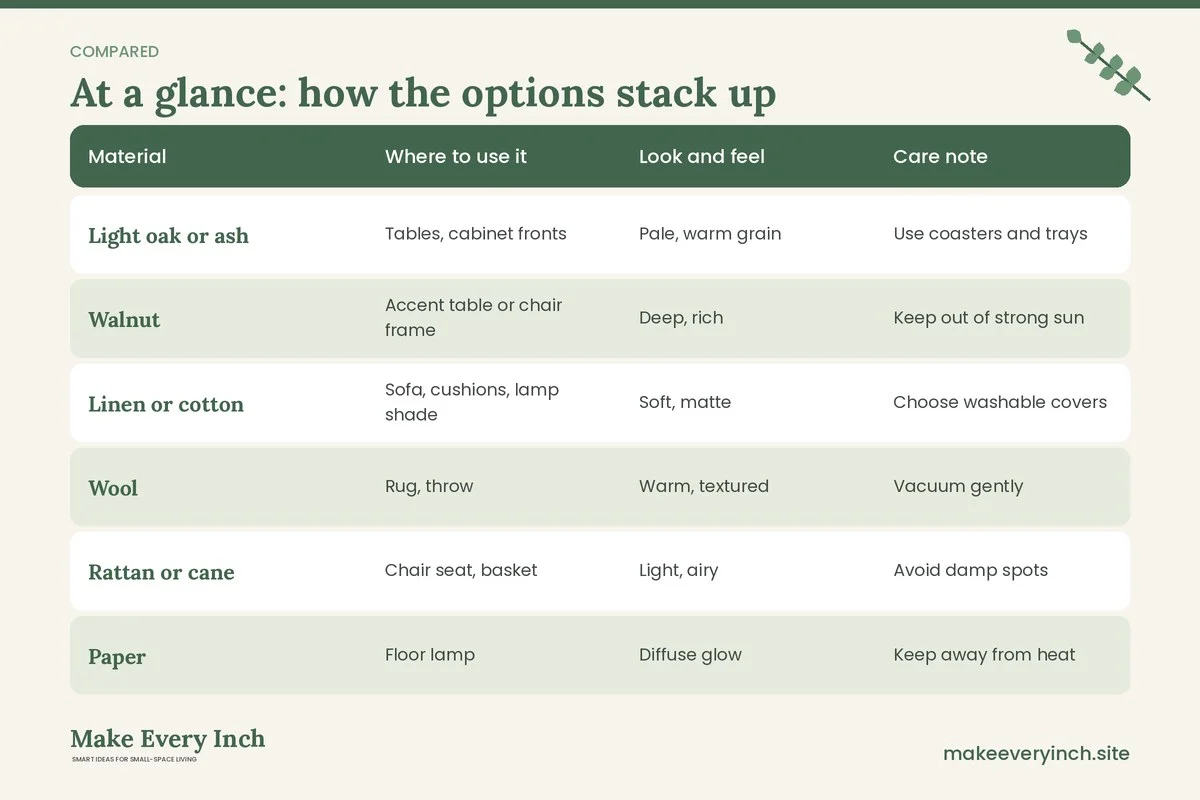
Material and finish table
The table below links common Japandi materials to the furniture that uses them and what to watch for. Treat the notes as general guidance.
| Material | Where to use it | Look and feel | Care note |
|---|---|---|---|
| Light oak or ash | Tables, cabinet fronts | Pale, warm grain | Use coasters and trays |
| Walnut | Accent table or chair frame | Deep, rich | Keep out of strong sun |
| Linen or cotton | Sofa, cushions, lamp shade | Soft, matte | Choose washable covers |
| Wool | Rug, throw | Warm, textured | Vacuum gently |
| Rattan or cane | Chair seat, basket | Light, airy | Avoid damp spots |
| Paper | Floor lamp | Diffuse glow | Keep away from heat |
| Ceramic | Vase, bowl, lamp base | Handmade, quiet | Handle with care |
| Black metal | Thin frame, lamp stem | Fine contrast | Use one or two accents only |
Three example rooms
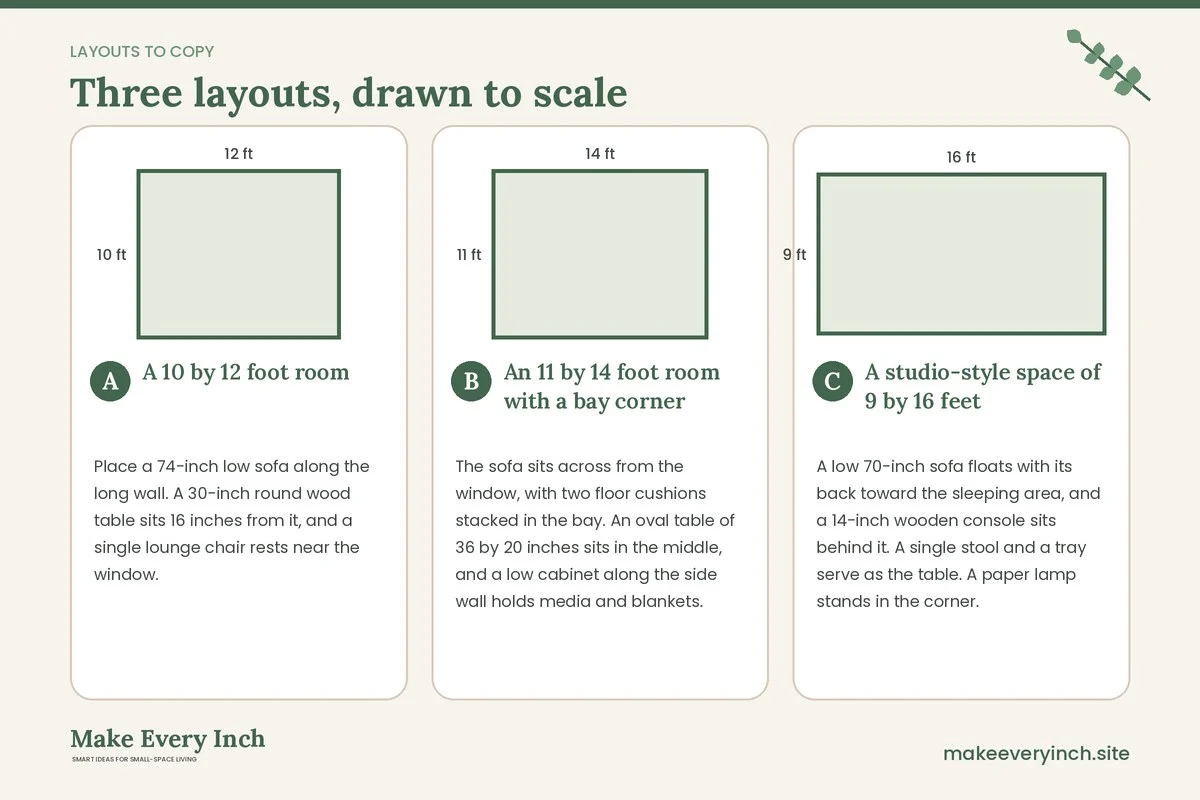
A 10 by 12 foot room
Place a 74-inch low sofa along the long wall. A 30-inch round wood table sits 16 inches from it, and a single lounge chair rests near the window. A cabinet of 48 inches wide and 24 inches high stands on the opposite wall with a paper floor lamp beside it. A 5 by 8 foot rug sits under the front legs. The main walkway is about 34 inches wide, and the low furniture keeps the window wall open.
An 11 by 14 foot room with a bay corner
The sofa sits across from the window, with two floor cushions stacked in the bay. An oval table of 36 by 20 inches sits in the middle, and a low cabinet along the side wall holds media and blankets. A nesting pair rests in the corner for guests. With six main pieces, the floor stays calm, and the cushions give flexible seating for friends without extra chairs.
A studio-style space of 9 by 16 feet
A low 70-inch sofa floats with its back toward the sleeping area, and a 14-inch wooden console sits behind it. A single stool and a tray serve as the table. A paper lamp stands in the corner. Four main pieces mark the zone, and a 30-inch path along the wall keeps movement easy. For more help with open spaces, read our guide to small apartment living room ideas for studios.
Palette and mixing wood tones
Japandi uses a quiet palette: warm white, oat, sand, clay, soft gray, charcoal and a touch of muted green or indigo. Keep the three largest pieces, the sofa, the rug and the cabinet, within one or two of these tones. Add a darker accent in small amounts, such as a black lamp stem or a walnut stool.
Wood tones deserve attention. Pick one main tone, usually a pale oak, ash or beech, and repeat it in two or three pieces. Add one darker wood for contrast, and keep the undertones similar, either warm or cool. If your floor is a strong orange wood, choose furniture with a cooler or paler tone, and let the rug do the bridging. Avoid shiny finishes. Matte or oiled surfaces look calmer and hide fingerprints better.
Care and daily routine
Natural materials ask for a little care. These small habits help the pieces last.
- Use trays and coasters: wood and stone show rings, so protect the top of the table.
- Keep wood out of direct sun: strong light can fade or darken a surface over time.
- Wipe with a soft, slightly damp cloth: avoid harsh cleaners on oiled wood.
- Rotate cushions weekly: this keeps linen and cotton looking even.
- Rinse out the clutter: at the end of the day, clear the table and leave one object.
- Re-style monthly: change the flowers, a branch or a single object on the cabinet.
Mistakes to avoid
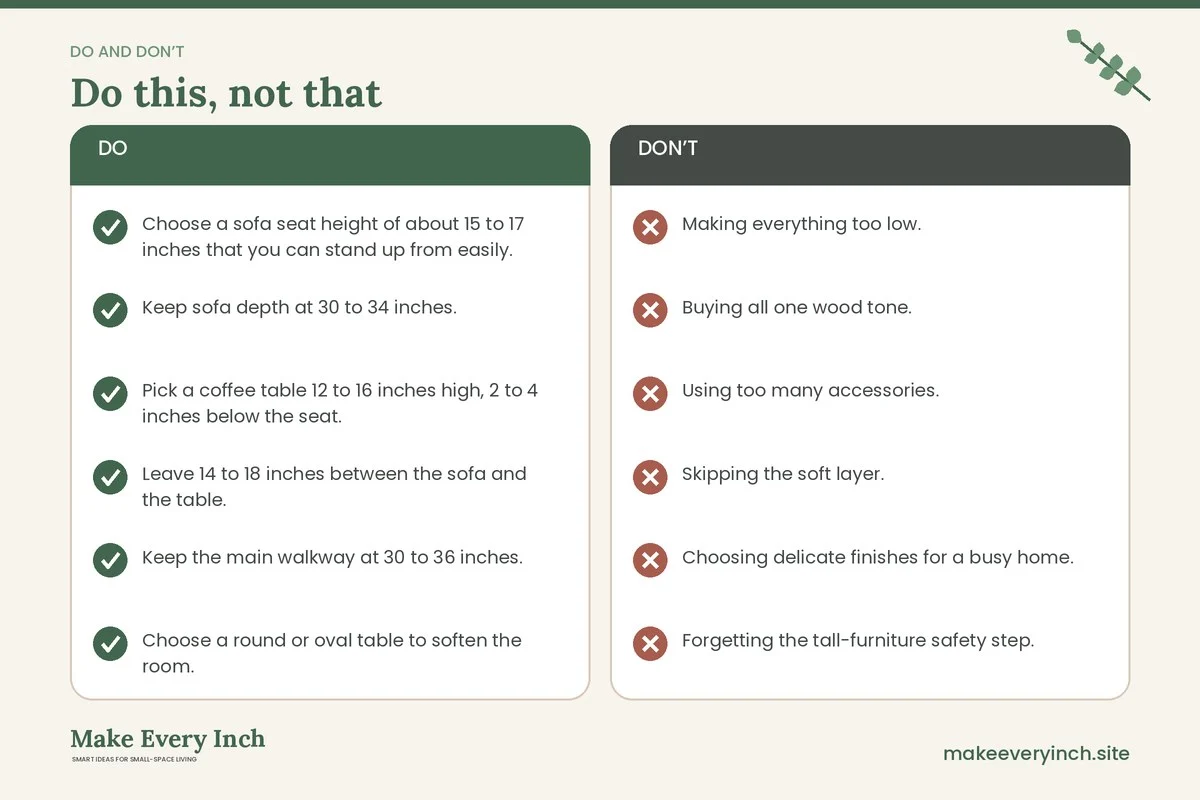
- Making everything too low. A seat that is too low is hard to rise from, so check comfort first.
- Buying all one wood tone. A match-everything look can feel flat, so add a second tone or a texture.
- Using too many accessories. Japandi is quiet, so leave empty space on shelves and tables.
- Skipping the soft layer. Without rug, throw and cushions, the style turns cold.
- Choosing delicate finishes for a busy home. Pick washable fabrics and durable tops if you have children or pets.
- Forgetting the tall-furniture safety step. Anchor tall pieces, or keep to lower ones.
- Copying a photo without measuring. A table that fits a large room can swamp a small one.
Budget and shopping approach
Japandi works well with a slow buy. Start with the sofa or the table, whichever you will use the most, then add the lamp, the rug and one handmade object. Wait a few weeks before the next purchase. Second-hand shops and online marketplaces are good sources for solid wood tables, stools and benches, which often hold up better than thin new pieces. Check for wobble, deep scratches and strong smells, and measure each item against a tape outline on the floor. Prices vary by region and by season, so compare a few sources and set a limit that fits your plans. For affordable routes, our guide to cozy small living room ideas on a budget offers more suggestions, and the post on Japandi apartment ideas shows how the style extends to other rooms.
Japandi furniture checklist
- Choose a sofa seat height of about 15 to 17 inches that you can stand up from easily.
- Keep sofa depth at 30 to 34 inches.
- Pick a coffee table 12 to 16 inches high, 2 to 4 inches below the seat.
- Leave 14 to 18 inches between the sofa and the table.
- Keep the main walkway at 30 to 36 inches.
- Choose a round or oval table to soften the room.
- Add a low cabinet of 20 to 30 inches to keep the wall above open.
- Use one main wood tone and one accent tone.
- Include at least three natural textures: linen, wool and wood.
- Place a paper or linen lamp in the corner.
- Add one handmade object and leave space around it.
- Anchor any tall furniture to the wall.
FAQ
What is Japandi furniture?
It is furniture that blends Japanese and Scandinavian ideas: low profile, natural materials, visible joinery, soft color and few pieces. The goal is calm and comfort.
How low should a Japandi sofa be?
Many low sofas have a seat height of around 15 to 17 inches. Choose the height that suits your knees and back, and try sitting on the sofa before you buy if you can.
Do I need a coffee table in a Japandi living room?
Not necessarily. A round table, a nesting pair or a large tray on the floor can do the job, and some rooms work with none at all.
Can Japandi work in a rental?
Yes. The style relies on freestanding furniture, rugs, lamps and textiles, which need no drilling. Check the lease before you fix anything to a wall.
How do I keep Japandi from feeling cold?
Add warm bulbs, wool and linen textures, a rug and a handmade object. Pale wood and soft colors give warmth when they are layered.
Is tall furniture safe in a Japandi room?
It can be if you anchor it to the wall and keep heavy items low. If you cannot drill, choose lower, wider pieces.
Keep going: Keep planning with our Japandi small apartment living room ideas, small living room ideas for renters and small living room lighting ideas.
Save this guide for later
Pin the ideas you like to Pinterest so you can come back to them when you plan your space.