15 Small Patio Ideas for Compact Homes
Quick answer: The best small patio compact homes ideas start with one clear job for the space, such as morning coffee, dinner for two or a plant corner, then add a compact seating set, a defined floor, vertical planting, soft light and a little privacy. Keep a walking path of about 30 inches, check your lease or HOA rules before you change anything, and secure everything against wind.
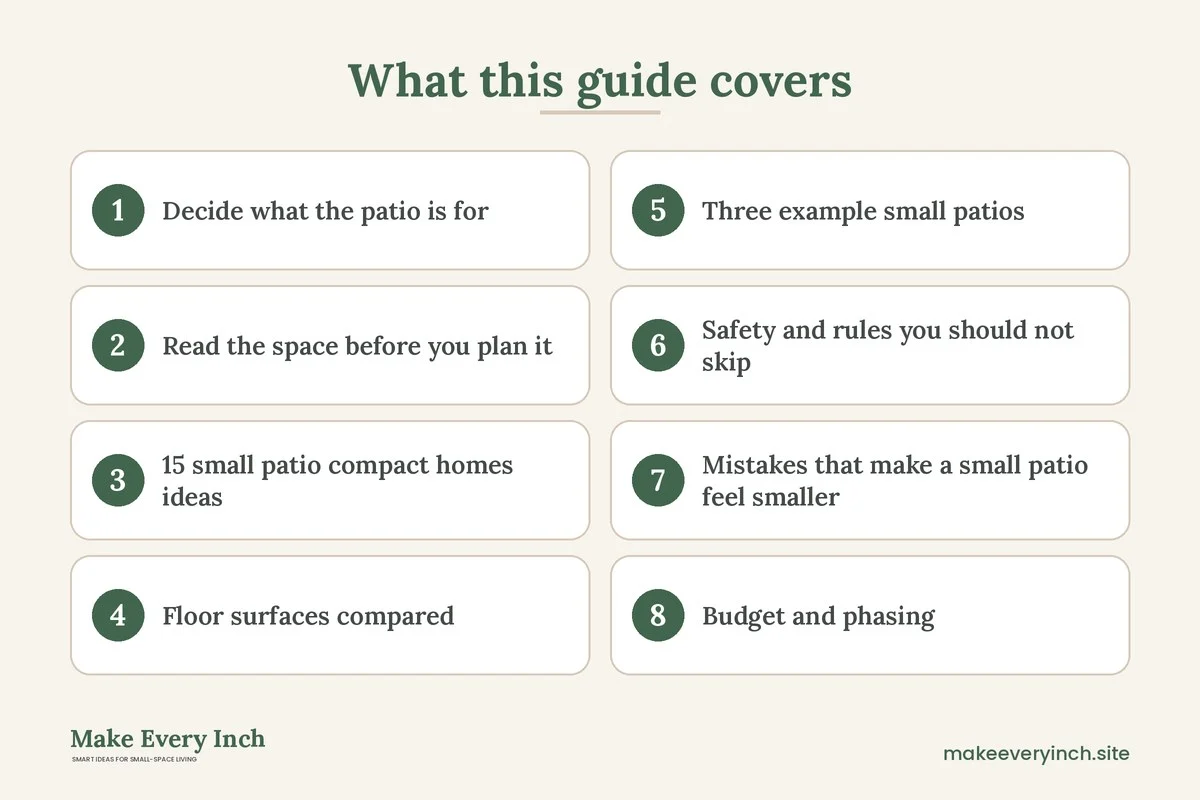
A small patio compact homes owners and renters both struggle with usually has the same problem: it is treated as leftover space instead of a real room. A townhouse slab, a condo terrace or a ground-floor apartment patio may measure only 6 by 8 feet, yet it can still be the most used spot in the home once it has a clear purpose. This guide walks through how to decide that purpose, how to read the space, 15 ideas grouped by job, a table of floor surfaces, three example patios, a safety section, common mistakes and a checklist. If you live above ground, our pillar guide on small balcony ideas covers the extra rules that come with height, and the companion post on small patio furniture layout ideas goes deeper on arranging the pieces once you have chosen them.
Decide what the patio is for
Compact homes cannot afford a patio that tries to do everything. Choose one main job and one small side job, then let that decide every purchase. The common jobs are quiet seating, outdoor dining, a plant and herb corner, a spot for kids or pets, and a work or reading nook. Each one asks for different things from the space.
Quiet seating needs comfort and a little privacy more than a table. Dining needs a stable table and enough room to pull chairs out. A plant corner needs light, water and a floor that tolerates splashes. A pet or play area needs open floor, so it wants fewer pieces. Write the main job at the top of a note on your phone and check every idea against it. If an item does not serve the job, leave it out. A patio that is 70 percent empty floor usually feels larger and more relaxed than one packed with furniture.
It also helps to think about time of day. A patio used mainly in the morning wants east light and a small table for a mug. A patio used for evening drinks wants soft lighting and a comfortable chair. Notice when the sun hits and when the space is shaded, and plan around those two facts before you buy anything.
Read the space before you plan it
Measure the patio at floor level and write down width, depth and any obstacles such as a door swing, a downspout, a hose tap, an electrical outlet or a drain. Door swings matter more than most people expect. A door that opens outward can eat 30 to 36 inches of floor, and that area must stay clear.
Next, check the surfaces. Concrete slabs, pavers, wood decking and tiles behave very differently when it rains and when it is hot. Look at the slope too. Many patios fall slightly away from the house to shed water, and a table on a slope will wobble. Place a level or a full glass of water on the floor to see which way water would run.
Then check the edges. Is there a low wall, a fence, a railing or open lawn? The edge decides where you can put tall plants, where privacy screens can stand and where a seat should face. Finally, look at the view. A small patio looks much bigger when the seat faces the best thing in sight, whether that is a tree, a garden bed or a clean fence. Turn the main chair toward it, and hide or soften what you would rather not see.
15 small patio compact homes ideas
Seating that fits
1. A bistro pair
Two chairs and a small round table fit in a corner as small as 5 by 6 feet. A round top removes sharp corners and lets people slip past. Choose a set that folds if you want to open up the floor for guests.
2. A compact bench with storage
A bench that opens up holds cushions, a watering can and small tools, which keeps the patio tidy. Check that the lid is weatherproof and that the bench is sturdy enough to sit on, and keep it away from the edge of any drop.
3. A loveseat in place of two chairs
A narrow loveseat is a good choice when you rarely host more than one guest. It uses one footprint and reads as a calm, single block. For wider thinking on seating, read our guide to small space seating ideas for guests.
4. Folding chairs on a hook
Folding chairs can hang on a wall hook or lean in a corner and come out when friends visit. Make sure any wall hook is allowed by your landlord or association, and never drill into a wall or railing without permission.
5. Stools that tuck under a ledge
A narrow ledge along a fence or wall, with two stools underneath, gives you a bar-style spot for coffee. It works well on a patio that is long and thin.
Floors and boundaries
6. A weatherproof outdoor rug
A rug turns a slab into a room. Pick a flat-weave, quick-drying one that sits just under the front legs of the chairs. Lift it now and then so the surface beneath can dry, and keep the edges flat so nobody trips.
7. Interlocking tiles over concrete
Clip-together deck tiles hide a stained slab and add warmth underfoot. They are usually removable, but check the lease and make sure water can still drain beneath them.
8. A defined edge with planters
A line of planters marks the edge of the room and doubles as a low screen. Keep them off railings and ledges, and use heavy, stable pots on the ground.
9. Gravel or pavers in a border strip
If you own the patio, a thin border of gravel keeps soil from washing onto the floor. Leave drainage paths clear.
Vertical and green
10. A trellis with climbers
A freestanding trellis behind a planter gives privacy and greenery without taking floor space. Choose a weighted or anchored base, since wind can tip a tall panel. See our small space plants and planters ideas for plant choices.
11. A tiered plant stand
A stand holds three or four pots in the footprint of one. Keep the heaviest pot on the lowest tier, and make sure the stand cannot tip in a gust.
12. A herb rail or wall pouch
A rail or pouches on a fence hold herbs within reach of the kitchen door. Use only mounting methods the owner allows.
Light, shade and privacy
13. A shade sail or umbrella
Shade makes a patio usable in summer. A clamp umbrella or a small sail gives cover without a permanent structure, but wind turns both into hazards, so close or remove them when it is gusty.
14. Outdoor-rated string lights
A single strand of outdoor-rated lights makes the patio feel like a room at night. Use only fittings labeled for outdoor use, plug them into a GFCI outlet and avoid overloaded sockets or long extension cords across walkways. See also our renter friendly lighting ideas for battery and solar options.
15. A privacy screen
Reed, bamboo or lattice panels block sightlines from neighbors. Ask first if the patio belongs to a shared building, and anchor panels so they do not catch the wind like a sail.
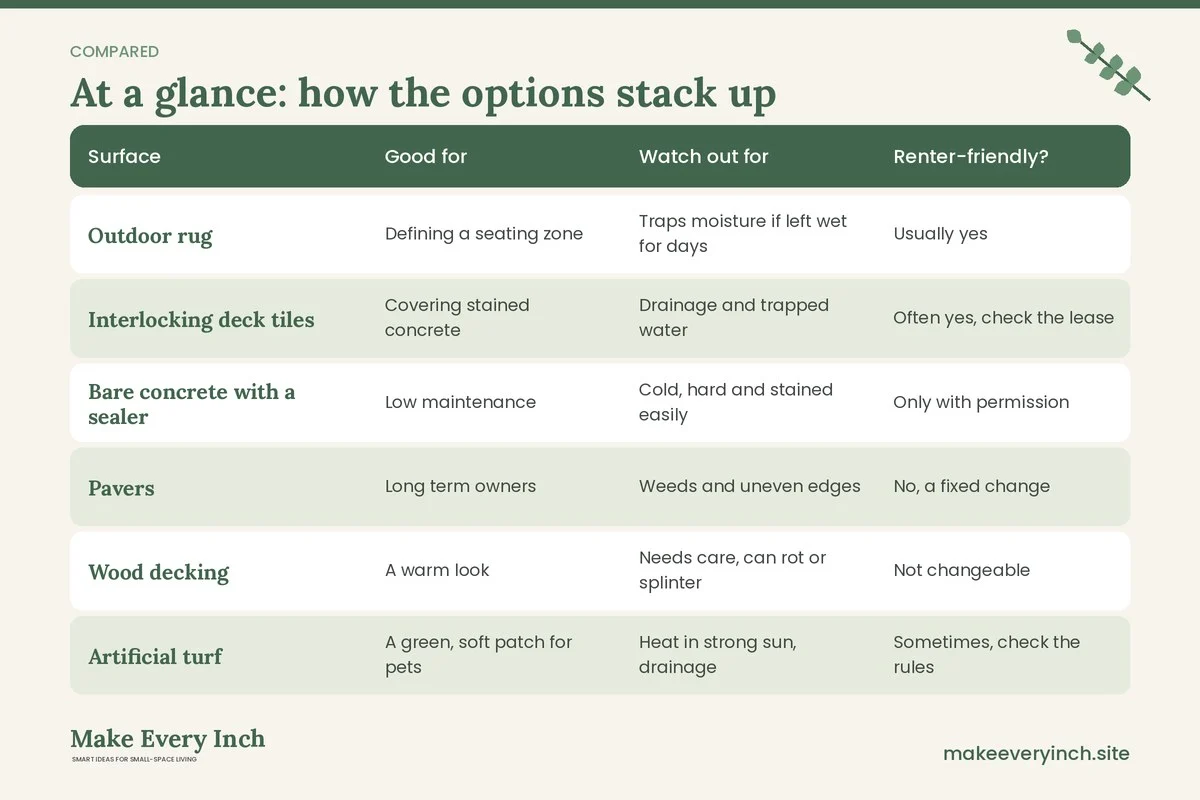
Floor surfaces compared
The floor is the base of everything else, so choose it with the lease and the weather in mind. Use this table as a quick guide, and remember that conditions vary.
| Surface | Good for | Watch out for | Renter-friendly? |
|---|---|---|---|
| Outdoor rug | Defining a seating zone | Traps moisture if left wet for days | Usually yes |
| Interlocking deck tiles | Covering stained concrete | Drainage and trapped water | Often yes, check the lease |
| Bare concrete with a sealer | Low maintenance | Cold, hard and stained easily | Only with permission |
| Pavers | Long term owners | Weeds and uneven edges | No, a fixed change |
| Wood decking | A warm look | Needs care, can rot or splinter | Not changeable |
| Artificial turf | A green, soft patch for pets | Heat in strong sun, drainage | Sometimes, check the rules |
Whatever you choose, make sure water can still drain away from the house and does not collect under the new surface. Pooled water can cause damage over time, and it can seep to neighbors below on a raised terrace.
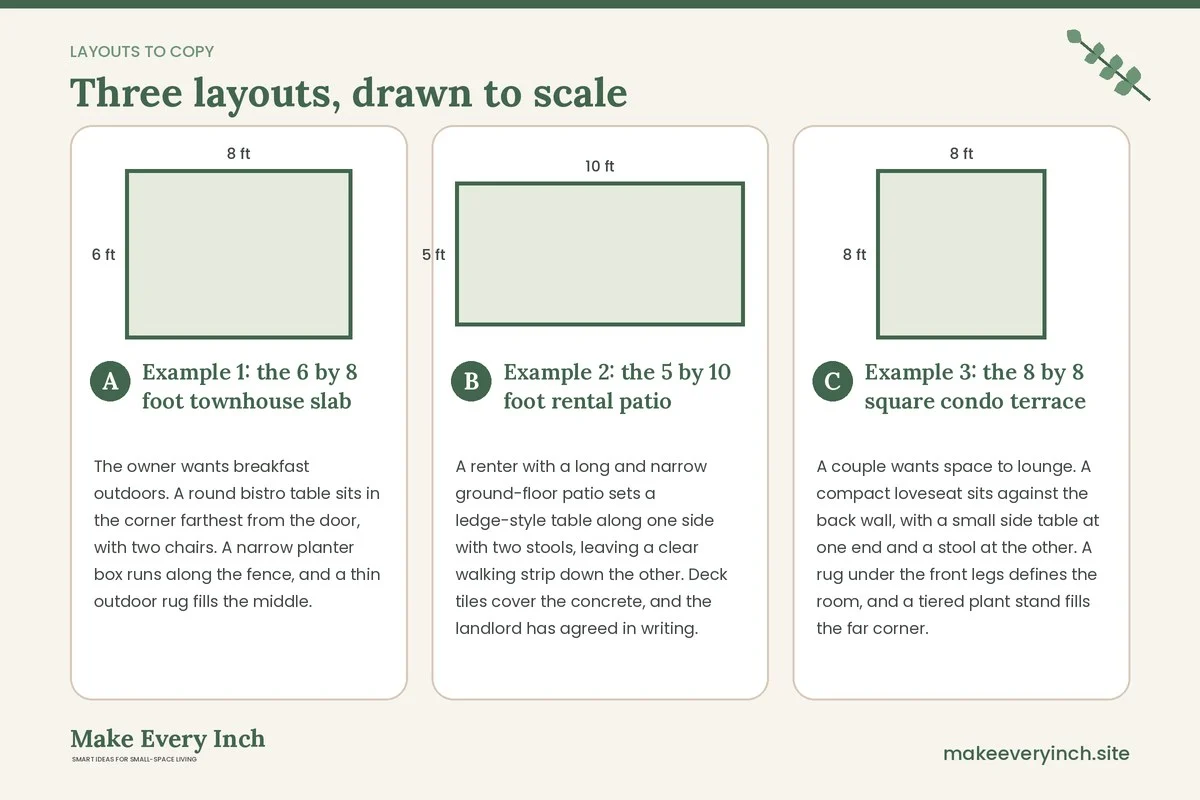
Three example small patios
Example 1: the 6 by 8 foot townhouse slab
The owner wants breakfast outdoors. A round bistro table sits in the corner farthest from the door, with two chairs. A narrow planter box runs along the fence, and a thin outdoor rug fills the middle. The remaining floor is a 30 inch path from the door to the table. A single strand of outdoor-rated lights hangs along the fence line from existing hooks the owner installed.
Example 2: the 5 by 10 foot rental patio
A renter with a long and narrow ground-floor patio sets a ledge-style table along one side with two stools, leaving a clear walking strip down the other. Deck tiles cover the concrete, and the landlord has agreed in writing. A trellis on a weighted base holds climbing plants, and a clamp-free umbrella stand gives shade. Everything on the patio can be packed into a car at move-out.
Example 3: the 8 by 8 square condo terrace
A couple wants space to lounge. A compact loveseat sits against the back wall, with a small side table at one end and a stool at the other. A rug under the front legs defines the room, and a tiered plant stand fills the far corner. The patio has an outdoor outlet with a GFCI cover, so a lamp with an outdoor-rated plug sits on the side table. Everything stays at least 3 feet from the railing.
Safety and rules you should not skip
A small patio is a real outdoor room, and a few rules protect people, neighbors and your deposit.
- Check the lease and the HOA or landlord rules first. Many buildings restrict what you can add, what you can hang and how much you can store outdoors. Ask in writing when in doubt.
- Weight limits. If your patio is a raised terrace, deck or rooftop, ask the building about its load limit. Soil, wet planters, stone and crowds of people add up quickly. Do not overload it.
- Keep furniture away from railings and edges. A chair or bench next to a railing becomes a ladder for children and pets. Keep climbable furniture at least 3 feet back.
- Railing height and gaps. Climbing and falling risk is real for small children and pets on raised patios. Do not rely on a decorative rail to keep them safe, and add a code-compliant barrier if needed with permission.
- Wind and tip-over. Umbrellas, trellises, tall plant stands and lightweight chairs can tip or fly. Anchor tall items and bring in lightweight ones in a storm.
- Falling objects. Pots, shelves and hanging items must be secure on any raised patio, since a fall can injure someone below.
- Fire and grills. Many leases and codes prohibit grills, fire pits and open flame on patios and balconies, or require clearances from walls and doors. Check before you use any flame, and do not use candles near fabric, plants or umbrellas.
- Electrical safety. Use only outdoor-rated lights and cords, plug them into a GFCI outlet and do not overload sockets. Do not run cords across walkways or through doors that cannot close.
- Drainage and neighbors below. Do not block drains, and avoid watering so heavily that water runs onto a neighbor’s space. Use saucers under planters.
- Toxic plants. Several common garden and patio plants are toxic to pets and children if chewed. Check each plant before you buy it, and put doubtful ones out of reach.
- Sun and heat. Dark surfaces, metal furniture and rugs can become hot in strong sun. Test surfaces with your hand before barefoot kids or pets walk on them.
- No drilling without permission. Do not drill into walls, railings or posts, and use freestanding or clamp-free solutions when the rules are unclear.
Mistakes that make a small patio feel smaller
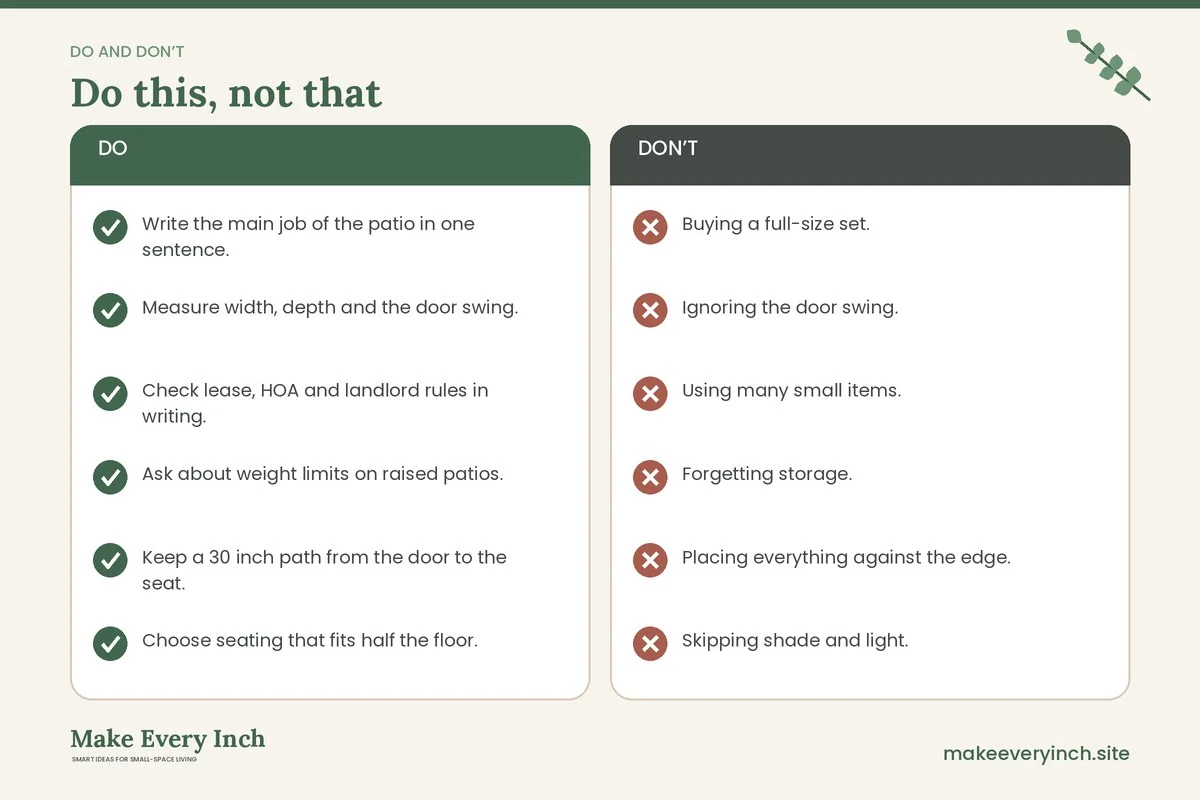
- Buying a full-size set. A four-seat dining set on a 6 by 8 foot patio leaves no path. Measure the floor and choose half the pieces you think you need.
- Ignoring the door swing. If the door cannot open fully, the space feels broken. Keep that arc clear.
- Using many small items. Ten small pots look cluttered. A few larger ones read as calm.
- Forgetting storage. Cushions, tools and watering cans need a dry home. A storage bench or a lidded box keeps the patio neat.
- Placing everything against the edge. A little floor in the middle can look bigger than furniture pushed to every wall.
- Skipping shade and light. A patio that is too hot at noon or too dark at night will not get used.
- Choosing plants that need constant care. Pick tolerant ones, and group them by water needs.
Budget and phasing
You do not need to complete the patio in a weekend. Start with the item that serves the main job, such as a chair and a small table, and use it for two weeks. Then add a rug, then plants, then lighting. Secondhand and community listings often offer sturdy chairs and tables, and many items can move with you if you rent. For more ideas, see our guide to budget small space ideas and the broader rules for renter friendly apartment decorating ideas. If you are planning the inside as well, our posts on small room decor ideas and studio apartment ideas show how to link the two spaces visually.
A good trick is to carry one color or material from the living room out to the patio, such as a cushion color or a wood tone. Seen through the door, the patio then looks like part of the room, which makes the whole home feel larger. Keep the door area free of furniture so the view is clear. If your patio sits next to a dining area, see our guide on small dining room ideas to help the two spaces work together, and check best furniture for small apartments when you choose pieces that can move indoors in winter.
Seasonal care and storage
A compact home rarely has a shed, so plan where things go when the weather turns. Cushions need a dry box or an indoor shelf. Folding chairs can hang or stack in a closet. Planters of tender plants may need to come inside, and that is easier when the pots are on wheeled trays. Clear leaves and debris from drains in autumn, and sweep snow gently away from the door so melting water does not flow toward the house. Before the cold season, empty pots and saucers that could freeze and crack, and secure or store anything that wind could lift. In spring, wash furniture with mild soap and water, check for loose screws and test lights before plugging them in. A short seasonal routine keeps a small patio ready all year and prevents the slow decay that makes outdoor spaces feel neglected.
For organizing the small items, our small space organization ideas guide has tips that translate well to a patio box or bench.
Patio checklist
- Write the main job of the patio in one sentence.
- Measure width, depth and the door swing.
- Check lease, HOA and landlord rules in writing.
- Ask about weight limits on raised patios.
- Keep a 30 inch path from the door to the seat.
- Choose seating that fits half the floor.
- Add a rug or tiles that drain well.
- Place heavy planters on the ground, not on railings.
- Anchor trellises, umbrellas and tall stands.
- Use outdoor-rated lights on a GFCI outlet.
- Check every plant for pet and child safety.
- Plan dry storage for cushions and tools.
FAQ
How do I make a very small patio feel bigger?
Keep the floor mostly open, use a round table, draw the eye upward with a trellis or a hanging light and carry an indoor color outside. Fewer, larger pieces look calmer than many small ones.
What furniture fits a small patio best?
A bistro pair, a narrow bench or a compact loveseat usually fits best. Foldable or stackable pieces give you flexibility. Always measure the door swing and the walking path first.
Can renters change a patio floor?
Often yes, with removable options such as an outdoor rug or interlocking tiles, but you should ask your landlord in writing and make sure water can still drain.
Is it safe to use string lights outside?
Use only lights labeled for outdoor use, plug them into a GFCI outlet and avoid overloaded sockets. Do not run cords where they can trip someone or get wet.
Can I use a grill or fire pit on a small patio?
Many leases, associations and local codes ban grills and open flame on patios and balconies, or require distance from walls. Check first, and consider an indoor alternative if the rules are strict.
How much privacy can I add?
Lattice, reed screens, tall planters and trellises can all help. Anchor them securely and ask permission in shared buildings.
Keep going: Keep planning with our small balcony ideas, renter friendly small balcony ideas and small patio furniture layout ideas.
Save this guide for later
Pin the ideas you like to Pinterest so you can come back to them when you plan your space.