Small Balcony Ideas for Pet Owners: 14 Safe Setups
Quick answer: A small balcony pet owners can trust starts with safety, not style. Block gaps and climbing spots, keep furniture off the railing, remove toxic plants, provide shade and water, use a washable surface and supervise every visit. Add comfort in layers, check the lease and building rules first, and never leave a pet alone on a balcony.
A small balcony pet owners love is a safe one, and that is a different goal from a balcony that simply looks good. Pets treat a balcony as a window with a door. Cats want to sit on the edge, dogs want to see the street and both will chew a plant if it is within reach. Balconies are also high, narrow and often shared with neighbors below, so mistakes carry real consequences. This guide shows how to make a small balcony work for you and your animals. It covers a hazard audit, railing and gap safety, surfaces, plants, shade, 14 ideas, a hazard table, three example balconies, a daily routine and a checklist. For the wider topic, see our pillar on small balcony ideas, and for a related space with different rules, read our companion post on small deck ideas for limited space.
A short note first: this guide is general information, not veterinary or engineering advice. Ask your vet about plants, heat and your own animal’s behavior, and ask the owner or a qualified professional about the structure.
Start with a hazard audit
Before you buy anything, walk the balcony at pet height. Get down on your knees and look along the floor, then stand and look at the rail. Note each of the following.
- Gaps: measure the space between balusters and between the floor and the bottom rail. Small animals can squeeze through gaps that look narrow, and a head can get stuck.
- Climbable objects: chairs, tables, planters, shelves and storage boxes that sit near the rail.
- Height of the rail: a determined cat can jump, and some dogs can put their paws on the top rail.
- Floor surface: check for rough, hot, slippery or splintered spots.
- Plants and objects within reach: anything that can be chewed, knocked over or swallowed.
- Sun and shade: where the sun lands at different times of day.
- Neighbors and noise: what your pet can see and hear, and what might trigger barking or bolting.
Take photos of each hazard, then fix the worst first. Gaps and climbing spots always come before decor.
Know your pet
The best layout depends on the animal. A senior cat wants a warm, low, quiet perch. A young dog wants to see everything and may bark at every passer-by. A small dog may fit through gaps that a larger one cannot. A rabbit or another small pet is a different case entirely, and many experts advise against leaving them outdoors in changing temperatures. Ask your vet whether the balcony is suitable for your pet at all, and for how long.
Also consider temperament. A nervous pet may bolt at a loud noise. A curious one may leap at a bird. Any animal can behave unpredictably around a drop, so supervision is not optional. Even a calm animal should not be left alone on a balcony.
Make the edges safe
Edges are where most serious accidents begin. Work in this order.
Close the gaps
If baluster gaps are wide, ask the owner or the building manager what safety options are allowed. Common choices include clear panels, mesh made for balconies and rail liners that attach without drilling. Choose a product that is stable, strong and approved for your type of rail. Do not drill into a rail, wall or post without written permission. Check your pet cannot chew or claw through the material, and check it regularly for wear.
Block the climb
Keep tables, chairs, shelves and planters at least 12 to 18 inches from the rail. If your cat is a climber, increase that distance, and keep the top of the rail clear so there is no ledge to perch on. A rail with a flat top is especially tempting, and a cat can balance there. Many owners decide a cat should only be on the balcony when it is fully enclosed, and some prefer a full netting enclosure that is installed correctly and permitted by the lease.
Think about the door
A door left open lets a pet slip out unnoticed. Keep a habit of checking the pet’s location before you open or close it, and consider a door that closes gently so it cannot trap a tail. Keep the threshold clear and flat so no one trips.
Choose the right floor
The floor affects paw comfort, hygiene and the neighbors below.
- Washable outdoor rugs or mats: a flat weave dries faster and is easier to hose off. Check it is not so thick that water pools beneath it.
- Interlocking tiles: these can warm and soften a cold concrete floor. Make sure they drain, and lift them to check for damp now and then.
- Artificial turf: some owners lay a small patch for dogs. It must drain well, be cleaned regularly and be checked against the lease and the drainage rules, because urine and water can run through to the unit below.
- Bare concrete or boards: check for heat in the sun and for splinters or sharp edges.
Hot surfaces are a real risk. Dark floors, metal and tile can get uncomfortably hot in direct sun. Test with the back of your hand for a few seconds. If it is too hot for you, it is too hot for paws. Add shade or a light rug, or keep the pet inside during the hottest part of the day.
Plants: choose carefully
Plants make a balcony feel alive, but many common ones are harmful to cats, dogs and children if chewed or swallowed. Some can cause mild stomach upset and some can be seriously harmful. Before you buy, check each plant against a trusted pet poison resource or ask your vet, and remember that toxicity can vary with the part of the plant and the amount eaten. When in doubt, leave it out.
Safer choices are widely recommended, but you should still confirm each one for your type of pet. Keep plants in stable pots on the floor, away from the rail, and place any questionable ones out of reach or indoors. Secure pots so a pet cannot knock them over, and use a heavy base. Falling pots can injure people below, so keep planters off the rail. For general plant guidance on a small outdoor space, see our guide to small space plants and planters ideas.
Watch out for other garden items too. Fertilizer, slug bait, pesticides, mulch and compost can be harmful if eaten, so store them in a closed container well out of reach. Some mulches and soils attract chewing, so consider a top layer of smooth stones, large enough that your pet cannot swallow them.
Water, shade and comfort
Pets need water and shade in warm weather. Provide a heavy, tip-resistant bowl in a shaded spot, and refill it often. Put up a shade that is stable in wind, such as a freestanding sail on a weighted base or a clamp-on option that is allowed on your rail. Do not hang heavy items from the rail unless it is made for it.
Weather matters. Strong sun, heavy rain, cold and wind can all be hazardous. Bring pets in when conditions are poor and never leave them on the balcony for long periods. A pet that pants heavily, drools, seems weak or avoids the surface needs to come inside right away. If you are concerned, call your vet.
14 small balcony pet owners ideas
Safety first
1. Clear panels or mesh on the lower rail
Panels or mesh made for balconies close the gaps. Choose a product allowed by the lease and attach it without drilling when possible. Check it for wear often.
2. A set-back furniture line
Pull furniture away from the rail. A narrow bench against the wall and a small table in the middle keep the edge clear.
3. A cat-safe enclosure, where permitted
A properly installed, allowed enclosure can turn a balcony into a safer outdoor room for a cat. It needs permission, strong fixings and regular checks, and it is not a replacement for supervision.
4. A low gate or a pet screen at the door
A gate or a door screen stops a dog from rushing out. Use one that fits securely and cannot be pushed over.
5. Weighted planters on the floor
Heavy, wide-based planters sit lower and cannot be knocked off. Keep them away from the rail and secure them against tipping.
Comfort for the pet
6. A shaded perch for the cat
A low shelf or a cat bed inside a shaded corner gives a view without a climb. Keep it low and away from the rail.
7. A washable rug or mat
A flat-weave outdoor mat gives grip and warmth. Wash it often.
8. A water station
A heavy ceramic or weighted bowl in the shade stays put. Refill it often.
9. A scratch-friendly spot
A sisal mat or post on the floor gives claws something to do besides the furniture. Choose a stable design that cannot topple.
10. A safe chew toy corner
A basket of durable toys keeps a dog busy. Remove anything small enough to swallow and anything that is damaged.
Comfort for you
11. A narrow bench with a lid
A bench with storage holds a pet’s outdoor things, such as a towel, a lead and a toy. Check the lid cannot slam on a paw.
12. Fold-away seating
A folding chair and a small table let you sit for ten minutes with your pet without crowding the space. See our guide to small space furniture ideas that do double duty for more pieces that earn their place.
13. Battery or solar lights
These avoid cords that a pet could chew or trip on. If you must use mains lights, choose outdoor-rated products and a GFCI-protected socket, and keep cords out of reach.
14. A simple cleaning kit
A small brush, a pet-safe cleaner and a cloth in a lidded box make quick work of fur and spills. Use only products labeled safe around animals, and keep them out of reach.
Hazards compared
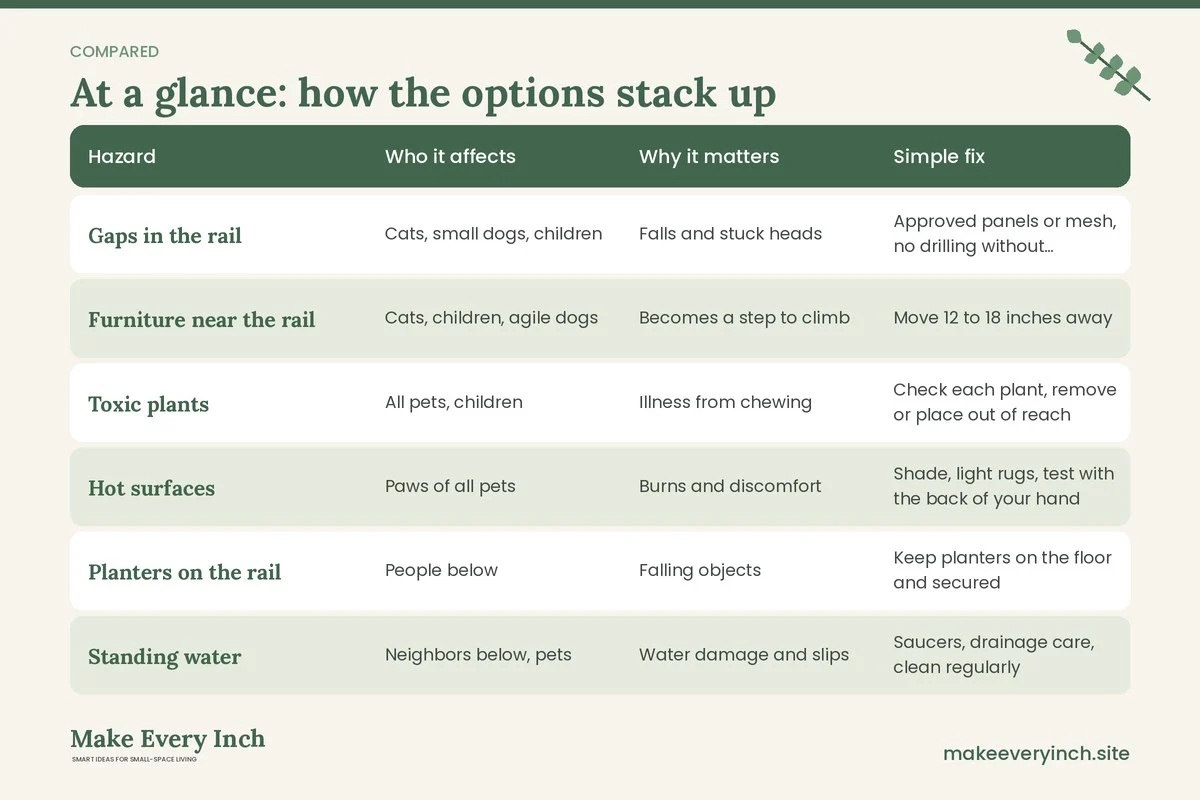
This table helps you rank problems. Fix the highest-risk items first, then move to comfort and style.
| Hazard | Who it affects | Why it matters | Simple fix |
|---|---|---|---|
| Gaps in the rail | Cats, small dogs, children | Falls and stuck heads | Approved panels or mesh, no drilling without permission |
| Furniture near the rail | Cats, children, agile dogs | Becomes a step to climb | Move 12 to 18 inches away |
| Toxic plants | All pets, children | Illness from chewing | Check each plant, remove or place out of reach |
| Hot surfaces | Paws of all pets | Burns and discomfort | Shade, light rugs, test with the back of your hand |
| Planters on the rail | People below | Falling objects | Keep planters on the floor and secured |
| Standing water | Neighbors below, pets | Water damage and slips | Saucers, drainage care, clean regularly |
| Cords and string lights | Chewers | Electrical injury | Battery or solar lights, cords out of reach |
| Open flames and grills | Everyone | Fire risk | Check the lease and local rules, use enclosed or battery options |
Safety notes for every balcony
This section applies to every small balcony, whether or not you have a pet.
Weight limits
Balconies have a stated load, and many people exceed it without noticing. Water-filled planters, wet soil, stone tiles, big furniture and groups of people add up. Check the building rules and ask the owner or a qualified professional if you are unsure. Do not overload the balcony, and spread heavy items near the supports rather than the center or edge.
Railing height and climbing
Rail height and design are set to reduce falls, but they cannot stop a determined climber on their own. Keep furniture, planters and storage away from the rail, check the gaps and do not let children or pets play near the edge unsupervised. Do not rely on a decorative screen as a safety feature unless it is made and rated for the job.
Wind and tip-over
Wind can topple light chairs, umbrellas and tall pots. Use heavy bases and bring light items inside in strong gusts. A tipped planter can hurt a pet or fall onto people below.
Falling objects
Secure everything. Planters, shelves, bottles and decor can all fall if bumped. Use clips and bases that are made for the purpose, and keep heavy items low.
Fire and grills
Many leases, insurers and local codes ban grills, fire bowls and open flames on balconies. Check the rules before you buy, and choose battery candles and lanterns for atmosphere. If a heat source is allowed, follow the manufacturer’s clearances, keep it away from pets, plants and fabric and never leave it unattended.
Electrical safety
Use outdoor-rated string lights and cords, plug them into a GFCI-protected socket and do not overload outlets or adapters. Keep cords out of chewing range. Solar and battery lights are simpler. Unplug any cord that is damaged, hot or wet and not rated for it.
Drainage and neighbors
Watering plants, washing the floor and pet accidents can send water to the unit below. Use saucers, wipe up spills, do not hose the balcony unless the rules permit it and never block the drain. A water leak can also damage the building and the lease relationship.
Sun and heat
Direct sun can heat floors, metal and furniture. Test surfaces with your hand, provide shade and bring pets inside when it is hot.
Lease, HOA and permission
Check the lease and HOA rules before you add panels, mesh, enclosures, shades or any fixed item. Do not drill into railings, walls or floors without written permission. Many pet-friendly solutions can be done with clamps, weights and freestanding pieces. For more on keeping changes reversible, see our guide to renter friendly small balcony ideas and the hub on renter friendly apartment decorating ideas.
Three example balconies
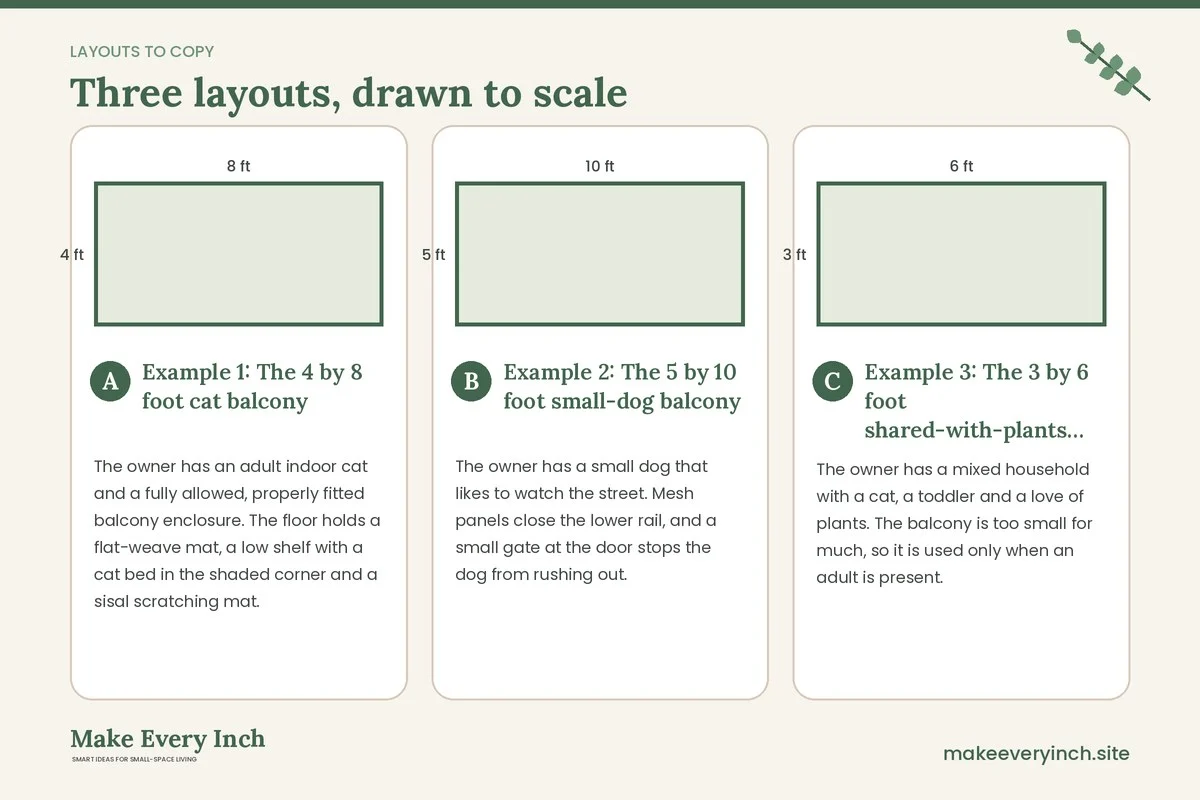
These are scenarios, not tested layouts. Adapt them to your own space, pet and rules.
Example 1: The 4 by 8 foot cat balcony
The owner has an adult indoor cat and a fully allowed, properly fitted balcony enclosure. The floor holds a flat-weave mat, a low shelf with a cat bed in the shaded corner and a sisal scratching mat. The one chair folds against the wall. Plants are limited to a pot of cat-safe grass kept on the floor, and everything else stays indoors. The owner sits with the cat for short visits and never leaves it alone.
Example 2: The 5 by 10 foot small-dog balcony
The owner has a small dog that likes to watch the street. Mesh panels close the lower rail, and a small gate at the door stops the dog from rushing out. A heavy water bowl sits in the shade, a washable mat covers the floor and a narrow bench lines the wall. There is no furniture within 18 inches of the rail. The owner uses the balcony for brief, supervised breaks and brings the dog in during hot hours.
Example 3: The 3 by 6 foot shared-with-plants balcony
The owner has a mixed household with a cat, a toddler and a love of plants. The balcony is too small for much, so it is used only when an adult is present. Only pet-safe plants, in heavy pots on the floor, are allowed, and the owner has checked each one with the vet. A single folding stool serves as a seat and a side table. Battery lanterns provide light. The door has a high latch so the toddler cannot open it alone.
A daily routine for a pet-friendly balcony
A routine keeps things safe without much effort.
- Before you open the door: know where your pet is.
- Before the pet goes out: check the rail, gaps, plants and surface temperature.
- While outside: stay with your pet, and watch for changes in behavior.
- After the visit: shut the door, refill water and wipe up spills and fur.
- Weekly: check panels, mesh, pots and fixings for wear. Wash the mat and bowl.
- Seasonally: reassess heat, cold, plants and storage.
If your balcony is also your storage, see our guide to small space organization ideas for ways to keep the floor clear.
Common mistakes
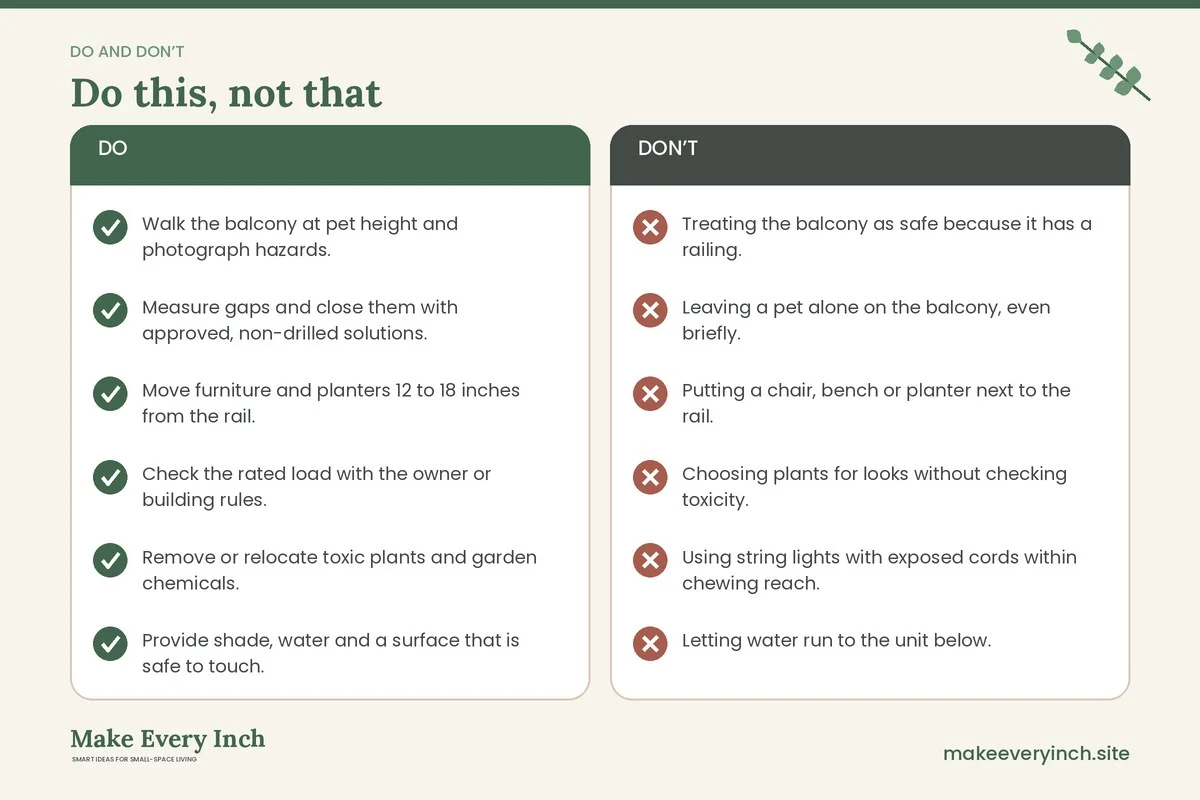
- Treating the balcony as safe because it has a railing.
- Leaving a pet alone on the balcony, even briefly.
- Putting a chair, bench or planter next to the rail.
- Choosing plants for looks without checking toxicity.
- Using string lights with exposed cords within chewing reach.
- Letting water run to the unit below.
- Assuming a grill or candles are allowed.
- Drilling into the rail or wall without permission.
Keep it affordable and calm
A pet-friendly balcony does not need to be costly. Start with the safety changes, which matter most, then add comfort in small steps. Reuse furniture you already own, borrow ideas from indoor setups and shop second-hand for sturdy pieces. If you want to stretch a budget, see our list of budget small space ideas, and for calm, uncluttered styling read our guide to small room decor ideas.
Frequently asked questions
Is a small balcony safe for a cat?
It can be, with precautions. Close gaps, remove climbable objects, secure the door and supervise. Many owners choose an approved enclosure. Ask your vet and the owner of the building whether it is suitable for your cat.
Can my dog use a small balcony?
Often yes, for supervised breaks. Provide shade, water and a safe surface, block gaps and keep furniture away from the rail. Do not leave a dog alone, and bring it in when it is hot.
Which plants are safe?
Safety varies by pet and by plant part. Check each plant against a trusted pet poison list or ask your vet, and place any doubtful plant out of reach or leave it out.
Can I use a grill or candles?
Check the lease, the building rules and local codes first. Many places ban them on balconies. Battery candles and lanterns are a safer way to get the same glow.
How do I protect the neighbors below?
Keep planters off the rail, use saucers, avoid hosing the floor and clean up pet messes promptly. Secure everything that could fall.
Do I need permission to add panels or an enclosure?
Usually yes. Ask the owner or the HOA in writing before you add anything that attaches to the rail, wall or ceiling.
Pet balcony checklist
- Walk the balcony at pet height and photograph hazards.
- Measure gaps and close them with approved, non-drilled solutions.
- Move furniture and planters 12 to 18 inches from the rail.
- Check the rated load with the owner or building rules.
- Remove or relocate toxic plants and garden chemicals.
- Provide shade, water and a surface that is safe to touch.
- Use battery, solar or outdoor-rated lights on a GFCI socket.
- Confirm that grills, candles and flames are allowed before using them.
- Control drainage so nothing reaches the unit below.
- Secure pots, shelves and light furniture against wind and falls.
- Get written permission before fixing or drilling anything.
- Supervise every visit and never leave a pet alone.
A good pet balcony is quiet, shaded and boring in the best way. Make the edges safe, keep the floor simple and spend time outside together.
Keep going: Keep going with our pillar on small balcony ideas, the plant guide to small space plants and planters ideas and the layout guide to small living room ideas.
Save this guide for later
Pin the ideas you like to Pinterest so you can come back to them when you plan your space.