Small Space Decorating with Natural Textures: A Layering Guide
Quick answer: Small space decorating natural textures works best when you pick three to five materials, such as linen, wool, wood, jute and ceramic, and layer them in a ratio of about 60 percent calm base, 30 percent mid-tone texture and 10 percent contrast. Mix smooth with rough, soft with hard, and keep the color palette narrow so the room feels warm without feeling busy.
Small space decorating natural textures is a way of adding depth to a compact room without adding clutter. When a room is small, you cannot lean on large furniture or bold paint to give it character, and too many objects make it feel cramped. Texture solves the problem quietly. A linen curtain, a woven basket, a wooden stool and a wool throw all add richness to the eye without taking up much space, and because they come from the same family of natural materials, they get along without effort. This guide explains how to choose and layer natural materials in a small room. It covers the three-layer ratio, a table of materials with their pros and cons, a room-by-room plan, a set of example rooms, care and safety notes and a checklist. For a wider view, begin with our guide to small room decor ideas, and see organic modern apartment ideas for the style that grows from these materials.
What counts as a natural texture
Natural textures come from plant, animal and mineral sources. Plant fibers include linen, cotton, jute, sisal, seagrass, rattan, bamboo, rush and cane. Animal fibers include wool and, in some homes, sheepskin or leather. Mineral materials include stone, clay, ceramic, terracotta, plaster and glass. Wood belongs in its own category, with different tones, grains and finishes. What links them is that they have visible, uneven surfaces. A lightly nubby weave, a visible wood grain or the soft edge of a hand-thrown pot makes your eyes slow down, which gives a small room more presence than a smooth, uniform surface.
You do not need all of them. In fact, the more restrained the list, the better a small room looks. Choose three to five materials and repeat them around the room so that they read as a family.
Why texture works in a small room
Color and pattern can overwhelm a small space, because each additional hue or print draws attention and divides the room into pieces. Texture adds interest while staying close to the base palette. It also changes how light behaves. A matte, slightly rough surface, such as a linen or a limewashed look, scatters light softly, while a gloss surface bounces it hard. Mixed in the right amounts they make the room feel layered and calm.
Texture also gives the senses something to do. A small room is often experienced close up, since you sit within an arm’s length of most things. The feel of a wool throw, a woven seat or a smooth wooden surface is part of the daily life of the room. People often describe a textured room as cozy, even when the colors are neutral, because the surfaces invite touch.
The 60-30-10 texture ratio
Designers often use a 60-30-10 ratio for color. The same idea works for texture, and it keeps a small room from tipping into chaos.
- 60 percent calm base: large, quiet surfaces such as smooth walls, a plain sofa, a flat-weave rug in a pale tone and floor-length curtains in a light fabric. These carry the eye across the room.
- 30 percent mid-tone texture: medium-size items with visible surface, such as a jute or wool rug, a wooden coffee table or bench, a woven pouf, linen cushions and a rattan chair.
- 10 percent contrast: small accents with strong texture or a different material, such as a stone tray, a ceramic vase, a wooden bowl, a dried grass arrangement or a piece of rough pottery.
Count by visual area, not by item. One large rug is a mid-tone element, and ten tiny objects together do not outweigh a sofa. If a room looks busy, cut accents. If it looks flat, add one mid-tone piece. This simple rule is more useful than any list of items.
Pick a material mix by room mood
Not every combination suits every room. These three mixes cover most small homes.
Warm and earthy
Combine light oak or pale pine, undyed linen, jute, clay and a touch of black iron for contrast. The effect is relaxed and sunny, and it suits rooms with plenty of daylight.
Calm and Scandinavian
Combine pale wood, wool, cotton and white ceramics. The palette is cool and quiet. It suits small bedrooms and compact living rooms. For more on this style, see Scandinavian small apartment ideas.
Soft and Japandi
Combine dark-stained wood, paper-like lampshades, linen, stone and a few green stems. The tone is serene and a bit more formal. Our guide to Japandi apartment ideas shows how to use the style in a small flat.
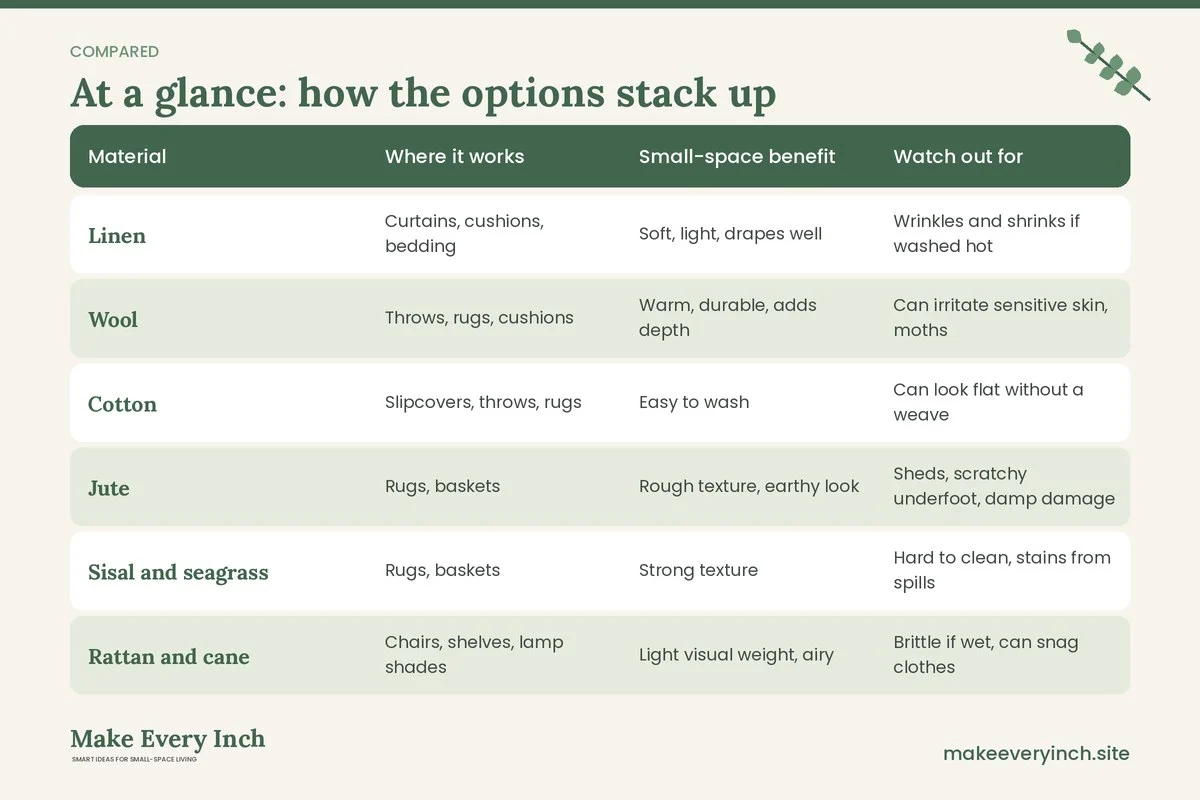
Material guide: pros, cons and small-space notes
| Material | Where it works | Small-space benefit | Watch out for |
|---|---|---|---|
| Linen | Curtains, cushions, bedding | Soft, light, drapes well | Wrinkles and shrinks if washed hot |
| Wool | Throws, rugs, cushions | Warm, durable, adds depth | Can irritate sensitive skin, moths |
| Cotton | Slipcovers, throws, rugs | Easy to wash | Can look flat without a weave |
| Jute | Rugs, baskets | Rough texture, earthy look | Sheds, scratchy underfoot, damp damage |
| Sisal and seagrass | Rugs, baskets | Strong texture | Hard to clean, stains from spills |
| Rattan and cane | Chairs, shelves, lamp shades | Light visual weight, airy | Brittle if wet, can snag clothes |
| Light wood | Tables, shelves, frames | Brightens, adds warmth | Shows scratches |
| Dark wood | Accents, frames | Grounds the room | Heavy if overused |
| Ceramic and clay | Vases, bowls, lamp bases | Handmade feel | Breakable, heavy for shelves |
| Stone | Trays, coasters, bookends | Weight and cool contrast | Heavy, can chip |
| Dried grasses | Vases, arrangements | Airy, inexpensive to refresh | Dust, allergies, fire risk near flames |
| Glass | Vases, jars | Reflects light | Fingerprints, breakage |
14 ways to use natural textures in a small space
Start with the biggest surfaces
1. A flat-weave natural rug
A rug anchors the room. In a small space, choose a flat weave, such as jute-wool blend or cotton, with a low pile that does not catch the door. Place it so the front legs of the sofa sit on it. Add a non-slip pad underneath, and trim any edge that curls so nobody trips. See our post on choosing a rug size for a small living room for the dimensions.
2. Floor-length linen curtains
Hang a linen curtain close to the ceiling to lengthen the wall. Natural fabric filters the light softly. Use a tension rod in a rental, or a rod where drilling is allowed. For lengths and heights, read our guide on small space curtain ideas to add height.
3. A wooden bench or a coffee table with a visible grain
One substantial wooden piece anchors the 30 percent mid-tone layer. Choose rounded corners so the piece is safe in a tight walkway.
Add warm, soft layers
4. A pair of wool or cotton throws
Throws bring texture to the sofa or the bed without needing storage. Keep two in a lidded basket so they stay off the floor. Fold one over the arm and leave the other in the basket.
5. Linen cushions in a tight palette
Use three or four cushions with different weaves in the same color family. A slubby linen next to a smooth cotton gives variety without adding a new color.
6. A sheepskin or a wool seat pad
A pad on a chair or a stool adds softness where the body meets a hard seat. Choose a size that suits the seat so it does not slip. Secure it with a non-slip underlay.
7. Linen bedding in layers
A linen duvet cover with a cotton sheet and a wool blanket gives a bed layers without adding bulk. Keep the palette within two tones.
Add structure with woven and carved forms
8. A woven basket as storage
A lidded basket hides throws, toys or chargers. Baskets are one of the most useful natural textures because they combine storage with surface. In a rental, they are also easy to move.
9. A rattan or cane chair
A caned chair has a light visual weight because the eye sees through the weave. It suits a tight corner or a bedroom nook. Check weight limits before sitting and avoid standing on it.
10. A rush or rope stool
A small stool doubles as a side table, a seat and a plant stand. Look for solid joints and a base wide enough to be stable.
Add small mineral and ceramic notes
11. A stone tray and ceramic bowls
A flat stone tray gathers keys, candles or a plant. A hand-formed ceramic bowl holds fruit or small items. Heavy pieces should sit on a low surface, not on a high shelf, particularly in a home with children.
12. A ceramic table lamp with a linen shade
A lamp with a ceramic base and a linen shade combines two textures and lights the room softly. Use a bulb with a wattage and a type that suits the lamp, keep the shade clear of the bulb and tidy the cord. For tips, see our guide to small living room lighting ideas.
Add living and drying elements
13. A single large plant in a woven basket cover
One big leafy plant in a basket cover adds texture, color and some freshness. Keep a drip tray so water does not reach the basket or the floor, and check that the plant is not toxic if you have pets or small children. Our guide on small space plants and planters ideas has more detail.
14. Dried stems in a ceramic vase
Dried grasses or branches in a ceramic vase give height without taking floor space. Keep them away from candles and heaters, because dried stems burn quickly. People with allergies may prefer to avoid them.
Room-by-room plans
The small living room
Aim for four materials. A flat-weave rug in a pale tone, linen curtains, a wooden coffee table or bench and a ceramic lamp make the base. Add wool or cotton cushions and a woven basket. Place a dried stem arrangement on the console. If you want a pared-back version, see our small apartment living room ideas for minimalists.
The small bedroom
Bedding is the main texture. Layer linen, cotton and wool. Use a woven pendant shade or a paper shade for soft light. Place a rattan or wood bedside table. Keep the floor clear except for one small rug beside the bed. Our post on small bedroom ideas that are cozy shows more.
The small kitchen or dining corner
Wood, stone and ceramic suit the food zone. A wooden cutting board on display, a stone trivet, a linen tea towel and a ceramic crock add texture and function. Keep fabric away from the cooker, and store natural-fiber items away from flames and hot surfaces.
The small entry
A woven basket for shoes, a jute mat inside the door and a wooden hook rail create an inviting first step. Fix hook rails only where the lease allows, or use a freestanding rack. See apartment entryway decorating for more.
The small bathroom
Bathrooms are damp, so choose materials that tolerate moisture. A teak or bamboo mat, a ceramic dish, a cotton towel and a stone soap holder work well. Keep rattan, jute and untreated wood out of wet zones. Ventilate the room well, since moisture damages natural fibers. Keep electrical items away from water, and use a GFCI-protected outlet for any appliance.
Three example rooms
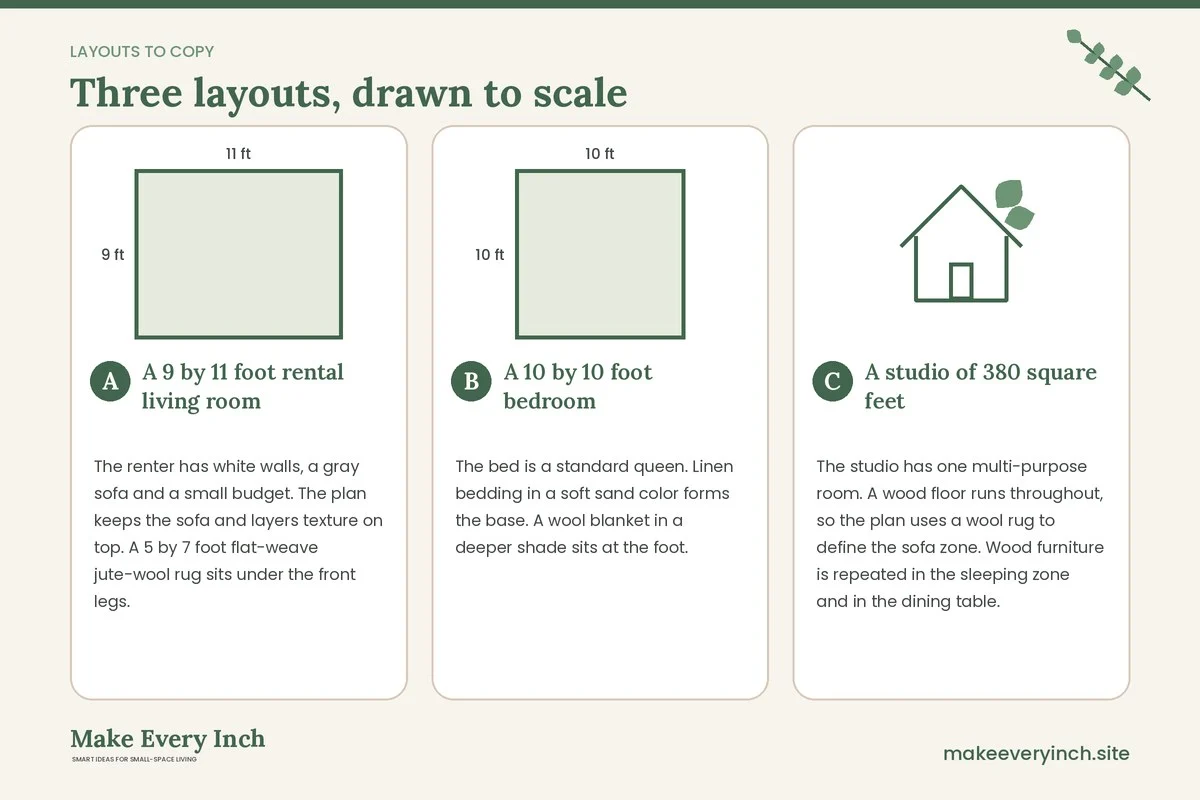
A 9 by 11 foot rental living room
The renter has white walls, a gray sofa and a small budget. The plan keeps the sofa and layers texture on top. A 5 by 7 foot flat-weave jute-wool rug sits under the front legs. Cream linen curtains hang from a tension rod near the ceiling. Two cushions in oatmeal linen and one in a coarse cotton go on the sofa, and a wool throw sits in a basket. A light wooden stool serves as a side table, and a ceramic vase holds dried grasses. No holes were made, so the wall stays untouched. The palette uses cream, oat and warm wood.
A 10 by 10 foot bedroom
The bed is a standard queen. Linen bedding in a soft sand color forms the base. A wool blanket in a deeper shade sits at the foot. The bedside tables are caned, and the lamp has a ceramic base and a linen shade. A small round rug of natural fiber lies beside the bed. The window has a sheer linen curtain that lets daylight through. The room has only four materials, and the repeated textures keep the space calm.
A studio of 380 square feet
The studio has one multi-purpose room. A wood floor runs throughout, so the plan uses a wool rug to define the sofa zone. Wood furniture is repeated in the sleeping zone and in the dining table. Baskets store linens and shoes. Woven pendant shades add a soft glow, and a large plant in a basket anchors a corner. One dark wood piece, a small bench at the foot of the bed, gives the 10 percent contrast. For more studio ideas, look at studio apartment decorating ideas.
Color: keeping the palette narrow
Natural textures look best in a tight palette. Choose a base of two or three tones from the family of cream, sand, oat, stone, clay and warm gray. Add one deeper accent, such as olive, terracotta or charcoal. Because the materials have their own variation, the room will look rich even though the color count is low. A small room also looks bigger when the colors are related, which you can read about in our guide to colors that make small rooms look bigger.
If you want warm wood tones, our post on small room decor ideas with warm wood goes deeper. For the neutral side of the palette, see small room decor ideas for neutral lovers.
Light and texture
Texture needs light to show. A flat overhead light can make rough textures look dull, while a side light brings out the grain and the weave. Place a lamp low on one side, and use a warm bulb of around 2700 kelvin. A window with sheer curtains lets daylight skim the textured surfaces. Avoid putting a bright spotlight on a natural-fiber rug or a linen curtain for long hours, since strong sunlight fades the fibers over time. Rotate a rug now and then so the sun hits it evenly.
Safety, health and care notes
Natural materials are lovely, but they need sensible handling in small homes.
- Anchor tall furniture. Wooden bookcases, cane cabinets and tall shelves must be anchored to the wall with the right hardware if the lease allows. If you cannot drill, use a freestanding, low design or ask the landlord about a non-damaging option. Tall furniture tips easily, particularly with children.
- Check weight limits. Ceramic, stone and wood are heavy. Respect the load limit of shelves and hooks, and keep heavy items low. Never stand on a rattan or cane chair.
- Keep dried plants away from flames. Dried grasses, pampas and branches burn fast. Keep them clear of candles, heaters, fireplaces and bulbs that run hot.
- Mind allergies. Dried flowers, wool and jute shed dust and fibers. People with asthma or allergies may prefer cotton and washable fabrics, plus regular vacuuming.
- Keep damp away. Jute, seagrass and cane can mold if they stay wet. Do not use them in a bathroom floor, under a leaking plant or near a window that gets condensation.
- Choose low-VOC finishes. If you stain or seal wood, or paint a wall, pick low-VOC products, ventilate the room and follow the label for drying. Keep children and pets away until the surface is dry. Reused wood may carry old finishes, so ask before sanding furniture of unknown age.
- Watch cords. A lamp with a woven shade needs a clear gap between bulb and shade. Do not run cords under rugs, and do not overload outlets or power strips.
- Think about children and pets. Small ceramic and stone objects can be swallowed or broken. Some plants are toxic to pets. Loose rug edges and long curtain cords are tripping and strangulation risks, so use cord shorteners and keep cords out of reach.
- Get permission. Do not drill, paint or hang rods without lease permission. Use tension rods, adhesive hooks within their weight rating, and freestanding pieces where you must not mark the wall.
- Look after the fibers. Vacuum jute and wool rugs regularly, blot spills rather than rubbing, and air wool throws. Wash linen according to the label, because hot water can shrink it.
Common mistakes
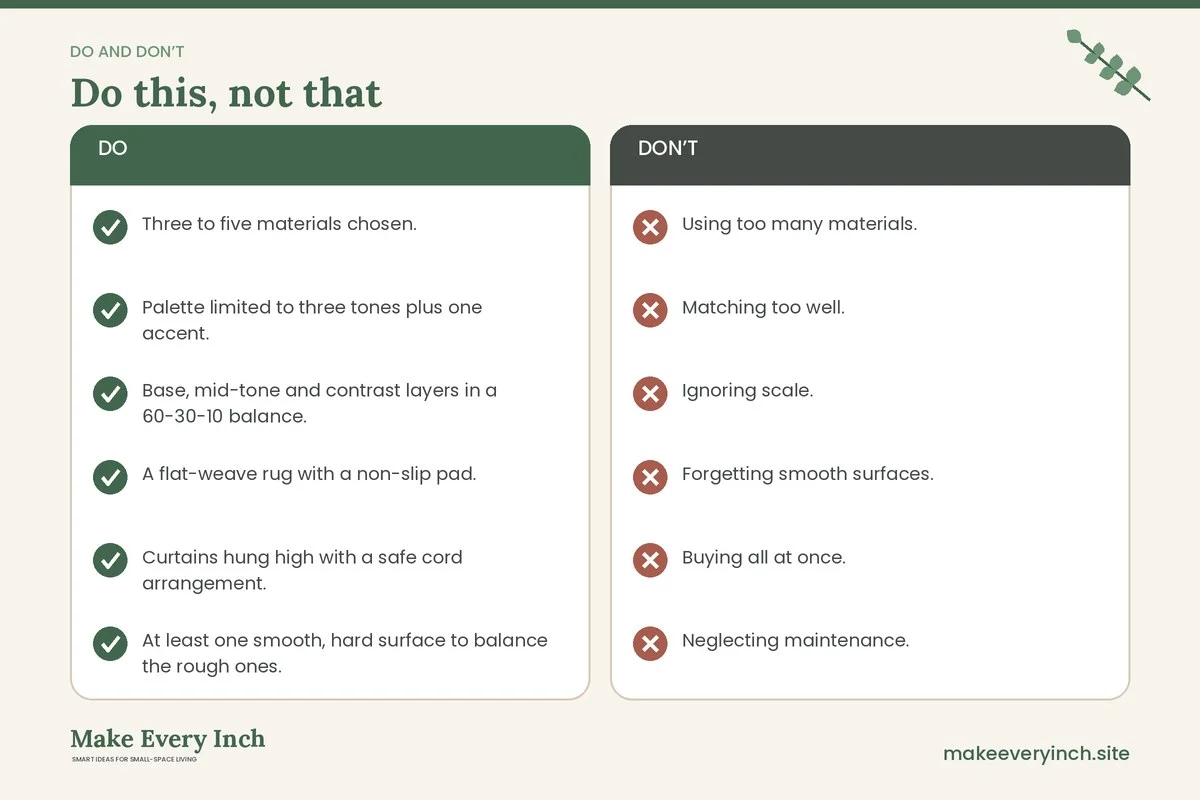
- Using too many materials. Seven different woods and fibers look like a shop. Stay with three to five.
- Matching too well. If every piece has the same wood tone and the same weave, the room looks flat. Vary the finish a little.
- Ignoring scale. A chunky rattan chair in a tiny corner can swallow the space. Choose light-looking forms.
- Forgetting smooth surfaces. A room with only rough textures feels scratchy. Add a smooth ceramic, glass or painted surface to rest the eye.
- Buying all at once. Add one layer at a time and live with it. The room will tell you what it needs.
- Neglecting maintenance. A neglected jute rug or a dusty dried arrangement shows quickly. Plan a small cleaning routine.
A weekend plan to add texture
1. Photograph the room and write down the three biggest surfaces.
2. Choose three to five materials from the table.
3. Pick a narrow palette of three tones and one accent.
4. Start with the rug and the curtains.
5. Add one wood piece and one woven piece.
6. Layer cushions and a throw on the seat.
7. Add one ceramic or stone item for contrast.
8. Place a lamp so that it grazes a textured surface.
9. Remove anything that does not fit the family.
10. Live with the room for a week before adding more.
Natural texture checklist
- Three to five materials chosen.
- Palette limited to three tones plus one accent.
- Base, mid-tone and contrast layers in a 60-30-10 balance.
- A flat-weave rug with a non-slip pad.
- Curtains hung high with a safe cord arrangement.
- At least one smooth, hard surface to balance the rough ones.
- Heavy objects kept low.
- Tall furniture anchored where the lease allows.
- Dried plants away from flames and heaters.
- Damp-sensitive fibers kept out of wet areas.
- Low-VOC finishes and ventilation for any painting or sealing.
- Lease checked before drilling, painting or hanging.
FAQ
What are the best natural textures for a small room?
Linen, wool, light wood, jute and ceramic are the most flexible. They are easy to mix, and they suit a range of styles from Scandinavian to boho.
How do I add texture without making the room look cluttered?
Use fewer, larger textured pieces such as a rug, curtains and one wooden item, then add a handful of small accents. Keep the palette narrow.
Is jute a good rug for a small apartment?
It can be, because it brings a strong texture in a neutral color. It can feel scratchy underfoot and it sheds fibers, so consider a jute-wool blend or place it in a spot with less bare-foot traffic.
Can I use natural textures in a rental?
Yes. Rugs, baskets, throws, cushions, lamps and freestanding wooden pieces need no holes. Use tension rods for curtains and check the lease before making any change.
Do natural textures work in a small bathroom?
Choose moisture-tolerant ones, such as teak, bamboo, ceramic, stone and cotton. Avoid jute, seagrass and cane near water, and keep the room ventilated.
How do I keep natural fabrics clean in a small space?
Vacuum rugs weekly, wash linen and cotton by the label, air wool throws and blot spills. Store spare throws in a lidded basket away from moisture.
Keep going: Keep going with our guides to small room decor ideas, small space wall art ideas and small home decorating ideas that feel cohesive.
Save this guide for later
Pin the ideas you like to Pinterest so you can come back to them when you plan your space.